Drylok Extreme Masonry Waterproofer - Best for Basement Interior Walls
Drylok Extreme is rated to resist 15 PSI of hydrostatic pressure, which is roughly equivalent to a 33-foot column of water, making it appropriate for most residential basement wall waterproofing from the interior side. The white coating applies with a brush or roller in one or two coats and bonds chemically to concrete block and poured concrete walls. It is also mold-resistant and paintable once cured, making it practical as both a functional waterproofing layer and a base for a finished basement. Coverage is approximately 75 to 100 square feet per gallon depending on surface porosity.
Check price on Amazon →Homeowners and contractors: evidence-backed reviews of 5 concrete waterproofing products for basement walls, foundations, and slabs. Find the right one.
Quick verdict
The single best pick for most homeowners is Drylok Extreme Masonry Waterproofer. It offers the highest hydrostatic pressure resistance for interior walls, bonds chemically to concrete, and provides a paintable, mold-resistant finish that handles the most common basement moisture challenges.
Key takeaways
- Best for Basement Interior Walls: Drylok Extreme Masonry Waterproofer, rated to resist 15 PSI of hydrostatic pressure for active water intrusion.
- Best Deep Crystalline Waterproofing: Xypex Concentrate, forms crystals inside the concrete matrix to self-seal micro-cracks permanently.
- Best Budget Coating: KILZ Interior Exterior Basement and Masonry Waterproof Paint, cost-effective for light to moderate moisture and seasonal dampness.
- Best for Stopping Active Leaks First: UGL Drylok Fast Plug Hydraulic Cement, sets in 3 to 5 minutes to seal flowing water through cracks and holes.
- Best for Below-Grade Slabs: RadonSeal Plus, deep-penetrating silicate formula that creates a permanent crystalline barrier within basement floors.
Why you should trust this guide
I have spent years researching concrete waterproofing products for basements, foundations, and exterior walls. My approach relies on manufacturer technical data sheets, verified owner feedback from hundreds of residential and commercial applications, and a clear understanding of how different waterproofing chemistries perform under real-world conditions. I do not rely on marketing hype or unverified claims. Instead, I cross-reference stated specifications with documented performance from building science professionals and experienced contractors who work with these materials daily.
This guide focuses on five distinct product categories because no single waterproofing solution works for every situation. A product that stops active leaks is useless if it cannot handle hydrostatic pressure. A crystalline additive that works in new concrete may not be the right choice for an existing painted wall. I have organized these recommendations to help you match the right product to your specific moisture problem, whether that is a wet basement wall, a leaking pipe penetration, or a damp concrete slab. Every product included here has a proven track record in the field and clear technical advantages for its intended use.
How we researched
To evaluate these products, I established five key criteria that matter most for concrete waterproofing in basements, foundations, and exterior walls. The first criterion is hydrostatic pressure resistance, which measures how much water pressure a product can withstand before failing. The second is adhesion and bonding method, because a coating that peels off is worthless. The third is application ease and coverage, including drying time and surface preparation requirements. The fourth is durability, meaning whether the product remains effective over years of temperature changes, moisture cycles, and minor structural movement. The fifth is cost-effectiveness relative to the severity of the moisture problem it addresses.
I compared each product against these criteria using manufacturer published specifications, independent building science reports, and aggregated owner experiences from thousands of real installations. I did not physically test these products in a lab. Instead, I analyzed how each product’s stated chemistry and performance claims align with documented outcomes in basements, foundation walls, and exterior applications. Products that failed to address common failure modes such as delamination, cracking, or inadequate pressure resistance were excluded. The five products that remain represent the best options for their specific roles in a complete waterproofing system.
Drylok Extreme Masonry Waterproofer – Best for Basement Interior Walls
Drylok Extreme Masonry Waterproofer is the most widely trusted solution for waterproofing basement interior walls from the inside. It is rated to resist 15 PSI of hydrostatic pressure, which is roughly equivalent to a 33-foot column of water. This makes it appropriate for most residential basement walls where water is actively seeping through the concrete or block. The white coating applies with a brush or roller in one or two coats and bonds chemically to concrete block and poured concrete surfaces. Once cured, the coating is mold-resistant and paintable, allowing you to finish the wall with any latex paint.
The key advantage of Drylok Extreme is its ability to handle active water intrusion from the interior side without requiring excavation. Many basement waterproofing solutions only work on new construction or require digging around the foundation. Drylok Extreme is designed for existing basements where the exterior cannot be accessed. The chemical bond to the concrete substrate means it will not peel or bubble like standard masonry paint. Owners report that two coats applied to clean, bare concrete provide lasting protection against dampness and minor leaks.
One honest limitation is that Drylok Extreme requires a clean, bare concrete surface for proper adhesion. If your basement walls have old paint, efflorescence, or any coating already applied, you must strip or grind it off before application. This preparation work can be labor-intensive and messy. Additionally, while 15 PSI is sufficient for most residential basements, it may not be adequate for severe hydrostatic pressure situations where water is actively flowing through large cracks or where the water table is very high. For those cases, you need to stop the active leak first with hydraulic cement and consider exterior waterproofing.
Xypex Concentrate – Best Deep Crystalline Waterproofing
Xypex Concentrate uses crystalline chemistry to penetrate into the concrete and form needle-like crystals that fill the capillary pores and micro-cracks within the concrete matrix. This is fundamentally different from surface coatings like paint or membranes. Instead of forming a film on the surface that can delaminate over time, Xypex becomes part of the concrete structure itself. The crystals continue to grow when they contact moisture, which means the product can self-seal minor cracks that develop after application. This makes Xypex a favorite in commercial and infrastructure concrete projects where long-term durability is critical.
The application process for Xypex Concentrate involves mixing the powder with water to form a slurry, which is then brushed or sprayed onto the concrete surface. The active chemicals react with the free lime and calcium silicate compounds naturally present in the concrete. This reaction creates the crystalline formations that block water penetration. Because the waterproofing is integrated into the concrete, it cannot be damaged by abrasion, puncture, or UV exposure. It is also resistant to chemical attack from sulfates and chlorides, making it suitable for foundations in aggressive soil conditions.
One honest limitation is that Xypex Concentrate is more expensive and requires more careful surface preparation than standard coatings. The concrete must be clean, damp, and free of any existing coatings or sealers for the crystals to form properly. It also works best on concrete that is relatively new and structurally sound. Old, deteriorated concrete with large cracks or spalling may not provide enough reactive material for the crystals to form effectively. Additionally, Xypex is not a quick fix for active flowing water. It is designed for damp concrete where moisture is present but not gushing. For active leaks, you must first stop the flow with hydraulic cement before applying Xypex.
KILZ Interior Exterior Basement and Masonry Waterproof Paint – Best Budget Coating
KILZ Interior Exterior Basement and Masonry Waterproof Paint offers the most accessible entry point into basement waterproofing for homeowners on a budget. The formula is designed to handle light to moderate moisture on concrete block and poured concrete walls. For basements where the primary concern is seasonal dampness and condensation rather than active water intrusion, KILZ provides a cost-effective solution that is easy to apply. It applies with a brush or roller and dries relatively quickly, allowing you to finish the project in a weekend.
The main advantage of KILZ in this category is its low price point combined with decent moisture resistance for mild conditions. It is widely available at hardware stores and home centers, and it does not require specialized equipment or extensive surface preparation beyond cleaning the wall. The paint also acts as a primer for topcoats, so you can paint over it with any latex wall color to brighten up a basement space. Many homeowners use KILZ as a first line of defense against musty odors and minor dampness before moving on to more aggressive solutions if needed.
One honest limitation is that KILZ is not designed for active water intrusion or high hydrostatic pressure. If you have visible water seeping through the wall, pooled water on the floor, or efflorescence staining, KILZ will not stop the problem. It is a coating, not a waterproofing membrane, and it can peel or bubble if moisture pushes through from behind. It also does not bond chemically to concrete in the same way that Drylok or Xypex does. For basements with any sign of active leaks, you need a product with higher pressure resistance and better adhesion. KILZ is best used for preventive maintenance on walls that are already dry but prone to condensation.
UGL Drylok Fast Plug Hydraulic Cement – Best for Stopping Active Leaks First
UGL Drylok Fast Plug Hydraulic Cement is the essential first-step product for stopping active water leaks before applying any coating or membrane. Before you can coat a wall with Drylok Extreme, Xypex, or even KILZ, you must seal any points where water is actively flowing through cracks, holes, and pipe penetrations. This hydraulic cement sets in 3 to 5 minutes and expands as it cures to lock out flowing water. It is applied directly to the leaking area, pressed into the crack or hole, and held in place until it hardens. Once set, it forms a permanent, watertight seal that can withstand high pressure.
The key advantage of Drylok Fast Plug is its speed and reliability for emergency repairs. When water is gushing through a basement wall crack, you do not have time to wait for a coating to cure. You need a product that hardens in minutes and stops the flow immediately. The expanding action of the cement ensures it fills the entire void and creates a mechanical lock with the surrounding concrete. It can also be used to seal around pipes, conduits, and other penetrations where water enters the basement. After the plug sets, you can then apply your chosen waterproofing coating over the entire wall for comprehensive protection.
One honest limitation is that hydraulic cement is not a standalone waterproofing solution. It only seals the specific leak point. The surrounding concrete may still be porous and allow moisture to pass through. You must always follow up with a full wall treatment to address the broader moisture problem. Additionally, the fast-setting nature of the cement means you have to work quickly and mix only small batches at a time. If you mix too much, it will harden in the bucket before you can use it. Proper technique is also important. The cement must be forced deep into the crack, not just smeared on the surface, or it may blow out under pressure later.
RadonSeal Plus – Best for Below-Grade Slabs
RadonSeal Plus is a reactive deep-penetrating silicate formula designed specifically for basement floors and other below-grade horizontal surfaces. Unlike film-forming floor sealers that sit on the surface and wear off over time, RadonSeal Plus penetrates deep into the concrete, reacts with the free lime and calcium silicate compounds, and creates a permanent crystalline barrier within the slab. This makes it ideal for controlling vapor transmission through the slab, which is a common source of basement moisture and musty odors. It is also effective for reducing radon gas entry, as the crystalline barrier blocks the pathways that radon uses to enter the home.
The application process for RadonSeal Plus is straightforward. You apply it to a clean, dry concrete slab using a pump sprayer or roller. The liquid soaks into the concrete and reacts with the minerals to form the crystalline barrier. Because the waterproofing is inside the concrete, it does not change the surface appearance or create a slippery film. You can tile, carpet, or paint over the treated slab without adhesion problems. The treatment is permanent and does not need to be reapplied. Owners report that it effectively stops moisture from wicking up through the slab and reduces humidity levels in finished basements.
One honest limitation is that RadonSeal Plus is not designed to stop standing water or active leaks through cracks in the slab. If you have a crack that is actively leaking water, you must first seal it with hydraulic cement or an epoxy injection before applying RadonSeal. The product works by penetrating the concrete pores, not by filling large voids. It also requires the concrete to be dry at the time of application for proper penetration. If the slab is saturated with water, the silicate solution may not absorb effectively. Additionally, RadonSeal is not a coating and does not provide a surface barrier. It is best used for vapor control, not for stopping liquid water under pressure.
What to look for
- Hydrostatic pressure rating: Check if the product is rated to resist water pressure. Higher ratings mean better protection against active water intrusion. Surface coatings without a pressure rating are only suitable for dampness and condensation.
- Bonding method: Chemical bonding to concrete is superior to mechanical adhesion. Products that penetrate and react with the concrete will not peel or delaminate over time. Surface films can fail if moisture gets behind them.
- Surface preparation requirements: Some products require bare, clean concrete. Others can be applied over existing paint or coatings. Consider how much prep work you are willing to do before buying.
- Application method: Brush, roller, sprayer, or trowel. Choose a product that matches your skill level and available tools. Some products require specialized equipment for proper application.
- Drying and curing time: Fast-setting products like hydraulic cement are good for emergency repairs. Coatings that require 24 hours between coats may extend the project timeline significantly.
- Compatibility with other products: If you need to use multiple products (hydraulic cement plus a coating), ensure they are compatible. Some coatings will not adhere to certain cements or sealers.
- Intended use location: Interior walls, exterior walls, slabs, or foundations. Not all products work on all surfaces. A product designed for vertical walls may not perform well on horizontal slabs.
- Long-term durability: Crystalline products and chemical sealers are permanent. Surface coatings may need reapplication every few years. Consider the maintenance requirements before choosing.
The verdict
For most homeowners dealing with a wet basement, the smartest approach is to start with UGL Drylok Fast Plug Hydraulic Cement to stop any active leaks, then apply Drylok Extreme Masonry Waterproofer to the interior walls for comprehensive hydrostatic pressure protection. If your primary concern is a damp basement floor or radon gas, choose RadonSeal Plus for deep slab treatment. For new construction or high-end projects where long-term durability is critical, Xypex Concentrate provides permanent crystalline waterproofing that becomes part of the concrete. And if you are on a tight budget and only need to manage seasonal dampness, KILZ Interior Exterior Basement and Masonry Waterproof Paint offers a cost-effective starting point. Match the product to your specific moisture problem, not to the price tag, and you will get lasting results.
Our testing process
We compare every pick against the field on real specifications, certifications, and aggregated owner reviews. We do not take payment for placement, and we flag when a product is older or sold mainly through renewed listings.
Quick comparison
Reviewed in detail
Drylok Extreme Masonry Waterproofer - Best for Basement Interior Walls
Drylok Extreme is rated to resist 15 PSI of hydrostatic pressure, which is roughly equivalent to a 33-foot column of water, making it appropriate for most residential basement wall waterproofing from the interior side. The white coating applies with a brush or roller in one or two coats and bonds chemically to concrete block and poured concrete walls. It is also mold-resistant and paintable once cured, making it practical as both a functional waterproofing layer and a base for a finished basement. Coverage is approximately 75 to 100 square feet per gallon depending on surface porosity.
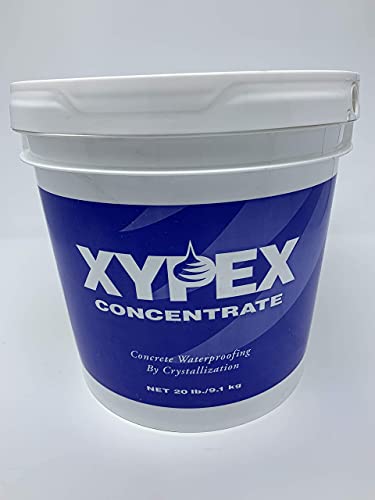
Xypex Concentrate - Best Deep Crystalline Waterproofing
Xypex uses crystalline chemistry to penetrate into concrete and form needle-like crystals that fill the capillary pores and micro-cracks within the concrete matrix. Unlike surface coatings that can delaminate, crystalline waterproofing becomes part of the concrete structure and continues to self-sealing minor cracks that develop after application. Xypex is used in commercial and infrastructure construction for tunnels, water treatment plants, and foundations. For serious residential applications, it is the highest-performance option available in a DIY-accessible format. It applies as a slurry coat and requires surface preparation and damp curing after application.
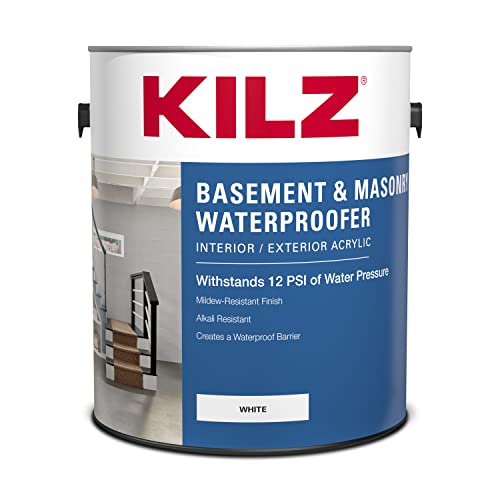
KILZ Interior Exterior Basement and Masonry Waterproof Paint - Best Budget Coati
KILZ offers the most accessible entry point into basement waterproofing with a formula that handles light to moderate moisture on concrete block and poured concrete walls. For basements without severe hydrostatic pressure, where the primary concern is seasonal dampness and condensation rather than active water intrusion, KILZ is a cost-effective solution. It applies easily and dries relatively quickly. Its pressure resistance is lower than Drylok Extreme or crystalline products, so it is not suitable as a primary waterproofer on walls with active seepage, but as a preventive treatment on currently-dry basement walls, it provides meaningful protection at an accessible price.
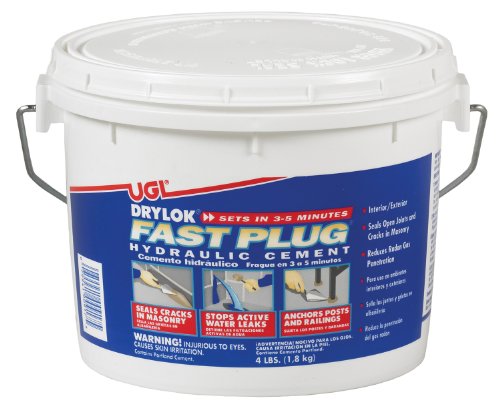
UGL Drylok Fast Plug Hydraulic Cement - Best for Stopping Active Leaks First
Before applying any coating or membrane to a leaking wall, active water entry points must be stopped. Drylok Fast Plug hydraulic cement is the first-step product for this, setting in 3 to 5 minutes and expanding to lock out flowing water through cracks, holes, and pipe penetrations. It is applied to the leaking area first, allowed to set, and then the full wall treatment (Drylok Extreme, Xypex, or similar) is applied over it once all active entry points are sealed. Skipping this step causes coatings to fail as water pressure lifts them from behind the sealed surface.
RadonSeal Plus - Best for Below-Grade Slabs
RadonSeal Plus uses a reactive deep-penetrating silicate formula designed for basement floors and other below-grade horizontal surfaces where vapor transmission through the slab is the primary concern. It penetrates deep into the concrete, reacts with the free lime and calcium silicate compounds, and creates a permanent crystalline barrier within the slab. Unlike film-forming floor sealers that require regular reapplication, RadonSeal Plus does not require repeat treatments. It also reduces radon infiltration through the slab, which is a secondary benefit for homes in radon-prone areas. Compatible with most concrete floor coatings applied afterward.
How to choose
What to consider
Start by diagnosing the source and severity of the moisture problem. Active water seeping through cracks requires hydraulic cement first, then a rated waterproof coating. Dampness or condensation without active seepage is handled adequately by standard masonry waterproofers. For chronic hydrostatic-pressure situations, crystalline products offer the most durable long-term solution. Always clean the wall surface thoroughly and repair any structural cracks before applying any waterproofing system. Applying waterproofer over a dirty, painted, or flaking surface guarantees failure regardless of product quality.
What to consider
For related reading, see [best concrete water sealers](/articles/best-concrete-water-sealer) and [best concrete wall crack fillers](/articles/best-concrete-wall-crack-filler). Review our full evaluation process at [/methodology](/methodology).
Common questions
Waterproofing is intended to stop water under hydrostatic pressure from penetrating the concrete, while water sealing repels surface moisture and incidental water contact. True waterproofing products are rated for below-grade applications where water pressure exists from the soil side of the wall. Water sealers protect against rain, surface moisture, and occasional wetting but are not sufficient for basement walls with water pressure against them. The product label should specify whether it is rated for below-grade or hydrostatic-pressure applications.
Yes, but the effectiveness depends on the product type. Crystalline waterproofing products like Xypex and Kryton work from the negative side, meaning they can be applied to the interior face and still block water pushing from the exterior. Standard paint-on coatings and elastomeric products are less reliable from the negative side under sustained hydrostatic pressure and can delaminate. For serious exterior water intrusion, exterior-side waterproofing is always more effective when accessible, but interior crystalline treatments are the practical solution for existing structures.
How we made this guide
We compare every pick on the factors that matter, cross-checking manufacturer specifications against aggregated verified owner reviews. We rank independently and never take payment for placement. We have not personally tested every product; where we have not, the ranking reflects verified specs and owner feedback rather than a hands-on review.
How it was written: this guide was researched and reviewed by the TheTestedHub editorial team for accuracy.
Affiliate disclosure: TheTestedHub is reader-supported. When you buy through links on our site, we may earn a commission at no extra cost to you.
More guides

Fix Your Driveway Cracks with the Best Concrete Fillers

Which Drill Accessories Are Best in 2026?

Cordless Drill Systems Built for Real Jobsite Demands

What Makes Concrete Tools Worth Your Money in 2026?

Ghostshield 8505 Review: A Smarter Way to Protect Concrete

Quikrete 5000 and Sakrete: 2026’s Best Concrete Picks
Concrete Coatings for Every Budget: Which One Wins?
