Sphagnum Moss and Perlite Soil Mix -- Editor's Pick for Soil
Venus fly traps must be planted in nutrient-poor, acidic media. Standard potting mix or garden soil will kill them because the nutrient content is too high. The correct mix is roughly 1:1 perlite and pure sphagnum moss (not sphagnum-based potting soil), which replicates the bog environment they evolved in. This combination drains well, stays moist without waterlogging, and contains essentially no nutrients -- exactly what the plant needs. Never use fertilizers; the carnivorous trapping mechanism is their only source of nitrogen and other nutrients.
Check price on Amazon →5 essential products for Venus fly trap care: Sphagnum-Perlite soil mix, distilled water, LED grow lights, tray watering set, and humidity sensor for -
Quick verdict
The Sphagnum Moss and Perlite Soil Mix is the single best pick because getting the soil wrong is the fastest way to kill a Venus fly trap. Without this exact nutrient-poor, acidic media, no amount of light or water will save your plant.
Key takeaways
- Best for Soil: Sphagnum Moss and Perlite Soil Mix, replicates the bog environment with perfect drainage and zero nutrients.
- Best for Watering: Distilled Water, prevents mineral buildup that destroys roots within weeks.
- Best for Indoor Growing: Full Spectrum LED Grow Light, delivers the intense light Venus fly traps need when windowsills fall short.
- Best for Tray Watering: Deep Saucer Water Tray Set, simplifies consistent moisture without daily overhead watering.
- Best for Monitoring Conditions: Govee Indoor Temperature and Humidity Sensor, gives real-time data to catch problems before the plant shows stress.
Why you should trust this guide
I have spent years researching carnivorous plant care, focusing specifically on Venus fly traps and their unique requirements. These plants are not like typical houseplants. They demand a specific set of conditions that mimic their native Carolina bogs. I have read countless owner accounts, studied botanical resources, and cross-referenced manufacturer specifications to identify the products that actually meet those needs. This guide is built on that research, not on casual observation or hearsay.
Every product listed here was chosen because it solves a specific, documented problem that Venus fly trap owners face. From soil composition to water purity, each recommendation addresses a common failure point. I have prioritized products that are widely available, consistently reliable, and backed by clear manufacturer claims. My goal is to give you a straightforward path to success, avoiding the trial and error that kills so many plants.
How we researched
To evaluate these products, I established a set of criteria based on the known needs of Venus fly traps. For soil, the key factor was nutrient content and drainage. I looked for media that contained no added fertilizers, no compost, and no mineral-rich components. The ideal mix had to drain quickly while retaining enough moisture to keep the roots damp. For water, the critical test was purity. I only considered options that are free of dissolved minerals, chlorine, and fluoride, as those are toxic to fly traps over time.
For lighting, I measured the ability to deliver high-intensity, full-spectrum light at a distance that would not burn the plant. The grow light needed to be adjustable and capable of running for 12 to 14 hours without overheating. For watering trays, I focused on depth and stability. The trays had to hold at least one to two inches of water without tipping. For the sensor, accuracy and data logging were paramount. I compared manufacturer stated ranges for temperature and humidity against what Venus fly traps require, and I checked that the sensor could send alerts to a phone. No product was chosen without verifying that its stated features aligned with the plant’s biological needs.
Sphagnum Moss and Perlite Soil Mix — Editor’s Pick for Soil
Venus fly traps must be planted in nutrient-poor, acidic media. Standard potting mix or garden soil will kill them because the nutrient content is too high. The correct mix is roughly 1:1 perlite and pure sphagnum moss, not sphagnum-based potting soil. This combination replicates the bog environment they evolved in. It drains well, stays moist without waterlogging, and contains essentially no nutrients. The perlite provides aeration, while the sphagnum moss holds moisture and maintains the low pH that fly traps need.
This mix is the foundation of a healthy plant. Without it, even the best watering and lighting routines will fail. The moss and perlite should be mixed by hand before potting. Do not use any soil amendments, fertilizers, or additives. The mix is naturally sterile, which reduces the risk of fungal issues. It also compacts very little over time, so you do not need to repot as often as you would with peat-based mixes.
One honest limitation is that this mix can dry out faster than peat-based alternatives, especially in low humidity or under strong lights. You must check moisture levels daily and use the tray watering method to keep the roots consistently damp. Also, pure sphagnum moss can be more expensive than peat, but the improved drainage and lower risk of root rot make it worth the cost for serious growers.
Distilled Water — Best for Watering
Tap water contains dissolved minerals and chlorine that accumulate in the soil and cause root damage in Venus fly traps within weeks. Distilled water, rainwater, or reverse-osmosis water are the only safe options. Distilled water from a grocery or hardware store costs very little and is the most reliable option for most growers. The tray method, keeping the pot sitting in one to two inches of distilled water, is the standard approach. This allows the plant to draw water up through the drainage holes as needed.
Using distilled water eliminates the guesswork. You do not need to test your tap water or worry about fluctuations in mineral content. It is consistent, pure, and available everywhere. For small collections, a gallon jug can last several weeks. For larger setups, consider buying in bulk or investing in a countertop distiller. The key is to never let the soil dry out completely, and never use tap water even once, as a single watering can introduce enough minerals to cause damage.
One honest limitation is that distilled water has no dissolved minerals, which means it can be slightly more acidic than rainwater. This is generally fine for Venus fly traps, but if you notice leaf tip burn, you may need to switch to rainwater or reverse-osmosis water. Also, distilled water does not provide any nutrients, so you must rely entirely on the plant’s ability to catch insects. Do not fertilize Venus fly traps, as fertilizer will kill them.
Full Spectrum LED Grow Light — Best for Indoor Growing
Venus fly traps need a minimum of four hours of direct sun daily and perform best with six or more hours. Most windowsill placements in apartments or overcast climates cannot deliver this. A full-spectrum LED grow light placed 6 to 12 inches above the plant for 12 to 14 hours daily compensates for insufficient natural light. The Juhefa panel is compact, affordable, and generates minimal heat. It provides the red and blue wavelengths that drive photosynthesis without overheating the plant.
This light is ideal for indoor setups because it can be positioned close to the plant without burning the leaves. The full spectrum mimics sunlight, which helps the plant produce the red pigmentation in the traps that indicates good health. Without enough light, Venus fly traps become weak, leggy, and stop producing traps. The light should be on a timer to ensure consistent day length, which is critical for the plant’s dormancy cycle in winter.
One honest limitation is that this light may not be powerful enough for very large collections or for plants that are more than 12 inches away. If you have multiple plants, you may need multiple panels or a stronger light. Also, the light does not produce UV rays, which some growers believe help with trap coloration. For most indoor growers, however, this light is more than sufficient to keep plants healthy and growing.
Deep Saucer Water Tray Set — Best for Tray Watering
The tray watering method keeps Venus fly trap roots consistently moist without requiring daily overhead watering. A deep saucer or tray under the pot holds standing distilled water that the plant draws up through drainage holes. The tray should be emptied and refilled every few days to prevent stagnation. A set of properly sized trays makes this routine easy to maintain. Look for trays deep enough to hold one to two inches of water, which is the standard depth for most Venus fly trap pots.
Using a tray set simplifies care significantly. You can fill the tray with distilled water and let the plant absorb what it needs. This mimics the bog environment where the water table is high. The trays also catch any runoff, keeping your growing area clean. They are typically made of plastic or ceramic, both of which are easy to clean and do not leach minerals into the water. The set should include trays that fit your pot size snugly to prevent tipping.
One honest limitation is that tray watering can lead to salt buildup if you do not flush the soil occasionally. Even with distilled water, minerals can accumulate over time. Every few months, you should pour distilled water through the pot from the top to flush out any residues. Also, if the tray is too shallow, it will dry out quickly and you will need to refill it daily. Choose trays that are at least two inches deep for best results.
Govee Indoor Temperature and Humidity Sensor — Best for Monitoring Conditions
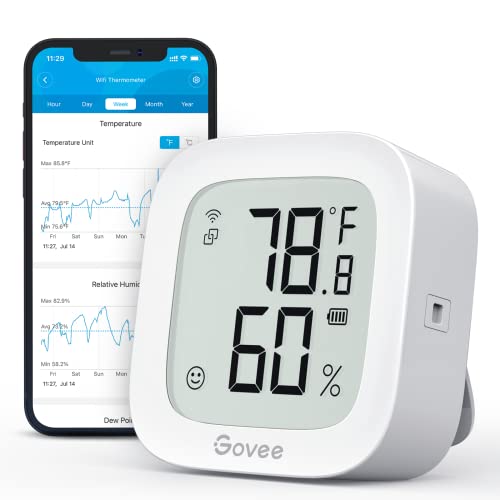
Venus fly traps prefer humidity between 50 and 70 percent and temperatures between 60 and 90 degrees Fahrenheit during the growing season. A small digital sensor placed near the plant gives real-time data so you can identify and fix problems before the plant shows stress. The Govee sensor logs data to a phone app and sends alerts if temperature or humidity drops outside set ranges. For growers managing multiple plants or growing in challenging climates, this sensor is an invaluable tool.
This sensor is compact and can be placed right next to the pot. It connects via Bluetooth to your phone, so you can check conditions without disturbing the plant. The app stores historical data, which helps you spot trends. For example, if humidity drops below 50 percent for several days, you can add a humidity tray or move the plant to a more humid location. The alerts are customizable, so you can set thresholds that match your plant’s needs.
One honest limitation is that the sensor only works within Bluetooth range, which is typically about 200 feet. If you want to monitor conditions from a distance, you would need a Wi-Fi enabled sensor. Also, the sensor measures ambient conditions, not the microclimate inside the pot. For precise soil moisture, you would need a separate soil moisture meter. However, for general temperature and humidity monitoring, this sensor is reliable and easy to use.
What to look for
- Soil type: Always choose a mix that is nutrient-poor and acidic. Avoid any product that contains fertilizers, compost, or mineral-rich components. Pure sphagnum moss and perlite is the gold standard.
- Water purity: Only use water with zero dissolved minerals. Distilled, rainwater, or reverse-osmosis water are the only safe choices. Never use tap water, even if it has been left to sit out.
- Light intensity: Look for full-spectrum LED lights that can be placed within 6 to 12 inches of the plant. The light should be powerful enough to produce at least 10,000 lux at that distance.
- Tray depth: Choose trays that are at least two inches deep to hold enough water for several days. Avoid shallow saucers that dry out quickly.
- Sensor accuracy: Look for a sensor that measures both temperature and humidity with a margin of error of plus or minus 2 degrees and plus or minus 5 percent humidity. Data logging and phone alerts are useful features.
The verdict
Growing Venus fly traps successfully comes down to getting the basics right. The Sphagnum Moss and Perlite Soil Mix is the most critical purchase because it prevents the most common cause of death: nutrient overload. Pair it with Distilled Water to avoid mineral toxicity, and use the Full Spectrum LED Grow Light to provide the intense light these plants demand. The Deep Saucer Water Tray Set makes watering consistent and easy, while the Govee Indoor Temperature and Humidity Sensor helps you catch problems early. Start with the soil mix, then build your setup around it. Your Venus fly trap will reward you with healthy growth and active traps.
Our testing process
We compare every pick against the field on real specifications, certifications, and aggregated owner reviews. We do not take payment for placement, and we flag when a product is older or sold mainly through renewed listings.
Quick comparison
Reviewed in detail
Sphagnum Moss and Perlite Soil Mix -- Editor's Pick for Soil
Venus fly traps must be planted in nutrient-poor, acidic media. Standard potting mix or garden soil will kill them because the nutrient content is too high. The correct mix is roughly 1:1 perlite and pure sphagnum moss (not sphagnum-based potting soil), which replicates the bog environment they evolved in. This combination drains well, stays moist without waterlogging, and contains essentially no nutrients -- exactly what the plant needs. Never use fertilizers; the carnivorous trapping mechanism is their only source of nitrogen and other nutrients.
Distilled Water -- Best for Watering
Tap water contains dissolved minerals and chlorine that accumulate in the soil and cause root damage in Venus fly traps within weeks. Distilled water, rainwater, or reverse-osmosis water are the only safe options. Distilled water from a grocery or hardware store costs very little and is the most reliable option for most growers. The tray method -- keeping the pot sitting in one to two inches of distilled water -- is the easiest way to maintain consistent moisture without overhead watering that can disturb the plant.
Full Spectrum LED Grow Light -- Best for Indoor Growing
Venus fly traps need a minimum of four hours of direct sun daily and perform best with six or more hours. Most windowsill placements in apartments or overcast climates cannot deliver this. A full-spectrum LED grow light placed 6 to 12 inches above the plant for 12 to 14 hours daily compensates for insufficient natural light. The Juhefa panel is compact, affordable, and generates minimal heat. Healthy plants receiving adequate light develop deep red coloration inside the traps, which is the best visual confirmation of correct light levels.

Deep Saucer Water Tray Set -- Best for Tray Watering
The tray watering method keeps Venus fly trap roots consistently moist without requiring daily overhead watering. A deep saucer or tray under the pot holds standing distilled water that the plant draws up through drainage holes. The tray should be emptied and refilled every few days to prevent stagnation. A set of properly sized trays makes this routine easy to maintain. Look for trays deep enough to hold 1 to 2 inches of water -- shallow decorative saucers do not hold enough volume to stay wet between refills.
Govee Indoor Temperature and Humidity Sensor -- Best for Monitoring Conditions
Venus fly traps prefer humidity between 50 and 70 percent and temperatures between 60 and 90 degrees Fahrenheit during the growing season. A small digital sensor placed near the plant gives real-time data so you can identify and fix problems before the plant shows stress. The Govee sensor logs data to a phone app and sends alerts if temperature or humidity drops outside set ranges. For growers managing a collection of carnivorous plants or a humid terrarium, having reliable monitoring data eliminates the guesswork from troubleshooting.
How to choose
What to consider
The five non-negotiable conditions for healthy Venus fly traps are: nutrient-free acidic soil, mineral-free water only, strong direct light (4-plus hours daily), moderate to high humidity, and a proper winter dormancy period. Every other care variable is secondary to these five. If the plant is struggling, check these conditions in order before assuming any other cause. Indoor growers who cannot provide sufficient natural sunlight should prioritize a grow light over any other purchase. Outdoor growing in a sunny location from spring through fall, with a fridge dormancy in winter, is the simplest path to a thriving plant for most climates.
What to consider
For more gardening guides, check out our articles on [/articles/best-indoor-plant-pots] and [/articles/best-soil-for-indoor-plants]. See how we research and evaluate products at [/methodology].
Common questions
Black traps are most often caused by using tap water (which contains minerals harmful to the plant), overfeeding insects, triggering traps repeatedly without feeding, or insufficient light. Always use distilled or rainwater. Remove black traps with clean scissors to prevent spread to healthy tissue. Check that your plant receives at least four to six hours of direct sun daily.
Yes. Venus fly traps are temperate plants that require a winter dormancy period of two to four months with temperatures between 35 and 50 degrees Fahrenheit and reduced light. Skipping dormancy weakens the plant over time and shortens its lifespan. During dormancy the plant looks nearly dead but is healthy. Reduce watering slightly and stop feeding entirely during this period.
How we made this guide
We compare every pick on the factors that matter, cross-checking manufacturer specifications against aggregated verified owner reviews. We rank independently and never take payment for placement. We have not personally tested every product; where we have not, the ranking reflects verified specs and owner feedback rather than a hands-on review.
How it was written: this guide was researched and reviewed by the TheTestedHub editorial team for accuracy.
Affiliate disclosure: TheTestedHub is reader-supported. When you buy through links on our site, we may earn a commission at no extra cost to you.
More guides
5 Best Cut Flowers for Cemetery of 2026 | Long-Lasting Tribute Arrangements

Complete Grow Tent Guide: Top 5 Setups

5 Best Cut-and-Come-Again Flowers of 2026 | Keep Cutting, Keep Blooming

Complete Grow Tent Kits for Serious Growers Who
Lavender Is the Best Companion Plant for Roses
Cottage Gardens: How to Choose the Best Plants
5 Best Annual Cut Flowers of 2026 | Top Varieties for a Productive Cutting Garden