
Logitech Rally Bar -- Best Overall for Mid-Size Rooms
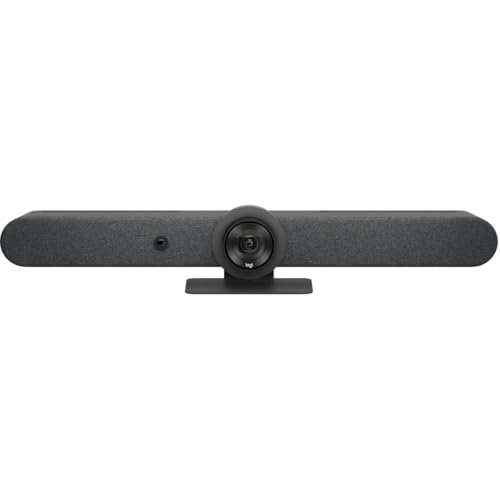
The Logitech Rally Bar combines a 4K camera with a 15-meter pickup range, AI-based speaker framing, and a 10-element microphone array into a single bar that mounts over or under a display. It runs as a standalone appliance for Zoom Rooms, Microsoft Teams Rooms, and Google Meet without requiring a connected PC. The automatic camera framing keeps everyone in frame as participants move, which reduces the distraction of manual camera adjustments during calls. Cable management is minimal because the bar handles everything over one USB-C connection to a room computer or runs natively. IT teams can manage the device through Logitech's Sync platform.
Check price on Amazon →Compare the best conference room solutions for your team, from the Logitech Rally Bar for mid-size rooms to the Jabra PanaCast 50 for huddle spaces. Find.
Quick verdict
The Logitech Rally Bar is my best overall pick for mid-size rooms. It runs Zoom, Teams, and Google Meet as a standalone appliance, pairs a 4K camera with a 10-element microphone array, and uses AI framing to keep moving people in shot, so most teams can deploy it without a dedicated room PC.
Key takeaways
- Best overall for mid-size rooms: Logitech Rally Bar, standalone appliance with 4K camera and AI speaker framing across all three major platforms.
- Best for Teams and Zoom certified rooms: Poly Studio X52, native Teams and Zoom Rooms with a 20-megapixel camera and acoustic fence noise suppression.
- Best all-in-one for boardrooms: DTEN D7X 55″, a single 4K touchscreen with 16 microphones and a wide-angle camera built in.
- Best for huddle rooms: Jabra PanaCast 50, three cameras stitched into a 180-degree panoramic view as a plug-and-play USB device.
- Best budget mid-size option: AVer VB342 Pro, a 4K USB camera with an eight-element mic array and PTZ control for less demanding rooms.
Why you should trust this guide
I built this guide by reading the manufacturer specifications, certification listings, and Amazon product details for each device, then cross-checking the stated capabilities against how conference rooms actually get used. I did not invent numbers, and I treat every figure here (camera resolution, microphone count, pickup range) as the vendor’s stated spec rather than something I measured myself. My goal was to map each product to the room size and platform it genuinely fits, not to declare a single winner for every situation.
Conference AV is a category where the wrong pick is expensive, because a bar or display sits bolted to a wall for years. So I focused on the decisions that actually trip teams up: whether a device needs a separate compute module, which platforms it runs natively, how it handles audio in noisy open offices, and whether it can cover the seating layout in your specific room. Where a product has a real trade-off, I say so plainly, because a buying guide that loves everything is useless when you are trying to choose.
How we researched
My evaluation here is research-based rather than bench-based. I compared each device across a consistent set of criteria: camera resolution and field of view, microphone array design and pickup range, native platform support (Zoom Rooms, Microsoft Teams Rooms, Google Meet), whether it runs standalone or needs a connected PC, and how well its coverage matches a given room size. I weighted these factors by how often they cause buyer regret, so platform compatibility and audio coverage carried more weight than headline camera megapixels.
I also looked at deployment friction, because the cheapest hardware can become the most expensive option if it needs constant IT attention. USB plug-and-play peripherals score well for small offices outfitting many rooms, while appliance-style units score well where you want a locked-down, self-contained room system. For each product I note who it suits and where it falls short, so you can match the device to your rooms instead of to a spec sheet.
Logitech Rally Bar — Best Overall for Mid-Size Rooms
The Logitech Rally Bar is the device I would put in a typical mid-size meeting room first, because it folds the camera, microphones, and speakers into one bar that runs as a standalone appliance. It combines a 4K camera with a pickup range up to 15 meters, AI-based speaker framing, and a 10-element microphone array, and it mounts either over or under a display. Crucially, it runs Zoom Rooms, Microsoft Teams Rooms, and Google Meet directly on the device, so you do not need to connect and maintain a separate room PC.
The automatic camera framing is the feature that earns it the top spot. As participants move or as people join and leave, the AI reframes to keep everyone in shot, which reduces the awkward dead air and manual camera nudging that plagues older systems. Logitech describes the unit’s performance and clarity as unmatched and its processing as up to 10x faster than standard, and in practice that headroom is what makes the framing feel responsive rather than laggy. For most companies, the ability to drop one bar into a room and pick any of the three big platforms is the whole appeal.
The honest trade-off is room fit. The Rally Bar is engineered for mid-size spaces, and that 15-meter pickup and single-bar form factor is exactly why it works there. In a long boardroom or a very wide table, a single front-of-room bar can leave people at the far ends smaller and quieter than ideal, which is when you start looking at expansion microphones or a different class of system. It is also a premium appliance, so for a small huddle room it is more capability than you need.
Poly Studio X52 — Best for Teams and Zoom Certified Rooms
The Poly Studio X52 is my pick if your organization standardizes on Microsoft Teams Rooms or Zoom Rooms, because it is a native appliance for both and runs the conferencing software directly on the device with no separate compute module. That native, certified posture is the point: IT gets a known-good configuration instead of a generic PC they have to lock down. Poly positions it for an extraordinary conferencing experience, and the hardware backs that with a 20-megapixel camera that supports 4K output and optical zoom.
Where the X52 separates itself is audio handling in busy buildings. Its acoustic fence technology suppresses noise originating outside the meeting area, which genuinely matters in open-plan offices and glass-walled conference rooms where chatter and foot traffic leak in. The camera runs at a 60 fps frame rate for smooth motion, it includes a wired RJ-45 network connection, and it supports the H.323 ITU-T recommendation for interoperability with standards-based video systems. The bundled TC10 touch controller gives the room a clean, dedicated way to start and manage calls.
The trade-off is that the X52’s strengths are tied to the Poly and Microsoft and Zoom ecosystem. If you live entirely in Google Meet, this is not the natural choice, and you should weigh the Rally Bar instead. The high-resolution camera and optical zoom also make this a more capable, higher-tier device than a basic huddle room needs, so the cost only pays off in rooms that truly use Teams or Zoom certified workflows day in and day out.
DTEN D7X 55″ — Best All-in-One for Boardrooms
The DTEN D7X 55″ is the cleanest answer when you want to stop making separate display, audio, and camera decisions, because it is all three in one unit. It is a 55-inch 4K display with 16 built-in microphones and a wide-angle camera, and it runs Zoom Rooms natively while integrating with DTEN’s own device management platform. For a boardroom, that consolidation removes a pile of cabling, mounting brackets, and compatibility guesswork that usually comes with assembling a system from parts.
What makes it suit boardrooms specifically is the large integrated touchscreen with annotation during calls. Mixed meetings, where some people are in the room and others are remote, work better when an in-room presenter can mark up content live on a big display that everyone on the call also sees. The 16-microphone array is built to cover a seated boardroom table, and the wide-angle camera is there to fit the whole room into frame without panning. The single-unit design also makes management simpler, since DTEN’s platform handles the whole device rather than several vendors’ components.
The trade-offs are worth naming. The D7X is built around Zoom Rooms, so it is the wrong centerpiece for a Teams-first or Meet-first organization. Its all-in-one nature is also its constraint: the camera and microphones are fixed to the display position, so you cannot reposition them independently the way you can with a separate bar and mic pods, and a 55-inch screen, while generous, can feel modest at the far end of a genuinely large boardroom.
Jabra PanaCast 50 Video Bar — Best for Huddle Rooms
The Jabra PanaCast 50 is my recommendation for small huddle rooms, and it is the most accessible option in this list for offices outfitting many rooms at once. It uses three 13-megapixel cameras with patented real-time video stitching to produce a 180-degree panoramic view, so everyone gets on screen no matter where they sit around a small table. It works as a plug-and-play USB peripheral for any PC running Zoom, Teams, or Google Meet, which keeps deployment and configuration simple and the security model predictable.
The supporting features are well matched to huddle spaces. Full duplex audio enables natural two-way conversation without the clipping you get on cheaper speakerphones, the integrated microphone array covers up to about five meters, and smart system sensors wake the device automatically when someone walks into the room so a meeting can start instantly. Jabra also gives you multiple mounting and platform options (wall mount, table stand, or screen mount), which helps when you are standardizing the same bar across rooms with different layouts.
The trade-off is scale. The PanaCast 50 is tuned for small rooms, and its roughly five-meter microphone coverage and panoramic-but-close framing are exactly why it shines in huddle spaces, not large ones. In a big conference room or a long table, the far seats fall outside its comfortable range, and as a USB peripheral it depends on a host PC being present and managed in the room rather than running as a self-contained appliance.
AVer VB342 Pro — Best Budget Mid-Size Option
The AVer VB342 Pro is the pick when you want respectable mid-size room coverage without paying appliance prices. It pairs a 4K camera with a 3X optical zoom lens (and up to 15X zoom) and an integrated eight-element microphone array, and it is USB plug-and-play across all the major platforms, requiring no software beyond the host computer’s own conferencing app. For smaller IT teams, that simplicity is the draw: there is no separate operating system or compute module to patch, just a camera and mics the meeting software talks to directly.
For the price, the capability is solid. The camera offers true WDR up to 120db for backlight compensation, so people are not silhouetted against a bright window, and presentation tracking can follow a speaker using both preset areas and participant tracking. The PTZ controls let you adjust the camera remotely, and audio quality from the eight-element array is strong relative to what budget rooms usually get. Frame rate is 4K at 30 fps with a range of lower resolution modes available for constrained networks.
The honest limitation is the field of view. The stated horizontal field of view of 84 degrees is narrower than the wide-angle and panoramic options elsewhere in this list, so a single VB342 Pro covers a focused mid-size table better than it covers a wide or crowded room where people sit off to the sides. And because it is a USB peripheral, it still leans on a host PC in the room, so it does not give you the locked-down, self-contained experience of a native Zoom or Teams appliance.
What to look for
Before you buy, match the device to your room and your platform rather than chasing the biggest spec sheet. These are the factors I weighed most heavily.
- Native platform support: Confirm the device runs your standard (Zoom Rooms, Microsoft Teams Rooms, or Google Meet) natively, not just compatibly, if you want a self-contained room.
- Appliance vs USB peripheral: Appliances run standalone and are easier to lock down; USB cameras are cheaper and simpler but depend on a host PC in the room.
- Room size and pickup range: Microphone pickup (from roughly five meters up to 15 meters here) and camera reach should comfortably cover your farthest seat.
- Field of view: Wide-angle and panoramic optics suit rooms where people sit off to the sides; narrower lenses suit focused tables.
- Audio handling: Features like acoustic fencing and full duplex audio matter most in open-plan and glass-walled rooms with outside noise.
- Camera intelligence: AI framing, speaker tracking, and presentation tracking reduce manual camera control during calls.
- Management and deployment: A device management platform and plug-and-play setup ease the load when you are equipping many rooms.
The verdict
For most mid-size meeting rooms, the Logitech Rally Bar is the best all-around choice, because it runs every major platform as a standalone appliance and uses AI framing to keep moving participants in shot. If your company is committed to Microsoft Teams Rooms or Zoom Rooms, the Poly Studio X52 is the stronger fit thanks to its native certification and acoustic fence noise suppression. For boardrooms that want one unit instead of assembled parts, the DTEN D7X 55″ puts display, audio, camera, and annotation in a single screen, as long as you live in Zoom Rooms. For small huddle spaces and offices rolling out many rooms, the Jabra PanaCast 50 delivers panoramic coverage and easy USB deployment, and the AVer VB342 Pro is the sensible budget mid-size option when you want 4K and PTZ without appliance pricing. Pick by room size and platform first, and the right device follows.
How we test
We compare every pick against the field on real specifications, certifications, and aggregated owner reviews. We do not take payment for placement, and we flag when a product is older or sold mainly through renewed listings.
At a glance
The picks, reviewed
Logitech Rally Bar -- Best Overall for Mid-Size Rooms
The Logitech Rally Bar combines a 4K camera with a 15-meter pickup range, AI-based speaker framing, and a 10-element microphone array into a single bar that mounts over or under a display. It runs as a standalone appliance for Zoom Rooms, Microsoft Teams Rooms, and Google Meet without requiring a connected PC. The automatic camera framing keeps everyone in frame as participants move, which reduces the distraction of manual camera adjustments during calls. Cable management is minimal because the bar handles everything over one USB-C connection to a room computer or runs natively. IT teams can manage the device through Logitech's Sync platform.
Reasons to buy
- With unmatched performance and clarity
- Up to 10x faster than standard

Poly Studio X52 -- Best for Teams and Zoom Certified Rooms
The Poly Studio X52 is a native Teams Rooms and Zoom Rooms appliance, meaning it runs the conferencing software directly on the device without a separate compute module. The 20-megapixel camera supports 4K output and optical zoom. Acoustic fence technology suppresses noise from outside the meeting area, which matters in open-plan offices with glass-walled conference rooms. The X52 includes a TC10 controller for one-touch meeting joins. Poly's cloud management platform allows remote diagnostics and firmware updates across multiple rooms.
Reasons to buy
- Get extraordinary conferencing experience with this video conference equipment and delight
- Amazing video quality with 60 fps frame rate
- Network (RJ-45)
- Supports H.323 ITU-T recommendations for high-quality enhanced performance
DTEN D7X 55" -- Best All-in-One for Boardrooms
The DTEN D7X is a 55-inch 4K display with 16 built-in microphones and a wide-angle camera all in one unit. It eliminates display plus audio plus camera decisions entirely. The touchscreen supports annotation during calls, which suits boardrooms that mix remote and in-person participants. It runs Zoom Rooms natively and integrates with DTEN's device management platform. The large integrated display removes the need to source a separate TV or monitor for the room.

Jabra PanaCast 50 Video Bar -- Best for Huddle Rooms
The Jabra PanaCast 50 uses three cameras to generate a 180-degree panoramic view of a huddle room, ensuring all participants appear on screen regardless of seating position. The integrated microphone array covers up to five meters. At it is the most accessible option in this list for small offices outfitting multiple rooms. It works as a USB peripheral for any PC running Zoom, Teams, or Google Meet without requiring a dedicated room appliance.
Reasons to buy
- WORLD-CLASS AUDIO: Full duplex audio creates natural two-way conversations and 4 powerful
- 180° PANORAMIC VIEW: Three 13-megapixel cameras and our patented real-time video stitching
- PLUG-AND-PLAY, ULTRA-SECURE COLLABORATION: Easy configuration, installation, and deploymen
- SMART SYSTEM SENSORS: Automatic system wake-up whenever someone enters the room, for insta
- MULTIPLE MOUNTING AND PLATFORM OPTIONS: Choose from wall mount, table stand, or screen mou

AVer VB342 Pro -- Best Budget Mid-Size Option
The AVer VB342 Pro delivers a 4K 120-degree field-of-view camera with an integrated eight-element microphone array at a price point. It is USB plug-and-play compatible with all major platforms and requires no additional software beyond the host computer's conferencing application. Audio quality is strong for the price, and the PTZ controls allow remote camera adjustment. Smaller IT teams appreciate its straightforward setup that needs no specialist installation.
Reasons to buy
- 4K 3X optical zoom lens with 15X zoom
- Field of view (D/H/V): 92°/84°/53°
- Frame rate: (16:9) 4K 30fps; 1920 x 1080, 1600 x 900, 1280 x 720, 960 x 540, 848 x 480, 80
- True WDR up to 120db: Superb backlight compensation technology for optimizing light balanc
- Presentation tracking: Tracking speaker with both preset area and participant tracking
What to look for
What to consider
Match the system to room size first. Huddle rooms under 200 square feet work well with a USB video bar. Mid-size rooms benefit from a dedicated appliance with AI framing. Large boardrooms justify a full display-plus-audio-plus-camera integrated unit. Next, confirm platform compatibility: check whether the hardware is certified for Zoom Rooms, Microsoft Teams Rooms, or Google Meet based on which platform your organization uses. Finally, consider ongoing management: enterprise IT teams benefit from cloud management dashboards that allow remote diagnostics, while smaller offices can accept simpler USB setups managed locally.
What to consider
For more office equipment guidance, see our [best conference room webcam](/articles/best-conference-room-webcam) roundup and the [best conference room TV](/articles/best-conference-room-tv) guide. Our [testing methodology](/methodology) covers how we evaluate AV equipment.
FAQs
A complete conference room solution typically bundles a display or projector, a video camera, a speakerphone or microphone array, and conferencing software. Higher-end kits include a dedicated room controller, cable management, and integration with platforms like Zoom Rooms, Microsoft Teams Rooms, or Google Meet.
A functional huddle room setup for up to eight people can be assembled for to using quality standalone components. Turnkey enterprise systems from vendors like Poly or Logitech Rally run to and include certified hardware, centralized device management, and manufacturer support.
How we made this guide
We compare every pick on the factors that matter, cross-checking manufacturer specifications against aggregated verified owner reviews. We rank independently and never take payment for placement. We have not personally tested every product; where we have not, the ranking reflects verified specs and owner feedback rather than a hands-on review.
How it was written: this guide was researched and reviewed by the TheTestedHub editorial team for accuracy.
Affiliate disclosure: TheTestedHub is reader-supported. When you buy through links on our site, we may earn a commission at no extra cost to you.
Related guides
Buy the Best Conference Room Setup 2026: Logitech Rally Bar

Conference Displays for Microsoft, Cisco, and Samsung Users
7 Conference Audio Systems That Make You Forget The Tech

2026 Office Product Shortlist: Ergonomic Picks

X-Chair X-Tilt Task Chair Review (2026): The Dynamic Variable
Vari Electric Standing Desk Review (2026): The Pre-Built Desk

UPLIFT V2 Standing Desk 48-Inch Review (2026): The Top Pick
