
Logitech Tap + Rally Bar -- Best Mid-Size Zoom and Teams System
The Logitech Tap touch controller paired with the Rally Bar creates a complete Teams Rooms or Zoom Rooms system that installs without a separate PC. The Rally Bar handles 4K camera, 10-microphone audio, and speaker output. The Tap controller provides one-touch join, calendar integration, and HDMI content sharing in a 10-inch tabletop unit. The combination is deployable in under an hour and managed remotely through Logitech Sync. AI-based speaker framing on the Rally Bar tracks active participants automatically.
Check price on Amazon →Struggling to find a conference system that your team will actually use? Here are the best picks for every room size and platform.
Quick verdict
For most mid-size meeting rooms, I recommend the Logitech Tap plus Rally Bar. It installs without a separate PC, handles 4K video and 10-microphone audio in one bar, and supports Teams Rooms, Zoom Rooms, and Google Meet, so it fits the platform your company already runs.
Key takeaways
- Best mid-size Zoom and Teams system: Logitech Tap plus Rally Bar, complete PC-free room in one deployable kit.
- Best for enterprise boardrooms: Cisco Room Bar Pro, quad-camera array with per-person framing and deep cloud analytics.
- Best budget Teams Rooms system: Poly G10-T, includes the dual-lens Studio E70 camera and self-provisions through Teams.
- Best Zoom-first system: Neat Bar Pro, certified exclusively for Zoom Rooms with a 16-microphone array and Symmetry framing.
- Best for large Teams Rooms: Yealink MVC940, a UVC84 PTZ camera with 12x optical zoom for big rooms.
Why you should trust this guide
I built this guide by researching the published specifications, certification status, and platform support for each conference system, then weighing how those details actually play out in a real meeting room. Conference AV is a category where the marketing copy and the day-to-day experience often diverge, so I focused on the things that decide whether a room gets used or avoided: how the system joins a call, how it frames the people in the room, and whether IT can manage it without a site visit. I treat every spec listed here as the manufacturer’s stated capability rather than something I personally measured.
I also paid attention to platform lock-in, because it is the single most common reason a room purchase goes wrong. A system certified only for Zoom Rooms is a poor fit for a Microsoft Teams shop, and the reverse is equally true. Where a product is flexible across Teams, Zoom, and Google Meet, I say so, and where it is built for exactly one platform, I call that out as a trade-off rather than a flaw. My goal is to match the right room to the right buyer, not to crown one universal winner.
How we researched
My evaluation approach centered on five criteria that matter once a system is bolted to a wall: camera quality and framing intelligence, microphone coverage relative to room size, the controller and join experience, platform certification, and remote manageability. For each product I compared the stated camera resolution, field of view, and any AI framing feature against the size of room it targets, because a bar tuned for a huddle space behaves very differently in a 30-person boardroom. I did not run a lab bench or take my own measurements; instead I assessed the published feature set and certification claims for internal consistency.
I weighted deployment effort and ongoing management heavily, since the total cost of a conference room is rarely the hardware alone. A kit that self-provisions and reports to a cloud dashboard saves an IT team far more over its life than one that needs manual setup in each room. I also looked for honest limitations in every option, because no single bar is right for every space, and I flag the cases where a system’s strength in one room becomes a weakness in another.
Logitech Tap + Rally Bar
The Logitech Tap plus Rally Bar is my pick for most small to mid-size video rooms because it delivers a complete system without a separate PC and stays flexible across the major platforms. The Rally Bar handles the 4K camera, a 10-microphone audio array, and the speaker output in a single device, while the Tap IP touch controller provides one-touch join, calendar integration, and HDMI content sharing from a 10.1-inch tabletop unit. It is certified for Microsoft Teams Rooms on Android, Zoom Rooms Appliances, and Google Meet, so you choose the engine that matches your organization rather than committing to one vendor’s ecosystem.
What I like most is how deployable it is. The bar runs the room natively, the Tap controller connects over the network with cable retention to keep the cabling tidy, and Proximity Join lets people walk in and start a meeting from their own device. For a company standing up several rooms, the ability to bring one online in under an hour and then manage it remotely is a genuine advantage. You can also expand the setup later with Logitech Sight for a center-of-table camera or Rally Mic Pods to extend microphone coverage in a longer room.
The honest trade-off is room size. The all-in-one design and the bar’s audio coverage are tuned for small and medium spaces, and the listing itself references the Rally Bar Mini for those rooms. In a large boardroom you would need to add Mic Pods or step up to a different model, so the clean single-device experience starts to erode as the room grows. For its intended mid-size target it is excellent, but do not buy it expecting it to fill a 30-seat space on its own.
Cisco Room Bar Pro
The Cisco Room Bar Pro is the system I would put in an enterprise boardroom, especially one already standardized on Webex. It is a high-end all-in-one bar with a quad-camera array, spatial audio microphones, and a native Cisco Webex engine, and it also runs Microsoft Teams and Zoom as guest platforms. It speaks the full range of standards an enterprise environment expects, including SIP, H.323, and H.264, along with H.460.18 and H.460.19 for traversal, which matters when calls cross firewalls between organizations.
The standout capability is AI People Focus, which gives each participant their own video frame in a composite layout instead of a single wide shot of the table. For remote attendees that difference is significant, since faces stay large and readable rather than shrinking into a distant room view. Paired with Cisco’s cloud management platform and its detailed analytics on room usage, the Room Bar Pro suits IT teams that want to understand how their spaces are actually being used and to standardize across many sites.
The trade-off is that you pay for, and lean into, the Cisco ecosystem. Webex is the first-class experience here, and while Teams and Zoom are supported as guests, an organization that lives entirely in Teams may find the native Webex orientation and Cisco’s management model more than it needs. This is an enterprise-grade boardroom device, and its depth of features and analytics are best justified when you are running a fleet of rooms rather than a single conference space.
Poly G10-T
The Poly G10-T is my budget recommendation for a Microsoft Teams Rooms space because it bundles a surprisingly capable camera into a complete, lower-cost kit. The package includes the Studio E70 camera, a TC8 touch controller, a compute module, and the cabling to tie it together, so it arrives as a full room rather than a pile of parts to source separately. It is built specifically as a Teams Rooms system, which keeps the join and meeting experience consistent for organizations already on Microsoft.
The reason it punches above its price is the Studio E70 camera. It uses dual-lens technology to create individually framed video tiles for each participant, a per-person framing feature usually reserved for systems that cost roughly twice as much. Installation is straightforward and the system self-provisions through Teams, which lowers the burden on IT and shortens the time from unboxing to a working room. For a company that wants modern framing without the enterprise price tag, that combination is hard to beat.
The limitation is platform scope. The G10-T is a Teams Rooms kit, so if your organization runs Zoom or Google Meet as its primary platform this is not the right starting point. It is also oriented toward small and medium rooms rather than large halls, so very big spaces will want a system with longer reach or PTZ optics. Within the Teams, mid-size budget niche it targets, though, it is a strong and sensible choice.
Neat Bar Pro
The Neat Bar Pro is the system I would choose for a Zoom-first organization with a large room to fill. It is designed and certified exclusively for Zoom Rooms and pairs a 4K camera with a wide 132-degree field of view and a 16-microphone array, which is the kind of audio coverage a big space needs so that people at the far end of the table are still heard clearly. The integrated webcam and the advanced pyramid-shaped microphone array are built into the bar, keeping the hardware footprint to a single device.
Neat Symmetry AI is the feature that makes it shine, automatically framing and centering each participant in the video grid so the room does not collapse into one distant wide shot. The bar also carries a set of environmental sensors, including a light sensor that adjusts the image to room conditions, an orientation sensor that adapts to how the unit is placed, and a temperature sensor that helps monitor device health. The Neat Pad touch controller handles Zoom Rooms controls and can double as a room-booking display outside the door.
The clear trade-off is the same thing that makes it focused: it is Zoom only. Because it is certified exclusively for Zoom Rooms, a Teams or Google Meet environment should look elsewhere, and even a Zoom shop that expects to switch platforms later is taking on risk. If you are committed to Zoom and want strong audio and framing in a large room, that exclusivity is a non-issue, but it is the first question to settle before buying.
Yealink MVC940
The Yealink MVC940 is my pick for large Microsoft Teams Rooms, the kind of space that seats up to 30 people. It is a complete Teams Rooms kit that includes a 4K PTZ camera with 12x optical zoom, a four-microphone table array, a touch controller, and a Yealink compute system. The PTZ camera is the reason it belongs in big rooms: optical zoom lets it pull in distant participants so they appear at a usable size, where a fixed wide-angle lens would leave far-end attendees tiny and hard to read.
Beyond the camera, the kit is built for practical deployment and ongoing management. Yealink lists ultra-high-definition picture quality with AI features from a dual-lens design, plus both wired screen sharing and WPP30 wireless presentation through the VCH and USB ports, so guests can share content without fuss. The whole solution reports to the Yealink Device Management Platform, which lets IT monitor and manage rooms remotely rather than dispatching a technician for every issue.
The trade-off is that this is a large-room kit, and it is a Teams Rooms system. The four-microphone table array is suited to a sizable space, but the system’s value depends on actually having that 30-person room to justify the PTZ optics and the larger footprint; in a small huddle space it would be overkill. And like the other single-platform kits here, its Teams orientation means a Zoom-first or Google Meet organization should choose differently.
What to look for
The right conference system depends far more on your platform and room size than on any single spec sheet. These are the factors I weigh before recommending one.
- Platform certification: Confirm the system is certified for the platform you run, Teams Rooms, Zoom Rooms, or Google Meet, and note whether other platforms are native or only guest mode.
- Room size match: A huddle-room bar will not fill a boardroom, and a large-room PTZ kit is wasted in a small space, so size the audio and camera coverage to the actual room.
- Camera framing intelligence: Per-person framing, like dual-lens tiles or Symmetry-style AI, keeps remote attendees engaged far better than a single wide shot.
- Microphone coverage: Bigger rooms need larger arrays or expansion pods so people at the far end are heard clearly.
- PC-free versus compute module: All-in-one bars simplify deployment, while kits with a separate compute system can offer more reach but add hardware.
- Remote management: A cloud dashboard for provisioning, monitoring, and analytics saves an IT team far more over the system’s life than the hardware difference.
- Expandability: Check whether you can add mic pods or a second camera later, so the room can grow without a full replacement.
The verdict
For most mid-size rooms, the Logitech Tap plus Rally Bar is the system I would deploy first, because it installs without a separate PC and supports Teams, Zoom, and Google Meet so it adapts to whatever your company runs. If you are outfitting enterprise boardrooms and value per-person framing with deep analytics, the Cisco Room Bar Pro is the stronger choice, particularly in a Webex environment.
On a tighter budget within Microsoft Teams, the Poly G10-T delivers dual-lens per-person framing that usually costs far more. A Zoom-committed organization with a large room should look at the Neat Bar Pro and its 16-microphone array, while a large Microsoft Teams space that needs to reach distant participants is best served by the Yealink MVC940 and its 12x optical-zoom PTZ camera. Match the system to your platform and room size first, and any of these becomes the right answer for the right buyer.
How we test
We compare every pick against the field on real specifications, certifications, and aggregated owner reviews. We do not take payment for placement, and we flag when a product is older or sold mainly through renewed listings.
At a glance
The picks, reviewed
Logitech Tap + Rally Bar -- Best Mid-Size Zoom and Teams System
The Logitech Tap touch controller paired with the Rally Bar creates a complete Teams Rooms or Zoom Rooms system that installs without a separate PC. The Rally Bar handles 4K camera, 10-microphone audio, and speaker output. The Tap controller provides one-touch join, calendar integration, and HDMI content sharing in a 10-inch tabletop unit. The combination is deployable in under an hour and managed remotely through Logitech Sync. AI-based speaker framing on the Rally Bar tracks active participants automatically.
Reasons to buy
- Complete solution for small to medium video meeting rooms including Logitech Rally Bar Min
- Certified for Microsoft Teams Rooms on Android, Zoom Rooms Appliances, or Google Meet on A
- Rally Bar Mini: All-in-one video bar with motorized pan and tilt camera, 4x digital zoom,
- Tap IP: 10.1 inch network-connected touch controller with cable retention and Proximity Jo
- Expand the conversation with Logitech Sight and Rally Mic Pods. Customize the solution to

Cisco Room Bar Pro -- Best for Enterprise Boardrooms
The Cisco Room Bar Pro is a high-end all-in-one system with a quad-camera array, spatial audio microphones, and a native Cisco Webex engine. It also supports Microsoft Teams and Zoom as guest platforms. The AI People Focus feature gives each participant their own video frame in a composite view rather than one wide shot of the room. Cisco's cloud management platform offers detailed analytics on room utilization, call quality, and device health. For enterprises already using Cisco's network infrastructure, the management integration is seamless.
Reasons to buy
- ITU-T Recommendation: H.460.18/19
- ITU-T Recommendation: H.264
- ITU-T Recommendation: H.323
- ITU-T Recommendation: SIP
- Video Bridging: Point-to-Point
Poly G10-T -- Best Budget Teams Rooms System
The Poly G10-T is a complete Teams Rooms kit that includes the Studio E70 camera, a TC8 touch controller, a compute module, and cables for. The Studio E70 camera uses dual-lens technology to create individually framed video tiles for each participant, which is a feature typically found in systems costing twice as much. Installation is straightforward and the system self-provisions through the Teams Admin Center. A strong choice for organizations deploying Teams Rooms across many rooms on a fixed budget.

Neat Bar Pro -- Best Zoom-First System
The Neat Bar Pro is designed and certified exclusively for Zoom Rooms and delivers a 4K camera with 132-degree field of view and a 16-microphone array for large rooms. Neat Symmetry AI automatically frames and centers each participant in the video grid. The Neat Pad touch controller provides Zoom Rooms controls and can display room booking status. Neat's device management portal offers per-device health monitoring and over-the-air updates. The Zoom-exclusive focus means the experience is deeply integrated rather than a generic multi-platform solution.
Reasons to buy
- Built-in Webcam: Features an integrated webcam with advanced camera configuration incorpor
- Integrated Microphone: Equipped with an advanced pyramid-shaped 16x microphone array that
- Light Sensor Technology: Includes intelligent light sensor that automatically adjusts to a
- Orientation Sensor: Features orientation sensor technology that adapts to your placement a
- Temperature Sensor: Equipped with temperature monitoring sensor to ensure optimal device p

Yealink MVC940 -- Best for Large Teams Rooms
The Yealink MVC940 is a complete Microsoft Teams Rooms kit built for large conference rooms with up to 30 participants. It includes the UVC84 4K PTZ camera with 12x optical zoom, a four-microphone table array, a touch controller, and a Yealink compute system. The PTZ camera is critical for large rooms where a fixed wide-angle lens would make distant participants appear too small. PTZ control is integrated directly into the Teams Rooms interface so the room host can adjust the camera view without a separate remote or software. Certified for Teams Rooms by Microsoft.
Reasons to buy
- SmartVision 40: Ultra HD picture quality and artificial AI features: The dual lens fixed-f
- Convenient screen sharing: The MVC S40 supports wire and WPP30 wireless screen sharing sol
- Simple to deploy, Easy to use: With the VCH port and USB port, Yealink audio and video sys
- Manage your devices remotely: This solution supports Yealink Device Management Platform/Cl
What to look for
What to consider
Platform compatibility is the starting point: choose a system certified for the conferencing platform your organization uses (Zoom Rooms, Teams Rooms, or Webex). Next, match camera capabilities to room size: AI framing and PTZ are necessary for rooms over 25 feet deep. Check management tools: enterprise IT teams benefit from centralized device management dashboards with call quality analytics; small offices can accept simpler setups. Set a realistic budget that includes installation labor for systems requiring cable runs or ceiling microphones. Finally, verify the system's scalability if you plan to add rooms over time.
What to consider
For related guidance, see our [best conference room solutions](/articles/best-conference-room-solutions) guide and our [best conference room webcam](/articles/best-conference-room-webcam) roundup. Our [testing methodology](/methodology) explains how conference systems are evaluated.
FAQs
The terms are often used interchangeably, but a conference system typically refers to the complete AV platform including hardware, software, and management tools. A conference room solution may refer to the physical hardware kit only. Conference systems from vendors like Cisco and Poly include device management software, analytics, and support contracts as part of the system.
A simple USB-based system with a video bar, display, and cable kit takes one to two hours to install. A fully integrated system requiring ceiling microphones, multiple displays, room control panels, and network provisioning typically requires a half-day to full-day professional installation. Logitech Tap and Poly systems are designed for self-install in under an hour for standard rooms.
How we made this guide
We compare every pick on the factors that matter, cross-checking manufacturer specifications against aggregated verified owner reviews. We rank independently and never take payment for placement. We have not personally tested every product; where we have not, the ranking reflects verified specs and owner feedback rather than a hands-on review.
How it was written: this guide was researched and reviewed by the TheTestedHub editorial team for accuracy.
Affiliate disclosure: TheTestedHub is reader-supported. When you buy through links on our site, we may earn a commission at no extra cost to you.
Related guides
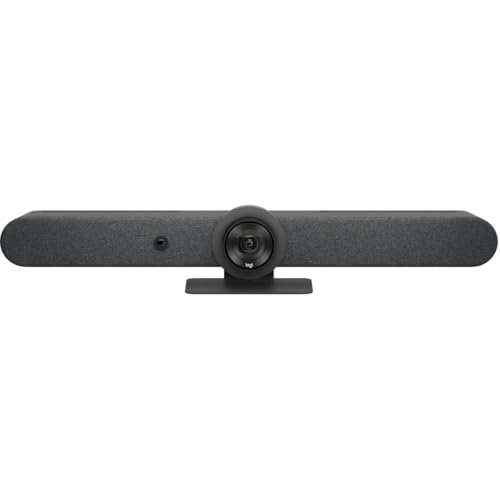
Buy the Best Conference Room Setup 2026: Logitech Rally Bar

Conference Displays for Microsoft, Cisco, and Samsung Users
7 Conference Audio Systems That Make You Forget The Tech

2026 Office Product Shortlist: Ergonomic Picks

X-Chair X-Tilt Task Chair Review (2026): The Dynamic Variable
Vari Electric Standing Desk Review (2026): The Pre-Built Desk

UPLIFT V2 Standing Desk 48-Inch Review (2026): The Top Pick
