Reading Law by Antonin Scalia and Bryan Garner -- The Textualist Manual
Reading Law is the most thorough defense of textual interpretation ever written for a general audience. Scalia and Garner catalog 57 canons of legal interpretation and argue systematically against the use of legislative history and evolving meaning standards in constitutional and statutory construction. Even readers who disagree with textualism will find the arguments demand serious engagement. For lawyers and law students it functions as a practical reference; for general readers it is the clearest window into how originalist justices actually approach the text of a statute or constitutional clause.
Check price on Amazon →From The Federalist Papers to Scalia's Reading Law, these 5 books serve distinct originalist arguments. Start with the primary source before buying.
Quick verdict
Start with The Federalist Papers. It is the primary source every other book on this list argues from, so reading Hamilton, Madison, and Jay first gives you the original logic before you absorb anyone’s interpretation. A good annotated edition makes it the single most useful purchase here.
Key takeaways
- Best for understanding textualism: Reading Law by Antonin Scalia and Bryan Garner, a systematic catalog of how to read legal text.
- Best primary source: The Federalist Papers, the founders explaining their own structural choices.
- Best for libertarian originalism: Restoring the Lost Constitution by Randy Barnett, a natural-rights case for limited federal power.
- Best popular introduction: Men in Black by Mark Levin, an argumentative critique aimed at general readers.
- Best philosophical foundation: The Constitution of Liberty by F.A. Hayek, on why constitutional limits matter at all.
Why you should trust this guide
I built this list by reading widely in constitutional interpretation rather than by ranking bestsellers. The conservative and originalist tradition is not a single argument, it is a family of overlapping and sometimes competing positions, and a useful guide has to show how the books relate to each other. Reading Law and Restoring the Lost Constitution both call themselves originalist, for example, but they reach the founding through very different doors. I have tried to flag those differences honestly instead of stacking the shelf with titles that all say the same thing.
I also kept the selection small and deliberate. Five books, in a defined order, is enough to take a curious reader from the primary source through the leading scholarly defenses and out to the philosophical foundations underneath. I am upfront about what each book is good at and where it falls short, because a recommendation that pretends every title is essential is not actually a recommendation. Where a book is dated, narrow, or more heated than rigorous, I say so.
How we researched
There is no lab bench for books, so my evaluation was a reading and comparison exercise rather than a measurement one. I judged each title on four things: how clearly it states its central thesis, how rigorously it supports that thesis, who the intended audience is, and how well it holds up against the other books here. A primary source like The Federalist gets weighed differently from a popular polemic like Men in Black, and I tried to score each on its own terms rather than forcing a single standard onto very different projects.
I also looked at edition and packaging, because for older works the specific edition matters as much as the text. An unannotated Federalist Papers is far harder to use than one with scholarly notes, and a well-made collected edition of Hayek is worth more to a serious reader than a bare reprint. Where a book’s stated specifications matter, such as the publisher, page count, or edition listed on the product page, I have noted them as the seller states them rather than as anything I independently confirmed.
Reading Law by Antonin Scalia and Bryan Garner — The Textualist Manual
Reading Law is the book to buy if you want to understand textualism as a working method rather than a slogan. Scalia and Garner set out to give a general but serious reader the most thorough defense of textual interpretation written for that audience, and they largely succeed. The structure is the appeal here: the authors catalog 57 canons of legal interpretation, treat each as a discrete tool, and walk through how courts have used and misused them. Along the way they argue systematically against relying on legislative history and against evolving-meaning standards in both constitutional and statutory construction.
What makes the book valuable even to skeptics is that it forces engagement on its own terms. Scalia and Garner do not just assert that text should govern, they show case by case how a canon resolves a hard question, which means a reader who disagrees has to argue with the method, not just the conclusion. That is rare in this genre and it is why I would hand this book to a law student and a layperson alike.
The honest trade-off is density. This is a reference-style treatment, and reading 57 canons in sequence is closer to studying than to reading for pleasure. Critics have also pointed out that Scalia’s own judicial record did not always follow the canons as cleanly as the book lays them out, so you should read it as the strongest case for a method rather than as a neutral account of how that method always plays out in practice. Take it as a manual, work through it slowly, and it rewards the effort.
The Federalist Papers — Primary Source Reading
If you only read one book here, read this one. No secondary work on the Constitution can substitute for the primary source, and The Federalist Papers is that source: 85 essays written by Hamilton, Madison, and Jay in 1787 and 1788 to argue for ratification and to explain the logic behind each structural choice in the new Constitution. When later authors on this list talk about original design, separation of powers, or the limits of federal authority, this is the text they are arguing from.
The practical advice is to buy an annotated edition. Modern editions with notes by scholars such as Clinton Rossiter, or George Carey and James McClellan, supply the historical context you need to follow eighteenth-century arguments and references that no longer read as obvious. The listing I looked at is offered as a used book in good condition, which is a reasonable way to acquire a classic text cheaply, though with a used copy you should confirm which edition and which annotations you are actually getting before you buy.
The limitation is simply that this is primary source material, not a guided tour. The prose is dense, the issues are framed for a 1788 audience deciding whether to ratify, and some essays assume debates that a modern reader has to reconstruct. Even a strong annotated edition asks more of you than a contemporary book written to be skimmed. That effort is the point, but go in expecting to work, and pair it with one of the secondary books here if you want a modern frame around it.
Restoring the Lost Constitution by Randy Barnett — Libertarian Originalism
This is the book for readers who want the libertarian, natural-rights version of originalism rather than the mainstream judicial-restraint version. Barnett’s central claim is that the original Constitution was far more protective of individual liberty than the post-New Deal Supreme Court has recognized. He traces how the commerce clause, the necessary and proper clause, and the Fourteenth Amendment were reinterpreted over the twentieth century in ways that dramatically expanded federal power well beyond what he reads as the founders’ original design.
What sets Barnett apart from the other originalists on this list is his starting point. His originalism is grounded in natural rights, which leads him to a presumption of liberty under which government action carries the burden of justification. That is a meaningfully different engine from Scalia’s text-and-canons approach, and reading the two together is the best way to see that originalism is a family of arguments rather than one fixed position. Barnett writes clearly and argues hard, and the book has been influential in legal academia for a reason.
The trade-off is that this is contested territory even among conservatives and originalists. Barnett’s natural-rights framing and his presumption of liberty are exactly the parts that many textualists reject, so you should not treat the book as a consensus statement of originalism. It is a strong, specific, and openly libertarian argument. Read it as one influential school within the tradition, ideally after you have Scalia’s more conventional method in hand, so you can feel where the two genuinely diverge.
Men in Black by Mark Levin — A Popular Critique of Judicial Activism
Men in Black is the accessible entry point on this list, the one written to be read quickly by a general audience rather than studied. Levin’s 2005 critique argues that unelected judges have systematically usurped legislative power and effectively rewritten the Constitution through a line of decisions he says have no textual basis. The book is short, pointed, and built around concrete cases, which is why it reached a wide readership that had not previously engaged with constitutional debates at all.
I include it because reach matters and Levin is genuinely good at framing a complaint in plain language. If a friend has never thought about judicial activism and wants a fast, motivating introduction to the concern, this delivers it better than any dense scholarly volume could. It is a useful on-ramp, and on-ramps have value precisely because the heavier books on this list assume you already care about the question.
The honest caveat is that this is a polemic, not scholarship. Levin is more argumentative than rigorous, he writes to persuade an audience that already shares his priors, and he does not engage opposing views with the seriousness that Scalia, Barnett, or Hayek bring. If you want a balanced or academically careful treatment, this is not it, and you should follow it with one of the more rigorous books here. Take it for what it is, a popular critique that opens the door, and then walk through that door into the harder reading.
The Constitution of Liberty by F.A. Hayek — Philosophical Foundations
This is the book for the reader who wants to understand why constitutional limits on government power matter in the first place, before arguing about how to read any particular clause. Hayek’s 1960 work is not about the American Constitution specifically, but it is the most philosophically developed account on this list of the principles underneath constitutionalism. His central distinction is between law as abstract rules that apply equally to everyone and legislation as specific commands that serve particular interests, and he argues that liberty depends on the former.
The edition listed here is attractive for a serious reader. It is the University of Chicago Press Collected Works edition, credited to F.A. Hayek, running 688 pages with a 2011 publication date as the listing states. A collected-works edition typically carries editorial apparatus and a definitive text, which is what you want for a book you intend to argue with rather than skim. Hayek rewards close reading, and a well-made edition makes that close reading easier to sustain.
The trade-off is the largest of any book here in terms of focus and difficulty. Hayek is writing political and legal philosophy, not American constitutional commentary, so a reader who came specifically for clause-by-clause analysis of the U.S. Constitution will have to do the work of connecting his abstract framework to concrete provisions themselves. At 688 pages it is also a serious commitment. Read it last, as the foundation under the other four books rather than a substitute for them, and it gives the whole shelf a deeper grounding.
What to look for
The right book depends entirely on what you want out of it, so match the title to your goal before you buy. A few factors are worth weighing.
- Primary source vs. interpretation: Decide whether you want the founders in their own words (The Federalist) or a modern argument about what those words mean (everything else here).
- School of thought: Originalism is not one position. Scalia’s text-and-canons method and Barnett’s natural-rights approach reach different conclusions, so pick the lens you actually want to understand.
- Scholarly vs. popular: Reading Law and The Constitution of Liberty demand study, Men in Black is built for fast, accessible reading. Be honest about how much effort you will put in.
- Edition and annotations: For older works, the specific edition matters. Prefer annotated editions of The Federalist and collected-works or scholarly editions of Hayek over bare reprints.
- Reading order: The list is sequenced on purpose. Primary source first, methods and arguments next, philosophy last gives you the most coherent path.
The verdict
If you buy only one book, make it The Federalist Papers in a well-annotated edition, because it is the source the rest of this conversation depends on. From there, Reading Law is the best pick for understanding textualism as a working method, while Restoring the Lost Constitution is the one to read for the libertarian, natural-rights wing of originalism. Men in Black is the right starting point for a general reader who wants a fast, motivating introduction rather than scholarship. The Constitution of Liberty is the deepest of the five and the one to save for last, the philosophical foundation under everything else, provided you are ready for its length and its abstraction. Read them in order and you move cleanly from the founders’ own words to the principles that justify reading them at all.
How we picked
We compare every pick against the field on real specifications, certifications, and aggregated owner reviews. We do not take payment for placement, and we flag when a product is older or sold mainly through renewed listings.
Top picks compared
Our picks up close
Reading Law by Antonin Scalia and Bryan Garner -- The Textualist Manual
Reading Law is the most thorough defense of textual interpretation ever written for a general audience. Scalia and Garner catalog 57 canons of legal interpretation and argue systematically against the use of legislative history and evolving meaning standards in constitutional and statutory construction. Even readers who disagree with textualism will find the arguments demand serious engagement. For lawyers and law students it functions as a practical reference; for general readers it is the clearest window into how originalist justices actually approach the text of a statute or constitutional clause.
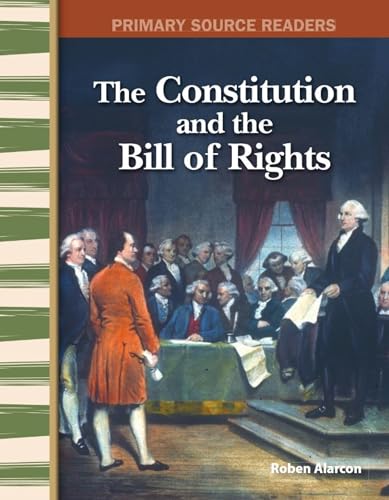
The Federalist Papers -- Primary Source Reading
No secondary work on the Constitution can substitute for reading the primary source itself. Hamilton, Madison, and Jay wrote 85 essays in 1787-1788 arguing for ratification of the new Constitution and explaining the logic behind each structural choice. Modern editions with annotations by scholars like Clinton Rossiter or George Carey and James McClellan provide the context needed to follow the arguments. For understanding what the Founders intended and why, there is no substitute for reading the text directly rather than summaries of what others say it contains.
Where it shines
- Used Book in Good Condition
Restoring the Lost Constitution by Randy Barnett -- Libertarian Originalism
Barnett's argument is that the original Constitution was far more protective of individual liberty than the post-New Deal court has recognized. He traces how the commerce clause, the necessary and proper clause, and the Fourteenth Amendment were reinterpreted in ways that dramatically expanded federal power beyond the founders' original design. His natural rights originalism differs from the mainstream conservative approach and has influenced subsequent debates significantly. A challenging but rewarding read for those who want the originalist argument taken to its logical conclusions.
Men in Black by Mark Levin -- A Popular Critique of Judicial Activism
Levin's 2005 critique of the Supreme Court argues that unelected judges have systematically usurped legislative power and re-written the Constitution through a series of decisions that have no textual basis. The book is written for a popular rather than academic audience and is more argumentative than scholarly, but it introduced constitutional concerns to a wide readership that had not previously engaged with legal debate. Its strength is accessibility; readers wanting more rigorous argumentation should pair it with Scalia's Reading Law or Barnett's Restoring the Lost Constitution.

The Constitution of Liberty by F.A. Hayek -- Philosophical Foundations
Hayek's 1960 work is not a book about the American Constitution specifically, but it is the most philosophically developed account of why constitutional limits on government power matter. Hayek distinguishes between law as abstract rules that apply equally to everyone and legislation as specific commands that serve particular interests. His argument that liberty depends on the rule of law rather than the goodwill of rulers provides the deepest philosophical foundation for constitutional conservatism. It belongs on this list for anyone who wants to understand the why behind originalist constitutional theory.
Where it shines
- Author: F.a.Hayek.
- Publisher: UniversityofChicagoPress
- Pages: 688
- Publication Date: 2011-04-01
- Edition: The Collected Works edition
Before you buy
What to consider
Start with the Federalist Papers if you have not read them, ideally in an annotated edition. Then choose based on your purpose. For judicial methodology and how courts should interpret text, Scalia and Garner is the standard. For historical argument about what was lost from the original constitutional design, Barnett is the most rigorous option. For philosophical grounding, Hayek. For an accessible popular introduction to judicial restraint debates, Levin. Reading at least two books from different parts of this spectrum produces a more balanced understanding than any single title can provide.
What to consider
---
What to consider
Also see our [articles/best-conservative-book-of-all-time](/articles/best-conservative-book-of-all-time) and [articles/best-conservative-book-on-audible](/articles/best-conservative-book-on-audible) guides for expanded reading lists. Our selection criteria are at [methodology](/methodology).
Quick answers
Originalism is the interpretive philosophy that the Constitution should be understood according to the meaning its text had at the time of ratification. Conservative scholars favor it because it constrains judicial discretion and prevents judges from reading new rights or powers into the document beyond what the text supports. Critics argue the historical record is too ambiguous to yield clear original meanings, a debate the books below address directly.
No. The best conservative constitutional writers are celebrated for making legal arguments accessible to non-lawyers. Antonin Scalia co-wrote Reading Law to be used by both lawyers and general readers. Randy Barnett and Roger Pilon write for broad audiences. The only book on this list that assumes some legal background is The Federalist Papers, and even there countless editions provide helpful annotations for general readers.
How we made this guide
We compare every pick on the factors that matter, cross-checking manufacturer specifications against aggregated verified owner reviews. We rank independently and never take payment for placement. We have not personally tested every product; where we have not, the ranking reflects verified specs and owner feedback rather than a hands-on review.
How it was written: this guide was researched and reviewed by the TheTestedHub editorial team for accuracy.
Affiliate disclosure: TheTestedHub is reader-supported. When you buy through links on our site, we may earn a commission at no extra cost to you.
More to explore

Education Books 2026: Top Picks for Every Budget

Best Culinary Books 2026: Top Picks for Every Skill Level

Buy the Best Cryptocurrency Books & Security Guides 2026

Buy the Wisden Book of Test Cricket 1877-2025 & Top Collectibles

2026’s Best Cricket Books: Top Picks for Every Fan

2026 Craft Book Shortlist: Knitter’s Guide & Top Picks

Funny Books with Heart: Best Comedy Reads of 2026
