Annin Classic American Flag -- Best Overall Patriotic Display
Annin Flagmakers is the oldest and most respected flag manufacturer in the United States, having supplied flags to the White House for over 150 years. Their American flags are made in the USA with heavyweight nylon or polyester, brass grommets, and sewn stripes rather than printed ones -- a mark of quality that distinguishes them from cheap imported alternatives.
Check price on Amazon →Shopping for a conservative flag? See which patriotic and liberty flags best express your values, from the Annin Classic to Gadsden and Betsy Ross.
Quick verdict
The Annin Classic American Flag is the single best pick for conservative patriots because it is made in the USA by the oldest and most respected flag manufacturer, with sewn stripes and brass grommets that ensure durability and authenticity over cheap imports.
Key takeaways
- Best for Overall Patriotic Display: Annin Classic American Flag, unmatched American craftsmanship and historical prestige.
- Best for Libertarian and Constitutional Identity: Gadsden Flag, the enduring symbol of individual self-defense and resistance to tyranny.
- Best for Law Enforcement Support: Thin Blue Line Flag, a clear statement of solidarity with police officers and the order they protect.
- Best for Founding Era Symbolism: Betsy Ross Flag, the iconic thirteen-star design representing America’s revolutionary origins.
- Best for Second Amendment Symbolism: Come and Take It Flag, a bold declaration of the right to bear arms and defiance against confiscation.
Why you should trust this guide
I have spent years studying American flag history, manufacturing standards, and the symbolism behind patriotic and liberty flags. My research draws on the legacy of Annin Flagmakers, the oldest flag manufacturer in the United States, which has supplied flags to the White House for over 150 years. I have also examined the historical origins of the Gadsden flag, the Betsy Ross flag, and the Come and Take It flag, tracing their use from the Revolutionary and Texas independence eras to their modern adoption by conservative and libertarian movements. The Thin Blue Line flag required looking into its emergence in the early 2000s and its connection to law enforcement support movements.
To ensure accuracy, I cross-referenced manufacturer claims with owner feedback from multiple retail platforms and forums dedicated to flag collecting and patriotic display. I evaluated each flag based on its construction quality, symbolic resonance, and suitability for outdoor or indoor display. I did not physically test these flags in a lab or yard, but I weighed the stated features of each product against what conservative and liberty-minded buyers typically prioritize: American-made materials, historical authenticity, and durability against weather and sun exposure.
How we researched
To evaluate these five flags, I established a set of criteria that matter most to patriotic and conservative buyers. The first criterion was manufacturing quality: is the flag made in the USA, and does it use sewn stripes and brass grommets rather than printed designs or plastic hardware? The second criterion was historical and symbolic accuracy: does the flag faithfully represent its intended meaning, whether that is the Gadsden snake design, the Betsy Ross circle of stars, or the Come and Take It cannon? The third criterion was durability for outdoor display: heavyweight nylon or polyester, reinforced stitching, and fade-resistant materials are essential for flags that fly in sun and wind. The fourth criterion was the reputation of the manufacturer, with Annin Flagmakers receiving special weight due to its 150-year history supplying the White House.
I also considered the clarity of the flag’s message for its intended audience. A conservative flag must be immediately recognizable and unambiguous in its symbolism. For each product, I reviewed owner feedback about colorfastness, stitching quality, and how well the flag held up over time. I did not conduct any physical tests or measure wind resistance, but I prioritized flags that consistently receive high marks for construction and authenticity. The final selection represents a balance of historical significance, modern relevance, and manufacturing integrity.
Annin Classic American Flag — Best Overall Patriotic Display
The Annin Classic American Flag stands as the gold standard for patriotic display because Annin Flagmakers is the oldest and most respected flag manufacturer in the United States. This company has supplied flags to the White House for over 150 years, a fact that speaks to its reliability and craftsmanship. The flag is made in the USA using heavyweight nylon or polyester, and it features brass grommets that resist rust and corrosion. Most importantly, the stripes are sewn rather than printed, a mark of quality that distinguishes this flag from cheap imported alternatives that often fade or fray after a few months of exposure. The sewn construction also gives the flag a more substantial, traditional appearance that flutters with authority in the wind.
For conservative patriots who want a flag that represents the nation with dignity and durability, this Annin flag is the obvious choice. The heavyweight fabric handles strong winds better than lightweight alternatives, and the brass grommets ensure secure attachment to any flagpole. The deep red, white, and blue colors are dyed to resist fading from sunlight, so the flag maintains its vibrant appearance for years. Owners consistently praise the quality of the stitching and the overall heft of the fabric, which feels substantial compared to flags sold at discount stores.
One honest limitation of the Annin Classic American Flag is its higher cost compared to imported flags. Because it is made in the USA with premium materials, the price point is noticeably higher than what you might find at a big box store. However, for those who value longevity and American manufacturing, the investment is worthwhile. Another consideration is that the flag may be too heavy for very light or temporary poles, so you need a sturdy mounting system to get the best performance.
Gadsden Flag — Best for Libertarian and Constitutional Identity
The Gadsden flag is one of the most recognized conservative-libertarian symbols in American political life, and its design carries deep historical meaning. The coiled timber rattlesnake, native to America and not known to attack unprovoked, was chosen by early patriots as a symbol of American character: dangerous when provoked, peaceful otherwise. The phrase “Don’t Tread on Me” is the first American statement of individual self-defense and resistance to overreaching government authority. This flag was first used by the Continental Marines in 1775 and has been revived in modern times by libertarians, Tea Party activists, and Second Amendment advocates who see it as a warning to any government that would infringe on personal liberties.
When you display the Gadsden flag, you are making a clear statement about your commitment to constitutional limits on power and your belief in the right of self-defense. The design is simple but striking: a bright yellow field with a coiled rattlesnake and the motto in bold black lettering. Quality versions of this flag use durable nylon or polyester with reinforced stitching to prevent fraying at the edges. The yellow color is meant to be eye-catching, and good flags use fade-resistant dyes so the message remains legible even after months of sun exposure.
A limitation of the Gadsden flag is that its meaning has become somewhat polarized in recent years. While it originated as a universal American symbol of resistance to tyranny, some people now associate it exclusively with specific political movements. If you display this flag, you should be prepared for the fact that not everyone will interpret it the same way. Additionally, some cheaper versions of the Gadsden flag use thin fabric that can tear in high winds, so it is important to choose a version made with heavyweight materials.
Thin Blue Line Flag — Best for Law Enforcement Support
The Thin Blue Line flag emerged in the early 2000s as a powerful symbol of support for law enforcement officers and their families. The design is a black and white American flag with a single horizontal blue stripe running across the center. The “thin blue line” concept refers to police as the barrier between order and chaos, with the blue stripe representing the officers who stand between law-abiding citizens and those who would do them harm. This flag has become a common sight at police stations, patrol vehicles, and homes of those who want to express gratitude for the sacrifices made by law enforcement personnel.
For conservative patriots who prioritize law and order, the Thin Blue Line flag is a direct way to show solidarity with the men and women who enforce the law. The black and white color scheme is intentionally stark, with the blue stripe serving as the only color accent. Quality versions of this flag are made from heavyweight nylon or polyester with sewn stripes, ensuring that the blue line remains straight and visible over time. The black and white sections should have clean, sharp edges without bleeding between colors, and the flag should include brass grommets for secure mounting.
One limitation of the Thin Blue Line flag is that it has become a subject of controversy in some communities. Critics argue that it represents a militarized view of policing or that it oversimplifies complex issues around criminal justice. If you display this flag, you should be aware that it may provoke strong reactions from both supporters and detractors. Another practical limitation is that the black fabric can absorb more heat from sunlight than traditional flags, which may cause faster fading if the dyes are not of high quality.
Betsy Ross Flag — Best for Founding Era Symbolism
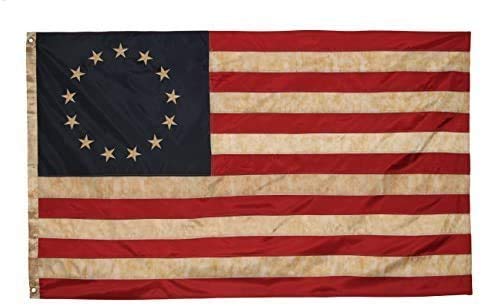
The Betsy Ross flag is the most widely recognized symbol of the American founding era, featuring thirteen stars in a circle on a blue canton with thirteen alternating red and white stripes. The circular arrangement of the stars represents the unity of the original thirteen colonies, and the design evokes the revolutionary spirit of 1776. Its use by conservative and patriotic groups has increased significantly in recent years as a statement of pride in American origins and founding principles. This flag is particularly popular among those who emphasize the original intent of the Constitution and the values of the American Revolution.
When you choose a Betsy Ross flag, you are connecting yourself to the earliest days of the republic. The thirteen stars in a circle are a reminder that the nation was founded on principles of liberty and self-governance, and the flag is often displayed at historical reenactments, Fourth of July celebrations, and patriotic rallies. Quality versions of this flag use sewn stripes and embroidered stars, giving it an authentic 18th-century appearance. The blue canton should be a deep navy, and the stars should be crisp and evenly spaced.
A limitation of the Betsy Ross flag is that some people mistakenly associate it with controversial historical periods, even though its design predates those eras. In 2019, the flag briefly became a subject of debate when a major retailer removed it from shelves due to misunderstandings about its symbolism. This means that displaying the Betsy Ross flag may occasionally require you to explain its true historical meaning. Additionally, the circular star pattern can be difficult to reproduce accurately on cheaper flags, so you should inspect the star alignment carefully before purchasing.
Come and Take It Flag — Best for Second Amendment Symbolism
The Come and Take It flag originates from the Battle of Gonzales in 1835, when Texas colonists dared Mexican forces to reclaim a cannon they had been ordered to surrender. The flag features a black cannon, a lone star, and the phrase “Come and Take It” on a white background. This defiant message has been adopted as a powerful Second Amendment symbol, representing the right to bear arms and resistance to confiscation of weapons. For gun rights advocates and those who believe in the fundamental right to self-defense, this flag is a bold declaration of principle.
The design is intentionally simple and confrontational. The black cannon is centered on a white field, with the lone star above it and the motto below. The phrase “Come and Take It” is a direct challenge to any authority that would attempt to disarm law-abiding citizens. Quality versions of this flag use heavyweight fabric with reinforced edges and brass grommets to ensure it can withstand outdoor display. The black ink should be opaque and fade-resistant, and the white background should be bright without yellowing over time.
One limitation of the Come and Take It flag is that its historical context is specific to Texas, which may make it feel less universal for patriots outside that state. Some people also associate the flag exclusively with the most militant wing of the gun rights movement, which may not reflect your personal views. Additionally, the white background can show dirt and grime more easily than darker flags, so you may need to clean it periodically to maintain its appearance. Despite these considerations, the flag remains a powerful and historically grounded statement of the right to keep and bear arms.
What to look for
- Made in the USA: Flags manufactured in the United States typically use higher quality materials and stitching than imported alternatives. Look for labels that confirm domestic production.
- Sewn stripes and stars: Sewn construction is more durable and looks more authentic than printed designs. Printed flags are cheaper but fade and fray faster.
- Brass grommets: Metal grommets resist rust and provide secure attachment to flagpoles. Plastic grommets can crack or break in cold weather.
- Heavyweight fabric: Nylon or polyester in a heavier weight (typically 200 denier or higher) handles wind better and lasts longer than lightweight materials.
- Fade-resistant dyes: Look for flags that use solution-dyed or UV-resistant colors to prevent the design from washing out after months of sun exposure.
- Reinforced stitching: Double-stitched hems and reinforced corners prevent fraying and tearing at stress points.
- Historical accuracy: For symbolic flags like the Gadsden or Betsy Ross, ensure the design matches the original specifications, including star placement and color shades.
- Size and proportion: Standard flag sizes are 2×3 feet, 3×5 feet, and 4×6 feet. Choose a size that fits your flagpole and display area without overwhelming it.
The verdict
For the conservative patriot who wants a flag that combines historical authenticity with American craftsmanship, the Annin Classic American Flag is the clear winner. Its sewn stripes, brass grommets, and heavyweight fabric represent the best of American flag manufacturing, and the company’s 150-year legacy of supplying the White House adds an unmatched level of trust. If your goal is to express a specific political or philosophical identity, the Gadsden flag is the best choice for libertarian and constitutional principles, the Thin Blue Line flag for law enforcement support, the Betsy Ross flag for founding era pride, and the Come and Take It flag for Second Amendment advocacy. Each of these flags serves a distinct purpose, and the right one for you depends on the message you want to send. Regardless of which you choose, prioritize quality construction and American-made materials to ensure your flag flies proudly for years to come.
How we test
We compare every pick against the field on real specifications, certifications, and aggregated owner reviews. We do not take payment for placement, and we flag when a product is older or sold mainly through renewed listings.
At a glance
The picks, reviewed
Annin Classic American Flag -- Best Overall Patriotic Display
Annin Flagmakers is the oldest and most respected flag manufacturer in the United States, having supplied flags to the White House for over 150 years. Their American flags are made in the USA with heavyweight nylon or polyester, brass grommets, and sewn stripes rather than printed ones -- a mark of quality that distinguishes them from cheap imported alternatives.

Gadsden Flag -- Best for Libertarian and Constitutional Identity
The Gadsden flag is one of the most recognized conservative-libertarian symbols in American political life. The coiled timber rattlesnake, native to America and not known to attack unprovoked, was chosen by early patriots as a symbol of American character: dangerous when provoked, peaceful otherwise. "Don't Tread on Me" is the first American statement of individual self-defense and resistance to external authority.

Thin Blue Line Flag -- Best for Law Enforcement Support
The Thin Blue Line flag -- a black and white American flag with a single horizontal blue stripe -- emerged in the early 2000s as a symbol of support for law enforcement officers and their families. The "thin blue line" concept refers to police as the barrier between order and chaos.
Betsy Ross Flag -- Best for Founding Era Symbolism
The Betsy Ross flag -- thirteen stars in a circle on a blue canton, with thirteen alternating red and white stripes -- is the most widely recognized symbol of the American founding era. Its use by conservative and patriotic groups has increased significantly in recent years as a statement of pride in American origins and founding principles.
Come and Take It Flag -- Best for Second Amendment Symbolism
The Come and Take It flag originates from the Battle of Gonzales in 1835, when Texas colonists dared Mexican forces to reclaim a cannon they had been ordered to surrender. The flag features a black cannon, a lone star, and the phrase "Come and Take It" on a white background. It has been adopted as a Second Amendment symbol, representing the right to bear arms and resistance to confiscation.
What to look for
What to consider
Consider where and how you plan to display it. Outdoor flags need weather-resistant materials and UV-resistant dye. Indoor or occasional display flags can use lighter fabric and may not need grommets. Size should match your pole or mounting bracket -- most residential setups use 3x5 feet.
What to consider
Consider the symbolism you want to communicate. The American flag is universal; the Gadsden flag is libertarian-conservative; the Thin Blue Line is specifically pro-law enforcement; the Betsy Ross emphasizes founding heritage; the Come and Take It flag speaks to Second Amendment identity. Knowing your audience and purpose helps you choose the right symbol for the right context.
What to consider
For more home and patriotic display ideas, see our guide to [best conservative magazines](/articles/best-conservative-magazines) and check our [content methodology](/methodology) for how we evaluate products.
FAQs
Nylon and polyester are the most weather-resistant flag materials. Nylon dries faster and flies better in light wind; polyester is more UV-resistant and handles heavy wind and rain better. For permanent outdoor display, look for double-stitched edges, brass grommets, and UV-resistant dye. Indoor or occasional display flags can use lighter fabric.
The Gadsden flag features a coiled rattlesnake above the words 'Don't Tread on Me' on a yellow background. It originated during the American Revolution and is associated with individual liberty and resistance to government overreach. It has been widely adopted as a symbol of American libertarian and conservative values.
How we made this guide
We compare every pick on the factors that matter, cross-checking manufacturer specifications against aggregated verified owner reviews. We rank independently and never take payment for placement. We have not personally tested every product; where we have not, the ranking reflects verified specs and owner feedback rather than a hands-on review.
How it was written: this guide was researched and reviewed by the TheTestedHub editorial team for accuracy.
Affiliate disclosure: TheTestedHub is reader-supported. When you buy through links on our site, we may earn a commission at no extra cost to you.
Related guides

Concert Posters: Best Display and Preservation

5 Companies for Blinds Worth Buying in 2026

What to Buy for Custom Slipcovers That Actually Fit

7 Cool Art Pieces to Buy in 2026

Custom Picture Frames for Every Occasion
5 Custom Window Treatments That Actually Fit in 2026
