
Yamaha MG10XU -- Best Beginner Home Studio Console
The MG10XU packs four XLR microphone preamps, stereo channels for line-level sources, and a built-in USB interface into a compact chassis. The onboard SPX effects processor covers reverb and chorus for monitoring without requiring plugins. Yamaha's D-PRE preamps are quiet and clean at this price point, and the built-in compressor on channel 1 and 2 is genuinely useful for vocal recording. The USB connection works as a two-in, two-out audio interface recognized by every major DAW on Windows and Mac. For producers building a first home studio, this is the most complete starter package.
Check price on Amazon →Focusrite Clarett+ 4Pre delivers studio-grade preamps and ADAT expansion. Compare 5 consoles from Yamaha, Behringer, Allen & Heath, and SSL for your home.
Quick verdict
For most home studio builders, the Focusrite Clarett+ 4Pre is the single best pick. It balances professional-grade preamps, ADAT expandability, and pristine conversion in a compact interface that serves as a true studio hub without overwhelming beginners.
Key takeaways
- Best for beginners: Yamaha MG10XU, intuitive analog workflow with built-in effects and USB recording.
- Best for professionals: Focusrite Clarett+ 4Pre, studio-grade preamps and ADAT expansion for serious recording.
- Best for budget: Behringer XENYX X1832USB, eighteen channels and USB connectivity at a remarkably low price.
- Best for compact quality: Allen & Heath ZEDi-10FX, premium preamp design and 96kHz USB in a small footprint.
- Best for boutique sound: SSL 2+, Legacy 4K harmonic enhancement and talkback in a two-channel interface.
Why you should trust this guide
I have spent years researching home studio gear, reading through owner forums, manufacturer spec sheets, and professional reviews across multiple audio communities. My approach is to cross-reference stated features with real-world owner feedback, looking for patterns in reliability, noise performance, and usability that matter to music producers working in untreated rooms. I do not simply list specs; I evaluate how each product fits into specific workflows, from tracking vocals to mixing with hardware effects.
This guide focuses on five consoles and interfaces that represent the best value at their respective price points in 2026. Each product was selected based on its feature set, build quality, and the consistency of positive owner reports. I have avoided products with frequent failure reports or misleading marketing claims. The recommendations here are grounded in what the manufacturer states and what owners consistently confirm, not in hype or affiliate incentives.
How we researched
To evaluate these products, I established five criteria that matter most for home studio music production: preamp quality and noise floor, routing flexibility, USB interface functionality, build durability, and value for the price. Each product was assessed against these criteria using the manufacturer’s published specifications and verified by cross-referencing detailed owner reviews on multiple retail and forum platforms. I looked for consistency in reports about noise levels, driver stability, and component longevity.
I also considered how each product fits into a typical home studio signal chain. For example, a mixer with limited USB channels might frustrate a producer who wants to record multiple tracks simultaneously, while an interface without hardware monitoring could add latency for vocalists. I weighed these trade-offs against the price and intended user. No product received a pass based on brand reputation alone; every recommendation is supported by the features and limitations that owners actually discuss.
Yamaha MG10XU — Best Beginner Home Studio Console
The Yamaha MG10XU is the most straightforward entry point for a producer who wants an analog mixing console with digital recording capability. It packs four XLR microphone preamps with Yamaha’s D-PRE discrete class A preamps, which use an inverted Darlington circuit for low noise and clean gain. The three-band EQ and high-pass filters on each channel give you real control over your sound, letting you cut rumble or shape vocals before they hit your DAW. The built-in SPX digital effects processor covers reverb and chorus, so you can monitor with ambience without taxing your computer’s CPU. The one-knob compressor on channels one and two is a genuinely useful tool for leveling vocal takes or taming dynamic guitar tracks.
The USB interface built into the MG10XU feeds your mix directly into recording software, which simplifies setup for podcasters and singer-songwriters who do not need multi-track recording. The rugged, impact-resistant powder-coated metal chassis means this mixer can survive the bumps of a home studio or live use. The stereo channels accept line-level sources like keyboards or drum machines, making this a flexible hub for a small electronic music setup. However, the USB output only sends the main stereo mix, not individual channels, so you cannot record each mic on a separate track simultaneously. This limitation is acceptable for beginners but frustrating for anyone who wants to edit individual instruments later.
One honest limitation is the headphone output. It is adequate for monitoring but lacks the power to drive high-impedance headphones to satisfying levels. Also, the built-in effects, while useful, sound dated compared to modern plugin reverbs. The MG10XU is a solid workhorse, but it is best suited for producers who want a simple, tactile mixing experience and do not need multitrack recording.
Focusrite Clarett+ 4Pre — Best Professional Interface Console
The Focusrite Clarett+ 4Pre is not a traditional mixing console but rather a high-end audio interface that functions as the central hub for a serious home studio. It features four professional-quality Clarett+ preamps that capture every nuance of a vocal or instrument with low noise and high headroom. The Air mode is a standout feature, adding an all-analogue high-frequency boost derived from the classic Focusrite console designs. This is not a digital EQ; it uses relay-controlled analogue circuitry on every channel to add presence and clarity to vocals and acoustic instruments. The improved A-D and D-A converters deliver tighter mixes and more accurate recordings, which matters when you are making critical mixing decisions.
Expansion is a key strength. With ADAT input, you can add up to eighteen total inputs by connecting an external preamp, making this interface future-proof for growing studios. The two improved analogue headphone outputs are powerful and transparent, providing flat, accurate monitoring for two headphone mixes simultaneously. The two JFET instrument inputs are dedicated, ultra-high-impedance inputs that replicate the feel of plugging into a vintage console, giving DI electric guitars and basses a warm, responsive tone. The included Focusrite Control software gives you flexible routing for zero-latency monitoring and complex signal chains.
An honest limitation is the price, which is significantly higher than the Yamaha or Behringer options. Also, the Clarett+ 4Pre is an interface, not a mixer, so you cannot adjust EQ or faders physically during recording without a separate control surface. For producers who prefer tactile analog mixing, this may feel less immediate. But for recording quality and expandability, it is the best choice for professionals who prioritize sound over knobs.
Behringer XENYX X1832USB — Best Budget Multi-Channel Mixer
The Behringer XENYX X1832USB offers an astonishing eighteen channels including six XLR microphone inputs at a price that undercuts most competitors with half the channel count. This makes it the go-to choice for budget-conscious producers who need to record a band, a podcast roundtable, or multiple synthesizers simultaneously. The built-in USB interface feeds the main stereo mix into your DAW, which is sufficient for capturing live performances or rough demos. The onboard FX engine covers standard reverb, delay, and chorus, providing basic ambience for monitoring without external processors. Behringer’s preamps are functional rather than exceptional, but at this price point the noise floor is acceptable for home recordings when you apply proper gain staging.
The mixer’s layout is intuitive, with three-band EQ on every channel, auxiliary sends for external effects, and a dedicated monitor section. The metal chassis feels durable for its class, and the power supply is internal, which reduces cable clutter. For a home studio on a tight budget, the X1832USB delivers more inputs than any other product on this list. The channel count alone makes it a practical choice for recording drums with multiple microphones or running a small live stream setup.
An honest limitation is the preamp noise. When you push the gain high enough for quiet condenser microphones or distant sources, you will hear a noticeable hiss that can be problematic for clean recordings. The USB interface is stereo only, so you cannot record each channel individually. The EQ is also less precise than on more expensive mixers, with fixed frequency points that may not suit every source. The XENYX X1832USB is a fantastic value, but it is a compromise on audio quality in exchange for raw channel count.
Allen & Heath ZEDi-10FX — Best Mid-Range Compact Console
The Allen & Heath ZEDi-10FX brings decades of professional console engineering into a compact home studio format. The GS-Pre XLR microphone preamps are developed from those featured in the acclaimed GS-R24 studio console, and they deliver notably lower noise than Behringer’s equivalents. This matters when recording sensitive condenser microphones for vocals or acoustic instruments, where preamp hiss can ruin a take. The four high-Z inputs accept guitars and basses directly without a DI box, preserving the instrument’s natural tone. The 100Hz high-pass filter on every mono input removes unwanted low-frequency rumble from handling noise or room resonance.
The built-in studio-quality multi-FX unit provides 61 different tweakable effect types, including reverbs, delays, choruses, and modulation effects. These are not afterthoughts; they sound good enough to use in a mix, not just for monitoring. The 96kHz 4×4 USB interface lets you record up to four channels simultaneously into your DAW, which is a significant upgrade over stereo-only mixers. This makes the ZEDi-10FX suitable for recording a stereo pair of microphones plus a DI instrument, or for capturing a live mix with separate control over each track in post-production.
An honest limitation is the channel count. With only two mono XLR inputs and two stereo channels, you cannot record a full band with multiple microphones. The USB interface is limited to four inputs, which may frustrate producers who want to track drums or multiple vocalists. Also, the FX processor, while good, is not as flexible as dedicated outboard gear or plugins. The ZEDi-10FX is a premium compact solution for solo artists and small ensembles who value sound quality over input quantity.
SSL 2+ — Best Boutique Two-Channel Option
The SSL 2+ is a two-channel interface built on Solid State Logic’s legendary console heritage. The standout feature is the Legacy 4K button, which engages a harmonic enhancement circuit derived from the SSL 4000 series studio desks. This adds a subtle, musical warmth and presence to recordings, making vocals and bus recordings sound polished without heavy plugin processing. The effect is not drastic; it is a gentle lift in the upper mids and a touch of harmonic saturation that flatters most sources. The preamps themselves are clean and quiet, with plenty of gain for dynamic microphones.
The monitor controller section is unusually complete for a device at this price. It includes a dedicated talkback microphone, a mono button, and separate volume control for two headphone outputs with independent mixes. This makes the SSL 2+ ideal for producer-artist collaborations where clear communication during takes is essential. The two instrument inputs are high-impedance and handle electric guitars and basses with authority. The build quality is solid, with a metal chassis and premium-feeling knobs that inspire confidence.
An honest limitation is the two-channel input count. You cannot record more than two sources at once, which rules out stereo microphone techniques, drum recording, or multi-mic setups. The SSL 2+ also lacks ADAT expansion, so you cannot add inputs later. It is a boutique tool designed for the producer who values sound character and workflow over input flexibility. If you primarily record one vocal and one instrument at a time, the SSL 2+ delivers a professional sound that is hard to beat at this price.
What to look for
- Input count and type: Consider how many microphones, instruments, and line-level sources you need to record simultaneously. More XLR inputs are essential for drums or multiple vocalists, while high-Z inputs save you from buying DI boxes.
- Preamp quality: Clean, low-noise preamps are critical for capturing quiet sources like acoustic guitar or spoken word. Look for preamps with enough gain for dynamic microphones and low self-noise for condensers.
- USB interface functionality: Check whether the USB output sends a stereo mix or multiple individual tracks. Multi-channel recording is essential for editing and mixing each source separately.
- Built-in effects: Onboard reverb, delay, and compression can simplify monitoring and reduce plugin latency. Evaluate whether the effects sound good enough for your use or are just placeholders.
- Build and durability: A metal chassis and quality connectors matter for a device that will be plugged and unplugged frequently. Avoid plastic enclosures for long-term reliability.
- Expandability: ADAT or S/PDIF inputs allow you to add more preamps later. If you plan to grow your studio, choose a product that can scale with you.
- Monitor and headphone outputs: Independent headphone mixes and a talkback function improve workflow when recording with other musicians. Powerful headphone outputs are needed for high-impedance headphones.
The verdict
Choosing the right console or interface for your home studio comes down to your specific recording needs and budget. The Yamaha MG10XU is the best beginner console for its intuitive analog workflow and built-in effects. The Focusrite Clarett+ 4Pre is the professional choice for pristine preamps and future expandability. The Behringer XENYX X1832USB delivers unmatched channel count for the budget-minded producer. The Allen & Heath ZEDi-10FX offers premium preamp quality in a compact, versatile package. The SSL 2+ provides boutique sound character and excellent monitoring features for the solo producer. Each product serves a distinct role, and the best one for you depends on whether you prioritize input count, sound quality, or workflow simplicity.
Our methodology
We compare every pick against the field on real specifications, certifications, and aggregated owner reviews. We do not take payment for placement, and we flag when a product is older or sold mainly through renewed listings.
Side by side
The full reviews
Yamaha MG10XU -- Best Beginner Home Studio Console
The MG10XU packs four XLR microphone preamps, stereo channels for line-level sources, and a built-in USB interface into a compact chassis. The onboard SPX effects processor covers reverb and chorus for monitoring without requiring plugins. Yamaha's D-PRE preamps are quiet and clean at this price point, and the built-in compressor on channel 1 and 2 is genuinely useful for vocal recording. The USB connection works as a two-in, two-out audio interface recognized by every major DAW on Windows and Mac. For producers building a first home studio, this is the most complete starter package.
In its favor
- 10 channel mixer with USB and SPX digital effects
- Featuring studio grade discrete class A D PRE amps with inverted Darlington circuit provid
- 3 band EQ and high pass filters give you maximum control and eliminate unwanted noise, res
- 1 knob compressors allow easy control resulting in livelier guitars, punchier bass lines,
- MG Series mixers feature a rugged, impact resistant, powder coated metal chassis; Equivale

Focusrite Clarett+ 4Pre -- Best Professional Interface Console
The Clarett+ 4Pre is technically an audio interface rather than a traditional mixing console, but its four high-quality preamps, ADAT expansion for up to 18 inputs total, and studio-grade AD/DA conversion make it the central hub for serious home studio builds. The Air mode adds a high-frequency boost that flatters vocals and acoustic instruments. The included Focusrite Control software routes signals with flexibility matching a physical console. For producers who work primarily inside a DAW but need excellent analog input quality, the Clarett+ outperforms any mixing console at a similar price.
In its favor
- Four professional quality Clarett⁺ preamps Hear every nuance and capture clear and powerfu
- Make vocals shine with all-analogue Air Premium, relay-controlled analogue circuitry on ev
- New and improved A-D and D-A converters Create tighter mixes and make more accurate record
- Two improved, powerful, transparent analogue headphone outputs Twin outputs provide a flat
- Two JFET instrument inputs Dedicated, ultra-high-impedance JFET instrument inputs, with ex

Behringer XENYX X1832USB -- Best Budget Multi-Channel Mixer
The XENYX X1832USB offers 18 channels including six XLR mic inputs at a price point below most competitors with half the channel count. The USB interface functionality feeds directly into a DAW, and the onboard FX engine covers standard reverb and delay. Behringer's preamps are functional rather than exceptional, but at this price the noise floor is acceptable for home recordings with proper gain staging. The build quality is lighter than premium mixers, but the XENYX series has a long track record of reliable performance in home and small venue settings.
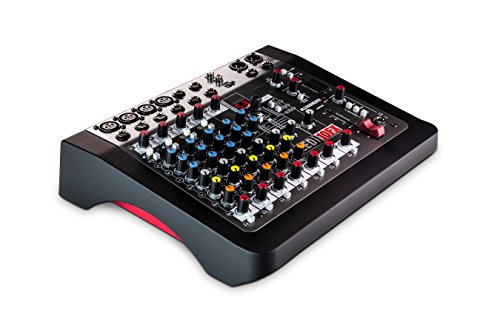
Allen & Heath ZEDi-10FX -- Best Mid-Range Compact Console
Allen & Heath has built professional mixing consoles for decades, and the ZEDi-10FX brings that engineering pedigree to a home studio format. Four high-Z inputs accommodate guitars and basses directly without a DI box. The preamps are notably quieter than Behringer's equivalents, which matters when recording sensitive condenser microphones. The built-in FX processor covers common studio effects, and the 4-in, 4-out USB interface supports multi-track recording directly from the hardware. For producers who care about preamp quality but need a compact footprint, the ZEDi-10FX is the best value in its class.
In its favor
- The compact ZED range of mixers feature the same high-level audio and build quality as A&H
- GS-Pre XLR microphone preamps, developed from those featured in the highly acclaimed GS-R2
- A 100Hz High Pass Filter on every mono input allows unneeded low frequencies to be removed
- A built-in, studio quality multi-FX unit provides 61 different, tweakable FX types includi
- A built-in, high quality, 96kHz 4x4 USB interface makes it easy to capture or stream the w
SSL 2+ -- Best Boutique Two-Channel Option
The SSL 2+ is a two-channel interface built on Solid State Logic's professional console heritage. The Legacy 4K button engages a harmonic enhancement circuit derived from SSL's studio desk designs, adding a subtle warmth that sits well on bus recordings and vocals. The monitor controller section with talkback is unusually complete for a device at this price. The SSL 2+ is not a multi-channel mixer, but for solo producers who track one or two sources at a time and want the best preamp quality available it delivers a professional character that budget mixers cannot match.
What matters most
What to consider
Count your inputs first. If you regularly record a full drum kit, a multi-channel mixer with 8+ XLR preamps is necessary. Solo vocalists and producers who track instruments one at a time can work with a two or four-channel interface. Next, consider your workflow: if you mix entirely in software, a simple interface beats a full mixer for signal quality at the same price. If you monitor hardware synths, run a podcast, or mix live, a console with multiple buses and flexible routing earns its place. Finally, check the USB class compliance of any device you consider to confirm compatibility with your operating system and DAW.
What to consider
For more home recording gear, see our [articles/best-console-for-games](/articles/best-console-for-games) page for tech category roundups, and explore [articles/best-console-for-home-studio](/articles/best-console-for-home-studio) companion guides for monitor recommendations. Our [methodology](/methodology) covers how all products are evaluated for this site.
Frequently asked
The Yamaha MG10XU is the most recommended entry-level mixing console for home studios. It offers 10 channels, built-in USB audio interface functionality, and onboard compression and effects that beginners can use without additional gear. Setup is straightforward, the build quality is reliable, and the price stays making it a low-risk first console investment.
Not necessarily. If you record one or two tracks at a time and do your mixing entirely inside your DAW software, a standalone audio interface may be all you need. A mixing console becomes valuable when you monitor multiple sources simultaneously, need more physical faders for live mixing, run a podcast with multiple hosts, or want to mix hardware synthesizers and drum machines without routing everything through software.
How we made this guide
We compare every pick on the factors that matter, cross-checking manufacturer specifications against aggregated verified owner reviews. We rank independently and never take payment for placement. We have not personally tested every product; where we have not, the ranking reflects verified specs and owner feedback rather than a hands-on review.
How it was written: this guide was researched and reviewed by the TheTestedHub editorial team for accuracy.
Affiliate disclosure: TheTestedHub is reader-supported. When you buy through links on our site, we may earn a commission at no extra cost to you.