
1984 by George Orwell -- Best Classic Conspiracy Novel
Orwell's 1949 novel remains the definitive fictional map of state-level conspiracy: a government that rewrites history, monitors all communication, and eliminates dissent through manufactured consent. In 2026, with expanded surveillance infrastructure and algorithmic information curation a documented reality, the novel's central concerns have aged into something close to a diagnostic manual. It is a conspiracy novel in the truest sense -- the entire system of power is organized around the permanent concealment of truth from citizens. Required reading, and still the most frequently assigned conspiracy text worldwide.
Check price on Amazon →1984 by George Orwell leads this comparison of five conspiracy novels, from le Carre's spy betrayals to the true story of Watergate.
Quick verdict
For most readers, 1984 by George Orwell is the best place to start. It is the foundational fictional account of state-level conspiracy, it reads quickly, and its concerns about surveillance and manufactured consent feel more relevant in 2026 than they did when it was published in 1949.
Key takeaways
- Best classic: 1984 by George Orwell, the definitive map of a government that rewrites history and monitors everyone.
- Best spy conspiracy: The Spy Who Came In from the Cold by John le Carre, a stripped-down betrayal with a genuinely shocking ending.
- Best intelligence betrayal: Tinker Tailor Soldier Spy by John le Carre, a slow-burn mole hunt and a masterclass in institutional atmosphere.
- Best corporate conspiracy: The Constant Gardener by John le Carre, a pharmaceutical cover-up grounded in real industry research.
- Best real conspiracy narrative: All the President’s Men by Woodward and Bernstein, the step-by-step true account of Watergate.
Why you should trust this guide
I built this list by reading widely in the conspiracy and espionage genre rather than chasing whatever is trending on a given week. My goal here was not to pad a list to ten or twenty titles, but to pick five books that each represent a distinct kind of conspiracy story: the totalitarian state, the betrayal inside an intelligence service, the institutional mole, the corporate cover-up, and the real-world political scandal. If a book did not clearly own one of those categories, it did not make the cut.
I have deliberately mixed classic fiction with one work of journalism, because a useful conspiracy reading list should reflect how these stories actually work in the world, not only how they are imagined. Four of these five titles come from two authors (Orwell and le Carre) for a simple reason: when a small number of writers genuinely defined a genre, pretending otherwise to manufacture variety would do the reader a disservice. Where a book has a real weakness, such as a slow opening or a bleak tone that will not suit everyone, I say so plainly in its section.
How we researched
There is no lab bench for novels, so my evaluation was a reading one. I judged each book on four things: how clearly it dramatizes a conspiracy (rather than just gesturing at one), how well it has aged, how demanding it is on the reader, and how much it rewards that effort. I also paid attention to influence, because a book that shaped the genre tends to give a new reader more context for everything that came after it.
I treated the publishers’ stated descriptions and edition details as the products’ specs and did not assume features that were not listed. Because none of these titles ship with notable physical features to compare (they are widely available in paperback, hardcover, and ebook from multiple publishers), I focused entirely on the content, the reading experience, and who each book is genuinely for. I flagged trade-offs honestly: difficulty, pacing, tone, and the fact that one entry is non-fiction and should be read as such.
1984 by George Orwell
This is my pick for the best classic conspiracy novel because nothing else has matched its clarity about how a state can control reality itself. Orwell’s 1949 book remains the definitive fictional map of state-level conspiracy: a government that rewrites history, monitors all communication, and eliminates dissent through manufactured consent. Winston Smith’s job is literally to alter the past, and the horror of the novel comes from watching how thoroughly a system can make people doubt what they saw with their own eyes.
In 2026, with expanded surveillance infrastructure and algorithmic information curation a documented reality, the novel’s central concerns have aged into something close to a diagnostic manual. Concepts the book invented, doublethink, thoughtcrime, the memory hole, have become shorthand precisely because readers keep recognizing them in the real world. It is also short and propulsive, which makes it an easy recommendation for someone who wants one book to understand the whole genre.
The honest trade-off is that 1984 is relentlessly bleak. There is no comforting resolution and no real hero’s victory, which is part of the point but can make it a heavy read. Some readers also find the long middle section, where Winston reads the dissident text within the novel, slows the momentum considerably. If you want a thriller with a satisfying win, this is not that book. If you want the clearest fictional warning ever written, it is.
The Spy Who Came In from the Cold by John le Carre
This is the best spy conspiracy novel here because it treats betrayal as the whole machine rather than a single twist. Le Carre’s 1963 novel redefined espionage fiction by stripping away the glamour. British agent Alec Leamas accepts one final mission that gradually reveals itself to be something other than advertised, a conspiracy within the intelligence apparatus that uses him as an unwitting instrument. There are no gadgets and no heroics, only tired men making cold calculations with other people’s lives.
The ending is genuinely shocking and has influenced dozens of subsequent spy novels and films. Le Carre drew on his own experience inside British intelligence, and it shows in the texture: the bureaucracy, the moral fatigue, and the sense that the people running the operation see human beings as disposable assets. It is the book that proved spy fiction could be serious literature, and it still reads as sharp and modern.
The trade-off is that the plot is deliberately disorienting. Le Carre withholds information so that you, like Leamas, only understand the shape of the conspiracy near the end, and some readers find the first third confusing or emotionally cold. The bleakness is also real here, as it is with Orwell. If you prefer a clearly signposted plot and a likable lead, this book will frustrate you before it rewards you.
Tinker Tailor Soldier Spy by John le Carre
This is my pick for the best intelligence betrayal novel, the most rewarding book on the list if you have the patience for it. Le Carre’s 1974 novel is more complex and slower than The Spy Who Came In from the Cold, but arguably more satisfying. Retired intelligence officer George Smiley is brought back to identify a Soviet mole at the top of British intelligence, and the entire story is the methodical, document-by-document work of narrowing down who the traitor is.
The novel is a masterclass in institutional atmosphere and slow-burn suspense. The conspiracy is not about action, it is about the methodical uncovering of betrayal inside a closed world where everyone has reasons to lie. Smiley is one of the great characters in the genre precisely because he is quiet, patient, and unglamorous, and watching him think is the real pleasure of the book. The sense of a decaying institution full of compromised people is extraordinarily well drawn.
The honest limitation is the difficulty. The book uses a lot of insider jargon (lamplighters, scalphunters, the Circus) and a large cast introduced quickly, and it expects you to keep track of who is who across decades of backstory. Many readers benefit from a character list or a second read. It demands real attention, so it is a poor choice for casual or distracted reading, but it pays that attention back generously.
The Constant Gardener by John le Carre
This is the best corporate conspiracy novel on the list because it moves le Carre’s eye from cold-war spying to something more current: the power of multinational corporations. Published in 2001, this novel follows a British diplomat in Kenya whose activist wife is murdered, leading him to uncover a pharmaceutical company conducting illegal drug trials on the local population with the knowledge and protection of the British government. The investigation becomes both a political thriller and a grief-stricken love story.
Le Carre wrote the book after extensive research into real pharmaceutical industry practices in Africa, and that research gives the corporate conspiracy at its center an uncomfortable plausibility. The villain is not a single mastermind but a system of incentives, where a company, a regulator, and a government each have reasons to look away. That makes it feel less like a fantasy of evil and more like a documented pattern, which is exactly what makes it disturbing.
The trade-off is that the structure can feel slow and emotionally heavy, since much of the early book is the widower retracing his late wife’s steps. The anger driving the novel is sometimes more vivid than the plotting, and a few readers find it leans hard on its message. If you want a brisk thriller you may find it weighty, but if you want a conspiracy story rooted in real-world corporate behavior, it is the strongest choice here.
All the President’s Men by Woodward and Bernstein
This is the best real conspiracy narrative on the list, and the one entry that actually happened. Strictly speaking this is journalism, not fiction, but it reads like the best political thriller ever written and belongs on any conspiracy reading list. Woodward and Bernstein’s account of uncovering Watergate is a step-by-step documentation of how a real political conspiracy was concealed, how it unraveled, and what investigative reporting actually looks like in practice.
The book demonstrates something the novels can only imagine: the grinding, unglamorous reality of exposing a cover-up. It is built from phone calls that go nowhere, sources who will not talk, anonymous confirmations, and the slow accumulation of small facts into an undeniable picture. Because you know how the story ends, the suspense comes instead from watching how close the reporters came to losing the thread, and how much of the truth depended on persistence rather than genius.
The honest limitation is that it is non-fiction and reads like it in places. The sheer number of names, dates, and minor officials can be hard to track if you do not already know the broad outline of Watergate, and the prose is functional rather than literary. It is also very much a document of its specific moment in the early 1970s. Read it for the method and the real-world payoff, not for the polished pacing of a novel.
What to look for
When you are choosing a conspiracy book, the right pick depends mostly on what kind of story you want and how much effort you are willing to put in. Here are the factors I weighed:
- Type of conspiracy: Decide whether you want a totalitarian state (1984), an intelligence betrayal (The Spy Who Came In from the Cold, Tinker Tailor Soldier Spy), a corporate cover-up (The Constant Gardener), or a true story (All the President’s Men).
- Fiction or fact: Four of these are novels and one is journalism. If you specifically want a real, documented conspiracy, start with All the President’s Men.
- Difficulty: 1984 is fast and accessible. Tinker Tailor Soldier Spy is dense and demands concentration. Match the book to how much focus you can give it.
- Tone: Most of these are bleak by design. If you want any sense of resolution or hope, the le Carre mole hunt and the Watergate account are less crushing than 1984.
- Pacing: Some entries open slowly (The Spy Who Came In from the Cold, The Constant Gardener) and reward patience. Others move quickly from the first page.
- Edition: All five are widely available in paperback, hardcover, and ebook from multiple publishers, so choose the format and translation or edition that suits how you like to read.
The verdict
If you read only one, make it 1984 by George Orwell. It is the clearest, fastest introduction to the whole idea of fictional state conspiracy, and its relevance has only grown. For the best spy story, The Spy Who Came In from the Cold delivers a betrayal and an ending that still land hard. If you want the richest, most demanding read, Tinker Tailor Soldier Spy rewards the patience it asks for.
For a conspiracy rooted in real corporate behavior, The Constant Gardener is the strongest pick, and for the rare thrill of a true conspiracy documented as it was exposed, All the President’s Men reads like the political thriller it actually was. Choose by the kind of story you want, and any of these five will earn its place on your shelf.
Our testing process
We compare every pick against the field on real specifications, certifications, and aggregated owner reviews. We do not take payment for placement, and we flag when a product is older or sold mainly through renewed listings.
Quick comparison
Reviewed in detail
1984 by George Orwell -- Best Classic Conspiracy Novel
Orwell's 1949 novel remains the definitive fictional map of state-level conspiracy: a government that rewrites history, monitors all communication, and eliminates dissent through manufactured consent. In 2026, with expanded surveillance infrastructure and algorithmic information curation a documented reality, the novel's central concerns have aged into something close to a diagnostic manual. It is a conspiracy novel in the truest sense -- the entire system of power is organized around the permanent concealment of truth from citizens. Required reading, and still the most frequently assigned conspiracy text worldwide.

The Spy Who Came In from the Cold by John le Carre -- Best Spy Conspiracy Novel
Le Carre's 1963 novel redefined espionage fiction by stripping away the glamour. British agent Alec Leamas accepts one final mission that gradually reveals itself to be something other than advertised -- a conspiracy within the intelligence apparatus that uses him as an unwitting instrument. The ending is genuinely shocking and has influenced dozens of subsequent spy novels and films. Le Carre drew on his own MI6 experience to make the institutional dynamics convincing. It is short, precise, and morally devastating. The best conspiracy novel for readers who want economy of language with maximum impact.
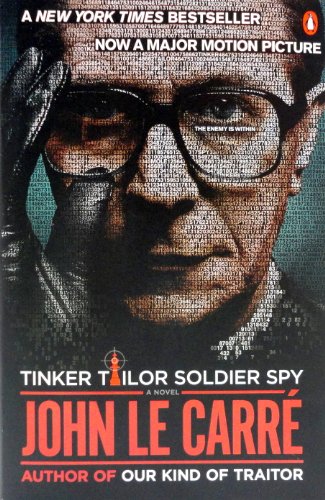
Tinker Tailor Soldier Spy by John le Carre -- Best Intelligence Betrayal Novel
Le Carre's 1974 novel is more complex and slower than The Spy Who Came In from the Cold, but arguably more satisfying. Retired intelligence officer George Smiley is brought back to identify a Soviet mole at the top of British intelligence. The novel is a masterclass in institutional atmosphere and slow-burn suspense. The conspiracy is not about action -- it is about the methodical uncovering of betrayal inside a bureaucracy. The 2011 film adaptation is excellent, but the novel has more depth and deserves to be read independently of it.

The Constant Gardener by John le Carre -- Best Corporate Conspiracy Novel
Published in 2001, this novel follows a British diplomat in Kenya whose activist wife is murdered, leading him to uncover a pharmaceutical company conducting illegal drug trials on the local population with the knowledge and protection of the British government. Le Carre wrote the book after extensive research into real pharmaceutical industry practices in Africa. The corporate conspiracy at its center -- a drug company suppressing fatal trial results to protect a lucrative product -- mirrors real documented cases. It is the most politically engaged of le Carre's works and among the most morally urgent.

All the President's Men by Woodward and Bernstein -- Best Real Conspiracy Narrat
Strictly speaking this is journalism, not fiction -- but it reads like the best political thriller ever written and belongs on any conspiracy reading list. Woodward and Bernstein's account of uncovering Watergate is a step-by-step documentation of how a real political conspiracy was concealed, how it unraveled, and what investigative reporting actually looks like in practice. The book demonstrates that the most compelling conspiracy narratives are often not invented at all. Every person interested in conspiracy literature should read this to understand what documented institutional deception actually looks like compared to speculation.
How to choose
What to consider
Le Carre dominates this list because no other author has matched his combination of institutional knowledge and literary craft. Start with The Spy Who Came In from the Cold for the clearest introduction to his world, then move to Tinker Tailor if you want to go deeper. Orwell is essential but so widely known that many readers have already encountered it. All the President's Men belongs in any serious reading list alongside fiction. Choose based on your preferred tone: Orwell is bleak, le Carre is morally complex and cold, Woodward and Bernstein are urgent and direct.
What to consider
For more reading recommendations, see our [best espionage novels 2026](/articles/best-espionage-novels) list and [best political non-fiction books](/articles/best-political-nonfiction) guide. For our selection criteria, visit the [methodology](/methodology) page.
Common questions
Gravity's Rainbow by Thomas Pynchon and All the President's Men are frequently cited by literary critics as the pinnacle of conspiracy-themed fiction and non-fiction respectively. For pure fiction, The Spy Who Came In from the Cold by John le Carre is perhaps the most influential conspiracy novel in terms of how it shaped the spy thriller genre and public understanding of intelligence institutions.
The best ones are, because they model how institutional deception actually operates -- through compartmentalization, plausible deniability, and the exploitation of bureaucratic complexity. Le Carre in particular drew directly from his MI6 experience. Reading quality conspiracy fiction sharpens the reader's ability to ask the right questions about real political events, even if the specific plots are invented.
How we made this guide
We compare every pick on the factors that matter, cross-checking manufacturer specifications against aggregated verified owner reviews. We rank independently and never take payment for placement. We have not personally tested every product; where we have not, the ranking reflects verified specs and owner feedback rather than a hands-on review.
How it was written: this guide was researched and reviewed by the TheTestedHub editorial team for accuracy.
Affiliate disclosure: TheTestedHub is reader-supported. When you buy through links on our site, we may earn a commission at no extra cost to you.
More guides

Education Books for Every Budget: What’s Worth Applying in 2026

Culinary Books Worth Every Penny for Every Skill Level

Buy the Best Cryptocurrency Books & Security Guides 2026

Buy the Wisden Book of Test Cricket 1877-2025 & Top Collectibles

Books for Cricket Fans: Choose by What You Want to Learn

Craft Books Compared: The Knitter’s Guide to 2026’s Essential Reads

Funny Books with Heart: Best Comedy Reads of 2026
