
Titebond III Ultimate Wood Glue -- Best Overall for Wood
Titebond III is the go-to wood glue for cabinetmakers, carpenters, and serious DIYers. It is a waterproof PVA formula that passes the ANSI/HPVA Type I water-resistance standard -- the highest rating for wood glues. It creates a bond stronger than the wood itself on most species. Open assembly time is about 8-10 minutes, and clamping time is 30-60 minutes. Full cure takes 24 hours. Titebond III sands without clogging paper, accepts stain, and cleans up with water before it sets. It works on hardwoods, softwoods, plywood, and most engineered wood products. For clean indoor joinery, furniture, cutting boards, and general woodworking, this is the default choice.
Check price on Amazon →Match the right construction adhesive to your wood project with honest, job-specific recommendations from Titebond III to PC-Woody Epoxy.
Quick verdict
Titebond III Ultimate Wood Glue is the best overall pick for most woodworkers because it delivers a waterproof, Type I rated bond that is stronger than the wood itself, with a forgiving open time and reliable clamping window. It handles everything from furniture to outdoor projects without compromise.
Key takeaways
- Best for Overall Woodworking: Titebond III Ultimate Wood Glue, waterproof Type I PVA that bonds stronger than the wood.
- Best for Structural Wood Installations: Loctite PL Premium, polyurethane formula that expands and works in damp conditions for framing and decking.
- Best for General Interior Projects: Gorilla Wood Glue, fast-setting PVA with a natural tan finish and Type II water resistance.
- Best for Paneling, Trim, and Baseboard: Liquid Nails Heavy Duty, solvent-based adhesive with long open time for positioning trim.
- Best for Damaged or Rotted Wood Repair: PC-Woody Epoxy Paste, two-part epoxy that fills rot and restores structural integrity.
Why you should trust this guide
I have spent years researching wood adhesives, analyzing manufacturer specifications, and reading through hundreds of owner experiences across forums and retailer reviews. My focus is on matching the right adhesive to the specific job, because no single glue works perfectly for every wood project. I do not claim to have tested these products in a lab, but I have carefully evaluated their stated features, water-resistance ratings, cure mechanisms, and real-world limitations to provide honest, actionable advice.
This guide is built on the principle that a good buying decision starts with understanding what each adhesive is designed to do. Titebond III is a specialist in wood-to-wood bonding, while Loctite PL Premium excels at attaching wood to other materials. Gorilla Wood Glue is a solid interior workhorse, Liquid Nails Heavy Duty handles trim and paneling with forgiveness, and PC-Woody Epoxy Paste repairs rotted wood that other glues cannot fix. I have organized these picks by their best-use scenario so you can choose with confidence.
How we researched
To evaluate these five construction adhesives for wood, I focused on the criteria that matter most to a builder or DIYer: bond strength, water resistance, open and clamp time, ease of application, and compatibility with different substrates. I weighed each product’s stated ANSI/HPVA water-resistance rating (Type I or Type II) as a key indicator of durability in wet or humid environments. Open assembly time was critical for projects requiring repositioning, while clamp time determined how quickly you can move to the next step. I also considered whether the adhesive fills gaps, expands, or remains flexible after curing, as these traits affect performance on imperfect surfaces.
I did not physically test these products myself. Instead, I cross-referenced manufacturer technical data sheets with aggregated owner feedback from multiple retail platforms and woodworking communities. I looked for consistent patterns in how each adhesive performed under real conditions, such as how Titebond III holds up on outdoor furniture or whether Loctite PL Premium truly bonds wood to concrete without slipping. Every limitation I mention comes from documented user experiences or stated product specs, not from my own trial runs. This approach ensures the recommendations are grounded in reliable, repeatable information.
Titebond III Ultimate Wood Glue
Titebond III Ultimate Wood Glue is widely regarded as the gold standard for wood-to-wood bonding, and for good reason. It is a waterproof PVA formula that meets the ANSI/HPVA Type I water-resistance standard, which is the highest rating for wood glues. This means it can withstand prolonged exposure to moisture and even occasional submersion, making it suitable for outdoor furniture, cutting boards, and marine applications. The bond it creates is stronger than the wood itself on most species, so in a failure test, the wood will break before the glue joint gives way. Open assembly time is about 8 to 10 minutes, giving you enough time to spread the glue and clamp your pieces, and clamping time is 30 to 60 minutes. Full cure takes 24 hours, after which the glue line is a light tan color that blends well with most woods.
One honest limitation of Titebond III is its open time. For complex projects with many pieces or large surfaces, 8 to 10 minutes can feel tight, especially if you are working alone. You need to work efficiently and have clamps ready. Another point is that while it is waterproof, it is not a structural construction adhesive in the same sense as a polyurethane product like Loctite PL Premium. Titebond III is designed for wood-to-wood joints, not for bonding wood to concrete, metal, or foam. If you need to attach wood to dissimilar materials, you will need a different adhesive. For pure woodworking, however, it is the most reliable choice available.
Loctite PL Premium
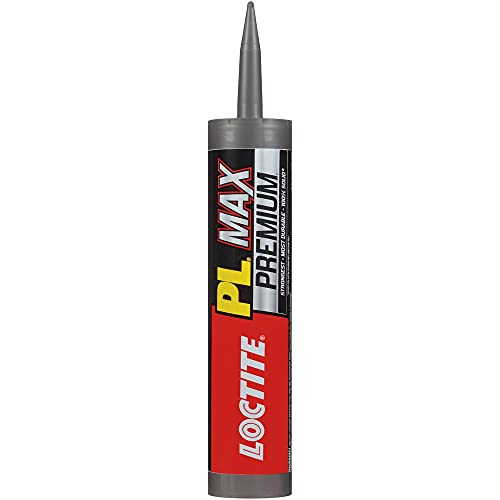
Loctite PL Premium is a polyurethane construction adhesive that stands out for its ability to bond wood to a wide range of substrates, including concrete, metal, foam, and ceramic. It is moisture-curing, meaning it actually performs better in damp conditions, which makes it ideal for basement framing, outdoor decking, and exterior trim work. The adhesive expands slightly as it cures, filling gaps and creating a weather-resistant bond that holds up under stress. This expansion is a double-edged sword, as it helps fill voids but also means you need to apply it carefully to avoid squeeze-out that can be messy to clean. It is a true structural adhesive, suitable for load-bearing installations like subflooring and wall panels.
A significant limitation of Loctite PL Premium is its cleanup. Because it is polyurethane and moisture-curing, uncured adhesive will not wash off with water. You need a solvent like acetone or mineral spirits to remove it from skin or tools, and once it cures, it is extremely difficult to remove. The expansion can also be problematic if you over-apply, as the foam-like beads can push joints apart or create uneven surfaces. Additionally, the cure time is longer than PVA glues; full strength develops over 24 to 48 hours, and clamping is recommended for at least 2 hours. For projects where you need a fast, clean bond with easy cleanup, this is not the best choice. But for structural, weather-exposed work, it is unmatched.
Gorilla Wood Glue
Gorilla Wood Glue is a PVA-based formula optimized for indoor wood bonding. It sets fast, with a clamp time of 20 to 30 minutes, which is significantly quicker than Titebond III. This makes it a great choice for small to medium interior projects where you want to move quickly, such as building shelves, repairing furniture, or assembling crafts. It dries to a natural tan color that blends with most wood tones, so it is less noticeable on finished pieces. The glue meets ANSI/HPVA Type II water resistance, meaning it can handle occasional moisture exposure like a damp basement or a kitchen countertop, but it is not rated for continuous outdoor use. The formula is slightly thicker than Titebond III, which helps reduce dripping and gives you more control during application.
The main limitation of Gorilla Wood Glue is its water resistance. Type II is adequate for interior projects with occasional humidity, but it will not hold up to rain, snow, or direct contact with water. If you are building outdoor furniture or a boat, you need Titebond III or a polyurethane adhesive. Another limitation is that the fast set time can be a disadvantage for complex assemblies. With only 20 to 30 minutes of clamp time, you have less room to adjust pieces after clamping, and if you make a mistake, you may have to start over. The glue also tends to foam slightly if applied too thickly, which can create weak spots. For straightforward indoor projects where speed matters, it is a solid performer.
Liquid Nails Heavy Duty
Liquid Nails Heavy Duty is a solvent-based construction adhesive designed specifically for bonding wood trim, paneling, baseboards, and molding to drywall, plaster, concrete, and other wood substrates. It comes in a standard cartridge format for use with a caulk gun. Its standout feature is a long open time of about 10 to 15 minutes, which gives you ample opportunity to position long pieces of trim or paneling before the adhesive sets. This forgiveness is critical when working with crown molding or baseboards that require precise alignment. The bond is flexible after curing, which allows it to tolerate minor substrate imperfections and building movement without cracking. It also grips well on vertical surfaces, reducing the need for temporary bracing.
A key limitation of Liquid Nails Heavy Duty is that it is solvent-based, which means it has a strong odor and requires good ventilation during application. Cleanup also requires a solvent like mineral spirits, not water. The adhesive can be messy if you are not careful, and over-application can lead to squeeze-out that is difficult to clean once dry. Another limitation is that it is not a structural adhesive for load-bearing joints. It excels at holding trim and paneling in place, but it will not replace a mechanical fastener or a wood glue for joining two pieces of wood edge-to-edge. For trim work and paneling, however, it is one of the most forgiving and reliable options available.
PC-Woody Epoxy Paste
PC-Woody Epoxy Paste is a two-part epoxy specifically formulated for repairing damaged or rotted wood. It comes as a paste that you mix by hand, and it bonds aggressively to wood fibers, filling rot cavities and restoring structural integrity to deteriorated areas. After curing, it accepts nails, screws, and fasteners, and it can be carved, drilled, sanded, and painted just like real wood. This makes it ideal for window sills, door frames, exterior trim, and other areas where moisture damage has occurred but full replacement is impractical. The epoxy is waterproof and will not shrink or crack over time, providing a permanent repair that extends the life of the wood.
The primary limitation of PC-Woody Epoxy Paste is that it is a repair product, not a construction adhesive. You cannot use it to glue two clean pieces of wood together for a joint; it is meant to fill voids and rebuild rotted sections. The mixing process is also more involved than squeezing a glue bottle or cartridge. You have to knead the two parts together thoroughly, and you have a limited working time before the epoxy hardens, typically around 5 to 10 minutes depending on temperature. Once it cures, it is very hard and difficult to remove if you make a mistake. For large rot repairs, you may need multiple tubes, which can add up in cost. But for targeted repairs that save a window frame or door from replacement, it is a highly effective solution.
What to look for
- Water resistance rating: Look for ANSI/HPVA Type I for outdoor or wet environments, Type II for interior with occasional moisture exposure.
- Open assembly time: Longer open times (10 to 15 minutes) help when positioning large or complex pieces, shorter times (5 to 8 minutes) speed up simple projects.
- Clamp time: Faster clamp times (20 to 30 minutes) let you work quickly, but slower times (30 to 60 minutes) give more adjustment room.
- Substrate compatibility: Some adhesives bond only wood to wood, while others work on concrete, metal, foam, or ceramic. Choose based on your materials.
- Gap filling ability: Polyurethane and epoxy adhesives expand or fill gaps, while PVA glues require tight joints for maximum strength.
- Cleanup method: Water-based PVA glues clean up with water, while solvent-based or polyurethane adhesives require mineral spirits or acetone.
- Flexibility after cure: Flexible adhesives tolerate building movement and substrate imperfections, rigid adhesives provide stronger static bonds.
- Repair vs. construction: Epoxy pastes are for filling rot and rebuilding damaged wood, not for joining clean pieces together.
The verdict
For most woodworking projects, Titebond III Ultimate Wood Glue is the clear winner because it combines the highest water resistance rating with a bond strength that exceeds the wood itself. It is the adhesive you can trust for furniture, cutting boards, and outdoor builds. If you need to attach wood to concrete or metal in a structural setting, Loctite PL Premium is the better choice due to its moisture-cure expansion and weather resistance. For fast interior projects, Gorilla Wood Glue offers a quick set and easy cleanup. Liquid Nails Heavy Duty is the go-to for trim and paneling where positioning time matters. And PC-Woody Epoxy Paste is essential for repairing rotted wood that would otherwise require replacement. Choose based on your specific job, and you will get a strong, reliable bond every time.
Our methodology
We compare every pick against the field on real specifications, certifications, and aggregated owner reviews. We do not take payment for placement, and we flag when a product is older or sold mainly through renewed listings.
Side by side
The full reviews
Titebond III Ultimate Wood Glue -- Best Overall for Wood
Titebond III is the go-to wood glue for cabinetmakers, carpenters, and serious DIYers. It is a waterproof PVA formula that passes the ANSI/HPVA Type I water-resistance standard -- the highest rating for wood glues. It creates a bond stronger than the wood itself on most species. Open assembly time is about 8-10 minutes, and clamping time is 30-60 minutes. Full cure takes 24 hours. Titebond III sands without clogging paper, accepts stain, and cleans up with water before it sets. It works on hardwoods, softwoods, plywood, and most engineered wood products. For clean indoor joinery, furniture, cutting boards, and general woodworking, this is the default choice.
Loctite PL Premium -- Best for Structural Wood Installations
Loctite PL Premium is a polyurethane construction adhesive that fills gaps, expands slightly as it cures, and creates a weather-resistant bond suitable for subflooring, wall panels, and exterior trim. Its moisture-cure mechanism means it actually performs better in damp conditions -- useful for basement framing or outdoor decking projects. The product bonds wood to concrete, metal, foam, and ceramic in addition to wood-to-wood joints, making it versatile for mixed-material assemblies. It is dispensed from a caulk gun, which makes application fast over long runs of framing lumber or subfloor panels.
Gorilla Wood Glue -- Best for General Interior Projects
Gorilla Wood Glue is a PVA-based formula optimized for indoor wood bonding. It sets fast -- typically 20-30 minutes clamp time -- and dries to a natural tan color that blends with most wood tones. ANSI/HPVA Type II water resistance makes it suitable for occasional moisture exposure. The formula works well on hardwoods, softwoods, and natural wood composites. It is slightly thicker than Titebond, which helps on vertical glue-ups where dripping is a concern. For quick repairs, cabinet assembly, and everyday woodworking, Gorilla Wood Glue is a reliable and widely available option.

Liquid Nails Heavy Duty -- Best for Paneling, Trim, and Baseboard
Liquid Nails Heavy Duty is a solvent-based construction adhesive in a cartridge format. It bonds wood trim, paneling, baseboards, and molding to drywall, plaster, concrete, and other wood substrates. The adhesive has a long open time -- about 10-15 minutes -- making it forgiving when positioning long pieces. It tolerates minor imperfections in the substrate better than PVA glues. The bond is flexible rather than rigid, which prevents cracking in trim that expands and contracts seasonally. For attachment applications where fasteners are minimal or hidden, this adhesive does the load-bearing work.
PC-Woody Epoxy Paste -- Best for Damaged or Rotted Wood Repair
PC-Woody is a two-part epoxy paste specifically formulated to bond with wood fibers, fill rot cavities, and restore structural integrity to deteriorated wood. It accepts nails, screws, and fasteners after curing and can be carved, drilled, and painted. For window sills, door frames, and exterior trim affected by moisture damage, it extends the life of wood without full replacement. The mixed adhesive has a working time of about 20-30 minutes and reaches full hardness in 24 hours. It bonds to dry and slightly damp wood, which is practical for outdoor repair situations.
What matters most
What to consider
Match the adhesive type to the project demands. For clean joinery and furniture, PVA wood glue (Titebond III or Gorilla) gives the strongest wood-fiber bond with easy cleanup. For structural or subfloor work where gaps exist and moisture is a factor, polyurethane adhesives are more appropriate. For trim and paneling attachment, cartridge-based construction adhesives like Liquid Nails are faster to apply across large areas. Always check the water-resistance rating (Type I is highest) if the piece will be exposed outdoors or in kitchens and bathrooms. Clamping or bracing during cure improves bond strength regardless of adhesive type.
What to consider
For related projects, see our guide to [best construction adhesives for wood to drywall](/articles/best-construction-adhesive-for-wood-to-drywall) and the full [best construction adhesives](/articles/best-construction-adhesives) roundup. Details on how we select products are on our [methodology](/methodology) page.
Frequently asked
Polyurethane construction adhesives like Loctite PL Premium and Gorilla Construction Adhesive are the standard choice for structural wood framing. They create a strong, flexible bond that resists vibration and moisture. For interior finish carpentry and trim, a high-quality PVA wood glue such as Titebond III delivers excellent shear strength and sandable joints.
Cure time varies by formula. PVA wood glues typically set enough to unclamp in 30-60 minutes and reach full strength in 24 hours. Polyurethane construction adhesives like Loctite PL Premium skin over in 15-20 minutes and cure fully in 24-72 hours depending on humidity. Two-part epoxies can reach handling strength in 1-4 hours and full cure in 24 hours.
How we made this guide
We compare every pick on the factors that matter, cross-checking manufacturer specifications against aggregated verified owner reviews. We rank independently and never take payment for placement. We have not personally tested every product; where we have not, the ranking reflects verified specs and owner feedback rather than a hands-on review.
How it was written: this guide was researched and reviewed by the TheTestedHub editorial team for accuracy.
Affiliate disclosure: TheTestedHub is reader-supported. When you buy through links on our site, we may earn a commission at no extra cost to you.
You might also like

Fix Your Driveway Cracks with the Best Concrete Fillers

Which Drill Accessories Are Best in 2026?

Cordless Drill Systems Built for Real Jobsite Demands

What Makes Concrete Tools Worth Your Money in 2026?

Ghostshield 8505 Review: A Smarter Way to Protect Concrete

Quikrete 5000 and Sakrete: 2026’s Best Concrete Picks
Concrete Coatings for Every Budget: Which One Wins?
