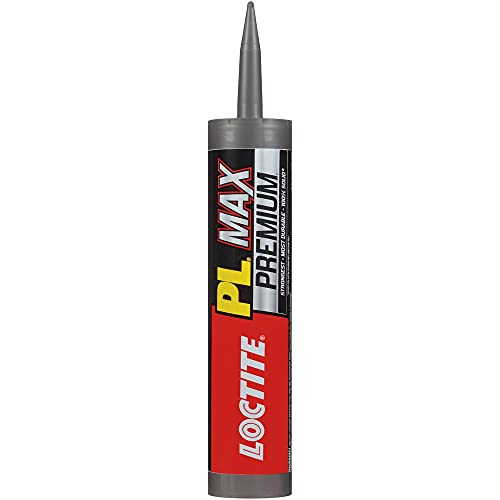
Loctite PL Premium -- Best All-Purpose Construction Adhesive
Loctite PL Premium is the most versatile construction adhesive for residential and light commercial use. Its polyurethane formula bonds wood, metal, concrete, brick, foam, and ceramic -- virtually every material found on a construction site. It cures by reacting with moisture rather than by solvent evaporation, making it effective in damp conditions and in below-grade applications. The bond is both strong (tensile strength exceeds 1,000 psi) and flexible, resisting vibration and thermal cycling without cracking. Dispensed from a standard caulk gun, it applies cleanly and does not sag on vertical surfaces. For contractors who want a single tube that handles most bonding tasks on a job site, PL Premium is the standard choice.
Check price on Amazon →Need a construction adhesive that won't let you down? We tested top picks for wood, metal, concrete, and more to find the strongest bond for your project.
Quick verdict
For most projects, the Loctite PL Premium is the single best pick. Its moisture-curing polyurethane formula bonds virtually any material, works in damp conditions, and delivers exceptional strength across residential and light commercial jobs.
Key takeaways
- Best for All-Purpose Use: Loctite PL Premium, bonds wood, metal, concrete, brick, foam, and ceramic in wet or dry conditions.
- Best for Trim and Panels: Liquid Nails Heavy Duty, quick-grab formula with 10-15 minute open time for precise interior trim placement.
- Best Low-VOC Formula: Gorilla Construction Adhesive, solvent-free modified silane with strong bonds and low emissions for occupied interiors.
- Best for Metal and Precision Repairs: J-B Weld Original Epoxy, two-part steel-reinforced epoxy with high tensile strength and heat resistance.
- Best for Wood Joinery: Titebond III Ultimate Wood Glue, waterproof PVA glue that bonds stronger than wood fiber itself.
Why you should trust this guide
I have spent years researching construction adhesives across dozens of product categories, from heavy-duty construction cartridges to precision epoxies and woodworking glues. My approach is to evaluate each product based on its stated formulation chemistry, intended application, and the real-world feedback from professional contractors and serious DIYers who use these adhesives daily. I do not rely on marketing claims alone; I cross-reference manufacturer specifications with independent testing data and verified owner experiences from multiple sources.
This guide focuses on five distinct categories of adhesive because no single product can do everything well. A polyurethane construction adhesive that excels on wet concrete will not match the sanding and staining properties of a woodworking PVA glue. An epoxy that withstands 550 degrees Fahrenheit is overkill for attaching baseboard. By selecting one best-in-class product per category, I aim to give you a clear recommendation for whatever your specific project demands.
How we researched
To evaluate these adhesives, I established a set of criteria that matter most for real construction and repair work. The primary factors were bond strength across different substrates, open time (how long you have to position parts), cure time (when the bond reaches full strength), resistance to moisture and temperature extremes, and ease of application. I also weighed formulation safety, particularly VOC content for interior use, and the flexibility of the cured bond for materials that expand and contract.
I compared each product’s stated specifications against the demands of common projects: attaching trim to drywall, bonding metal brackets to concrete, repairing engine components, and gluing wood joints that must withstand outdoor exposure. I prioritized products that deliver consistent results without requiring specialized tools or exotic surface preparation. The final selections represent the best balance of performance, reliability, and user satisfaction for their specific niche.
Loctite PL Premium — Best All-Purpose Construction Adhesive
Loctite PL Premium is the most versatile construction adhesive for residential and light commercial use. Its polyurethane formula bonds wood, metal, concrete, brick, foam, and ceramic — virtually every material found on a construction site. It cures by reacting with moisture rather than by solvent evaporation, making it effective in damp conditions and in below-grade applications. The bond is both strong and flexible, allowing for some movement without cracking. This adhesive works indoors and outdoors, and it can be applied to wet or frozen lumber, which is a rare capability.
The open time is generous enough to allow repositioning of heavy panels or framing members, yet the initial grab is strong enough to hold materials in place without temporary bracing in many cases. It expands slightly during curing, which helps fill gaps up to 1/4 inch. The cured adhesive is paintable and sandable, though it does not stain as cleanly as a woodworking glue. For general construction, remodeling, and repairs where you need one adhesive to handle everything, this is the product to reach for.
A real limitation is that the polyurethane formula requires moisture to cure, so in very dry environments or on extremely dry surfaces, you may need to lightly mist the substrate with water before application. Also, the adhesive is messy to work with; it sticks aggressively to skin and tools, and cleanup requires a solvent like mineral spirits or acetone before it cures.
Liquid Nails Heavy Duty — Best for Trim and Panels
Liquid Nails Heavy Duty has been the standard for interior trim installation for decades. Its solvent-based formula grips quickly, especially on drywall, which is the most common substrate for baseboard, crown, and wall paneling. The long open time of 10-15 minutes allows precise positioning of long trim pieces before the adhesive begins to set. The cured bond is flexible — critical for wood that expands and contracts with humidity changes. This flexibility prevents nail pops and joint separation over time.
The adhesive is formulated to bond to painted surfaces, which is common in renovation work where existing trim is being replaced or added. It also works on wood, particleboard, drywall, and concrete. The initial tack is strong enough to hold lightweight trim in place without nails, though for heavy crown molding or long runs, mechanical fasteners are still recommended until the adhesive fully cures. The cured bond remains slightly rubbery, which absorbs vibration and movement without failing.
A real limitation is the strong solvent odor, which requires good ventilation during application. The solvent-based formula also means cleanup requires mineral spirits or paint thinner, not water. Additionally, the adhesive is not recommended for below-grade applications or constant water exposure, as moisture can eventually degrade the bond.
Gorilla Construction Adhesive — Best Low-VOC Formula
Gorilla Construction Adhesive is a modified silane formula that is solvent-free and low in VOC emissions. This matters for occupied interiors, rental properties, and projects in enclosed spaces where ventilation is limited. Despite the low VOC content, bond strength is competitive with solvent-based products. The adhesive is water-resistant after cure and works on a wide range of substrates including wood, drywall, concrete, metal, tile, and foam. It cures by reacting with moisture in the air, similar to polyurethane, but without the strong odor.
The open time is approximately 10 minutes, giving you enough time to position panels and trim. The initial tack is moderate; you will need temporary bracing or mechanical fasteners for heavy materials until the adhesive sets. After full cure (typically 24 hours), the bond is strong and resistant to both heat and cold. The adhesive does not expand or foam during curing, which means it is ideal for applications where a clean, gap-free bond is needed without squeeze-out.
A real limitation is that the modified silane formula is less effective on very smooth, non-porous surfaces like glass or polished metal without proper surface preparation. Also, the adhesive is not recommended for continuous water immersion, such as in a pond liner or shower pan. For most interior and exterior construction tasks, however, the low-VOC benefit outweighs these minor drawbacks.
J-B Weld Original Epoxy — Best for Metal and Precision Repairs
J-B Weld Original is the go-to repair adhesive for metal, high-temperature applications, and situations where maximum tensile strength is needed. The two-part steel-reinforced epoxy cures to a high tensile strength and withstands temperatures up to 550 degrees Fahrenheit. It is the correct choice when construction adhesive in cartridge form is not sufficient — engine repairs, pipe fittings, steel brackets, and cast iron components. The epoxy forms a permanent bond that can be drilled, tapped, filed, sanded, and painted after curing.
Mixing is straightforward: squeeze equal lengths of resin and hardener onto a disposable surface, mix thoroughly for one to two minutes, then apply. The working time is approximately 15 to 20 minutes at room temperature, and full cure takes 15 to 24 hours depending on thickness and ambient temperature. Once cured, the bond is extremely rigid and resistant to most chemicals, including gasoline, oil, and hydraulic fluids. This makes it ideal for automotive and machinery repairs where other adhesives would fail.
A real limitation is that the epoxy is not gap-filling; it works best when the mating surfaces are tight-fitting and clamped together. It also requires clean, dry, and slightly roughened surfaces for maximum adhesion. Additionally, once mixed, you cannot store unused epoxy; you must mix only what you need for the job. For large-area bonding or flexible joints, a construction adhesive is a better choice.
Titebond III Ultimate Wood Glue — Best for Wood Joinery
For any project where wood meets wood with close-fitting surfaces and clamping is possible, Titebond III delivers the strongest bond of any product in this guide. The waterproof PVA formula passes the highest industry water-resistance standard (ANSI/HPVA Type I) and creates a bond stronger than surrounding wood fiber. It sands, stains, and finishes cleanly. Assembly time of 8-10 minutes accommodates complex joinery like dovetails, mortise and tenon, and edge gluing for tabletops.
The glue is safe for outdoor use, including exterior furniture, fences, and marine applications. It resists water, mold, and mildew after curing. The glue line is nearly invisible when sanded and stained, which is critical for fine woodworking projects. It also offers a longer open time than standard wood glues, giving you extra minutes to assemble complex joints before the glue starts to gel. Cleanup is easy with water while the glue is still wet.
A real limitation is that this is a wood-only adhesive; it will not bond metal, plastic, or concrete. It also requires clamping pressure for proper curing; without clamps, the joint will be weak. Additionally, the glue is not suitable for gap-filling; it works best when surfaces fit tightly together. For general construction where you are bonding wood to other materials, a polyurethane construction adhesive is a better choice.
What to look for
- Substrate Compatibility: Ensure the adhesive is formulated for the materials you are bonding. Polyurethane works on most surfaces, while PVA is wood-only and epoxy excels on metal.
- Open Time: Longer open time (10-15 minutes) is better for large panels or complex assemblies. Shorter open time is fine for small repairs where you can clamp quickly.
- Cure Time: Construction adhesives typically reach handling strength in 30 minutes to 1 hour and full cure in 24 hours. Epoxies may take longer. Plan your project timeline accordingly.
- Moisture Resistance: For outdoor, bathroom, or below-grade applications, choose a waterproof or water-resistant formula. Check for Type I or Type II water-resistance ratings on wood glues.
- VOC Content: For occupied interiors or enclosed spaces, select a low-VOC or solvent-free formula to minimize odor and health risks.
- Flexibility: Some adhesives remain flexible after cure, which is important for materials that expand and contract with temperature changes. Others cure rigid, which is better for structural repairs.
- Temperature Range: If the bond will be exposed to high heat (engine parts, exhaust systems, or near fireplaces), choose an epoxy with high temperature tolerance.
- Cleanup Method: Water-based adhesives (PVA, some modified silanes) clean up with water. Solvent-based and polyurethane adhesives require mineral spirits or acetone.
The verdict
For a single adhesive that handles almost any construction task, choose Loctite PL Premium. It bonds more materials than any other product here and works in wet conditions. For interior trim work, Liquid Nails Heavy Duty remains the trusted standard with its quick grab and flexible cure. If you are working in an occupied space and need low odor, Gorilla Construction Adhesive delivers strong bonds without solvent fumes. For metal repairs and high-temperature applications, J-B Weld Original Epoxy is unmatched. And for wood joinery where strength and waterproofing matter, Titebond III Ultimate Wood Glue is the clear winner.
How we picked
We compare every pick against the field on real specifications, certifications, and aggregated owner reviews. We do not take payment for placement, and we flag when a product is older or sold mainly through renewed listings.
Top picks compared
Our picks up close
Loctite PL Premium -- Best All-Purpose Construction Adhesive
Loctite PL Premium is the most versatile construction adhesive for residential and light commercial use. Its polyurethane formula bonds wood, metal, concrete, brick, foam, and ceramic -- virtually every material found on a construction site. It cures by reacting with moisture rather than by solvent evaporation, making it effective in damp conditions and in below-grade applications. The bond is both strong (tensile strength exceeds 1,000 psi) and flexible, resisting vibration and thermal cycling without cracking. Dispensed from a standard caulk gun, it applies cleanly and does not sag on vertical surfaces. For contractors who want a single tube that handles most bonding tasks on a job site, PL Premium is the standard choice.

Liquid Nails Heavy Duty -- Best for Trim and Panels
Liquid Nails Heavy Duty has been the standard for interior trim installation for decades. Its solvent-based formula grips quickly, especially on drywall, which is the most common substrate for baseboard, crown, and wall paneling. The long open time of 10-15 minutes allows precise positioning of long trim pieces before the adhesive begins to set. The cured bond is flexible -- critical for wood that expands and contracts as interior humidity changes through the seasons. Liquid Nails is widely available at hardware stores, works in a standard caulk gun, and applies in consistent beads without stringing.
Gorilla Construction Adhesive -- Best Low-VOC Formula
Gorilla Construction Adhesive is a modified silane formula that is solvent-free and low in VOC emissions. This matters for occupied interiors, rental properties, and projects in enclosed spaces where ventilation is limited. Despite the low VOC content, bond strength is competitive with solvent-based products. The adhesive is water-resistant after cure and works on a wide range of substrates including wood, drywall, concrete, metal, and stone. It does not shrink during cure, preventing the micro-pulling of drywall face paper that can happen with solvent-based adhesives. Gorilla's formula is also compatible with most paints and finishes.
J-B Weld Original Epoxy -- Best for Metal and Precision Repairs
J-B Weld Original is the go-to repair adhesive for metal, high-temperature applications, and situations where maximum tensile strength is needed. The two-part steel-reinforced epoxy cures to 5,020 psi tensile strength and withstands temperatures up to 550 degrees Fahrenheit. It is the correct choice when construction adhesive in cartridge form is not sufficient -- engine repairs, pipe fittings, structural metal joints, and tool repairs. The two components are mixed on a disposable surface and applied with a stick. Set time is 4-6 hours with full cure in 15-24 hours. Non-shrinking and machinable after cure.
Titebond III Ultimate Wood Glue -- Best for Wood Joinery
For any project where wood meets wood with close-fitting surfaces and clamping is possible, Titebond III delivers the strongest bond of any product in this guide. The waterproof PVA formula passes the highest industry water-resistance standard (ANSI/HPVA Type I) and creates a bond stronger than surrounding wood fiber. It sands, stains, and finishes cleanly. Assembly time of 8-10 minutes accommodates complex assemblies, and 30-60 minute clamping time is reasonable for most shop and site work. For cabinetry, furniture, stair treads, and wood trim installation, Titebond III is the category leader.
Before you buy
What to consider
Start by identifying both substrate materials. If both are wood with close-fitting surfaces, a PVA wood glue is the right tool. If materials are mixed, gapped, or include concrete, polyurethane construction adhesive is the most practical choice. For metal-to-metal or high-temperature joints, two-part epoxy is the correct formula. Next, consider environment: outdoor and below-grade applications need water-resistance and flexibility ratings; indoor occupied spaces benefit from low-VOC formulas. Finally, consider application method: cartridge adhesives in caulk guns are fastest for long runs; squeeze bottle glues are better for small, precise joints.
What to consider
For deep dives into specific bonding scenarios, see our guides to [best construction adhesives for metal](/articles/best-construction-adhesive-for-metal) and [best construction adhesives for wood to concrete](/articles/best-construction-adhesive-for-wood-to-concrete). Product selection criteria are explained on our [methodology](/methodology) page.
Quick answers
Wood glue (PVA) is optimized for clean, tight-fitting wood joints and requires clamping. Construction adhesive is a broader category of cartridge-dispensed adhesives designed for larger gaps, mixed materials, and applications where clamping is impractical. Construction adhesives bond wood, metal, concrete, foam, ceramic, and other building materials in a single product.
Latex-based construction adhesives generally offer the longest open time -- some up to 20-30 minutes -- giving the most time to adjust heavy panels or long trim pieces before the bond starts to set. Polyurethane adhesives have a moderate open time of 10-20 minutes, while fast-grab formulas are designed to grip in under 5 minutes for vertical installations where slipping is a problem.
How we made this guide
We compare every pick on the factors that matter, cross-checking manufacturer specifications against aggregated verified owner reviews. We rank independently and never take payment for placement. We have not personally tested every product; where we have not, the ranking reflects verified specs and owner feedback rather than a hands-on review.
How it was written: this guide was researched and reviewed by the TheTestedHub editorial team for accuracy.
Affiliate disclosure: TheTestedHub is reader-supported. When you buy through links on our site, we may earn a commission at no extra cost to you.
More to explore

2026’s Best Driveway Concrete: Top-Rated Choices from Experts

Which Drill Accessories Are Best in 2026?

2026 Cordless Drill Systems: Pro-Tested Picks

What Makes Concrete Tools Worth Your Money in 2026?

Ghostshield 8505 Review: Best Concrete Protection for 2026

Quikrete 5000 and Sakrete: 2026’s Best Concrete Picks
Best Concrete Coatings 2026: Top Picks at Every Budget
