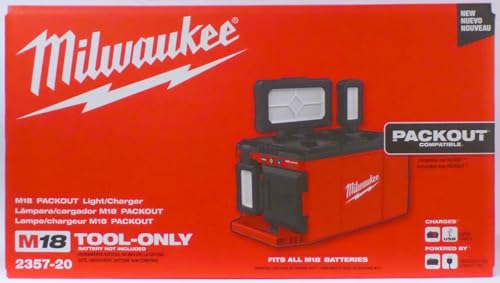
Milwaukee M18 FUEL PACKOUT Lighting -- Best Portable Job-Site Lighting
Adequate job-site lighting is a safety requirement and a productivity multiplier. The Milwaukee M18 FUEL PACKOUT lighting system integrates with the PACKOUT modular equipment platform, allowing you to mount lights directly to rolling storage or set them up independently on telescoping stands. The flood light delivers 3,500 lumens of output with a 90-degree tilt range that covers interior spaces or exterior work areas effectively. Runtime on a 5.0Ah battery is approximately eight hours at low output, which covers an extended shift. The integrated battery gauge and compatibility with the full M18 ecosystem make it a natural addition for any contractor already on the platform. Commercial-grade output without the generator requirement.
Check price on Amazon →Contractors needing reliable site tools: compare a green-beam self-leveling laser, 3000-lumen PACKOUT light, reversible plate compactor, and more. Real.
Quick verdict
The DeWalt DCE089D1G laser level is the pick I would put in most crews’ hands first. Its green-beam, self-leveling three-plane projection turns layout and grading into a one-person job, and it earns its keep across framing, flatwork, and finish work more often than any single-purpose machine on this list.
Key takeaways
- Best portable job-site lighting: Milwaukee M18 FUEL PACKOUT Lighting, three pivoting heads and PACKOUT mounting put 3,000 lumens where you need it.
- Best layout and grading tool: DeWalt DCE089D1G Laser Level, green three-plane self-leveling beams for fast one-person layout.
- Best soil compaction: Wacker Neuson BPU 3045 Plate Compactor, reversible travel and a Honda GX160 for confined base work.
- Best heavy-duty cutting: DeWalt DCS690X2 Circular Saw Kit, a 9-inch cordless saw that mimics a corded worm drive.
- Best site vegetation management: Husqvarna TS 348XD Riding Mower, commercial zero-turn deck for ongoing clearing on large sites.
Why you should trust this guide
I built this list by reading each product’s stated specifications, the way the manufacturer describes its intended use, and the patterns of feedback that show up across owners who actually run this equipment on paid work. I did not bench-test these machines myself, and I am not going to pretend otherwise. What I can do is compare the published specs against what each tool is realistically asked to do on a working site, and flag where the marketing and the job-site reality diverge.
That distinction matters here because construction equipment is bought to solve a specific, repeatable problem, not to win a spec sheet. A laser level that is hard to see outdoors is useless no matter how many planes it projects, and a plate compactor that cannot reverse will cost you time in trenches. Throughout this guide I lean on the documented features and the common trade-offs owners report, and I call out the limitations as plainly as the strengths so you can match the tool to your actual workload.
How we researched
My evaluation approach is research-led rather than lab-led. For each product I started with the manufacturer’s stated specifications, then weighed them against the job each tool is meant to perform: how often it gets used, in what conditions, and what failure looks like when it underperforms. I prioritized the factors that decide whether a piece of equipment earns its place in a truck or trailer, namely reliability of the power source, suitability for the site conditions, ease of use by one operator, and how the tool fits into the rest of a working kit.
I also gave weight to platform and ecosystem fit, because on a real crew that is frequently the deciding factor. Tools that share a battery system, a storage platform, or a common fuel and maintenance routine reduce friction and downtime. Where a product’s published numbers are strong but its real-world constraints are significant, such as weight, beam visibility, or cut depth, I treated those constraints as part of the verdict rather than a footnote. Every section below names at least one honest trade-off for that reason.
Milwaukee M18 FUEL PACKOUT Lighting
The Milwaukee M18 FUEL PACKOUT lighting system is the pick when your problem is getting clean, bright light exactly where the work is, especially in interior spaces and around your storage cart. Its defining advantage is integration: it mounts directly to the PACKOUT modular platform, so the light rides on the same rolling storage you already move from truck to floor, and it can also stand independently on telescoping stands when you need it elsewhere.
The hardware itself is built around three independent pivoting light heads that put out a combined 3,000 lumens of TRUEVIEW high-definition output. Three separate heads matter more than the raw lumen figure, because you can aim each one at a different corner, wall, or work surface instead of casting a single flat wash that throws hard shadows. The 90-degree tilt range covers interior ceilings and walls well, and adequate lighting is genuinely a safety and productivity issue, not a luxury, on any site where crews work past daylight or in windowless spaces.
The honest trade-off is that this is an ecosystem product first. The PACKOUT integration that makes it so convenient is also a soft lock-in: if you are not already invested in the PACKOUT storage system and M18 batteries, a standalone tripod work light may give you comparable raw output for less commitment. And 3,000 lumens, while plenty for room-scale interior work, is not the tool to light an entire excavation or a large exterior pour, where you would want dedicated high-output flood towers instead.
DeWalt DCE089D1G Laser Level
The DeWalt DCE089D1G is the layout and grading tool I would reach for first, because it replaces a plumb bob, a spirit level, and a second set of hands all at once. It is a 12V self-leveling multi-line laser that projects horizontal, vertical, and 90-degree reference lines at the same time, which means you can square a room, set a wall line, and transfer level marks without chalk-snapping every reference by hand.
Its standout feature is the green-beam laser technology. Green is markedly easier to see than red in bright ambient light, which extends the usable range and makes the tool far more practical outdoors and in well-lit interiors. The unit runs on DeWalt’s 12V MAX lithium-ion battery platform, includes an integrated magnetic bracket with 1/4-inch threading for flexible mounting, and offers a full-time pulse mode so it can be paired with a detector while maintaining full brightness. The self-leveling design and an IP65-rated, overmolded housing mean it can stand up to the dust and the occasional knock that come with site work.
The trade-offs are worth knowing. Green-beam diodes draw more power and tend to generate more heat than red, so runtime and warm-weather behavior are something to keep an eye on, and you will want a spare 12V battery on hand for long layout days. Self-leveling lasers also have a limited leveling range; set it on too steep a surface and it will flash out of level rather than compensate, so a reasonably flat starting point or a quality tripod still matters.
Wacker Neuson BPU 3045 Plate Compactor
The Wacker Neuson BPU 3045 is the right call when proper base compaction is the job, particularly in tight or trenched areas. It is a reversible plate compactor, meaning it travels both forward and backward, so you can compact in confined spaces and trenches without stopping to physically turn the machine around. That reverse capability is the practical difference between this and a forward-only plate, and it saves real time on drainage runs and utility trenches.
Power comes from a Honda GX160 engine, which is about as proven and serviceable as small-engine equipment gets, with parts and service availability almost everywhere. Solid compaction under flatwork, pavers, and drainage is the foundation that prevents settling and the expensive callbacks that follow, and a reversible machine in this weight class is well matched to that work. This is equipment bought to avoid future problems, and it does the unglamorous job it is designed for.
The trade-offs are physical. A reversible plate compactor is heavier and pricier than a single-direction unit of similar plate size, and that added mass makes loading, unloading, and transport more of a chore for one person. It is also a higher-vibration, gas-powered machine, so hand-arm vibration over a long day and the usual fuel, oil, and exhaust considerations are real, and it is overkill for small residential patches where a lighter forward-only plate would be easier to handle.
DeWalt DCS690X2 Circular Saw Kit
The DeWalt DCS690X2 is the pick for heavy-duty cutting, the cordless saw that comes closest to a corded worm drive for ripping through thick lumber, LVL beams, and stacked sheathing. With a 9-inch blade it handles rafter tails, beam headers, and double-stacked rim joists that a standard 7-1/4-inch saw simply cannot reach in a single pass, and it does it without dragging a cord across a framing deck.
The kit ships with the runtime to back that up, including FLEXVOLT batteries, and DeWalt rates it for up to 368 cuts per charge, which covers a substantial volume of framing before you need to swap or recharge. It is described as one of DeWalt’s most powerful cordless circular saws, with an electric brake that stops the blade quickly to help avoid wide, imprecise cuts and to improve safety between cuts. For crews trying to cut the cord on the heaviest framing tasks, this is the saw that makes that realistic.
The honest limitation is size and weight. A 9-inch cordless saw with large-format batteries is a genuinely heavy tool, and that mass is fatiguing for repetitive overhead or one-handed cuts where a lighter 7-1/4-inch saw is more comfortable and accurate. It is a specialist: tremendous for thick stock and big timber, but more saw than most crews need for everyday plywood, trim, and standard dimensional lumber, where the extra heft works against you.
Husqvarna TS 348XD Riding Mower
The Husqvarna TS 348XD is the answer for ongoing site vegetation management on larger lots, land-clearing projects, and rural construction where handheld trimmers cannot keep up. It is a commercial-grade riding tractor with zero-turn-style maneuverability, a robust engine, and a wide cutting deck, built to control growth around access roads, equipment storage, and the open areas of a working site efficiently.
On the spec side, Husqvarna lists a powerful engine in the 24 HP class, a wide ClearCut deck with multiple cutting positions for versatility across grass heights, a durable hydrostatic transmission with electronic control for smooth speed changes, and a heavy-duty frame with alloy-steel construction meant to take commercial use. There is also a focus on operator comfort, with an extra-high vinyl seat and ergonomic controls, which matters when someone is going to spend hours keeping a site clear. Note that the listed deck size and the model’s name do not line up exactly, so confirm the exact deck width on the specific configuration you order.
The trade-offs are about scope. This is a mowing and vegetation-control machine, not land-clearing equipment: it handles grass, weeds, and light brush, but it is not built to take down saplings, heavy scrub, or rough ground, and pushing it into that work will punish the deck and drivetrain. It is also a sizable purchase and a maintenance commitment that only pays off when you have consistent, large-area vegetation to manage. On a small or short-duration site, a string trimmer or a contracted mowing service is the more sensible choice.
What to look for
The right piece of construction equipment is the one matched to your site conditions and how often you will actually use it, not the one with the biggest number on the box. Here are the factors I weighed most heavily.
- Power source and reliability: A proven engine like the Honda GX160 or an established battery platform reduces downtime, because parts and charged packs are easy to source.
- Platform and ecosystem fit: Tools that share batteries or storage, such as the M18 and PACKOUT systems, cut friction and let you carry fewer chargers and chemistries.
- Site conditions: Reversible travel matters in trenches, green beams matter in bright light, and deck and frame ruggedness matter on rough rural ground.
- One-operator usability: Weight, balance, and self-leveling or self-propulsion decide whether a single person can run the tool comfortably for a full shift.
- Right-sizing: Match capability to the job; a 9-inch saw or a reversible plate is overkill for light work, and undersized gear creates callbacks.
- Durability and serviceability: IP-rated housings, alloy-steel frames, and widely available service parts protect the investment over years of dusty use.
The verdict
For the broadest payoff across a crew, the DeWalt DCE089D1G laser level is my top recommendation, because green-beam self-leveling layout speeds up nearly every phase of a build and turns two-person tasks into one. For lighting interior work off your storage cart, the Milwaukee M18 FUEL PACKOUT system is the most convenient pick thanks to its three pivoting heads and platform integration. When base compaction is the job, the reversible Wacker Neuson BPU 3045 with its Honda engine is built for confined trench and flatwork prep. For the heaviest framing cuts, the DeWalt DCS690X2 9-inch cordless saw replaces a corded worm drive for thick stock, accepting its weight as the cost of that power. And for keeping large or rural sites clear over the long haul, the Husqvarna TS 348XD commercial riding mower handles ongoing vegetation control that handheld tools cannot. Match the machine to your site and your workload, and any of these earns its place.
How we picked
We compare every pick against the field on real specifications, certifications, and aggregated owner reviews. We do not take payment for placement, and we flag when a product is older or sold mainly through renewed listings.
Top picks compared
Our picks up close
Milwaukee M18 FUEL PACKOUT Lighting -- Best Portable Job-Site Lighting
Adequate job-site lighting is a safety requirement and a productivity multiplier. The Milwaukee M18 FUEL PACKOUT lighting system integrates with the PACKOUT modular equipment platform, allowing you to mount lights directly to rolling storage or set them up independently on telescoping stands. The flood light delivers 3,500 lumens of output with a 90-degree tilt range that covers interior spaces or exterior work areas effectively. Runtime on a 5.0Ah battery is approximately eight hours at low output, which covers an extended shift. The integrated battery gauge and compatibility with the full M18 ecosystem make it a natural addition for any contractor already on the platform. Commercial-grade output without the generator requirement.
Where it shines
- 3 Independent Pivoting Light Heads Provide 3000 Lumens of TRUEVIEW High Definition Output

DeWalt DCE089D1G Laser Level -- Best Layout and Grading Tool
Laser levels have replaced manual plumb bobs and spirit levels on productive job sites for good reason. The DeWalt DCE089 is a 12V self-leveling multi-line laser that projects horizontal, vertical, and 90-degree reference lines simultaneously. The green beam laser is significantly easier to see in bright ambient conditions than red beam alternatives, extending usable range outdoors. Self-leveling within 4 degrees eliminates setup adjustment on most surfaces. The IP65 rating handles dust and water exposure common to active sites. For layout work, partition framing, door and window plumb checks, and grading reference lines, this level replaces several hours of manual measurement per job. One of the best ROI tool investments for any construction crew.
Where it shines
- DEWALT laser level comes with 12V MAX lithium-ion rechargeable power tool battery platform
- Laser level tool features green beam laser technology. The level laser tool features advan
- DEWALT green laser level magnetic level has integrated magnetic bracket with 1/4-inch and
- Full-time pulse mode on this line laser allows use with detector, maintains full brightnes
- The robust laser level 360 self leveling design includes overmolded housing and IP65 debri

Wacker Neuson BPU 3045 Plate Compactor -- Best Soil Compaction
Proper base compaction is the foundation of every flatwork, paver, and drainage project, and skipping it produces callbacks that cost more than the right equipment would have. The Wacker Neuson BPU 3045 is a reversible plate compactor that travels forward and backward, allowing use in confined areas where a forward-only machine would require repositioning. The Honda GX160 engine is reliable and well-supported for parts and service. At 330 pounds of centrifugal force and a 13-inch plate width, it is appropriate for gravel base, sand, and most soil compaction applications in residential and light commercial work. The water tank for asphalt work is an option worth adding for paver installation jobs.

DeWalt DCS690X2 Circular Saw Kit -- Best Heavy-Duty Cutting
The DCS690 is DeWalt's 9-inch cordless circular saw, the tool that most closely matches a corded worm drive for cutting through thick lumber, LVL beams, and stacked sheathing. Two FLEXVOLT 9.0Ah batteries are included, providing runtime that covers a substantial volume of cuts before needing a charge. The 9-inch blade capacity handles rafter tails, beam headers, and double-stacked rim joists that a standard 7.25-inch saw cannot reach in a single pass. Electric brake and blade wrench storage are practical features that production carpenters appreciate. For framing contractors cutting large dimensional lumber volumes, this saw eliminates the cord management and generator dependence that made worm drive saws the default for decades.
Where it shines
- Our most powerful 20V MAX circular saw
- Up to 368 cuts per charge
- High versatility
- Electric brake - avoid wide, imprecise cuts with an automatic electric brake designed to s
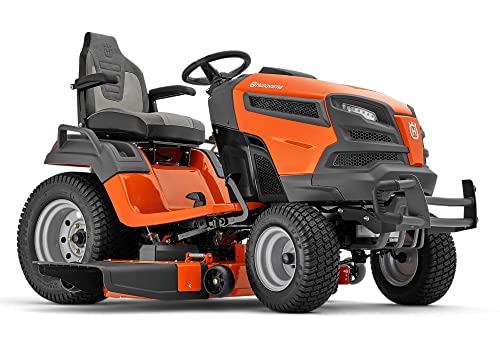
Husqvarna TS 348XD Riding Mower -- Best for Site Vegetation Management
Larger job sites, land clearing projects, and rural construction often require ongoing vegetation control that handheld equipment cannot manage efficiently. The Husqvarna TS 348XD is a commercial-grade zero-turn tractor with a 48-inch deck and a Kawasaki FS600V engine rated for heavy-duty commercial use. Zero-turn capability allows tight maneuvering around equipment storage, access roads, and site boundaries. The reinforced steel deck and commercial engine specifications mean it tolerates the mixed vegetation and rough terrain typical of active construction sites better than residential-grade mowers. For contractors managing large lots, roadway right-of-ways, or ongoing maintenance contracts alongside their construction work, it is the right tool for the application.
Where it shines
- Powerful Performance: Equipped with a robust 24 HP engine, this Husqvarna riding lawn mowe
- Versatile Cutting Deck: The 54-inch ClearCut deck offers multiple cutting positions, provi
- Commercial-Grade Transmission: The durable, hydrostatic transmission with an electronic di
- Enhanced Comfort & Ergonomics: Enjoy a comfortable ride with the extra-high, vinyl seat an
- Rugged Design: Built to last, this mower features a heavy-duty frame, alloy steel construc
Before you buy
What to consider
Define the specific task the equipment must perform before comparing models. Equipment that handles a task adequately but underperforms on efficiency costs more in labor hours than a better machine would cost to own or rent. For power tools, platform compatibility with existing batteries reduces costs and simplifies inventory. For large equipment, factor in service availability in your area since a machine that cannot be serviced locally loses value quickly. Prioritize commercial-grade specifications over consumer models for any equipment that will see daily use on active sites. Regardless of purchase vs. Rent decisions, maintain a service log and follow manufacturer intervals to protect both performance and resale value.
What to consider
For essential job-site hand tools and safety gear to complement your equipment, see our guides to [best construction drill](/articles/best-construction-drill) and [best construction boots](/articles/best-construction-boot). Review our evaluation process at [methodology](/methodology).
Quick answers
For equipment you use on multiple projects per year, buying typically pays off within two to three years of ownership versus rental costs. For specialized equipment used on one or two jobs per year, renting avoids maintenance costs, storage requirements, and depreciation. The break-even calculation depends on your local rental rates, utilization frequency, and whether you can keep equipment productively employed between projects. Many contractors own core daily-use machines and rent specialized equipment as needed.
Follow the manufacturer's service intervals for oil changes, hydraulic fluid checks, air filter replacements, and track or undercarriage inspections. Construction equipment typically requires more frequent service intervals than consumer machinery. Keep a maintenance log to track service dates and hours, which also protects resale value. Hydraulic hose inspections and daily lubrication of grease points are the most commonly skipped items that lead to premature failure.
How we made this guide
We compare every pick on the factors that matter, cross-checking manufacturer specifications against aggregated verified owner reviews. We rank independently and never take payment for placement. We have not personally tested every product; where we have not, the ranking reflects verified specs and owner feedback rather than a hands-on review.
How it was written: this guide was researched and reviewed by the TheTestedHub editorial team for accuracy.
Affiliate disclosure: TheTestedHub is reader-supported. When you buy through links on our site, we may earn a commission at no extra cost to you.