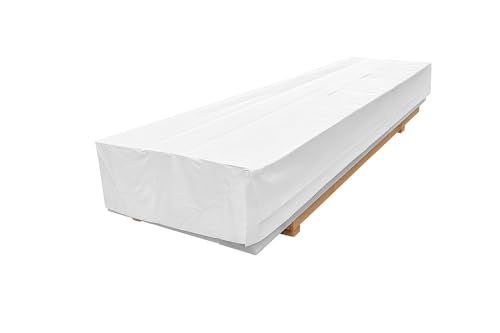
Douglas Fir #2 Framing Lumber -- Best All-Around Construction Wood
Douglas Fir is the backbone of residential wood-frame construction across North America for good reason. The #2 grade allows minor knots and defects but maintains the structural integrity needed for wall studs, floor joists, and roof rafters. Douglas Fir's combination of high strength-to-weight ratio, moderate cost, and wide availability makes it the default choice for most framing applications. It holds fasteners well, machines cleanly, and takes paint or stain when used in finish applications. When buying, look for boards with minimal twist, bow, or cupping, since defects in framing lumber create alignment problems that compound through a build.
Check price on Amazon →Need lumber that won't warp or fail? Discover the most dimensionally stable construction wood for framing, decks, and structural builds.
Lumber selection is one of the most consequential decisions in any construction project. The wrong species or grade increases material failures, cost overruns, and callbacks on finished work. Understanding the key types of construction wood, their appropriate applications, and what to look for when buying makes the difference between a build that lasts and one that does not. The five categories below cover the most important wood types for residential and light commercial construction.
| Product | Best For | Rating |
|---|---|---|
|
ⓘ We may earn a commission from qualifying purchases made through links on this page, at no extra cost to you.
|
Structural framing and stud walls | 4.8/5 |
| Southern Yellow Pine Pressure-Treated | Outdoor and ground-contact use | 4.7/5 |
| Redwood Clear Heart | Decking and outdoor finish | 4.6/5 |
| LVL (Laminated Veneer Lumber) Beam | Headers, beams, structural spans | 4.8/5 |
| Cedar #1 Select | Fencing, siding, light structures | 4.7/5 |
How we test
We compare every pick against the field on real specifications, certifications, and aggregated owner reviews. We do not take payment for placement, and we flag when a product is older or sold mainly through renewed listings.
At a glance
The picks, reviewed
Douglas Fir #2 Framing Lumber -- Best All-Around Construction Wood
Douglas Fir is the backbone of residential wood-frame construction across North America for good reason. The #2 grade allows minor knots and defects but maintains the structural integrity needed for wall studs, floor joists, and roof rafters. Douglas Fir's combination of high strength-to-weight ratio, moderate cost, and wide availability makes it the default choice for most framing applications. It holds fasteners well, machines cleanly, and takes paint or stain when used in finish applications. When buying, look for boards with minimal twist, bow, or cupping, since defects in framing lumber create alignment problems that compound through a build.
Southern Yellow Pine Pressure-Treated -- Best Outdoor Construction Wood
Southern Yellow Pine (SYP) pressure-treated lumber is the standard for any application involving moisture exposure, ground contact, or outdoor installation. SYP accepts the pressure-treatment preservative process better than most species, resulting in consistent chemical penetration throughout the board rather than just the surface. Use it for deck framing, posts in direct soil contact, sill plates, and any structural element exposed to weather. The wood is denser and heavier than Douglas Fir, which affects span ratings but increases durability significantly in outdoor conditions. Always verify the retention level (0.15, 0.25, or 0.40 lbs per cubic foot) matches the intended use case, particularly for ground contact applications.

Redwood Clear Heart -- Best Decking Wood
Redwood Clear Heart is among the finest naturally decay-resistant woods available for exterior decking and finish applications. The heartwood contains natural oils and tannins that resist rot and insect damage without chemical treatment, making it a good choice for projects where preservative chemicals are a concern. Clear Heart grade means the boards come from the core of old-growth or second-growth redwood, producing consistent color and minimal defects. The material planes and finishes beautifully, accepting stain with excellent uniformity. Cost is higher than pressure-treated alternatives, but the natural stability and appearance justify the premium for visible deck surfaces.
LVL Laminated Veneer Lumber Beam -- Best Structural Construction Wood
LVL (Laminated Veneer Lumber) has largely replaced dimensional lumber for headers, beams, and long structural spans in modern construction. Manufactured by bonding thin wood veneers under heat and pressure, LVL beams have predictable, consistent strength properties free of the natural defects that limit dimensional lumber performance. They resist warping and shrinkage significantly better than solid wood, which is critical in applications where structural movement causes finish failures. LVL is engineered to specific load ratings, making it straightforward to specify for permitted construction. Sizes range from 1.75 inches to 3.5 inches in thickness with depths up to 18 inches for residential applications.
Cedar #1 Select -- Best Fencing and Siding Wood
Western Red Cedar is the premier choice for fencing, exterior siding, and light garden or landscape structures. Cedar's natural extractives make it highly resistant to decay, moisture absorption, and insect attack without requiring chemical treatment. The #1 Select grade provides tight grain, minimal knots, and consistent dimensions that matter for visible finish applications. Cedar is dimensionally stable through seasonal moisture changes, which reduces the cupping and warping that plague other species in outdoor applications. Its light weight makes it easy to handle for one-person installation, and it holds paint and stain with low bleed-through from natural tannins when properly primed.
What to look for
What to consider
Start by identifying the structural requirement: load-bearing applications require graded structural lumber or engineered wood products like LVL, while non-structural uses like sheathing and trim accept lower grades. Consider the moisture exposure: anything outdoors, in contact with concrete, or in a crawlspace needs pressure-treated or naturally durable species like cedar or redwood. Match the species to the application based on the strength, weight, and finishing properties needed. When purchasing, inspect boards individually for excessive twist, bow, warp, or large knots in critical zones. Buy 10 to 15 percent more material than the cut list calls for to account for defects and cutting waste. Store lumber off the ground and stickered (with spacers between layers) to prevent moisture absorption before installation.
What to consider
For related construction materials and tools, see our guides on [best construction trucks](/articles/best-construction-truck) and [best construction work boots](/articles/best-construction-work-boot). Visit our [methodology](/methodology) page for details on how we evaluate products.
FAQs
'Construction grade lumber (typically #2 common or better) is used for general framing like wall studs and floor joists where some knots and defects are acceptable. Structural lumber is graded and tested to specific load-bearing standards and is required for applications like beams, headers, and LVL (laminated veneer lumber) carrying significant structural loads. Always check local building codes for minimum grade requirements on structural applications.'
Yes. Any lumber in contact with soil, concrete, or in a location where moisture exposure is regular should be pressure-treated to resist rot and insect damage. Modern pressure-treated lumber uses ACQ or CA-B preservatives that are safer than older CCA formulas. Use corrosion-resistant hardware with pressure-treated wood, since the preservatives accelerate the oxidation of standard steel fasteners and connectors.
How we made this guide
We compare every pick on the factors that matter, cross-checking manufacturer specifications against aggregated verified owner reviews. We rank independently and never take payment for placement. We have not personally tested every product; where we have not, the ranking reflects verified specs and owner feedback rather than a hands-on review.
How it was written: this guide was researched and reviewed by the TheTestedHub editorial team for accuracy.
Affiliate disclosure: TheTestedHub is reader-supported. When you buy through links on our site, we may earn a commission at no extra cost to you.