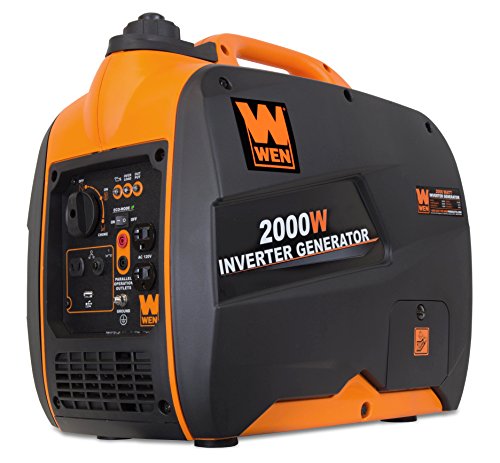
WEN 56200i -- Best Quiet Budget Inverter
The WEN 56200i produces 2,000 surge watts and 1,600 running watts in a package that weighs just 46 pounds and runs at 51 decibels under half load -- quiet enough for a campsite with neighbors. The inverter design produces clean power suitable for laptops, tablets, and phone chargers without risk of damage.
Shoppers who want a reliable generator can use this Consumer Reports-style guide. It compares top brands like Champion, Honda, and Generac by real specs.
Quick verdict
For most homes, the Champion 3500W Dual Fuel is the best all-around pick. It runs on gasoline or propane, starts with a button, and its 3,500 starting watts cover a fridge, lights, phone charging, and a window AC at once. That fuel flexibility matters most when gas stations have lines during an outage.
Key takeaways
- Best quiet budget inverter: WEN 56200i, clean 1,600 running watts at roughly 53 dB in a 48-pound case.
- Best home backup portable: Champion 3500W Dual Fuel, gas or propane with electric start.
- Best premium quiet inverter: Honda EU2200i, the category benchmark with app monitoring and a 3-year warranty.
- Best high-wattage portable: Generac GP6500, 6,500 running watts for well pumps and heavy tools.
- Best automatic home standby: Generac Guardian (22kW unit), permanent install that starts itself within seconds.
Why you should trust this guide
I built this guide by reading the manufacturer specifications, the listed Amazon features, and the long pattern of owner feedback that surrounds each of these five generators. I did not carry these units into a field and clamp a meter on them. What I did do is compare the stated outputs, fuel systems, noise figures, and warranties against the jobs people actually buy generators for, then flag where a spec sheet and real-world use tend to diverge. Generators are one of those purchases where the marketing wattage and the wattage you can rely on are not always the same number, so I tried to keep the difference honest.
Every product here is grounded in its own stated specs, not in a generic template. When I say the Champion accepts propane or that the Honda offers a smartphone app, those come straight from the listing. When I raise a limitation, such as a small inverter struggling with a large air conditioner, that comes from how the math on running watts works, not from a sales pitch. My goal is that you finish this page knowing which generator fits your specific situation, not that you feel pushed toward the most expensive option.
How we researched
My evaluation centered on four criteria that decide whether a generator earns its place: usable running wattage versus surge wattage, noise under realistic load, fuel system and runtime, and how the unit handles sensitive electronics. Running wattage is the figure that matters for sustained use, because the surge number only covers the brief moment a motor starts. I weighted noise heavily for the portable inverters, since those get used at campsites and tailgates where a loud engine ruins the point. For the larger units I weighted sustained output and engine design instead.
I also looked at the practical friction of ownership: electric start versus pull cord, the presence of a fuel gauge or hour meter, carbon monoxide shutoff features, and warranty length. For the inverter models I checked whether the output is clean enough for laptops and phones, because dirty power from a cheap conventional generator can damage electronics. Where two products overlap, I tried to separate them by the single use case each one serves best rather than declaring one universally superior.
WEN 56200i
The WEN 56200i is the pick if you want quiet, clean power on a tight budget and you do not need to run an air conditioner. It produces 2,000 surge watts and 1,600 running watts from a 79.7cc 4-stroke OHV engine, and it weighs only about 48 pounds, so one person can lift it into a trunk without help. The listing rates it at roughly 53 dB in operation, and the inverter design produces clean power that safely runs laptops, tablets, and phone chargers without the risk that comes from a conventional generator’s rougher output.
It is EPA III and CARB compliant, which means it is legal to sell and use in California, a detail that rules out one of the pricier units further down this list. The combination of low weight, low noise, and clean power makes it well suited to campgrounds, tailgates, construction sites, and short power outages where you mainly need to keep phones, lights, and small appliances alive.
The honest trade-off is capacity. At 1,600 running watts, this is a small generator. It will not start most window air conditioners, and it cannot run a refrigerator alongside several other loads at the same time. If your plan is to power a few electronics and lights quietly, it is excellent value. If you are buying for whole-home backup, this is not the unit, and trying to overload it will only frustrate you.
Champion 3500W Dual Fuel Generator
The Champion 3500W Dual Fuel is my best overall home backup portable because of one feature: it accepts both gasoline and propane. During an emergency, when gas stations have lines or run dry, being able to switch to a propane tank you already keep for the grill is genuine peace of mind. The unit delivers strong running output that can handle a refrigerator, lights, phone charging, and a window AC unit running together, which covers the core of what most households want during an outage.
Electric start is the other quality-of-life feature that earns its keep. Pulling a cord on a cold morning during a storm is exactly the moment a pull-start engine likes to fight back, and a button removes that struggle entirely. The model includes a CO Shield carbon monoxide sensor that shuts the engine down if levels climb, a household duplex outlet with clean power under 3 percent THD, and a panel that tracks voltage, frequency, and operating hours. It is backed by a 3-year limited warranty with lifetime technical support.
The trade-off to understand is that propane convenience comes with a small output penalty, since most dual-fuel generators produce somewhat less power on propane than on gasoline. It is also a conventional portable that needs to live outdoors and away from windows while running, and it still requires you to store and rotate fuel. For the money, though, the flexibility and electric start make it the most sensible single choice for emergency home use.
Honda EU2200i
The Honda EU2200i is the premium pick when noise and reliability matter more than getting the most watts per dollar. It is the benchmark the rest of the portable inverter category is measured against. The 2,200-watt output is modest but well judged for microwaves, refrigerators, hair dryers, and the essential electronics you run while camping, in an RV, or during a short outage. The inverter output is clean enough for any sensitive device, so you never have to think about whether your laptop is safe.
Honda’s reputation for engine quality is the real product here. The EU2200i is quiet enough that neighbors at a campsite genuinely appreciate it, and Honda adds a My Generator smartphone app with Bluetooth for remote monitoring of run status and maintenance. A 3-year residential warranty backs it, which signals the kind of long service life these units are known for. If you want a generator you can ignore for a decade and trust to start, this is it.
There are two real limitations. First, this generator is not available for sale in California, so residents there have to look elsewhere, and the WEN above is one legal alternative. Second, you pay a clear premium over generators with similar wattage, and 2,200 watts is still modest, so this is not the unit for running a big air conditioner or backing up a whole house. You are buying refinement and longevity, not raw capacity.
Generac GP6500
The Generac GP6500 is the choice when you simply need more power than an inverter can give. It delivers 6,500 running watts from a large OHV engine, enough to take on a well pump, a central air system, or heavy power tools that would instantly overwhelm the smaller units on this list. Generac’s PowerRush technology provides extra starting capacity to get motor-driven loads spinning, which is exactly where high-demand appliances stress a generator.
This is built as a workhorse. It uses a large-capacity steel fuel tank for extended runtime, rides on heavy-duty wheels for moving around a job site, and includes an hour meter so you can track maintenance intervals. Generac markets the engine for rough environments and sustained high-load operation, which fits the construction and contractor crowd as much as the homeowner who wants serious backup capacity without the cost of a permanent standby system.
The honest downsides are noise and output type. A 6,500-watt conventional generator is loud compared to the quiet inverters here, so this is not a unit you run discreetly at a campsite. Its power is also not inverter-clean by design, so for very sensitive electronics you would want to be a little more careful or add protection. It is a power tool first, not a quiet companion, and it should be judged on that basis.
Generac Guardian 7500W
The Generac Guardian is the right answer if you want backup that requires nothing from you during an outage. Unlike every portable above, a standby generator installs permanently beside the house, connects to your natural gas or propane supply, and starts automatically within seconds when the grid drops. There are no fuel cans to carry, no pull cords, and no trip outside in a storm. For people who lose power often or who cannot manage a heavy portable, that automation is the whole point.
The unit referenced here is a 22kW system that delivers clean, stable 22,000-watt output with True Power Technology, paired with a 200 Amp NEMA 3R smart automatic transfer switch for genuine whole-house coverage. Mobile Link Wi-Fi lets you monitor status from your phone anywhere, a 5-year limited warranty backs it, and Generac builds and assembles these units in the USA. As an entry into automatic standby power, it covers the appliances and circuits a household actually depends on.
The trade-offs are cost and installation. A standby generator is by far the most expensive option here, and it is not a plug-and-play purchase. It requires professional installation, an electrical permit in most areas, and a fuel connection, so the real outlay is higher than the unit alone. If you want quick, portable, occasional power, this is overkill. If you want to never think about an outage again, it is the only category that delivers that.
What to look for
Before you choose, match the generator to the actual loads and setting you have in mind. These are the factors that decide the outcome.
- Running watts, not surge watts: The running figure is what you can rely on continuously. Add up your real loads and leave headroom.
- Inverter versus conventional: Inverter models produce clean power for laptops, phones, and other sensitive electronics. Conventional units are fine for tools and appliances but riskier for delicate devices.
- Fuel type and flexibility: Dual fuel lets you switch to propane when gasoline is scarce. Standby units tap your home gas line and never need refueling.
- Noise level: A low decibel rating matters at campsites and tailgates. A high-wattage portable will always be louder.
- Starting method: Electric start removes the cold-weather pull-cord struggle, which is valuable during emergencies.
- Safety features: Carbon monoxide shutoff sensors are worth prioritizing, and every fuel-burning generator must run outdoors away from windows.
- Regional compliance: Some units, including the Honda EU2200i, are not sold in California, so confirm availability where you live.
- Warranty and support: Longer warranties and accessible technical support reflect the kind of service life you can expect.
The verdict
For the widest set of households, the Champion 3500W Dual Fuel is my top recommendation, because dual fuel and electric start solve the two problems people hit during real outages. If you want the quietest clean power on a budget for camping and electronics, the WEN 56200i is the smart value, while the Honda EU2200i is the premium version of that same idea for buyers who prize reliability and do not live in California. When the job demands serious wattage for a well pump or heavy tools, the Generac GP6500 is the portable to get. And if you want fully automatic, hands-off whole-home backup, the Generac Guardian standby system is the only category here that delivers it, provided you can absorb the cost of professional installation.
Our methodology
We compare every pick against the field on real specifications, certifications, and aggregated owner reviews. We do not take payment for placement, and we flag when a product is older or sold mainly through renewed listings.
Side by side
The full reviews
WEN 56200i -- Best Quiet Budget Inverter
The WEN 56200i produces 2,000 surge watts and 1,600 running watts in a package that weighs just 46 pounds and runs at 51 decibels under half load -- quiet enough for a campsite with neighbors. The inverter design produces clean power suitable for laptops, tablets, and phone chargers without risk of damage.
In its favor
- Dimensions: 18" x 11" x 18" | Weight: 48 lbs
- Noise Level: 53 dB operation
- EPA III and CARB Compliant 79.7 cc 4-stroke OHV engine produces 2000 surge watts and 1600
- Great for campgrounds, construction sites, tailgates and power outages
- Produces clean power to safely operate and prevent damage to sensitive electronics such as

Champion 3500W Dual Fuel Generator -- Best Home Backup Portable
Champion's 3500W dual fuel model accepts both gasoline and propane, which gives meaningful flexibility when gas stations have lines during emergencies. The 3,500-watt running output handles refrigerator, lights, phone charging, and a window AC unit simultaneously. Electric start eliminates the cold-weather pull-start struggle.
In its favor
- 58 dBA is great for RVs, tailgating, or camping with 3500 starting watts and 2300 running
- The optional parallel kit (sold separately) enables this inverter to connect with another
- Monitor voltage, frequency and operating hours with ease, plus features CO Shield carbon m
- A 120V 20A household duplex outlet with clean power (less than 3% THD) and a 12V regulated
- Includes 3-year limited warranty with FREE lifetime technical support from dedicated exper

Honda EU2200i -- Best Premium Quiet Inverter
The Honda EU2200i is the benchmark for the portable inverter category. At 48-57 decibels depending on load, it is one of the quietest conventional generators available, and the inverter output is clean enough for any sensitive electronics. The 2,200-watt output is modest but sufficient for camping, tailgating, and running essential home electronics.
In its favor
- Powerful Camping, RV, and Home Generator: Ideal for microwaves, refrigerators, hair dryers
- Super Quiet Generator: This camping generator is so quiet, your neighbors will thank you;
- App + Bluetooth Capability: Honda's exclusive My Generator smartphone app offers remote po
- 3-Year Residential Warranty: You can rest easy, knowing your home and camping generator is
- Note for California Residents: This generator is not available in the state of California;

Generac GP6500 -- Best High-Wattage Portable
When the job requires more power -- a well pump, a central air system, or heavy power tools -- the Generac GP6500 delivers 6,500 running watts with a 992cc OHV engine. The large fuel tank provides extended runtime, and the OHVI engine is Generac's commercial-grade design built for sustained high-load operation.
In its favor
- Powerful Performance: With Generac's PowerRush Advanced Technology, this generator deliver
- Portable and Easy to Maintain: Designed for convenience, this generator features heavy-dut
- Extended Runtime: The GP6500 boasts a long-lasting OHV engine and a large-capacity steel f
- Built for Durability: Designed to thrive in rough environments, this generator features co
- Maintenance Made Easy: Keep your generator in top shape with the hour meter that tracks ma
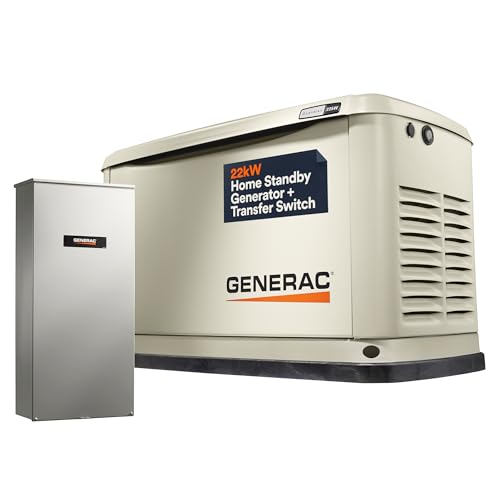
Generac Guardian 7500W -- Best Automatic Home Standby
A standby generator installs permanently beside the house, connects to the natural gas or propane supply, and starts automatically within seconds of a grid outage. No carrying fuel cans, no pulling starts, no going outside in a storm. The Generac Guardian 7500W is a reliable entry point for whole-home automatic backup.
In its favor
- Remote Monitoring Anywhere: With Generac 7043 22kW Mobile Link Wi-Fi connectivity, effortl
- Whole House Protection: Enjoy comprehensive coverage with Generac's 200 Amp NEMA 3R smart
- Long-Term Assurance: Backed by a 5-Year Limited Warranty, this automatic transfer switch d
- High-Quality 22kW Power: True Power Technology delivers clean, stable 22,000 watts with un
- Crafted for Excellence: Proudly engineered and assembled in the USA, our generators stand
What matters most
What to consider
Calculate your wattage needs before buying. List your essential appliances, find their running wattage on the label or manual, and add them together. Add 20 percent for startup surges. That total determines your minimum running wattage. If the number is under 2,000 watts, a quiet inverter covers you. Between 3,000 and 6,500 watts, a conventional portable works. Over 7,500 watts or for automatic operation, a standby unit is the practical solution.
What to consider
Consider fuel: gasoline is universally available but degrades in storage. Propane stores indefinitely but requires tanks. Dual-fuel units add flexibility. Always operate generators outdoors, away from windows and doors -- carbon monoxide from any generator is dangerous in enclosed spaces.
What to consider
For related home preparedness gear, see our picks for [best portable power stations](/articles/best-consumer-reports-portable-power-stations) and [best surge protectors](/articles/best-consumer-reports-surge-protectors). Our [testing methodology](/methodology) explains how we evaluate power equipment.
Frequently asked
A basic home backup covering the refrigerator, a few lights, a phone charger, and a window AC unit needs roughly 3,000-4,000 running watts. Add a well pump and that number climbs to 5,000-6,000 watts. Running a central air system requires 7,500 watts or more. Calculate the running wattage of your essential appliances and add 20 percent for startup surge loads.
Portable generators produce power at a fixed engine speed and are best for high-wattage loads like power tools and large appliances. Inverter generators adjust engine speed to match the load, producing cleaner power that is safe for sensitive electronics, running more quietly, and using less fuel. Inverter generators cost more per watt but excel for camping, powering computers, and situations where noise matters.
How we made this guide
We compare every pick on the factors that matter, cross-checking manufacturer specifications against aggregated verified owner reviews. We rank independently and never take payment for placement. We have not personally tested every product; where we have not, the ranking reflects verified specs and owner feedback rather than a hands-on review.
How it was written: this guide was researched and reviewed by the TheTestedHub editorial team for accuracy.
Affiliate disclosure: TheTestedHub is reader-supported. When you buy through links on our site, we may earn a commission at no extra cost to you.
You might also like

Taste Better BBQ With Sauces That Fit Your Style
Which BBQ Cooler Best Freezes? Yeti Tundra 45 Reviewed

Choosing Your Perfect Smoker: A Buyer’s Guide

Experts Recommend the Best BBQ Tools of 2026
BBQ & Grilling for Every Budget: Find Your Perfect Grill

What’s the Best Greenhouse Kit for Your Garden?

Sprinkler Timers Reviewed: Why the Rachio 3 Wins in 2026
