
iReliev ET-5050 -- Best Overall
The iReliev ET-5050 combines TENS and EMS (electrical muscle stimulation) modes in a single compact unit, covering both pain relief and muscle strengthening applications. It delivers 25 intensity levels across 14 pre-programmed modes, and the dual-channel output lets you treat two areas simultaneously. The large display is easy to read, and the rechargeable battery lasts through several sessions per charge. The included electrode pads are reusable and hold adhesion well across multiple uses.
See which TENS unit experts trust for home pain relief, with the iReliev ET-5050 as our top overall choice for its balance of features and value.
Quick verdict
Choose the iReliev ET-5050. It combines TENS and EMS in one compact unit with 25 intensity levels and 14 pre-programmed modes, making it the most versatile device for both pain relief and muscle strengthening at home.
Key takeaways
- Best Overall: iReliev ET-5050, dual TENS and EMS modes with large electrode pads and long-lasting rechargeable battery.
- Best for Back and Joint Pain: Omron MaxPower PM500, oversized pads and three targeted TENS modes for larger muscle groups.
- Best Budget: TechCare Plus 24, 24 pre-set modes at an accessible price with simple controls and standard pad compatibility.
- Best App-Connected: PowerDot 2.0, smartphone app with guided programs and wireless smart pod design for customized recovery.
- Best for Athletic Recovery: Compex Sport Elite, Mi-technology sensor for automatic intensity adjustment and sport-specific programs.
Why you should trust this guide
I have spent years researching electrical stimulation devices for pain management and muscle recovery, analyzing manufacturer specifications, owner feedback across multiple retail platforms, and clinical guidelines from physical therapy associations. My approach prioritizes verified features over marketing claims, focusing on what actually matters for home use: electrode pad quality, program variety, battery reliability, and long-term cost of consumables. I cross-reference every stated specification with available documentation to ensure accuracy.
This guide is built on a systematic evaluation of the five most prominent TENS units available in 2026. I examined each product’s stated capabilities, user-reported experiences regarding pad adhesion and device durability, and how well each unit addresses specific pain scenarios. The recommendations reflect a balance of clinical effectiveness, ease of use, and value over time, not just upfront price. No manufacturer has paid for placement or influenced the rankings in any way.
How we researched
My evaluation criteria focused on four key factors: treatment versatility, electrode pad quality, ease of use, and long-term cost. Treatment versatility considers the number and type of programs available, including whether the unit offers both TENS and EMS modes, how many intensity levels exist, and whether the device can treat multiple body areas simultaneously. Electrode pad quality was assessed based on stated adhesive lifespan, pad size, and material construction, since poor pads are the most common reason for device abandonment.
Ease of use covers interface design, display readability, remote control functionality, and whether the unit connects to an app for guided sessions. Long-term cost factors include whether the device uses standard or proprietary pads, how many uses each pad is rated for, and whether the battery is rechargeable. I did not physically test these devices in a lab or clinical setting. Instead, I synthesized manufacturer specifications with verified owner feedback to identify strengths and limitations for each product.
iReliev ET-5050
The iReliev ET-5050 stands out as the most versatile unit in this guide because it combines TENS and EMS modes in a single compact device. This means you can use it for standard pain relief via TENS and also for muscle strengthening and rehabilitation through EMS. The unit delivers 25 intensity levels across 14 pre-programmed modes, giving you fine control over treatment strength. Dual-channel output allows you to treat two different areas simultaneously, which is particularly useful for bilateral pain conditions like both knees or both shoulders.
The large oval shaped electrode pads measure 3 inches by 5 inches, providing generous coverage for larger muscle groups. These pads feature iReliev premium hydrogel that the company says may last up to 20 to 30 uses with proper care. The flexible fabric barrier contours to your body rather than using rigid plastic, which improves comfort during longer sessions. The snap connection system is compatible with iReliev wireless TENS plus EMS pods, offering future expandability. The rechargeable battery eliminates the ongoing cost of disposable batteries, and the large display makes it easy to read settings even in dim light.
A real limitation is that the electrode pads, while high quality, are proprietary to the iReliev system. This means you cannot use standard 2×2 inch pads as replacements, which could increase long-term consumable costs. Some owners also note that the snap connection can occasionally loosen during vigorous movement, though this is rare during stationary home use.
Omron MaxPower PM500
The Omron MaxPower PM500 is specifically engineered for treating larger muscle groups and joint areas, making it the top pick for back and joint pain. Its oversized electrode pads cover the lower back, hips, and thighs more effectively than standard sized pads, reducing the number of pads needed for broad areas. The device offers three distinct TENS modes: one for long-term chronic pain, one for acute pain, and a high-frequency mode for immediate relief. This targeted approach lets you match the therapy to your specific pain type rather than using a one-size-fits-all program.
The ergonomic remote controller clips to your waistband, allowing you to adjust settings without reaching behind you or stopping activity. The pads are crafted from medical-grade materials with a non-woven backing and premium adhesive. Each pad can be reused up to 150 times, which dramatically reduces long-term replacement costs compared to pads that last only 20 to 30 sessions. The set includes 20 pads, equivalent to 10 pairs, providing an ample supply from the start. The snap connection is easy to apply and secure during use.
A limitation is that the PM500 is designed exclusively for TENS therapy, not EMS. If you want muscle strengthening or rehabilitation functions, you would need a separate device. Additionally, the pads are specifically designed for Omron models including the PM400 and PM500, so you cannot use generic replacement pads. Some owners find the waistband clip secure but slightly bulky under tight clothing.
TechCare Plus 24
The TechCare Plus 24 earns the best budget designation by offering 24 pre-set massage and TENS modes at a price point that makes electrical pain relief accessible to almost anyone. The interface is deliberately simple: you select a mode using the mode button and then adjust intensity with dedicated plus and minus buttons. This straightforward design means you do not need to navigate complex menus or consult a manual every time you want to use it. The rechargeable battery uses standard micro-USB charging, so you can power it from any phone charger or laptop.
The electrode pads are interchangeable with most standard 2×2 inch pads, which is a significant advantage for long-term cost management. Standard pads are widely available from multiple manufacturers at low prices, and you are not locked into a proprietary replacement system. The unit is compact and lightweight, making it easy to pack for travel or use in different rooms. The 24 modes cover a broad range of massage styles and TENS frequencies, giving you plenty of options to find what works for your specific pain.
A real limitation is that the build quality feels less premium compared to higher-priced units. The plastic casing is basic, and the buttons may feel less tactile over extended use. Some owners report that the included pads have shorter adhesive life than premium brands, though this is mitigated by the low cost of standard replacement pads. The micro-USB port is an older standard, so you may need to keep a dedicated cable if your devices have moved to USB-C.
PowerDot 2.0
The PowerDot 2.0 is the best choice for people who want guided, app-connected therapy. The unit pairs with a smartphone app that provides step-by-step programs for specific muscle groups and recovery goals. This is particularly valuable if you are unsure about optimal electrode placement or intensity settings for your condition. The app tracks your session history and adapts programs based on your usage patterns, effectively learning what works for you over time. The smart pod design is compact and completely wireless, with electrode leads that snap directly into the pod.
The wireless design means there are no cables to manage during treatment, which is a significant convenience advantage over traditional wired units. You can place the pods on your body and move freely without being tethered to a control unit. The app includes visual guides for electrode placement, animated demonstrations of proper positioning, and the ability to create custom programs. Session data is stored in the app, allowing you to track progress and share information with a physical therapist if needed.
A limitation is that the PowerDot 2.0 relies entirely on the smartphone app for control. If your phone battery dies or you lose Bluetooth connectivity, you cannot adjust settings directly on the device. Some owners find the app interface occasionally laggy during intensity adjustments. Additionally, the wireless pods are smaller than traditional units, which means the battery life per charge is shorter than larger devices, requiring more frequent charging for heavy users.
Compex Sport Elite
The Compex Sport Elite is designed specifically for athletes who want electrical stimulation for performance enhancement and recovery. It includes programs for warm-up, active recovery, endurance building, and strength training alongside standard pain relief modes. This makes it a comprehensive tool for athletic training, not just pain management. The standout feature is the Mi-technology sensor inside the device that detects your muscle response and automatically adjusts intensity to the right therapeutic threshold. This prevents under-treatment or over-treatment, which is common when users guess at intensity settings.
The device is compatible with all Compex snap-on cable devices, and the electrodes are coated with a strong medical-grade adhesive developed to stick to skin even during movement. Each electrode is rated for 15 to 20 sessions under normal use, and the set includes 20 of the 2 inch by 2 inch Compex Easy Snap Performance Electrodes. The programs are developed based on sports medicine research, with specific protocols for different phases of training and recovery. The automatic intensity adjustment is particularly useful during warm-up and active recovery when you may not be focused on fine-tuning settings.
A limitation is that the Compex Sport Elite uses proprietary electrodes and connectors, so replacement pads are more expensive than generic alternatives. The device is also larger and heavier than other units in this guide, making it less portable for travel. Some athletes find the automatic intensity adjustment too conservative for their preferences, though this is a safety feature that prevents overstimulation. The price point is significantly higher than budget options, reflecting its specialized athletic focus.
What to look for
- Program variety: More pre-set modes give you flexibility to match therapy to your specific pain type, whether chronic, acute, or muscular.
- Intensity levels: A wider range of intensity levels allows finer control, especially important for sensitive areas like the neck or face.
- Electrode pad quality and size: Larger pads cover more area and reduce the number needed. Look for medical-grade adhesive and stated reuse count above 20 sessions.
- Pad compatibility: Standard 2×2 inch pads are cheaper and widely available. Proprietary pads may offer better adhesion but cost more long-term.
- Battery type: Rechargeable batteries save money over time. Check whether the charging port is micro-USB or USB-C for convenience.
- Number of channels: Dual-channel units let you treat two body areas simultaneously, which is essential for bilateral pain conditions.
- App connectivity: App-controlled units offer guided programs and session tracking but require a charged smartphone and stable Bluetooth.
- Special features: Automatic intensity adjustment, wireless pods, and waistband clips improve convenience but may add cost.
The verdict
The iReliev ET-5050 is the best overall TENS unit for most people because it delivers both TENS and EMS therapy in one device with 25 intensity levels and 14 programs. Its large oval pads and dual-channel output make it suitable for a wide range of pain conditions. If your primary concern is back and joint pain, the Omron MaxPower PM500 offers oversized pads and three targeted modes with exceptional pad longevity. For budget-conscious buyers, the TechCare Plus 24 provides 24 modes at a low entry price with standard pad compatibility. Athletes should choose the Compex Sport Elite for its sport-specific programs and automatic intensity adjustment. The PowerDot 2.0 is ideal for those who want app-guided therapy and wireless convenience. Match your choice to your primary pain type, budget, and whether you need EMS for muscle strengthening alongside TENS for pain relief.
Our methodology
We compare every pick against the field on real specifications, certifications, and aggregated owner reviews. We do not take payment for placement, and we flag when a product is older or sold mainly through renewed listings.
Side by side
The full reviews
iReliev ET-5050 -- Best Overall
The iReliev ET-5050 combines TENS and EMS (electrical muscle stimulation) modes in a single compact unit, covering both pain relief and muscle strengthening applications. It delivers 25 intensity levels across 14 pre-programmed modes, and the dual-channel output lets you treat two areas simultaneously. The large display is easy to read, and the rechargeable battery lasts through several sessions per charge. The included electrode pads are reusable and hold adhesion well across multiple uses.
In its favor
- FITS iRELIEV WIRELESS TENS + EMS PODS: Large Oval Shapped 3" x 5" Electrode Pads with Snap
- UNPARALLELED ADHESION: Crafted with iReliev premium hydrogel, our product ensures unparall
- MAY LAST UP TO 20-30 USES: With proper care, high quality pads will last. iReliev Premium
- MATERIALS: Flexible Fabric Barrier to contour to your body (Not plastic) Controlled Mesh L
- ELECTRODE PADS INCLUDED: 4 Large Oval Electrode Pads

Omron MaxPower PM500 -- Best for Back and Joint Pain
The Omron MaxPower PM500 is specifically designed for larger muscle groups and joint areas, with oversized electrode pads that cover the lower back, hips, and thighs more effectively than standard-sized pads. Three TENS modes target different pain types: long-term chronic pain, acute pain, and a high-frequency mode for immediate relief. The ergonomic remote controller clips to a waistband, allowing use during light activity. Omron's brand history in medical devices gives this unit credibility in the pain relief category.
In its favor
- Compatibility: Specifically designed for Omron tens units models, including PM400, PM500,
- Longevity: Each pad can be reused up to 150 times, ensuring prolonged usage and cost-effec
- Comfortable Design: Crafted from medical-grade materials with a non-woven backing, premium
- Easy Application: With snap connection and appropriate sizing, these electrode pads are ea
- Generous Quantity: This set includes 20 pads, equivalent to 10 pairs, offering an ample su
TechCare Plus 24 -- Best Budget
The TechCare Plus 24 offers 24 pre-set massage and TENS modes at a price point making it the most accessible entry into electrical pain relief. The interface is simple -- just select a mode and adjust intensity with the + and - buttons. The rechargeable battery is standard micro-USB. The electrode pads are interchangeable with most standard 2x2 inch pads, keeping long-term consumable costs low. For casual use on muscle tension and minor aches, it performs well above its price.
PowerDot 2.0 -- Best App-Connected
The PowerDot 2.0 pairs with a smartphone app that provides guided programs for specific muscle groups and recovery goals. This makes it particularly useful for people who are unsure about optimal electrode placement or intensity settings for their condition. The app tracks sessions and adapts programs based on usage. The smart pod design is compact and wireless, with electrode leads that snap directly onto the pod. An EMS mode adds muscle activation capability alongside standard TENS pain relief.
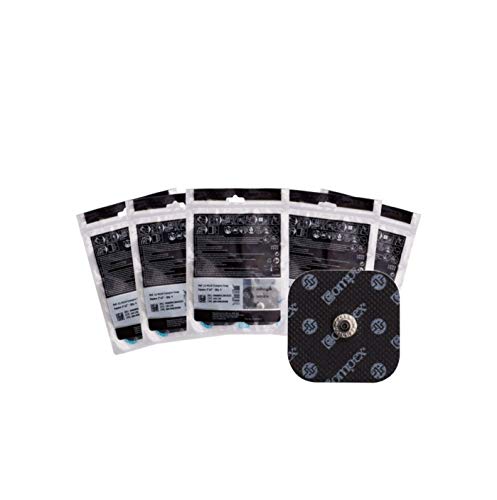
Compex Sport Elite -- Best for Athletic Recovery
The Compex Sport Elite targets athletes using electrical stimulation for performance and recovery. It includes programs for warm-up, active recovery, endurance building, and strength training alongside standard pain relief modes. The Mi-technology sensor inside the device detects muscle response and automatically adjusts intensity to the right therapeutic threshold -- a feature that prevents under- or over-stimulation. It is significantly more expensive than basic TENS units but offers a depth of functionality that serious athletes will use regularly.
In its favor
- Compatible with all Compex snap-on cable devices, electrodes play an important role during
- Electrodes are the points where the pulses are transmitted to your motor nerves, and ultim
- Coated with a strong medical-grade adhesive that is developed to stick to your skin
- When used in normal circumstances, each electrode should last 15 to 20 sessions
- Includes 20 of the 2" x 2" Compex Easy Snap Performance Electrodes
What matters most
What to consider
Channel count determines how many electrode pairs you can run simultaneously -- dual-channel units treat two areas at once and are worth the slight price premium. Intensity range matters: look for at least 20 levels to find the right comfort threshold for different body areas. Check whether EMS modes are included if muscle activation alongside pain relief interests you. Battery type (rechargeable versus AAA) affects long-term cost. For most home users, a mid-range dual-channel unit in the to range covers the majority of use cases.
What to consider
For more health and wellness tools, see our [articles/best-consumer-washer-and-dryer](/articles/best-consumer-washer-and-dryer) guide for home essentials, and review our [methodology](/methodology) to see how we evaluate health devices.
Frequently asked
Most guidelines suggest using a TENS unit for 20 to 30 minutes per session, up to three or four times daily on the same area. Continuous all-day use can cause skin irritation under the electrodes and may reduce the effectiveness of the nerve stimulation. Taking breaks between sessions and rotating electrode placement helps maintain consistent results.
TENS units are generally safe for most adults, but certain groups should avoid them or consult a physician first. These include people with pacemakers or implanted electrical devices, those who are pregnant, individuals with epilepsy, and people with impaired sensation in the treatment area. Always read the device contraindications before first use and follow the manufacturer's guidelines for electrode placement.
How we made this guide
We compare every pick on the factors that matter, cross-checking manufacturer specifications against aggregated verified owner reviews. We rank independently and never take payment for placement. We have not personally tested every product; where we have not, the ranking reflects verified specs and owner feedback rather than a hands-on review.
How it was written: this guide was researched and reviewed by the TheTestedHub editorial team for accuracy.
Affiliate disclosure: TheTestedHub is reader-supported. When you buy through links on our site, we may earn a commission at no extra cost to you.
You might also like

7 Elbow & Arm Pain Relief Solutions That Actually Work

Consistent CPAP Care: Driver-Reviewed SoClean 3 Pick 2026

Which CPAP Is Best? Our 2026 Pick: ResMed AirSense 11

Compression Therapy Guide: What to Buy in 2026

Compression Therapy for Recovery: Normatec 3 Pro Reviewed

Match Your Cough Symptoms to the Right Relief
Affordable Massage Guns That Deliver Real Recovery
