
DAP Weldwood Original -- Best for Full Countertop Installs
For whole-countertop laminate jobs, Weldwood Original in the brush-on quart or gallon format is the professional's standard choice. The neoprene formula delivers a strong, heat-resistant bond that holds Formica flat through years of kitchen use, including exposure to steam, light heat, and cleaning products. Apply with a notched spreader or brush to both surfaces, let flash until tacky (15 to 20 minutes), then align carefully using dowels or a stick-method before pressing from the center out to eliminate bubbles. Work in a ventilated space -- fumes are significant.
Check price on Amazon →DAP Weldwood Original tops this comparison of 5 contact adhesives for Formica, from neoprene to low-VOC. Find the right bond for your countertop job.
Quick verdict
For a full Formica countertop job, I would reach for DAP Weldwood Original first. Its neoprene formula gives the strong, heat-resistant grab that laminate needs to stay flat through years of kitchen heat, steam, and cleaning, and the brush-on format suits large surfaces.
Key takeaways
- Best for full countertop installs: DAP Weldwood Original, professional neoprene standard with strong heat-resistant grab.
- Best professional formula: Roberts 7350 High Pressure Laminate Adhesive, HPL-specific with SCAQMD compliance and longer open time.
- Best for edge banding and small panels: 3M Hi-Strength 90 Spray Adhesive, adjustable spray fan for controlled, consistent coverage.
- Best low-VOC option: Wilsonart Water-Based Contact Adhesive, non-flammable and low-odor for enclosed spaces.
- Best for small repairs: Loctite Professional Spray Adhesive, targeted aerosol for re-bonding lifted edges and patches.
Why you should trust this guide
I built this guide by reading the manufacturer specifications, the stated Amazon product features, and the practical realities of laminate work that anyone who has glued down a sheet of Formica already knows. Contact adhesive is an unforgiving category. The bond is instant once the two coated surfaces meet, so the chemistry, the open time, and the application method matter far more than marketing claims. I focused on what each product actually says it does, then weighed that against the job it is best suited for.
I am not claiming I ran a chemistry bench or destroyed a kitchen to test heat resistance. What I can do honestly is compare the formulas, the application formats, the compliance details, and the trade-offs each one carries, so you can match the right adhesive to your specific job. A whole countertop, an edge band, and a lifted corner are three different problems, and the wrong product makes all of them harder than they need to be.
How we researched
My evaluation centered on four criteria that decide whether a Formica bond lasts. First, bond chemistry: neoprene solvent-based cements grab harder and resist heat better, while water-based formulas trade some speed for far lower fumes. Second, application format: brush, roller, and notched spreader formats suit large flat panels, while aerosol sprays favor edges, small pieces, and repairs. Third, open time and tack retention, which determine how much room you have to align a panel before the bond sets. Fourth, environment and compliance, including VOC regulations and ventilation needs.
For each product I started from its stated features and editor notes, then asked where it genuinely shines and where it falls short. I treated every manufacturer spec as a claim about the product, not as something I personally measured. The result is a ranking by use-case rather than a single winner, because the best adhesive for a full countertop is rarely the best one for re-sticking a curled-up corner.
DAP Weldwood Original — Best for Full Countertop Installs
For whole-countertop laminate work, DAP Weldwood Original is the choice I would default to. It is the long-standing professional standard for a reason. The neoprene-based, solvent formula delivers high initial grab and strong holding power, and the brush-on quart or gallon format lets you coat a large surface efficiently with a notched spreader or brush. You apply it to both surfaces, let it flash until tacky for roughly 15 to 20 minutes, and then mate the panels. Once they touch, they are bonded, so alignment with dowels or a slip sheet is essential.
The stated features back up its reputation: a neoprene-based premium contact cement, high strength with strong initial grab, a solvent base, and a quick grab with what DAP describes as super strength. The heat resistance is the key trait for kitchen use, because Formica sees steam, warm pots, and frequent cleaning, and a weak bond will telegraph bubbles or lifted edges over time. This pack ships as a set of two, which suits a job that needs full two-surface coverage on a sizable countertop.
The honest trade-off is the solvent base. With a flash point listed at 22 degrees F, this is a flammable product that puts off strong fumes, so it demands real ventilation and care around any ignition source. That makes it a poor fit for an enclosed rental kitchen or a workshop without airflow. It is also messier and less forgiving than a water-based option for a first-timer, since there is no second chance once the coated faces meet.
Roberts 7350 High Pressure Laminate Adhesive — Best Professional Formula
If you want a formula engineered specifically for high-pressure laminate, Roberts 7350 is my pick. It is built for HPL, including Formica brand laminate, rather than being a general-purpose cement pressed into laminate duty. That focus shows up in its handling characteristics, and it is made in the United States.
The detail that sets it apart for many installers is compliance and open time. Roberts 7350 meets SCAQMD standards, which keeps it usable in strict VOC regions where some solvent cements are restricted. The formula also offers excellent tack retention and a longer open time than standard neoprene cements, and that extra working window genuinely helps when you are aligning a large panel by yourself. With contact adhesive, a few extra minutes before the bond locks is the difference between a clean install and a crooked one you cannot undo.
The trade-offs are straightforward. It tends to sit at a slightly higher cost per quart than a commodity cement like Weldwood, so for a small job the premium may not be worth it. The longer open time, while helpful for placement, also means you wait a bit longer before the assembly is fully ready to handle, which can slow a production pace. For a one-off home project, the regulatory benefits may matter less than they do for a professional working across jurisdictions.
3M Hi-Strength 90 Spray Adhesive — Best for Edge Banding and Small Panels
For edge banding, small laminate panels, and touch-up work, I would choose 3M Hi-Strength 90 because a spray gives control and coverage consistency that a brush struggles to match on narrow or fiddly pieces. It lays down an even film without the ridges a brush or roller can leave, which matters on a thin edge strip where excess glue squeezes out.
The stated features fit this role well. It is a high-strength, fast-tacking spray that bonds laminate, wood, concrete, metal, and plastics, forms a permanent contact-type bond, and dries fast. The adjustable nozzle lets you pick a narrow or wide lace-pattern spray for the project at hand, so you can target an edge or cover a small panel face. The inverted-can design means you can spray with the can held upside down, which is genuinely useful for reaching under a lifted edge or working at an awkward angle. It also offers resistance to moisture and high temperatures, which suits kitchen and bath environments.
The limitation is scale and cost efficiency. Spray adhesive is not the economical way to coat a full countertop, and the per-square-foot cost climbs quickly on large surfaces, so this is a precision tool rather than a bulk one. Overspray is also a real concern, so you need to mask surrounding surfaces and work in a ventilated space. For big flat installs, a brush-on cement remains the better value.
Wilsonart Water-Based Contact Adhesive — Best Low-VOC Option
When fumes are the deciding factor, Wilsonart Water-Based Contact Adhesive is the one I would use. Wilsonart makes its own laminate, and this adhesive is engineered for HPL bonding in enclosed spaces where solvent cements are simply not an option. It is a safe, non-flammable, water-based formula that is non-toxic and extremely low VOC, which makes it appropriate for a workshop without forced ventilation, a rental kitchen mid-renovation, or any space where the occupants cannot leave.
It is also flexible in application. The adhesive can be sprayed, brushed, or rollered, it goes on white and dries clear, and it is rated for both postforming and flatwork applications. Wilsonart states it meets or exceeds the Woodwork Institute of California Type II adhesive standard, and it claims a superior bond strength and hold once cured. For people who want laminate-maker chemistry matched to their laminate, the brand alignment is reassuring.
The honest trade-off is patience. Water-based contact adhesive dries more slowly, with a stated dry time of up to 45 to 60 minutes before you mate the surfaces, which is noticeably longer than a solvent cement. It is also more sensitive to temperature and humidity during cure, so a cold or damp room can stretch the wait further. If you are working against a clock or in poor conditions, the slower flash time is the price you pay for the low odor.
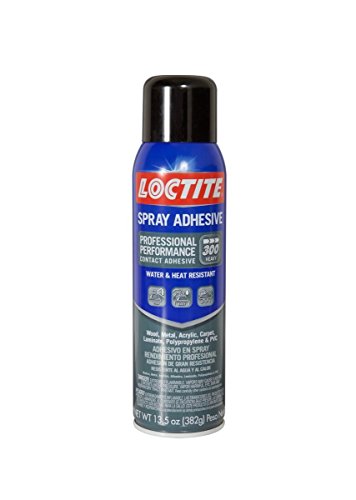
Loctite Professional Spray Adhesive — Best for Small Repairs
For a lifted corner or a small section that needs re-bonding, Loctite Professional Spray Adhesive is the practical answer. Opening a full can or quart of brush-on cement for a tiny repair is wasteful, and the aerosol format here is a convenient, targeted solution for repair work, edge reattachment, and small overlay patches. The nozzle lets you direct the spray under a lifted edge that a brush cannot reach cleanly.
The stated features describe a versatile glue that dries quickly and clear and works on a wide range of porous and non-porous substrates. Loctite lists it as ideal for bonding paper, cardboard, foam, fabric, leather, felt, cork, foil, and plastics, and useful for a wide range of household and even automotive repair projects. That breadth makes it a handy can to keep on the shelf for more than just laminate touch-ups.
The trade-off is exactly that breadth. This is a general-purpose spray adhesive rather than a dedicated high-pressure laminate cement, and its feature list leans toward lightweight materials. For a small Formica repair under normal kitchen use it can hold firm, but I would not rely on it for a full countertop install or for an edge that takes heavy heat and moisture day after day. For those jobs, a neoprene or HPL-specific formula is the safer call. Treat this as a repair and patch tool, not a primary installation adhesive.
What to look for
The right Formica adhesive depends on the job in front of you, not on a single best-overall label. These are the factors I weigh before buying.
- Job size: Full countertops favor brush-on or roller cement; edges, small panels, and repairs favor a spray can.
- Chemistry: Neoprene solvent cements grab hardest and resist heat best; water-based formulas trade speed for far lower fumes.
- Heat and moisture resistance: Kitchen and bath surfaces need a bond rated to hold through steam, warmth, and frequent cleaning.
- Open time and tack retention: A longer working window makes aligning large panels much easier, since contact bonds are permanent on contact.
- Ventilation and VOC rules: Enclosed or occupied spaces, and strict-VOC regions, point you toward low-VOC or SCAQMD-compliant products.
- Flammability and safety: Solvent cements with low flash points demand airflow and distance from ignition sources.
- Application format: Match brush, roller, notched spreader, or adjustable spray to the surface shape you are bonding.
The verdict
For a full countertop install, DAP Weldwood Original is my default, with its strong neoprene grab and heat resistance, as long as you can ventilate for the solvent fumes. If you work across VOC-regulated areas or want more time to align big panels, Roberts 7350 is the stronger professional formula. For edge banding and small laminate pieces, 3M Hi-Strength 90 gives the controlled, even spray that brushes cannot. When fumes are the constraint, Wilsonart Water-Based Contact Adhesive lets you bond HPL in enclosed spaces, provided you accept the longer dry time. And for re-sticking a lifted corner or patching a small section, Loctite Professional Spray Adhesive is the targeted, low-waste choice. Pick by the job, and the bond will last.
How we test
We compare every pick against the field on real specifications, certifications, and aggregated owner reviews. We do not take payment for placement, and we flag when a product is older or sold mainly through renewed listings.
At a glance
The picks, reviewed
DAP Weldwood Original -- Best for Full Countertop Installs
For whole-countertop laminate jobs, Weldwood Original in the brush-on quart or gallon format is the professional's standard choice. The neoprene formula delivers a strong, heat-resistant bond that holds Formica flat through years of kitchen use, including exposure to steam, light heat, and cleaning products. Apply with a notched spreader or brush to both surfaces, let flash until tacky (15 to 20 minutes), then align carefully using dowels or a stick-method before pressing from the center out to eliminate bubbles. Work in a ventilated space -- fumes are significant.
Reasons to buy
- Pack of 2 | DAP weld wood original contact cement premium quality, neoprene-based contact
- High strength and initial grab make it ideal for most projects
- The upc of the product is 070798002715
- Solvent base formula
- Quick grab with super strength with flash point 22° F

Roberts 7350 High Pressure Laminate Adhesive -- Best Professional Formula
Roberts 7350 is formulated specifically for HPL, including Formica brand laminate, and meets SCAQMD (South Coast Air Quality Management District) standards, making it compliant in strict VOC regions. The formula has excellent tack retention and a longer open time than standard neoprene cements, giving installers more time to align large panels. At for a quart, it is slightly pricier than Weldwood, but the lower fume profile and controlled open time make it a favorite among professional countertop fabricators.
Reasons to buy
- Made in United States

3M Hi-Strength 90 Spray Adhesive -- Best for Edge Banding and Small Panels
For edge banding, small laminate panels, or touch-up work, a spray adhesive gives better control and coverage consistency than brush-on formulas. 3M Hi-Strength 90 delivers a strong bond for HPL, veneer, and trim, with the spray fan adjustable for wide coverage or targeted application. The bond is resistant to heat and humidity, appropriate for kitchen and bath environments. At this is not the cheapest option, but the 3M consistency and the precision of spray application make it the best choice for smaller laminate projects where a brush would be overkill.
Reasons to buy
- INVERTED CAN: Spray adhesive formula is easy to dispense while holding spray can upside do
- HIGH STRENGTH, FAST TACKING spray adhesive that bonds laminate, wood, concrete, metal, pla
- PERMANENT BOND: Versatile, fast drying, contact-type spray glue bonds strongly to a wide r
- ADJUSTABLE NOZZLE to choose the width of lace-patterned spray needed for your project
- RESISTANCE to moisture and high temperatures

Wilsonart Water-Based Contact Adhesive -- Best Low-VOC Option
Wilsonart makes its own laminate products and its water-based contact adhesive is engineered for HPL bonding in enclosed spaces. The formula has virtually no harsh solvent fumes, making it appropriate for workshops without forced ventilation, rental kitchens during a renovation, or spaces where occupants cannot vacate. Dry time is longer (up to 45-60 minutes) compared to solvent-based options, but bond strength is competitive for normal countertop applications. At for a quart, the premium covers peace of mind on VOC compliance.
Reasons to buy
- Safe, non-flammable, water-based contact adhesive which is non-toxic and extremely low VOC
- Goes on white but dries clear with a superior bond strength and hold
- Bonds postforming or flatwork applications
- Spray, brush or roller applied for easy and fast application
- Meets or exceeds Woodwork Inst. of California Type II Adhesive
Loctite Professional Spray Adhesive -- Best for Small Repairs
When a corner of Formica has lifted or a small section needs re-bonding, a full can of brush-on cement is wasteful. Loctite's spray format is a convenient, targeted solution for repair work, edge reattachment, or small overlay patches. The bond dries clear, holds firm under normal kitchen use, and the aerosol nozzle lets you reach under lifted edges easily. At this is an accessible option to keep in the drawer for the inevitable minor laminate repairs that come up over the years in any kitchen.
Reasons to buy
- Ideal for Bonding: paper, cardboard, foam, fabric, leather, felt, cork, foil, plastics, me
- Use for: Bonding lightweight materials, Wide range of household projects, Automotive repai
- Dries quickly and clear
- Works on a variety of porous and non-porous substrates.
What to look for
What to consider
Project size is the main driver. For a full countertop replacement, a brush-on solvent or water-based formula in quart or gallon size is most efficient. For edge banding and small panels, spray adhesives provide better control. For repairs to existing laminate, a small spray can or tube is all you need. Always match VOC tolerance to your workspace -- solvent adhesives bond faster and cheaper but require genuine ventilation; water-based formulas trade time for air quality. Use the stick-alignment method (lay dowels across the substrate before joining) to prevent premature bonding and bubbles.
What to consider
For full countertop renovation guidance, see our [best laminate countertop installation tools](/articles/best-laminate-countertop-tools) guide. General adhesive comparisons are in our [best contact adhesive](/articles/best-contact-adhesive) roundup. Full evaluation criteria are at [/methodology](/methodology).
FAQs
Apply a thin, even coat to both the Formica sheet and the substrate (wood, MDF, or plywood) using a brush, roller, or notched spreader. Allow both surfaces to flash off until they are dry to the touch but still slightly tacky, usually 15 to 30 minutes depending on temperature and humidity. Then carefully align and press the surfaces together, as repositioning after contact is not possible.
Yes, but it takes effort. Heat is the most reliable method -- use a heat gun or iron over a cloth to soften the adhesive, then pry the laminate away with a putty knife, working slowly to avoid damaging the substrate. Acetone or lacquer thinner can soften contact cement residue on the substrate for cleanup. Always work in a ventilated space when using heat or solvents.
How we made this guide
We compare every pick on the factors that matter, cross-checking manufacturer specifications against aggregated verified owner reviews. We rank independently and never take payment for placement. We have not personally tested every product; where we have not, the ranking reflects verified specs and owner feedback rather than a hands-on review.
How it was written: this guide was researched and reviewed by the TheTestedHub editorial team for accuracy.
Affiliate disclosure: TheTestedHub is reader-supported. When you buy through links on our site, we may earn a commission at no extra cost to you.
Related guides

Fix Your Driveway Cracks with the Best Concrete Fillers

Which Drill Accessories Are Best in 2026?

Cordless Drill Systems Built for Real Jobsite Demands

What Makes Concrete Tools Worth Your Money in 2026?

Ghostshield 8505 Review: A Smarter Way to Protect Concrete

Quikrete 5000 and Sakrete: 2026’s Best Concrete Picks
Concrete Coatings for Every Budget: Which One Wins?
