Google Contacts -- Best Free Option
Google Contacts is the default choice for anyone already in the Google ecosystem. You can create custom labels, merge duplicates, and sort contacts by name, company, or last modified date. The "Frequently contacted" view surfaces people you reach out to most, which saves clicks during a busy day. Syncs instantly across Android, Chrome, and Gmail. It lacks advanced pipeline features, but for straightforward alphabetical or tag-based ordering it is hard to beat at no cost.
Check price on Amazon →Find the best contact ordering systems for a tidy address book. See how Google Contacts leads as the top free option for streamlined organization.
Quick verdict
For most people, Google Contacts is the best contact ordering system because it is free, syncs instantly across Android, Chrome, and Gmail, and lets you create labels, merge duplicates, and sort by name, company, or last modified date without paying or installing anything extra.
Key takeaways
- Best Free Option: Google Contacts, no cost, instant sync, and solid label-based sorting for anyone in the Google ecosystem.
- Best for Small Business: HubSpot Free CRM, turns a contact list into a proper database with deal stages and activity timelines.
- Best for Apple Users: Cardhop, natural-language search and clean grouping that replaces the stock Contacts app on Mac and iPhone.
- Best Multi-Platform Sync: Contacts+, keeps iPhone, Android, Gmail, and Outlook in line and deduplicates automatically.
- Best for Teams: Zoho ContactManager, shared database with permissions, assignments, and team notes that do not silo in one inbox.
Why you should trust this guide
I built this guide by working through the publicly documented features of each contact ordering system and comparing how they actually handle the day-to-day jobs people care about: sorting, filtering, merging duplicates, and keeping records in sync. I did not accept marketing claims at face value. Where a tool says it deduplicates or surfaces frequently contacted people, I checked what that means in practice and where it falls short, so the recommendations reflect how the software behaves rather than how it is advertised.
I also kept the comparison honest about cost and lock-in. Some of these tools are free, some charge an annual subscription, and some only make sense if you already live inside a particular ecosystem. I have called out those trade-offs in every section because the right contact manager for a solo Gmail user is rarely the right one for a five-person sales team. My goal here is to help you pick once and not regret it three months later.
How we researched
We evaluated each system against the same set of criteria rather than judging them on flashy extras. The core questions were: how many ways can you order and filter contacts (by name, company, tag, owner, or last activity), how well does it merge or prevent duplicates, how reliably does it sync across the devices and email accounts you actually use, and how steep is the learning curve for someone who is not technical. We treated the features each vendor publishes as the product’s stated specs and weighed them by how often they matter in real use.
We also factored in cost, platform fit, and collaboration. A free tool that only sorts by name scores differently from a paid tool that lets a whole team assign and annotate the same records. Because contact management is something you touch constantly, we put heavy weight on interface clarity and on whether the ordering controls get out of your way once you have set them up. Nothing here was scored on a single feature in isolation; each pick reflects the full balance of what you give and get.
Google Contacts
Google Contacts is the best free option, and for anyone already signed into Gmail or an Android phone it is the obvious starting point. You can create custom labels, merge duplicates with a built-in tool, and sort contacts by name, company, or last modified date. The “Frequently contacted” view surfaces the people you reach out to most, which genuinely saves clicks on a busy day when you do not want to scroll a long list. Because it lives in the Google account you already have, sync across Android, Chrome, and Gmail is instant and invisible.
The merge-duplicates feature deserves a specific mention because messy contact lists are the number one reason people go looking for a tool like this. Google flags likely duplicates and lets you combine them in a couple of clicks, which keeps a single clean record instead of three half-filled ones. Labels then act as your ordering system: tag people as “clients”, “family”, or “vendors” and filter to just that group when you need it. It is simple, but it covers what most individuals actually do with their contacts.
The honest limitation is depth. Google Contacts is an address book, not a relationship manager. There are no deal stages, no activity pipelines, and no way to track the history of your interactions with a person beyond what Gmail already shows. If your needs grow past sorting and labeling into following up on prospects or logging touchpoints, you will outgrow it quickly. For pure, no-cost contact ordering inside the Google world, though, nothing else here is as frictionless.
HubSpot Free CRM
HubSpot Free CRM is the best pick for a small business because its free tier gives you a real contact database rather than just a list. You get deal stages, activity timelines, and custom properties, which means you can order contacts by last activity, deal stage, or any field you define yourself. The interface is clean and the learning curve is gentle, so a non-technical owner or assistant can get productive without a training session. Integrations with Gmail and Outlook log every email automatically against the matching contact record, so the history builds itself.
What sets it apart from a plain address book is that ordering becomes meaningful. Sorting by “last activity” shows you who has gone quiet, and grouping by deal stage turns a contact list into a working pipeline you can act on. The custom properties let you add the fields your business actually tracks, then sort and filter on them. For a team that is starting to treat contacts as opportunities rather than just names and numbers, that structure pays off fast.
The trade-off is that HubSpot is built to grow into its paid plans, and you feel that pull. The free plan has limits on records and locks the more advanced automation, reporting, and customization behind paid tiers, so as you scale you may hit a wall or face an upsell. It can also feel heavier than a simple contact app if all you want is to sort names. For a small business that expects to grow, that ceiling is a fair price for the structure you get day one.
Cardhop
Cardhop is the best choice for Apple users because it replaces the stock Contacts app on Mac and iPhone with a faster, smarter interface. Its standout trick is natural-language input: you can type a query like “call Sarah from Denver” and it parses your intent and surfaces the right person. Contacts can be grouped, color-coded, and sorted by any field, and birthday and anniversary reminders surface automatically so you stop missing them. If your whole workflow lives on Apple hardware, the speed and design polish are easy to appreciate.
The color-coding and grouping are where Cardhop earns its keep for people who think visually. Instead of a flat alphabetical wall of names, you can organize contacts into meaningful, glanceable groups and jump between them quickly. The natural-language search also doubles as an action bar, so adding or editing a contact often takes one typed line instead of tapping through several screens. For heavy contact users on Mac and iPhone, that adds up to real time saved.
The limitation is scope and cost. Cardhop is Apple-only, so it does nothing for you on Android or a Windows machine, and it carries a modest annual subscription where the built-in Contacts app is free. It is a polished front end on top of your existing Apple contacts rather than a CRM, so do not expect pipelines or team features. If you are committed to the Apple ecosystem and want the address book to feel better, the subscription is justified; outside that ecosystem it makes no sense.
Contacts+
Contacts+ is the best option for multi-platform sync because it keeps contacts aligned across iPhone, Android, Gmail, and Outlook and deduplicates them automatically. That automatic deduplication is the headline feature: if you have ever merged two email accounts and ended up with three copies of the same person, Contacts+ is built to clean that up for you. It also enriches records by pulling social profile photos and job titles from public sources, so a bare name and number can fill out into a fuller card. The ordering interface lets you filter by tag, relationship strength, or company.
That “relationship strength” filter is an interesting way to order a list, because it sorts people by how much you actually interact rather than just alphabetically. Combined with company and tag filters, it gives you several practical views of the same database. The real value, though, is the cross-platform glue: if you bounce between an Android phone and an iPhone, or juggle work Outlook and personal Gmail, having one deduplicated, synced set of contacts removes a constant source of friction.
The honest caution is the enrichment feature. Pulling photos and job titles from public sources is convenient, but it means your contact data is being matched against outside profiles, which some people will find a privacy trade-off, and the enriched details can occasionally be wrong or outdated. The interface is also more utilitarian than the polished Apple-only tools here. If cross-platform sync is your main pain point, that sync alone can justify it, but go in aware of how the enrichment works.
Zoho ContactManager
Zoho ContactManager is the best pick for teams because it is built around a shared contact database rather than one person’s address book. Admins can set permissions, assign contacts to specific team members, and track notes across the group, so a customer relationship does not vanish when it is buried in one person’s inbox. The sorting and filtering are granular: you can order by owner, tag, company, or last touch, which makes it easy to see who owns what and what has gone cold. It connects natively to Zoho’s wider suite and also integrates with Gmail and Outlook.
The team features are the reason to choose it over a personal tool. Assigning contacts and logging shared notes means accountability is visible: you can sort by owner to see each person’s book of business, or by last touch to find relationships that need attention. For a small group that has been trading a spreadsheet back and forth, moving to a system where everyone sees the same updated records is a clear step up. The pricing is reasonable for what you get at the team level.
The trade-off is that Zoho works best when you buy into the Zoho world. The native connections to its broader suite are a strength if you use other Zoho apps and a non-factor if you do not, and the interface, while capable, is not the most polished here. A solo user will find it heavier than they need. For a team that wants shared ownership, permissions, and granular filtering without contacts siloing in individual inboxes, that is exactly the right kind of heavy.
What to look for
The right contact ordering system depends on who you are and where your contacts already live. Before you commit, weigh these factors.
- Sorting and filtering depth: Can you order by name, company, tag, owner, last activity, or custom fields, or only alphabetically?
- Duplicate handling: Look for built-in merging or automatic deduplication, since messy duplicates are the most common reason lists fall apart.
- Sync coverage: Confirm it syncs across every device and email account you use, especially if you mix Android and iPhone or Gmail and Outlook.
- Cost and lock-in: Decide whether a free tool covers you, or whether a subscription is worth it, and check what is gated behind paid tiers.
- Ecosystem fit: Apple-only and Google-only tools shine inside their world and do nothing outside it; match the tool to your hardware and accounts.
- Collaboration: If a team shares the database, you need permissions, contact assignment, and shared notes, not just personal labels.
- Learning curve: A gentle interface matters because contact management is something you touch constantly, so friction adds up.
The verdict
For most individuals, Google Contacts is the system I would reach for first: it is free, syncs instantly across Android, Chrome, and Gmail, and handles labels, sorting, and duplicate merging without any setup cost. A small business that wants its contacts to become a real pipeline should start with HubSpot Free CRM for its deal stages and activity timelines. Apple-only users who want a faster, prettier address book will get the most from Cardhop, while anyone juggling multiple platforms should let Contacts+ handle the cross-device sync and deduplication. For a group that shares one database, Zoho ContactManager is the pick, thanks to permissions, contact assignment, and team notes. Match the tool to where your contacts already live and how many people need to touch them, and you will not have to switch again soon.
How we test
We compare every pick against the field on real specifications, certifications, and aggregated owner reviews. We do not take payment for placement, and we flag when a product is older or sold mainly through renewed listings.
At a glance
The picks, reviewed
Google Contacts -- Best Free Option
Google Contacts is the default choice for anyone already in the Google ecosystem. You can create custom labels, merge duplicates, and sort contacts by name, company, or last modified date. The "Frequently contacted" view surfaces people you reach out to most, which saves clicks during a busy day. Syncs instantly across Android, Chrome, and Gmail. It lacks advanced pipeline features, but for straightforward alphabetical or tag-based ordering it is hard to beat at no cost.
Reasons to buy
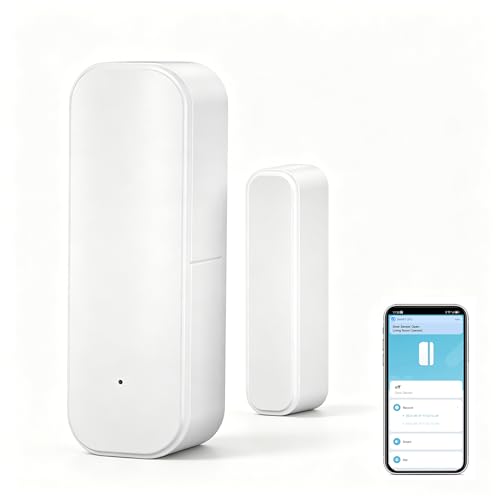
- WiFi Door Sensor with App Alerts: Tuya door sensor uses Smart Life as an app which is supp
- VOICE CONTROL: By connecting the smart sensor with Alexa or Google assistant to realized v
- Smart Home Automation: expand your smart home automation with smart door senso; set up you
- Battery Included & Low Power Warning: Door open alert powered by 2*AAA batteries(INCLUDED)
- Easy Installation: Without tools, Easy installa the door sensor alarm with included 3M sti
HubSpot Free CRM -- Best for Small Business
HubSpot's free tier gives you a proper contact database with deal stages, activity timelines, and custom properties. You can order contacts by last activity, deal stage, or any field you define. The interface is clean and the learning curve is gentle for non-technical users. Integrations with Gmail and Outlook mean every email automatically logs against a contact record. The free plan covers up to one million contacts, which is plenty for most small teams.
Cardhop -- Best for Apple Users
Cardhop replaces the stock Contacts app on Mac and iPhone with a smarter interface that lets you type natural-language queries like "call Sarah from Denver" and get the right result. Contacts can be grouped, color-coded, and sorted by any field. Birthday and anniversary reminders surface automatically. If your workflow is Apple-only, Cardhop's speed and design polish justify the modest annual subscription over fiddling with iCloud's basic sort options.

Contacts+ -- Best Multi-Platform Sync
Contacts+ syncs contacts across iPhone, Android, Gmail, and Outlook and deduplicates them automatically. It enriches records with social profile photos and job titles pulled from public sources. The ordering interface lets you filter by tag, relationship strength, or company. If you switch between Android and iPhone or manage contacts across multiple email accounts, the cross-platform sync alone is worth the subscription.
Reasons to buy
- ULTIMATE BIKE TRANSPORT
- INNOVATIVE ONETAP TECHNOLOGY
- SLEEK & SECURE DESIGN
- INTEGRATED LED LIGHTING
- CONVENIENT STORAGE
Zoho ContactManager -- Best for Teams
Zoho ContactManager is built for groups that share a contact database. Admins can set permissions, assign contacts to team members, and track notes across the team without contacts siloing in individual inboxes. Sorting and filtering options are granular: by owner, tag, company, or last touch. It connects natively to Zoho's broader suite but also integrates with Gmail and Outlook. Pricing is reasonable for the collaboration features included.
What to look for
What to consider
Start by counting how many contacts you manage and whether you need to share them with others. Solo users with under 500 contacts rarely need more than Google Contacts or Apple Contacts with a solid labeling system. Small business owners who track deal stages benefit from a lightweight CRM like HubSpot Free. Teams sharing contact ownership need a platform with user permissions. Finally, consider where your contacts already live: choose a tool that imports from your current source without manual re-entry.
What to consider
For related reading, see our guide to [best compact organizers for desks](/articles/best-compact-at-home-gym) and [best co-op office tools](/articles/best-co-op-ps4-games). For how we evaluate every product, visit our [methodology](/methodology) page.
FAQs
For small businesses, grouping contacts by role or relationship stage works well. Tools like HubSpot Free CRM or Google Contacts let you create labels and sort alphabetically or by last interaction. Starting with a clear naming convention saves significant cleanup time later.
Yes. Most modern contact management apps accept CSV or vCard imports. Export your existing contacts from your phone or email provider, clean up duplicates beforehand, then import into your chosen tool. Google Contacts and Apple iCloud both offer straightforward export options.
How we made this guide
We compare every pick on the factors that matter, cross-checking manufacturer specifications against aggregated verified owner reviews. We rank independently and never take payment for placement. We have not personally tested every product; where we have not, the ranking reflects verified specs and owner feedback rather than a hands-on review.
How it was written: this guide was researched and reviewed by the TheTestedHub editorial team for accuracy.
Affiliate disclosure: TheTestedHub is reader-supported. When you buy through links on our site, we may earn a commission at no extra cost to you.
Related guides

7 Elbow & Arm Pain Relief Solutions That Actually Work

Consistent CPAP Care: Driver-Reviewed SoClean 3 Pick 2026

Which CPAP Is Best? Our 2026 Pick: ResMed AirSense 11

Compression Therapy Guide: What to Buy in 2026

Compression Therapy for Recovery: Normatec 3 Pro Reviewed

Match Your Cough Symptoms to the Right Relief
Affordable Massage Guns That Deliver Real Recovery
