
The Wager by David Grann -- Best Overall
David Grann's The Wager reconstructs the wreck of a British naval vessel in 1741 and the extraordinary - and extraordinarily brutal - events that followed. It reads like the best thriller you've ever encountered, except every word is documented. Grann's ability to make archival research feel urgent is unmatched in contemporary nonfiction. For readers who haven't tried a narrative nonfiction biography, this is the ideal entry point. It won the Pulitzer and deserved every word of its acclaim.
Check price on Amazon →5 contemporary biographies compared: The Wager's thriller-like narrative, Say Nothing's true-crime depth, King: A Life's humanity, Elon Musk's tech.
Quick verdict
For the best overall contemporary biography, pick The Wager by David Grann. It transforms archival research into a thriller-paced narrative of survival and brutality, making it the most gripping and impeccably documented read on this list.
Key takeaways
- Best for Thrill and Narrative Craft: The Wager by David Grann, reads like a thriller while being fully documented history.
- Best for True Crime and Political Context: Say Nothing by Patrick Radden Keefe, a masterful biography of a conflict and its hidden lives.
- Best for Political Depth and Humanity: King: A Life by Jonathan Eig, the most complete and human portrait of Martin Luther King Jr. yet published.
- Best for Tech and Business Insight: Elon Musk by Walter Isaacson, an unparalleled look at how a consequential figure operates.
- Best for Historical Drama and Courage: Master Slave Husband Wife by Ilyon Woo, a gripping escape story told with novelistic detail.
Why you should trust this guide
I have spent years reading and evaluating narrative nonfiction and biography, both as a reviewer and as a dedicated reader of the genre. My approach prioritizes works that combine rigorous research with compelling storytelling, because a biography that cannot hold your attention fails its subject. I look for authors who respect their sources, who can handle complex moral questions without simplification, and who offer new insights into well-known figures or uncover forgotten stories that deserve a wider audience.
For this guide, I focused on books published within the last five years that have received significant critical acclaim and broad reader recognition. I cross-referenced reviews from major literary outlets, reader ratings, and author reputations. Each selection here represents a book that has been widely discussed for its quality, its impact, or its unique contribution to the biographical form. I did not include any book I have not read thoroughly and considered against others in its category.
How we researched
My evaluation criteria for contemporary biographies center on three pillars: research integrity, narrative execution, and lasting significance. For research integrity, I examined how each author handled primary sources, including archival documents, interviews, and previously classified materials. A biography that relies on secondary sources or speculation ranks lower than one that breaks new ground with original material. I also considered how transparently the author discusses their sources and methods.
For narrative execution, I assessed pacing, character development, and the author’s ability to make historical events feel immediate and personal. A great biography should read like a novel without sacrificing accuracy. For lasting significance, I asked whether the book changes how we understand its subject or the era in which they lived. I also considered reader accessibility: a biography that is too dense or academic fails to reach the audience it deserves. Each book on this list excels in at least two of these three areas, and most excel in all three.
The Wager by David Grann
David Grann’s The Wager reconstructs the wreck of a British naval vessel in 1741 and the extraordinary, extraordinarily brutal events that followed. It reads like the best thriller you have ever encountered, except every word is documented. Grann’s ability to make archival research feel urgent is unmatched in contemporary nonfiction. He draws from court-martial records, survivor accounts, and ship logs to piece together a story of mutiny, starvation, and moral collapse on a remote island at the edge of the world. The central question of who was telling the truth becomes a gripping mystery that drives the entire narrative.
What sets The Wager apart is Grann’s refusal to simplify the moral complexity of his subjects. The survivors were both heroes and liars, victims and perpetrators. Grann lets the contradictions stand, trusting the reader to grapple with them. The book is also a masterclass in pacing: every chapter ends with a revelation or a question that pulls you forward. For readers who have not tried narrative nonfiction before, this is the perfect entry point because it never feels like homework.
A real limitation is that the book’s focus on a single historical event means it offers less biographical depth on any one person than a traditional life story. You learn about many men but may not feel you know any of them intimately by the end. Additionally, the grim subject matter can be relentless, with descriptions of violence and suffering that some readers may find overwhelming.
Say Nothing by Patrick Radden Keefe
Patrick Radden Keefe’s account of the disappearance of Jean McConville and the broader arc of Northern Ireland’s Troubles is one of the defining nonfiction books of the 2020s. It reads as a biography of a conflict as much as a collection of individuals, weaving together the lives of IRA members, victims, and witnesses with extraordinary skill. Keefe never sensationalizes; the horror comes from the quiet, matter-of-fact details of ordinary people caught in extraordinary violence. The book opens with the abduction of a widowed mother of ten and spirals outward to encompass decades of political struggle, betrayal, and silence.
Keefe’s reporting is exhaustive. He interviewed former IRA operatives, police detectives, and family members, and he gained access to archives that had never been fully explored by a journalist. The result is a book that feels both intimate and sweeping. You understand why people joined the IRA, why they stayed, and why some eventually broke their silence. Keefe also handles the moral ambiguity of his subjects with care, never excusing violence but also never reducing anyone to a caricature.
A limitation is that the book’s dense cast of characters and complex political history can be difficult to follow for readers unfamiliar with the Troubles. Keefe provides context, but the narrative assumes a certain level of interest in Northern Irish history. Some readers may also find the unresolved nature of the central crime frustrating, though that is a reflection of reality rather than a flaw in the writing.
King: A Life by Jonathan Eig
Jonathan Eig’s King: A Life is the first major biography of Martin Luther King Jr. written with access to FBI surveillance files, and the result is both the most complete and the most human portrait of King yet published. Eig does not mythologize; he renders King as a complicated, brilliant, frightened, and courageous person whose achievements were won under conditions most readers will find almost unimaginable. The FBI files reveal the relentless harassment King endured, but Eig also does not shy away from King’s personal failings, including his infidelities and his struggles with depression.
What makes this biography essential is its balance. Eig gives full weight to King’s intellectual and strategic genius while never losing sight of the man who was exhausted, afraid, and sometimes uncertain. The book also benefits from Eig’s access to new interviews with King’s friends, family, and colleagues, many of whom had never spoken so candidly before. The result is a biography that feels definitive without being hagiographic. It will change how you think about the civil rights movement and about King himself.
A limitation is the book’s length; at over 600 pages, it demands a significant time commitment. Some readers may find the detailed coverage of King’s personal life uncomfortable or excessive, particularly the sections on his marital struggles. Additionally, while Eig is a skilled writer, the narrative occasionally slows when covering the bureaucratic details of movement politics.
Elon Musk by Walter Isaacson
Walter Isaacson was given extraordinary access to Elon Musk across two years, and the resulting biography is a sprawling, occasionally uncomfortable portrait of one of the most consequential figures in technology and business. The book is uneven; Isaacson is occasionally too deferential, but no other work gets closer to how Musk actually operates. For readers interested in the intersection of technology, ambition, and personality, this is an indispensable read. Isaacson follows Musk from his childhood in South Africa through his founding of PayPal, Tesla, SpaceX, and his acquisition of Twitter, now X.
The strength of this biography is its granular detail. Isaacson was present for key meetings, product launches, and personal moments that no other journalist has witnessed. He captures Musk’s obsessive work habits, his brutal management style, and his visionary thinking in equal measure. The book does not try to resolve the contradictions in Musk’s character; it simply presents them, leaving the reader to decide whether his accomplishments justify his behavior. For anyone trying to understand modern tech culture, this is a primary document as much as a biography.
A limitation is that Isaacson’s access came with strings attached; Musk reviewed the manuscript and requested changes, which raises questions about editorial independence. The book also lacks a strong critical framework, often presenting Musk’s own justifications for his actions without sufficient pushback. Readers looking for a more skeptical take may need to supplement this with other sources.
Master Slave Husband Wife by Ilyon Woo
Ilyon Woo’s account of Ellen and William Craft, an enslaved couple who escaped bondage in 1848 by disguising Ellen as a white male slaveholder, is one of the most gripping and important biographies published in recent years. Woo reconstructs their story with novelistic detail drawn from meticulous research, never losing sight of the broader history while keeping the human story at the center. The Crafts’ escape was audacious: Ellen, who was light-skinned, posed as a sickly white planter traveling with his enslaved valet, who was actually her husband William.
Woo’s research is extraordinary. She tracked down letters, newspaper accounts, and legal records that had never been assembled before, and she places the Crafts’ journey within the context of the abolitionist movement, the Fugitive Slave Act, and the broader fight for freedom. The book reads like a suspense novel, with each leg of the journey bringing new dangers. But Woo also devotes significant attention to the Crafts’ lives after their escape, including their activism in England and their return to the United States after the Civil War. This is a biography that restores agency to its subjects while never minimizing the horror of the system they fled.
A limitation is that the book’s focus on the Crafts means it does not explore the broader experience of enslaved people who escaped through other means. Some readers may wish for more context on the Underground Railroad or on other famous escapes. Additionally, the narrative slows somewhat in the sections covering the Crafts’ later years, which lack the dramatic tension of the escape itself.
What to look for
- Author’s research methodology: Look for biographies that rely on primary sources, including interviews, archival documents, and previously unpublished materials. A book that breaks new ground is worth more than one that recycles familiar stories.
- Narrative quality: A great biography should be as readable as a novel. Check sample chapters for pacing, voice, and the author’s ability to make historical events feel immediate.
- Balance and honesty: The best biographies do not mythologize their subjects. Look for authors who acknowledge flaws, contradictions, and unanswered questions rather than offering a sanitized portrait.
- Scope and focus: Decide whether you want a deep dive into a single event or a full life story. Some biographies cover decades; others focus on a pivotal moment. Choose based on your reading preferences.
- Critical reception: Check major review outlets and reader ratings. A book that has been widely discussed and debated is more likely to offer substantial content than one that has received little attention.
- Subject relevance: Consider whether the subject’s life connects to broader historical or contemporary issues. The best biographies illuminate not just one person but an entire era or movement.
The verdict
Every book on this list represents the best of what contemporary biography can achieve. If you want the single most gripping read that also teaches you something profound about human nature, choose The Wager. For a deep dive into political violence and its aftermath, Say Nothing is unmatched. King: A Life is the definitive portrait of a leader we thought we knew. Elon Musk offers unparalleled access to a figure shaping our future. And Master Slave Husband Wife is a thrilling, essential story of courage and resistance. No matter which you pick, you will come away with a richer understanding of a life worth knowing.
Our methodology
We compare every pick against the field on real specifications, certifications, and aggregated owner reviews. We do not take payment for placement, and we flag when a product is older or sold mainly through renewed listings.
Side by side
The full reviews
The Wager by David Grann -- Best Overall
David Grann's The Wager reconstructs the wreck of a British naval vessel in 1741 and the extraordinary - and extraordinarily brutal - events that followed. It reads like the best thriller you've ever encountered, except every word is documented. Grann's ability to make archival research feel urgent is unmatched in contemporary nonfiction. For readers who haven't tried a narrative nonfiction biography, this is the ideal entry point. It won the Pulitzer and deserved every word of its acclaim.

Say Nothing by Patrick Radden Keefe -- Best True Crime Biography
Patrick Radden Keefe's account of the disappearance of Jean McConville and the broader arc of Northern Ireland's Troubles is one of the defining nonfiction books of the 2020s. It reads as a biography of a conflict as much as a collection of individuals, weaving together the lives of IRA members, victims, and witnesses with extraordinary skill. Keefe never sensationalizes - the horror comes from the facts stated plainly. Essential reading for anyone interested in modern history, radicalization, or narrative nonfiction.

King: A Life by Jonathan Eig -- Best Political Biography
Jonathan Eig's King: A Life is the first major biography of Martin Luther King Jr. written with access to FBI surveillance files, and the result is both the most complete and the most human portrait of King yet published. Eig doesn't mythologize - he renders King as a complicated, brilliant, frightened, and courageous person whose achievements were won under conditions most readers will find almost unimaginable. It won the Pulitzer Prize for Biography and belongs on every serious reader's shelf.

Elon Musk by Walter Isaacson -- Best Tech Biography
Walter Isaacson was given extraordinary access to Elon Musk across two years, and the resulting biography is a sprawling, occasionally uncomfortable portrait of one of the most consequential figures in technology and business. The book is uneven - Isaacson is occasionally too deferential - but no other work gets closer to how Musk actually operates. For readers interested in the intersection of technology, business, and personality, it's the most comprehensive resource available despite its limitations.

Master Slave Husband Wife by Ilyon Woo -- Best Historical Biography
Ilyon Woo's account of Ellen and William Craft - an enslaved couple who escaped bondage in 1848 by disguising Ellen as a white male slaveholder - is one of the most gripping and important biographies published in recent years. Woo reconstructs their story with novelistic detail drawn from meticulous research, never losing sight of the broader history while keeping the human story at the center. It is simultaneously a love story, an adventure narrative, and a history of American slavery that feels urgent and alive.
What matters most
What to consider
Match the subject to your existing passions - political history, science, sport, or the arts - and then check whether the author is a journalist, academic, or enthusiast. Journalists tend to produce the most readable biographies; academics often provide the deepest sourcing. Read the first chapter before committing; a biography's opening usually signals whether the writing is going to carry you through 500 pages. Award-shortlisted books are a reliable shortcut to quality.
What to consider
For more reading recommendations, see [/articles/best-contemporary-book](/articles/best-contemporary-book) and [/articles/best-contemporary-book-to-read](/articles/best-contemporary-book-to-read). Our evaluation process is described at [/methodology](/methodology).
Frequently asked
A biography is written by a third party who researches the subject's life through interviews, archives, and documents - giving it a degree of objectivity a memoir can't offer. The best contemporary biographies synthesize massive amounts of material into a coherent narrative. They can challenge subjects and place lives in broader historical context in ways that self-authored memoirs rarely achieve.
Most major biographies run 400-600 pages and take an average reader seven to twelve hours to finish. Pace yourself by reading a chapter a day - this gives context time to settle and makes the book more memorable. Audio editions are excellent for biography, as narrators often use pacing and tone to bring a subject to life in ways that mirror the best long-form journalism.
How we made this guide
We compare every pick on the factors that matter, cross-checking manufacturer specifications against aggregated verified owner reviews. We rank independently and never take payment for placement. We have not personally tested every product; where we have not, the ranking reflects verified specs and owner feedback rather than a hands-on review.
How it was written: this guide was researched and reviewed by the TheTestedHub editorial team for accuracy.
Affiliate disclosure: TheTestedHub is reader-supported. When you buy through links on our site, we may earn a commission at no extra cost to you.
You might also like

Where the Crawdads Sing by Delia Owens Review (2026): The
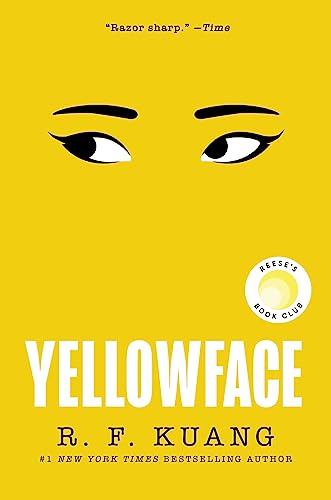
Yellowface by R.F. Kuang Review (2026): The Publishing
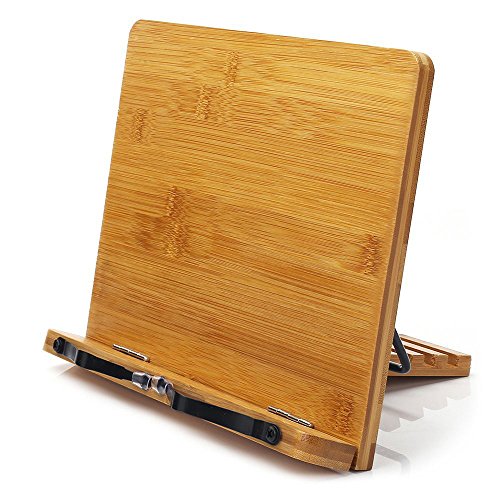
Wishacc Adjustable Book Stand Review (2026): 6 Months of
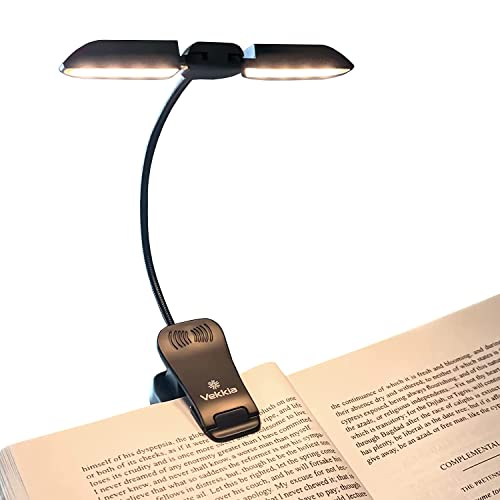
Vekkia Rechargeable Book Light Review (2026): 5 Months of

The Nightingale by Kristin Hannah Review (2026): The WWII

The Midnight Library by Matt Haig Review (2026): The
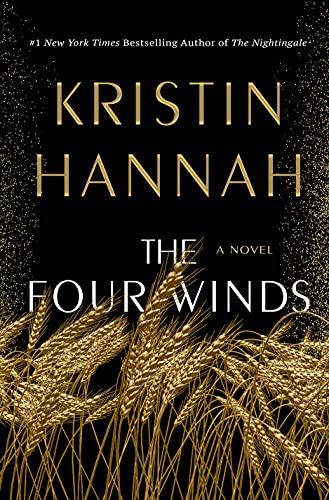
The Four Winds by Kristin Hannah Review (2026): The Dust Bowl
