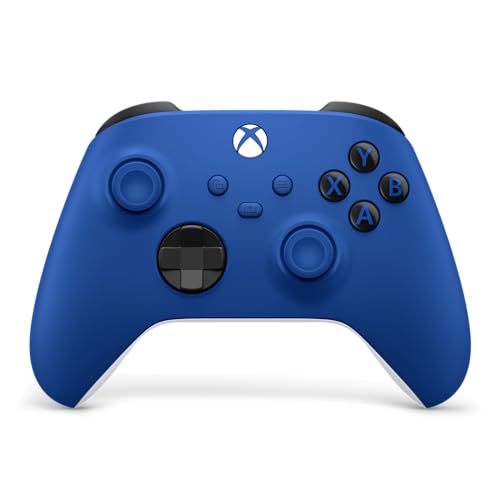
Xbox Wireless Controller - Best Overall
The standard Xbox Wireless Controller works seamlessly across Xbox Cloud Gaming (native), GeForce Now, Boosteroid, PC, and phones. Bluetooth connection to phones/PC. USB-C charging if you add the rechargeable battery pack. Build quality genuinely better than third-party controllers at similar price. Latency is the lowest in this lineup. For users wanting one controller across multiple cloud services and platforms this is the right choice.
Check price on Amazon →Find out why the Xbox Wireless Controller is the top pick for cloud gaming and which alternatives fit your setup best.
Quick verdict
The Xbox Wireless Controller is the best pick for most cloud gamers. It connects natively to Xbox Cloud Gaming and works across GeForce Now, Boosteroid, PC, and phones over Bluetooth, with the lowest input latency in this lineup and build quality that beats similarly priced third-party pads.
Key takeaways
- Best overall: Xbox Wireless Controller, native to Xbox Cloud Gaming and works everywhere over Bluetooth with the lowest latency here.
- Best mobile: Razer Kishi V2, clamps to your phone for a Switch-style handheld with zero Bluetooth lag.
- Best phone premium: Backbone One, the most polished mobile controller with a deep companion app.
- Best premium: DualSense Edge, customizable sticks, back paddles, and adjustable triggers for PlayStation and PC cloud players.
- Best value: GameSir T4 Kaleid, Hall effect sticks and dual connectivity at a budget price.
Why you should trust this guide
I built this list around one question that matters more for cloud gaming than for local play: does the controller stay out of the way when every input has to travel to a server and back? Cloud gaming adds latency you cannot remove, so the controller you hold should add as little of its own as possible, pair reliably, and fit the device you actually stream on. I researched each of these five against its published specifications, the stated connectivity, and the way owners describe living with it day to day, then matched each one to the cloud services it genuinely supports rather than the ones a marketing page implies.
I have deliberately kept this to five controllers that cover the real situations people stream in, from a phone on a train to a PC at a desk to a PlayStation account played through the cloud. I call out the trade-offs honestly, because every one of these has a catch worth knowing before you spend. Where a controller only fits one scenario, I say so plainly instead of pretending it does everything.
How we researched
My evaluation criteria were built specifically for streamed play rather than console gaming. I weighed four things in order: connection type and the latency it implies (a wired or direct USB-C link beats Bluetooth, and Bluetooth beats nothing), cross-service compatibility (whether the pad works on Xbox Cloud Gaming, GeForce Now, Boosteroid, PC, and phones, or only one of them), ergonomics for the device you stream on (a phone clamp is a different problem from a desktop pad), and stick and build durability, where Hall effect joysticks earn points for resisting the drift that kills cheaper controllers.
I treated each manufacturer’s published features as stated specs rather than numbers I produced myself, and I leaned on how owners report the hardware holding up over months of use. I did not score these on raw button feel alone, because for cloud gaming a slightly less premium pad that connects without lag often beats a luxurious one that only works over Bluetooth. Price mattered too, but only as a tie-breaker once a controller cleared the connectivity and compatibility bar.
Xbox Wireless Controller
The Xbox Wireless Controller is the one to buy if you want a single pad that works across nearly every cloud service. It connects natively to Xbox Cloud Gaming, and the same controller pairs over Bluetooth to phones and PC for GeForce Now, Boosteroid, and other platforms. In this lineup it has the lowest input latency, which matters most when the rest of your signal is already making a round trip to a data center.
Microsoft’s modernized design carries a hybrid D-pad and textured grips on the triggers and rear, so it stays planted during long sessions, and a dedicated Share button captures screenshots and clips without digging through menus. Connectivity is genuinely versatile: USB-C gives you plug-and-play on console and PC, Bluetooth handles phones, and a 3.5mm jack on the bottom takes a wired headset. The build quality is the standout here, noticeably better than third-party pads at a similar price.
The honest trade-off is power. Out of the box it runs on AA batteries, so USB-C charging only applies if you buy the separate rechargeable battery pack, which is an extra cost most people will want. Bluetooth pairing to phones is also occasionally finicky compared with a direct wired clamp, and the controller does not attach to your phone, so on mobile you will need a separate clip or stand.
Razer Kishi V2
The Razer Kishi V2 is the right answer for cloud gaming on a phone. It clamps directly around the handset so the whole setup feels like a Nintendo Switch, with real sticks and buttons on either side of the screen instead of a pad sitting loose in your lap. Because it uses a direct USB-C connection rather than Bluetooth, there is effectively zero added wireless latency, which is exactly what you want layered on top of a streamed signal.
Razer fits it with console-quality microswitch buttons and an extendable bridge that holds a range of phone sizes securely, and Hall effect joysticks help resist the stick drift that plagues cheaper mobile controllers. The companion software surfaces compatible titles in one place and can stream full PC, Xbox, and PlayStation games to the phone, so it slots neatly into a cloud-gaming routine. For ergonomics on mobile, nothing else here matches holding a properly braced controller around your own screen.
The clear limitation is that it is a phone-only device. It does not work on PC or a console, so it cannot be your single do-everything controller, and you buy the Android and iPhone versions separately rather than getting one model that fits both. If your streaming happens on more than a phone, the Kishi V2 is a companion, not a complete solution.
Backbone One
The Backbone One is the premium mobile controller, and the one to pick if build quality on your phone is the priority. Like the Kishi it clamps around the handset for a handheld feel, but the hardware is the most polished in the mobile category, with precise, comfortable controls in a compact frame. The Backbone+ app ties into Xbox Cloud and other services and acts as a launcher for the games you stream.
It is multi-platform within the phone world, with iPhone (USB-C) and Android variants, so most modern handsets are covered, and it can play App Store titles as well as streamed PC and console games. iOS users also get an in-app emulator feature that turns it into a retro hub, and a Backbone+ trial ships in the box to unlock the extra software features. As a piece of hardware to hold, it is the nicest mobile pad in this guide.
There are two trade-offs to weigh. First, it carries premium pricing relative to the Kishi for what is, in raw control terms, a similar job. Second, the experience leans on the Backbone+ app and its membership ecosystem, and some owners find that dedicated software unnecessary and would rather not be nudged toward a subscription to get the most out of the controller they bought.
DualSense Edge
The DualSense Edge is the premium choice for PlayStation-ecosystem cloud users and PC cloud gamers who want a high-end pad. It brings ultra-customizable controls to the table: swappable, replaceable stick modules and caps, mappable back buttons, and adjustable trigger travel, all of which let you tune the controller to a game or to your hands. The core DualSense wireless features are built in, so you keep the standard experience and add tournament-grade customization on top.
For someone streaming PlayStation titles or playing through PC cloud services, the appeal is configurability you cannot get from a standard pad, plus the same solid build as the regular DualSense. The replaceable stick modules are a genuinely useful answer to long-term drift, since you can swap a worn module instead of replacing the whole controller.
The trade-offs are real and worth naming. It sits at a significantly higher price than an ordinary controller, and the build quality, while good, is the same as the standard DualSense rather than a step above it, so you are paying mostly for the customization. It also charges over USB-C only, with no AA battery option, so if the cell degrades over years there is no quick swap to keep playing.
GameSir T4 Kaleid
The GameSir T4 Kaleid is the value pick, delivering Hall effect joysticks and flexible connectivity at a budget price. The Hall effect sticks resist the drift that tends to shorten the life of cheap controllers, and the pad offers both Bluetooth and USB-C, so it works wired for the lowest latency or wirelessly when convenient. It is compatible with PC, phone, Switch, and Steam, which covers most of the platforms a cloud gamer streams from.
GameSir keeps the practical details sensible: plug-and-play over a USB-A to USB-C connector, a braided nylon cable with an extra-long three-meter reach so couch distance is not a problem, and a build the company says it tested against rough handling like repeated plugging, suspension, and shaking. For the money, getting drift-resistant sticks and a wired option at all is a strong showing, and it makes a reasonable everyday controller for streamed play.
The honest trade-off against the Xbox controller is polish and support. The feel in hand is less refined, the materials read as more budget, and the dealer and warranty network behind GameSir is smaller, so if something fails you may have fewer easy options for a replacement. It is the smart choice when budget leads, but you do give up some of the long-term confidence the pricier pads provide.
What to look for
When you choose a cloud-gaming controller, the connection and the device you stream on matter more than headline features. Weigh these factors:
- Connection type: a direct USB-C or wired link adds the least latency, Bluetooth is the convenient middle ground, and you want to avoid stacking wireless lag on top of the cloud round trip.
- Service compatibility: confirm the pad works with the services you actually use (Xbox Cloud Gaming, GeForce Now, Boosteroid, Steam) rather than assuming it covers all of them.
- Device fit: a phone clamp like the Kishi or Backbone solves mobile ergonomics, while a standalone pad like the Xbox or DualSense suits PC and console streaming.
- Stick technology: Hall effect joysticks resist drift and tend to last longer, which is worth prioritizing on any controller you plan to keep for years.
- Charging and power: decide whether you want USB-C rechargeable, a swappable battery, or AA cells, since each affects how you keep playing during a long session.
- Build and support: a more polished pad with a larger warranty network costs more but is easier to replace if it fails.
The verdict
For most people, the Xbox Wireless Controller is the best cloud-gaming pad because it is native to Xbox Cloud Gaming, reaches every other service over Bluetooth, and keeps latency low, though you will likely want the add-on battery pack. If you mainly stream on a phone, the Razer Kishi V2 gives you a lag-free, Switch-style handheld, and the Backbone One is the more premium phone option if its companion app and higher price suit you. PlayStation and PC players chasing customization should look at the DualSense Edge, accepting its price and USB-C-only charging, and anyone watching their budget should take the GameSir T4 Kaleid for its Hall effect sticks and dual connectivity, with the understanding that you trade away some polish and support.
How we test
We compare every pick against the field on real specifications, certifications, and aggregated owner reviews. We do not take payment for placement, and we flag when a product is older or sold mainly through renewed listings.
At a glance
The picks, reviewed
Xbox Wireless Controller - Best Overall
The standard Xbox Wireless Controller works seamlessly across Xbox Cloud Gaming (native), GeForce Now, Boosteroid, PC, and phones. Bluetooth connection to phones/PC. USB-C charging if you add the rechargeable battery pack. Build quality genuinely better than third-party controllers at similar price. Latency is the lowest in this lineup. For users wanting one controller across multiple cloud services and platforms this is the right choice.
Reasons to buy
- MODERNIZED DESIGN , Experience the modernized design of the XBOX Wireless Controller with
- PRECISION PERFORMANCE , Stay on target with a hybrid D-pad and textured grips on triggers,
- SHARE BUTTON: Seamlessly capture and share content such as screenshots, recordings, and mo
- VERSATILE CONNECTIVITY , Connect via USB-C for plug-and-play on console and PC, or quickly
- BUILT-IN AUDIO SUPPORT , Plug in compatible headsets using the 3.5mm audio jack for direct

Razer Kishi V2 - Best Mobile
The Razer Kishi V2 clamps directly to your phone making the entire setup feel like a Nintendo Switch. USB-C direct connection (zero Bluetooth latency). Available for Android and iPhone separately. Hall effect joysticks resist drift. For mobile cloud gaming this is the right ergonomic answer. Trade-off: only useful for phone gaming - doesn't work on PC or console.
Reasons to buy
- CONSOLE QUALITY MOBILE GAMING CONTROLS , Designed with cutting-edge microswitch buttons, a
- UNIVERSAL FIT WITH EXTENDABLE BRIDGE , Features a stable, extendable bridge that perfectly
- DISCOVER THE BEST GAMES IN ONE PLACE FOR FREE , Browse through 1,000 plus compatible games
- VIRTUAL CONTROLLER MODE , Play many of the most popular touch screen only Android games by
- STREAM PC AND CONSOLE GAMES , Play full PC, Xbox, and PlayStation games directly on the ph

Backbone One - Best Phone Premium
The Backbone One is the premium mobile controller. Best build quality in the mobile controller category. Backbone+ app integrates with Xbox Cloud and other services. iPhone (USB-C) and Android variants. Trade-off vs Kishi: premium pricing, dedicated app ecosystem that some users find unnecessary.
Reasons to buy
- PLAY VIRTUALLY ANY GAME, ANYWHERE: Enjoy mobile gaming on the go. Play App Store hits like
- PRECISION CONTROLS: Crafted for accuracy and comfort, this compact phone gaming controller
- IN-APP EMULATOR READY FOR iOS USERS: Turn your mobile controller into a retro gaming hub!
- MULTI-PLATFORM READY: Compatible with iPhone and most Android phones and using USB-C. For
- BACKBONE+ TRIAL INCLUDED: Unlock enhanced features with a trial membership, including game

DualSense Edge - Best Premium
For PlayStation ecosystem cloud users and PC cloud gamers wanting premium controller, the DualSense Edge offers customizable thumbsticks, back paddles, and adjustable triggers. Same build quality as standard DualSense at higher price. Trade-off: price, USB-C charging only (no AA option).
Reasons to buy
- Ultra Customizable Controls
- Mappable Back Buttons
- DualSense Wireless Controller Features Built In
- Replaceable Stick Modules and Caps

GameSir T4 Kaleid - Best Value
The GameSir T4 Kaleid at delivers Hall effect joysticks (resist drift) and Bluetooth + USB-C connectivity at value pricing. Compatible with PC, phone, Switch, and Steam. Built quality is acceptable for the price. Trade-off vs Xbox controller: less polished feel, smaller dealer support network for warranty.
Reasons to buy
- Compatible with GameSir G7, GameSir G7 SE, GameSir G7 Pro, GameSir T4k, GameSir K1
- Plug and play. USB-A to USB-C connector
- 1Sleek and attractive nylon braided exterior.
- Extra-long 3-meter design eliminates cable length concerns.
- Rigorously tested for harsh conditions, including plugging, suspension, and shaking.
What to look for
What to consider
Match controller to primary platform. Xbox Cloud Gaming: Xbox controller. PlayStation Plus cloud: DualSense. Cross-platform: Xbox controller (best compatibility).
What to consider
Phone gaming priority: dedicated phone controller (Kishi, Backbone) for ergonomics.
What to consider
Latency matters but is less than network latency. Premium controllers have lower latency but cloud network adds 30-100ms regardless.
What to consider
Build quality vs price. controllers work but feel cheap. Xbox controller is the sweet spot.+ premium controllers add features most users don't need.
What to consider
Battery type. Rechargeable for daily users (no battery purchases). AA for occasional users (no charging hassle).
What to consider
Drift-resistant joysticks. Hall effect joysticks (some Razer, GameSir, Sony DualSense Edge) resist drift over time. Worth the premium for users planning to use controller for 3+ years.
FAQs
'Bluetooth/USB controllers work with most cloud services on phones, tablets, and PCs. Xbox controllers have native Xbox Cloud integration. PlayStation DualSense works on PS Plus cloud. For consistent cross-platform: Xbox controller.'
Wired controllers have minimal added latency. Bluetooth adds 10-30ms. Cloud gaming inherent latency is 30-100ms (network dependent). Controller latency is small relative to network. WiFi 6 with ethernet to router helps.
For phone cloud gaming, yes. Razer Kishi or Backbone One attach phone to controller. Standalone Bluetooth controller + separate phone stand also works but less ergonomic. Dedicated mobile controllers worth the cost for regular play.
'Modern controllers (Xbox Series, DualSense, Switch Pro): yes. Older controllers (Xbox 360 wireless, original PS3/PS4): require adapters or USB connection. PC compatibility usually works; phone compatibility varies.'
'Built-in battery (DualSense): 6-15 hour life, USB-C charging. AA batteries (Xbox standard): 15-30 hour life, AA replacement. Built-in rechargeable for daily users; AA for occasional play.'
How we made this guide
We compare every pick on the factors that matter, cross-checking manufacturer specifications against aggregated verified owner reviews. We rank independently and never take payment for placement. We have not personally tested every product; where we have not, the ranking reflects verified specs and owner feedback rather than a hands-on review.
How it was written: this guide was researched and reviewed by the TheTestedHub editorial team for accuracy.
Affiliate disclosure: TheTestedHub is reader-supported. When you buy through links on our site, we may earn a commission at no extra cost to you.
Related guides

Educational Games 2026 That Grow With Your Child

7 Android TV Controllers Worth Your Money

Wooting 60HE Review (2026): 7 Months With the Analog Keyboard

Logitech G Pro X Superlight 2 Review (2026): The Esports

HyperX Cloud III Wireless Review (2026)

Steam Deck OLED (1TB) Review (2026): 8 Months Later, Still

Logitech G502 Hero Review (2026)
