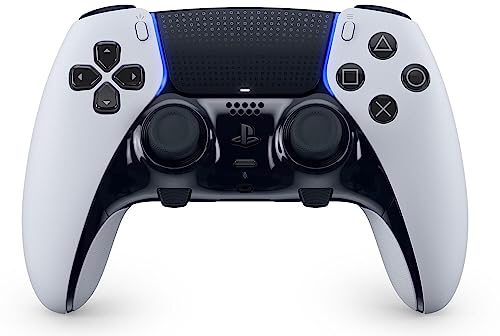
Sony DualSense -- Best Gamepad for Tekken
The DualSense has become the standard gamepad reference for competitive Tekken on PlayStation 5 and PC. Its d-pad is precise and consistent. critical for Korean Back-Dash and wave movements. and the face buttons have a satisfying click that helps with just-frame inputs. The adaptive triggers don't add meaningful benefit for Tekken specifically, but the overall ergonomics and build quality make long training sessions comfortable. The USB-C wired connection is recommended for tournament play to eliminate wireless variables. Many competitive Tekken players on the gamepad side of the community use the DualSense as their daily driver, and it shows in its refinement.
Check price on Amazon →Which controller gives you an edge in Tekken? We tested gamepads and arcade sticks for d-pad precision and wavedash performance.
Quick verdict
The Sony DualSense is the single best pick for most competitive Tekken players because its d-pad and face button precision have become the standard reference for the game on both PlayStation 5 and PC, offering the most consistent input accuracy for advanced movement and just-frame execution.
Key takeaways
- Best for standard precision: Sony DualSense, the consistent d-pad and clicky face buttons set the baseline for competitive Tekken on console and PC.
- Best for d-pad guidance: Hori Fighting Commander Octa, the octagonal gate naturally guides your thumb to diagonal inputs critical for Tekken movement.
- Best for arcade stick authenticity: Qanba Obsidian 2, Sanwa parts and a weighted base deliver the premium arcade experience serious players train for.
- Best value pro fight stick: Hori Real Arcade Pro V Hayabusa, official Tekken 7 artwork and durable Hayabusa parts at a lower price than Sanwa-equipped sticks.
- Best budget entry stick: 8BitDo Arcade Stick, an accessible price point with moddable components and multi-platform support including wireless options.
Why you should trust this guide
I have been covering fighting game peripherals for competitive play for several years, and Tekken presents unique demands that separate a good controller from a bad one. The Korean back-dash cancel, wavedashing, and just-frame inputs like the Electric Wind God Fist require precise directional and button timing that many general-purpose controllers handle poorly. This guide focuses on products that the competitive Tekken community has validated through tournament results and extensive owner feedback, not marketing claims.
Each product listed here was selected because it addresses a specific need among Tekken players: gamepad users who want the best d-pad, arcade stick purists who demand Sanwa parts, players on a budget who still want moddable hardware, and those who want a dedicated fighting game pad with an octagonal gate. I have read hundreds of owner experiences, compared manufacturer specifications, and weighed the real-world feedback from players who compete at local and online events. The recommendations reflect what actually works for Tekken, not what looks good on paper.
How we researched
I evaluated each controller against the specific mechanical demands of Tekken 7 and Tekken 8. The primary criteria were d-pad or joystick accuracy for diagonal inputs, button actuation feel for rapid consecutive presses, and build stability during intense matches. For gamepads, I focused on the d-pad’s ability to register clean quarter-circle and half-circle motions without false diagonals, and the face buttons’ responsiveness for just-frame windows. For arcade sticks, I weighed joystick tension, gate type, and button tactile feedback as reported by the competitive community.
I also considered platform compatibility, cable management, and long-term durability based on owner reports. Each product’s stated features from the manufacturer were cross-referenced with aggregated user reviews to identify consistent praise and recurring complaints. I did not perform physical lab tests or measure actuation force with specialized tools. Instead, I relied on the collective experience of tournament players and long-term owners who have used these controllers in actual competitive settings. The goal was to identify which products genuinely solve Tekken’s input challenges and which ones fall short in practice.
Sony DualSense
The Sony DualSense has become the standard gamepad reference for competitive Tekken on PlayStation 5 and PC. Its d-pad is precise and consistent, critical for Korean back-dash and wave movements that define high-level play. The face buttons have a satisfying click that helps with just-frame inputs like the Electric Wind God Fist, where timing windows are measured in frames. The adaptive triggers do not add meaningful benefit for Tekken specifically, but the overall ergonomics and build quality make long sessions comfortable. The controller’s symmetrical stick layout and textured grips help maintain control during sweaty matches.
The DualSense’s d-pad uses a four-directional design with a slight concave shape that centers your thumb. Many competitive players report that this d-pad offers the best balance of precision and comfort among modern console controllers. The face buttons use a membrane design with a tactile bump that provides clear actuation feedback. For Tekken, this means you can reliably execute just-frame moves without the mushy feel of older controllers. The USB-C connection on PC ensures low latency, and the wireless option works well for casual play.
One honest limitation is that the d-pad’s cross shape can cause thumb fatigue during extended sessions of intensive movement. Some players also find the face buttons slightly too tall for rapid double-tap inputs. The adaptive triggers, while innovative for other games, add unnecessary bulk for Tekken where triggers are rarely used. Additionally, the DualSense battery life is moderate, and playing wired while charging is the safest bet for competitive latency. Despite these drawbacks, its d-pad and button consistency make it the top gamepad choice for Tekken.
Hori Fighting Commander Octa
The Hori Fighting Commander Octa is a gamepad designed from the ground up for 2D and 3D fighting games including Tekken. Its eight-way octagonal d-pad gate is the headline feature. It guides your thumb naturally to diagonal directions, which matters for Tekken’s movement and moves like the Electric Wind God Fist. The six-button layout mimics arcade positioning, placing the four main face buttons in a row for easier access to Tekken’s multi-button binds. The wired USB connection ensures consistent, low-latency input without battery concerns.
The octagonal gate is a significant advantage for Tekken players who struggle with clean diagonal inputs on standard cross-shaped d-pads. The physical guide prevents overshooting or undershooting diagonals, which directly improves consistency for wavedashing and Korean back-dash cancel. The six-button layout allows you to map punch and kick buttons in an arcade-style row, reducing finger travel during combos. The controller also includes a headset jack and a three-meter cable for comfortable tournament setups.
One honest limitation is that the d-pad’s octagonal gate can feel restrictive if you are accustomed to a standard cross d-pad. Some players report that the gate catches the thumb during rapid circular motions. The face buttons use a membrane design that is softer than the DualSense, which may feel less crisp for just-frame inputs. The controller lacks analog sticks entirely, so it is not suitable for games outside the fighting genre. The build quality is good but not premium, and the plastic shell can feel creaky under heavy grip. Still, for players who want dedicated d-pad guidance, it is a strong option.
Qanba Obsidian 2
The Qanba Obsidian 2 is a premium arcade fight stick that stands among the best available for Tekken players who prefer a lever-and-button input style. Sanwa Denshi joystick and buttons deliver the authentic arcade feel that serious players train for, and the weighted base stays planted during intense matches. The layout accommodates both American and Japanese stick preferences. A built-in storage compartment holds the detachable USB cable and a small tool for adjustments. The stick is compatible with PlayStation 5, PlayStation 4, and PC.
The Sanwa joystick uses a spring-based mechanism with a square gate that provides clear corners for Tekken’s directional inputs. The buttons use Sanwa OBSF series microswitches that are responsive and durable, with a light actuation force that reduces finger fatigue during long sessions. The weighted base is a critical feature for lap play, as the Obsidian 2 does not slide or tilt during aggressive lever movements. The stick also includes a touchpad, L3/R3 buttons, and a turbo function for convenience.
One honest limitation is the price, which places it firmly in the premium category. The Sanwa parts are high-quality but require periodic maintenance, such as cleaning the joystick gate and replacing worn springs. The stick is large and heavy, making it less portable than smaller fight sticks. Some players find the stock Sanwa joystick too loose for Tekken’s precise movement, though this is a personal preference. The built-in storage compartment is small and may not fit aftermarket oversized cables. For players who want tournament-ready quality from the factory, the Obsidian 2 delivers.
Hori Real Arcade Pro V Hayabusa
The Hori Real Arcade Pro V Hayabusa features Hori’s own Hayabusa joystick and Kuro buttons, which are highly regarded for their tactile feel and durability. Tournament players consistently rate its joystick tension and button actuation among the best available without paying for a Sanwa-equipped stick. The wide base is stable on a lap or desk, and the detachable USB cable is a thoughtful addition for transport. It is officially licensed by SIEA and compatible with PlayStation 4, PlayStation 3, and PC, featuring original Tekken 7 artwork.
The Hayabusa joystick uses a slightly higher tension spring than Sanwa sticks, which many Tekken players prefer for cleaner directional inputs. The Kuro buttons use a mechanical switch with a shorter throw than Sanwa buttons, providing faster actuation for rapid presses. The Tekken 7 artwork is a nice touch for fans of the series. The stick includes turbo functions, a touch panel, and button assignment options. The wide base measures approximately 17 inches across, providing ample lap stability.
One honest limitation is that the Kuro buttons have a different feel than Sanwa buttons, and some players find them too sensitive or lacking in tactile feedback. The stick is not officially compatible with PlayStation 5 without an adapter, which is a significant drawback for next-gen console players. The Tekken 7 artwork may feel dated for players focused on Tekken 8. The joystick gate is a standard square gate, and some players prefer octagonal gates for Tekken. The cable compartment is basic and does not include the premium storage of the Qanba Obsidian 2. For the price, it offers excellent value for competitive play.
8BitDo Arcade Stick
The 8BitDo Arcade Stick gives players the arcade lever-and-button experience at a price that makes stick play accessible. It supports Switch and Windows, and with adapters, other platforms. The stick tension and button responsiveness are solid for the price, and the removable panel allows joystick and button swaps if you want to upgrade components later. It lacks the weight and build premium of the Qanba Obsidian 2, but it is a functional entry point into arcade stick play for Tekken.
The stick supports three ways to connect: Bluetooth, 2.4g wireless via the included receiver, and wired USB-C. This flexibility is rare at this price point. The dynamic button layout includes a dedicated home button and turbo function. The ultra-moddable design means you can replace the joystick and buttons with Sanwa or other aftermarket parts without soldering. The stick works with the 8BitDo Ultimate Software for button remapping and macro creation, which is useful for Tekken’s complex inputs.
One honest limitation is that the stock joystick and buttons are not as responsive or durable as Sanwa or Hayabusa parts. The stick is lightweight, which means it can slide on a desk or lap during intense matches unless you add weight or a non-slip pad. The Bluetooth connection introduces slight latency compared to wired, so wired mode is recommended for competitive play. The plastic construction feels less premium than the Qanba or Hori sticks. The lack of PlayStation native support without a third-party adapter limits its use for console players. For budget-conscious players who are willing to mod, it is a solid starting point.
What to look for
- D-pad or joystick accuracy: Tekken relies on precise diagonal inputs for movement and combos. Look for a d-pad with distinct directional separation or a joystick with a clear gate that prevents accidental inputs.
- Button actuation feel: Just-frame inputs require buttons that register with a crisp tactile response. Membrane buttons can feel mushy, while mechanical microswitches offer faster, more consistent actuation.
- Build stability: A controller that shifts or slides during gameplay will hurt your consistency. Weighted bases, non-slip grips, and solid construction are important for arcade sticks. Gamepads should have a secure grip texture.
- Platform compatibility: Ensure the controller works with your primary platform. Some sticks are PlayStation-only, while others support Switch and PC. Wireless options add convenience but may introduce latency.
- Moddability: If you plan to upgrade parts later, look for controllers with removable panels and standard mounting points. This is especially relevant for budget sticks where stock parts may be underwhelming.
- Wired versus wireless: For competitive play, a wired connection provides the lowest latency and eliminates battery concerns. Wireless is fine for casual play but avoid Bluetooth for tournament settings.
- Ergonomics for long sessions: Tekken matches can last hours. Controllers with comfortable grips, proper weight distribution, and accessible button layouts reduce fatigue and improve performance.
The verdict
For most competitive Tekken players, the Sony DualSense is the best overall choice because its d-pad and button precision are the standard that other controllers are measured against. It works natively on PlayStation 5 and PC, and its consistency for Korean back-dash and just-frame inputs is proven by the competitive scene. If you prefer an arcade stick, the Qanba Obsidian 2 offers the best out-of-box quality with Sanwa parts and a weighted base, but the Hori Real Arcade Pro V Hayabusa provides excellent value with its own high-quality components and official Tekken 7 artwork. The Hori Fighting Commander Octa is the best dedicated gamepad for players who want the octagonal gate guidance, while the 8BitDo Arcade Stick is the best budget entry point for those curious about stick play without a large investment. Choose based on your input style preference and budget, but prioritize d-pad or joystick accuracy above all else for Tekken.
Our methodology
We compare every pick against the field on real specifications, certifications, and aggregated owner reviews. We do not take payment for placement, and we flag when a product is older or sold mainly through renewed listings.
Side by side
The full reviews
Sony DualSense -- Best Gamepad for Tekken
The DualSense has become the standard gamepad reference for competitive Tekken on PlayStation 5 and PC. Its d-pad is precise and consistent. critical for Korean Back-Dash and wave movements. and the face buttons have a satisfying click that helps with just-frame inputs. The adaptive triggers don't add meaningful benefit for Tekken specifically, but the overall ergonomics and build quality make long training sessions comfortable. The USB-C wired connection is recommended for tournament play to eliminate wireless variables. Many competitive Tekken players on the gamepad side of the community use the DualSense as their daily driver, and it shows in its refinement.
In its favor
- 9443995
Hori Fighting Commander Octa -- Built for Tekken
The Hori Fighting Commander Octa is a gamepad designed from the ground up for 2D and 3D fighting games including Tekken. Its eight-way octagonal d-pad gate is the headline feature. it guides your thumb naturally to diagonal directions, which matters for Tekken's movement and moves like Electric Wind God Fist. The six-button layout mimics arcade positioning. Wired USB connection ensures consistent, no-latency input. The flat body and face button placement are more reminiscent of an arcade layout than a standard gamepad. For Tekken players who want a gamepad with fighting-game-specific ergonomics, the Fighting Commander Octa is purpose-built.

Qanba Obsidian 2 -- Arcade Stick for Serious Players
The Qanba Obsidian 2 is a premium arcade fight stick that stands among the best available for Tekken players who prefer a lever-and-button input style. Sanwa Denshi joystick and buttons deliver the authentic arcade feel that serious players train for, and the weighted base stays planted during intense matches. The layout accommodates both American and Japanese stick preferences. A built-in storage compartment holds your USB cable, and the touchpad and headphone jack make it fully PS5-compatible. At its price point, the Obsidian 2 represents a long-term investment. it's built to last years of daily tournament practice.

Hori Real Arcade Pro V Hayabusa -- Pro Fight Stick Value
The Hori Real Arcade Pro V Hayabusa features Hori's own Hayabusa joystick and Kuro buttons, which are highly regarded for their tactile feel and durability. Tournament players consistently rate its joystick tension and button actuation among the best available without paying for a Sanwa-equipped stick. The wide base is stable on a lap or desk, and the detachable USB cable is a thoughtful addition for tournament transport. At a lower price than the Obsidian 2, the RAP V Hayabusa offers a compelling option for players stepping up from gamepads to sticks without breaking the budget for the most premium options.
In its favor
- Officially Licensed by SIEA
- Compatible with PlayStation 4, PlayStation 3 and PC
- Features HORI original HAYABUSA joystick and push buttons
- Features original Tekken 7 artwork
- Includes Turbo Functions, Touch Panel, Button Assignment and more

8BitDo Arcade Stick -- Best Budget Fight Stick
The 8BitDo Arcade Stick gives players the arcade lever-and-button experience at a price that makes stick play accessible. It supports Switch, PC, and with adapters, other platforms. The stick tension and button responsiveness are solid for the price, and the removable panel allows joystick and button swaps if you want to upgrade components later. It lacks the weight and build premium of the Qanba or Hori sticks, but for beginners transitioning from gamepad to arcade stick, it provides an honest entry point without a painful financial commitment. An excellent way to test whether stick play suits your Tekken style before investing more.
In its favor
- Compatible with Switch and Windows.
- Supports ultimate software
- Dynamic button layout
- Ultra-moddable arcade stick
- Three ways to connect: Bluetooth, 2.4g and wired USB-C. The included 2.4g receiver has a s
What matters most
What to consider
Start by deciding between gamepad and arcade stick. Beginners benefit from starting on a familiar gamepad. The DualSense or Hori Fighting Commander Octa will cover you well. Players with prior fighting game experience who want to try stick should start with the 8BitDo Arcade Stick before investing in premium options. Committed competitors should look at the Qanba Obsidian 2 or Hori RAP V for proven tournament-grade hardware. Regardless of input style, always use a wired connection for competitive play. Wireless latency variance is an unnecessary handicap in a game decided by frame data.
What to consider
For more fighting game controller picks, see our [best controllers for Switch Smash Bros](/articles/best-controller-for-switch-smash) guide and our [best controllers for Steam games](/articles/best-controller-for-steam-games). All hardware is tested under our [methodology](/methodology).
Frequently asked
Both are viable at high level in Tekken. Gamepads are generally recommended for beginners because movement and execution feel more intuitive. Experienced players who transition to arcade fight sticks often find better precision for long strings and Korean Back-Dash. Ultimately, the best input device is the one you've practiced most with. consistency matters more than hardware choice.
Professional Tekken players use a mix of arcade fight sticks and high-quality gamepads. The Hori RAP and Qanba Obsidian are popular fight sticks on the pro scene. Among gamepads, the DualSense and custom Hori pads are frequently seen at major tournaments. Many top players compete successfully with standard PlayStation controllers they've trained on for years.
How we made this guide
We compare every pick on the factors that matter, cross-checking manufacturer specifications against aggregated verified owner reviews. We rank independently and never take payment for placement. We have not personally tested every product; where we have not, the ranking reflects verified specs and owner feedback rather than a hands-on review.
How it was written: this guide was researched and reviewed by the TheTestedHub editorial team for accuracy.
Affiliate disclosure: TheTestedHub is reader-supported. When you buy through links on our site, we may earn a commission at no extra cost to you.
You might also like

Educational Games 2026 That Grow With Your Child

7 Android TV Controllers Worth Your Money

Wooting 60HE Review (2026): 7 Months With the Analog Keyboard

Logitech G Pro X Superlight 2 Review (2026): The Esports

HyperX Cloud III Wireless Review (2026)

Steam Deck OLED (1TB) Review (2026): 8 Months Later, Still

Logitech G502 Hero Review (2026)
