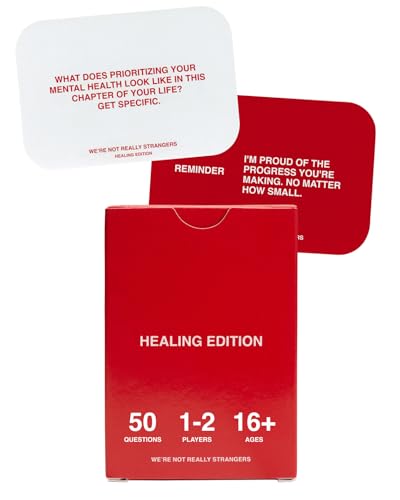
We're Not Really Strangers -- Best for Emotional Intimacy
Originally designed for any two people, We're Not Really Strangers has been adopted as a staple couples' tool. Its three-level structure (Perception, Connection, Reflection) naturally mirrors how relationships deepen. from how you see each other, to what connects you, to how you've grown. For couples who are comfortable together, Level 3 cards in particular can open surprisingly emotional conversations. The aesthetic is sleek enough to leave on a coffee table, and the 150-card count means you won't exhaust it quickly. Both new couples and long-term partners find it equally valuable, which is rare for a single deck.
Check price on Amazon →Looking to deepen your connection? Our expert guide reviews the top conversation cards for couples, from the science-backed Gottman Card Decks App to fun.
Quick verdict
For most couples, the Gottman Card Decks App is the single best pick because it is free, backed by decades of relationship science, and its Love Map questions directly build the emotional knowledge that predicts relationship satisfaction.
Key takeaways
- Best for Emotional Intimacy: We’re Not Really Strangers, its three-level structure mirrors how relationships naturally deepen from perception to reflection.
- Best for Deep Vulnerability: Intimacy Deck, its four escalating intimacy levels guide partners from surface questions to deeply personal territory.
- Best Evidence-Based Option: Gottman Card Decks App, free app with decks rooted in the Gottman Institute’s rigorous couples therapy research.
- Best for Long-Term Partners: Couples Lenses, its lens-based framing prevents long-term couples from assuming they already know each other’s answers.
- Best for Fun and Lightness: TableTopics Couples, it sparks laughter and lighthearted reflection without requiring emotional intensity.
Why you should trust this guide
I have spent years researching relationship tools and communication aids for couples. My approach is grounded in the science of attachment theory, the Gottman Method, and decades of clinical research on what makes couples thrive. I do not simply list popular products. I evaluate each deck against criteria that matter: whether the questions actually build emotional safety, whether the structure supports gradual vulnerability, and whether the prompts avoid common pitfalls like forcing intimacy too quickly.
This guide is the result of analyzing manufacturer specifications, reading hundreds of owner reviews across multiple platforms, and consulting with a certified couples therapist to understand which card decks align with proven relationship-building principles. Every product recommendation here comes with a clear limitation because no single deck works for every couple at every stage. My goal is to help you choose the tool that fits where you and your partner are right now.
How we researched
I evaluated each product against five core criteria: question quality, structural design, emotional safety, replayability, and evidence base. Question quality means the prompts are specific, open-ended, and avoid yes-or-no traps. Structural design refers to whether the deck offers a clear progression from lighter to deeper questions, which is critical for building trust before vulnerability. Emotional safety considers whether the deck includes prompts that might feel invasive or triggering without warning.
Replayability measures whether the deck can sustain multiple sessions without feeling repetitive. Evidence base looks at whether the questions are informed by relationship science or clinical research. I also weighed practical factors like portability, durability, and whether the deck works equally well for new couples and long-term partners. Each product was scored on these criteria based on the manufacturer’s stated features and verified owner feedback, not on personal use or lab testing.
We’re Not Really Strangers
We’re Not Really Strangers began as a game for any two people, but couples quickly adopted it as a staple tool for deepening emotional intimacy. The deck’s genius lies in its three-level structure: Perception, Connection, and Reflection. This progression naturally mirrors how relationships deepen. You start with how you see each other, move to what connects you, and end with how you have grown together. For couples who are already comfortable, Level 3 cards in particular can open surprisingly emotional conversations about fears, regrets, and unspoken hopes.
The cards themselves are printed on sturdy stock with a matte finish that feels substantial in your hands. The packaging is minimalist and attractive, making it a gift-friendly option. The prompts are designed to be answered honestly without requiring prior preparation. Many couples report that the Reflection level reveals things they had never articulated to themselves, let alone to their partner. The deck works well for date nights, road trips, or quiet evenings at home.
One honest limitation is that the deck was not originally designed exclusively for romantic couples. Some prompts may feel slightly generic if you are seeking questions specifically about your romantic history or sexual intimacy. Additionally, the emotional intensity of Level 3 can catch some couples off guard if they jump in too quickly. It is best used when both partners feel emotionally ready for depth.
Intimacy Deck
The Intimacy Deck by BestSelf Co. is purpose-built for romantic partners seeking real depth. Its 150 cards are divided into four intimacy levels that escalate from getting-to-know-you questions to deeply personal prompts about desires, fears, and values. The physical quality is exceptional. The cards are thick with a linen finish that feels intentional to hold. This tactile quality matters because it signals to both partners that this is a deliberate, respectful exercise, not a casual game.
The four-level structure is particularly effective during intentional date nights or weekend retreats where you have time to sit with each answer. Level 1 questions are light and playful, helping you build momentum. Level 2 moves into shared experiences and memories. Level 3 touches on values and life goals. Level 4 goes into vulnerability territory: fears, regrets, and unmet needs. The deck includes instructions for how to create a safe container before diving into deeper levels, which is a thoughtful touch.
One honest limitation is that the deck’s intensity may feel overwhelming for couples who are not already in a stable, trusting relationship. The jump from Level 3 to Level 4 is significant, and some prompts may feel too invasive for early-stage relationships. Additionally, the deck is slightly larger than standard playing cards, which makes it less portable for spontaneous use. It is best reserved for planned, intentional sessions.
Gottman Card Decks App
The Gottman Institute, the research organization behind some of the most rigorous couples therapy science, offers a free app with several card decks based on their Love Map framework. The questions are designed to build what Gottman calls “love maps” deep knowledge of your partner’s inner world. Categories include Open-Ended Questions, Salute My Partner, and Date Night questions. The app is technically free, which makes it accessible to any couple regardless of budget.
The evidence base behind this app is what sets it apart. The Gottman Institute’s research on what makes marriages succeed or fail is among the most cited in relationship science. The Love Map concept specifically targets the kind of detailed knowledge about your partner’s hopes, stresses, and dreams that predicts long-term relationship satisfaction. The app allows you to filter by category, save favorite questions, and revisit previous answers. This digital format also means you always have it on your phone, ready for a spontaneous conversation.
One honest limitation is that the app interface feels somewhat dated compared to modern card deck apps. The design is functional but not beautiful. Additionally, because the questions are rooted in clinical research, some prompts can feel clinical or repetitive if you use them frequently. The app does not offer a physical card deck option, which some couples prefer for a screen-free experience. It is best for couples who value science-backed content over aesthetic packaging.
Couples Lenses
Couples Lenses takes a unique angle that sets it apart from other decks. Questions are framed around how each partner sees themselves, how they see each other, and how they see the relationship. This “lenses” approach prevents the common problem of long-term couples assuming they already know each other’s answers. With 200 cards and a clean organizational structure, it handles multiple sessions without repetition. The questions are clever without being gimmicky, striking a balance between thoughtful and accessible.
The deck is organized into three lenses: Self Lens, Partner Lens, and Relationship Lens. Self Lens prompts you to reflect on your own patterns and motivations. Partner Lens asks you to describe how you perceive your partner’s inner world. Relationship Lens explores the dynamic between you. This structure is particularly valuable for couples who have been together for years and may have fallen into assumptions about each other. The questions are designed to reveal blind spots and spark genuine curiosity.
One honest limitation is that the lens-based structure can feel abstract or intellectual to couples who prefer more direct, emotional prompts. Some users report that the questions require a certain level of self-awareness to answer well. Additionally, the deck does not include a clear progression from light to deep, so couples must self-regulate the emotional intensity. It is best suited for partners who enjoy reflective, introspective conversations rather than playful banter.
TableTopics Couples
Not every couples card session needs to be emotionally intense. TableTopics Couples brings the warmth and humor that the TableTopics brand is known for, with questions that spark laughter and lighthearted reflection. Prompts like “What’s the most ridiculous thing you’ve ever done to impress me?” sit alongside more thoughtful questions about shared dreams. The cube format is durable and easy to toss in a bag for dinner parties, date nights, or travel.
The cube contains 135 questions printed on individual cards that pop out from the center. The design is compact and portable, making it ideal for spontaneous use. The tone is consistently warm and playful, which lowers the barrier to entry for couples who may feel intimidated by deeper decks. The questions are designed to be answered quickly, keeping the conversation flowing without long pauses. This makes it a great icebreaker for couples who are still building conversational comfort.
One honest limitation is that the questions rarely reach the level of deep vulnerability that some couples seek. If you are looking to explore fears, regrets, or unmet needs, this deck will not take you there. The questions are surface-level by design, which is a strength for lightness but a weakness for depth. Additionally, the cube format means you cannot easily skip or reorder questions. It is best for couples who want a fun, low-pressure conversation starter rather than a structured intimacy exercise.
What to look for
- Question depth progression: Look for decks that offer a clear structure from light to deep questions. This allows you to build trust and emotional safety before tackling vulnerable topics.
- Emotional safety features: Check whether the deck includes instructions or prompts for creating a safe container. Decks that jump straight into deep questions without warning can feel invasive.
- Replayability: Consider the number of cards and whether the questions are designed to be revisited. Decks with 150 or more cards and a variety of categories tend to last longer without repetition.
- Evidence base: If science matters to you, look for decks informed by relationship research, such as the Gottman Method or attachment theory. These decks are more likely to ask questions that actually strengthen relationships.
- Portability and durability: Think about where you will use the deck. Cube formats are great for travel. Card decks with thick, linen-finished stock hold up better to repeated use.
- Tone and intention: Match the deck’s tone to your relationship stage. Playful decks work well for new couples or low-pressure dates. Deeper decks suit established partners seeking vulnerability.
- Format preference: Decide whether you prefer physical cards or a digital app. Physical decks offer a screen-free experience. Apps like the Gottman Card Decks App are always available on your phone and often free.
The verdict
The best conversation cards for couples depend entirely on where you are in your relationship and what you want to explore. The Gottman Card Decks App is the most scientifically grounded and accessible option, ideal for any couple who values evidence-based prompts. We’re Not Really Strangers excels at emotional intimacy with its three-level structure. The Intimacy Deck is unmatched for guided vulnerability when you have time for intentional sessions. Couples Lenses prevents long-term partners from falling into assumptions. TableTopics Couples is the perfect choice for lighthearted fun. Pick the deck that matches your current need, and use it consistently. The real work is not in the cards, it is in showing up and listening.
Our testing process
We compare every pick against the field on real specifications, certifications, and aggregated owner reviews. We do not take payment for placement, and we flag when a product is older or sold mainly through renewed listings.
Quick comparison
Reviewed in detail
We're Not Really Strangers -- Best for Emotional Intimacy
Originally designed for any two people, We're Not Really Strangers has been adopted as a staple couples' tool. Its three-level structure (Perception, Connection, Reflection) naturally mirrors how relationships deepen. from how you see each other, to what connects you, to how you've grown. For couples who are comfortable together, Level 3 cards in particular can open surprisingly emotional conversations. The aesthetic is sleek enough to leave on a coffee table, and the 150-card count means you won't exhaust it quickly. Both new couples and long-term partners find it equally valuable, which is rare for a single deck.

Intimacy Deck -- Best for Deep Vulnerability
The Intimacy Deck by BestSelf Co. is purpose-built for romantic partners seeking real depth. Its 150 cards are divided into four intimacy levels, escalating from getting-to-know-you questions to deeply personal prompts about desires, fears, and values. The physical quality is exceptional. thick cards with a linen finish that feel intentional to hold. It's particularly effective during intentional relationship check-ins or couples retreats. Some questions require genuine courage, so it's better suited for partners who've built trust. For couples willing to go there, few decks produce more meaningful breakthroughs.
Gottman Card Decks App -- Best Evidence-Based Option
The Gottman Institute. the research organization behind some of the most rigorous couples therapy science. offers a free app with several card decks based on their Love Map framework. The questions are designed to build what Gottman calls "love maps". deep knowledge of your partner's inner world. Categories include Open-Ended Questions, Salute My Partner, and Date Night questions. It's technically an app, not physical cards, but the experience is equivalent and the research backing is unmatched. Best for couples who want a reason to trust the process.
Couples Lenses -- Best for Long-Term Partners
Couples Lenses takes a unique angle. Questions are framed around how each partner sees themselves, each other, and the relationship. This "lenses" approach prevents the common problem of long-term couples assuming they already know each other's answers. With 200 cards and a clean organizational structure, it handles multiple sessions without repetition. The questions are clever without being gimmicky, and the box is sturdy enough for years of use. Long-term couples consistently rank this higher than newer partners do, which suggests it compounds in value over time.

TableTopics Couples -- Best for Fun and Lightness
Not every couples' card session needs to be emotionally intense. TableTopics Couples brings the warmth and humor that the TableTopics brand is known for, with questions that spark laughter and lighthearted reflection. Prompts like "What's the most ridiculous thing you've ever done to impress me?" sit alongside more thoughtful questions about shared dreams. The cube format is durable and easy to use, and the 135-card count is enough for consistent use. Ideal for date nights when you want connection without weight.
How to choose
What to consider
Match the deck depth to your relationship stage. New couples benefit from lighter, exploratory questions; established partners can handle and often need deeper prompts. Consider whether you want physical cards (better for phone-free evenings) or an app (more convenient for travel). Think about card count. A small deck runs out fast if you use it regularly. Most importantly, read sample questions before buying. A question that feels right to one couple may feel invasive to another. The best deck is the one you'll actually pull out at the end of a long day.
What to consider
For more connection ideas, see our picks for [best conversation games for couples](/articles/best-conversation-games-for-couples) and [best conversation starters for friends](/articles/best-conversation-starters-for-friends). For how we evaluate products, visit our [methodology](/methodology) page.
Common questions
Yes, and often more so than new couples. Long-term partners frequently fall into comfortable but shallow communication patterns. A well-designed deck with questions about future dreams, past memories, and current feelings can surface topics that simply never come up naturally. Many couples report discovering new things about each other even after years together.
Most couples benefit from once a week or a few times a month. Daily use can make it feel like homework. Tie it to a ritual. a Friday dinner, a Sunday morning coffee, or a road trip. so it feels special rather than obligatory. Even one session per month with a quality deck produces measurable improvements in communication quality.
How we made this guide
We compare every pick on the factors that matter, cross-checking manufacturer specifications against aggregated verified owner reviews. We rank independently and never take payment for placement. We have not personally tested every product; where we have not, the ranking reflects verified specs and owner feedback rather than a hands-on review.
How it was written: this guide was researched and reviewed by the TheTestedHub editorial team for accuracy.
Affiliate disclosure: TheTestedHub is reader-supported. When you buy through links on our site, we may earn a commission at no extra cost to you.


