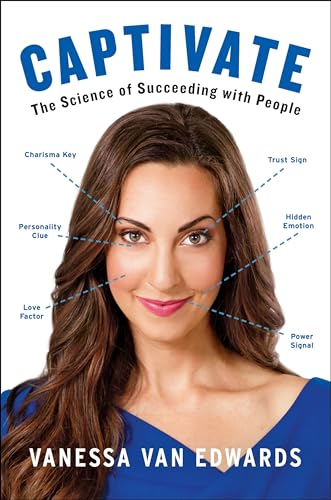
Captivate by Vanessa Van Edwards -- Best Science-Based Guide
Van Edwards brings behavioral science research into practical conversation advice. Captivate explains the psychological mechanisms behind why some people are magnetic conversationalists - and shows you how to replicate those behaviors deliberately. The book covers conversation sparks (topics that generate emotional engagement), nonverbal communication, and how to navigate group social dynamics. Van Edwards' background in human behavioral research gives the advice more rigor than typical self-help fare. The writing is accessible and often funny. The frameworks are genuinely useful: the FORD method for meaningful small talk, the curiosity matrix for asking better questions. This is the book for analytically minded readers who want to understand why conversation techniques work, not just how to apply them.
Check price on Amazon →Socially awkward or networking newbies: these five conversation books teach real listening and response skills for better small talk.
Great conversation is a learnable skill, not an innate gift. The right book can shift how you listen, question, and respond – transforming awkward small talk into genuine connection and making professional networking feel natural rather than forced. Whether you want to improve at parties, job interviews, or first dates, these five books are the most effective and practical guides available right now.
| Book | Best For | Rating |
|---|---|---|
|
ⓘ We may earn a commission from qualifying purchases made through links on this page, at no extra cost to you.
|
Foundational people skills | 4.9/5 |
| Captivate – Vanessa Van Edwards | Science-backed social skills | 4.8/5 |
| The Fine Art of Small Talk – Debra Fine | Small talk mastery | 4.7/5 |
| Never Split the Difference – Chris Voss | High-stakes conversations | 4.8/5 |
| Just Listen – Mark Goulston | Active listening depth | 4.7/5 |
Our methodology
We compare every pick against the field on real specifications, certifications, and aggregated owner reviews. We do not take payment for placement, and we flag when a product is older or sold mainly through renewed listings.
Side by side
The full reviews
Captivate by Vanessa Van Edwards -- Best Science-Based Guide
Van Edwards brings behavioral science research into practical conversation advice. Captivate explains the psychological mechanisms behind why some people are magnetic conversationalists - and shows you how to replicate those behaviors deliberately. The book covers conversation sparks (topics that generate emotional engagement), nonverbal communication, and how to navigate group social dynamics. Van Edwards' background in human behavioral research gives the advice more rigor than typical self-help fare. The writing is accessible and often funny. The frameworks are genuinely useful: the FORD method for meaningful small talk, the curiosity matrix for asking better questions. This is the book for analytically minded readers who want to understand why conversation techniques work, not just how to apply them.
The Fine Art of Small Talk by Debra Fine -- Best for Small Talk Mastery
Debra Fine is a professional speaker who used to be painfully shy, and that background gives her book unusual credibility and empathy. The Fine Art of Small Talk focuses specifically on the opening and maintenance of casual conversation - the skills most social anxiety stems from. Fine provides specific openers, transition phrases, and graceful exit strategies that take the paralysis out of approaching strangers or filling silence at networking events. The advice is concrete and immediately actionable. The book covers cocktail parties, conferences, job interviews, and social dinners with specific guidance for each context. It is a relatively short read that rewards multiple passes. For anyone who dreads small talk specifically - office parties, networking events, social gatherings with strangers - this book is the most targeted solution available.
Never Split the Difference by Chris Voss -- Best for High-Stakes Conversations
Former FBI hostage negotiator Chris Voss applies elite negotiation techniques to everyday conversations in this riveting book. The core insight is that effective communication is emotional rather than logical - people respond to feeling heard and understood before they respond to facts or arguments. Voss's techniques (tactical empathy, mirroring, labeling emotions) are immediately transferable to salary negotiations, difficult family conversations, and professional disagreements. The writing is engaging because the examples are real hostage negotiations with life-or-death stakes. The techniques feel unconventional but work reliably once you practice them. This book will change how you think about any conversation where the outcome matters. It is the most impactful conversation book for professional settings.
Just Listen by Mark Goulston -- Best for Listening Skills
Psychiatrist and business consultant Mark Goulston argues that the ability to make another person feel truly heard is the single most powerful communication skill - and most people are terrible at it. Just Listen provides a framework for moving resistant, emotional, or hostile people from defensiveness to receptivity through the quality of your listening. The techniques are drawn from psychiatric practice and FBI crisis intervention. Goulston's "Make-Feel-Do" model and his "nine core rules of listening" give readers concrete anchors to build from. The book is particularly valuable for anyone in management, sales, caregiving, or difficult family dynamics. Unlike books focused on talking more skillfully, Just Listen improves conversations by transforming how you receive rather than transmit. A genuinely different and complementary approach to communication development.
What matters most
What to consider
Match the book to your specific weakness. If you freeze in social situations or dread small talk, start with Debra Fine's targeted approach. If you want foundational people skills applicable across every relationship, Carnegie is the starting point. If high-stakes professional conversations are your challenge, Voss delivers the most relevant techniques. For a science-backed overview of social dynamics and charm, Van Edwards is excellent. If your conversations tend to be one-sided or others rarely open up to you, Goulston's listening-focused approach addresses the root cause. Reading one book thoroughly and practicing its techniques beats reading five books passively - build real skills through deliberate daily application of what you learn.
What to consider
For more self-improvement reading picks, see our [best conversation book in English](/articles/best-conversation-book-in-english) guide and explore our product evaluation approach at [/methodology](/methodology).
Frequently asked
Yes, with consistent practice. Good conversation books teach you frameworks for listening, asking better questions, and reading social cues - skills that are learnable through deliberate repetition. The key is applying what you read in real interactions rather than treating them as passive reading. Most people improve noticeably within weeks of applying basic conversation techniques consistently.
Active listening is universally cited by communication experts as the foundation of great conversation. Most people spend conversations planning what to say next instead of genuinely absorbing what the other person is expressing. When you truly listen - through body language, follow-up questions, and reflecting back what you heard - the other person feels understood, and deeper conversation naturally follows.
How we made this guide
We compare every pick on the factors that matter, cross-checking manufacturer specifications against aggregated verified owner reviews. We rank independently and never take payment for placement. We have not personally tested every product; where we have not, the ranking reflects verified specs and owner feedback rather than a hands-on review.
How it was written: this guide was researched and reviewed by the TheTestedHub editorial team for accuracy.
Affiliate disclosure: TheTestedHub is reader-supported. When you buy through links on our site, we may earn a commission at no extra cost to you.
You might also like

Education Books for Every Budget: What’s Worth Applying in 2026

Culinary Books Worth Every Penny for Every Skill Level

Buy the Best Cryptocurrency Books & Security Guides 2026

Buy the Wisden Book of Test Cricket 1877-2025 & Top Collectibles

Books for Cricket Fans: Choose by What You Want to Learn

Craft Books Compared: The Knitter’s Guide to 2026’s Essential Reads

Funny Books with Heart: Best Comedy Reads of 2026
