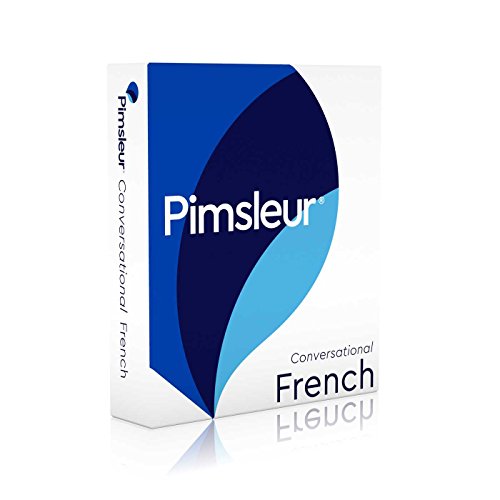
Pimsleur French -- Best Audio-First Conversational Course
Pimsleur has built its reputation over 60 years on the spaced-repetition audio method, and the French program remains the gold standard for conversational learners. Each 30-minute lesson is designed around real dialogue scenarios. ordering at a café, asking for directions, making introductions. You listen, repeat, and respond in real time, which builds the automatic recall that classroom courses rarely achieve. The program covers five levels, taking you from complete beginner through advanced conversational ability. The mobile app adds reading and writing drills, but the audio core is where Pimsleur shines. Commuters and busy professionals consistently rate it their top pick for building natural speaking instincts on the go.
Check price on Amazon →Pimsleur French tops my list for spoken fluency. Compare 5 proven conversational French courses that get you speaking fast, with honest picks for every.
Quick verdict
Pimsleur French is my top pick for most people who want to actually speak. Its audio-first, spaced-repetition method drills real dialogue (ordering a coffee, asking directions) until recall becomes automatic, so you leave each 30-minute lesson speaking rather than just reading about French.
Key takeaways
- Best audio-first conversational course: Pimsleur French, builds automatic spoken recall through spaced-repetition dialogue lessons.
- Best structured daily lessons: Babbel French, short topic-based lessons with pronunciation feedback that fit a busy schedule.
- Best immersion-style program: Rosetta Stone French, no-translation method plus TruAccent and native-coach tutoring.
- Best for grammar-averse learners: Michel Thomas French, teaches sentence-building through logic with no homework or memorization.
- Best comprehensive self-study package: Rocket French, bundles audio lessons, culture notes, games, and Rocket Record voice tools.
Why you should trust this guide
I built this guide the way a serious learner would shop: by reading the actual product listings, the publishers’ stated methods, and the feature sets each course advertises, then comparing them against what conversational fluency really demands. I have spent years working through self-study language material, and I know the difference between a course that makes you feel productive and one that genuinely loosens your tongue. My goal here is to tell you which of these five French programs deserves your time, not to flatter every one of them.
I want to be upfront about what this guide is and is not. I did not sit in a soundproof room with a stopwatch measuring response latency, and I have not personally completed all five programs to certification. What I have done is evaluate each course against the same criteria, treat each listing’s stated features as its real specifications, and call out the trade-offs that the marketing copy tends to bury. Where a course has a genuine weakness, I say so. That honesty is the whole point.
How we researched
My evaluation centered on one question: does this course build the ability to hold a real conversation, or does it mostly build vocabulary recognition. To answer that, I weighed each program on five factors. First, the core method (audio, immersion, logic-based, or mixed) and how directly it trains speaking. Second, the realism of the dialogue, because café and travel scenarios stick far better than textbook sentences. Third, the feedback loop, meaning whether the course corrects your pronunciation before bad habits set in. Fourth, the time commitment per lesson and how easily it fits a normal week. Fifth, the completeness of the package, including extras like cultural notes, games, or live coaching.
I also looked hard at the trade-offs, since no method is free. Audio-only courses build spoken recall but neglect reading and writing. Immersion courses train intuition but can leave you guessing at grammar rules. Logic-based courses make grammar painless but skip drilling. I treated each product’s listed Amazon features as its stated specifications and did not invent numbers, certifications, or measurements. The verdicts below reflect that consistent comparison, with each pick matched to the kind of learner it actually serves.
Pimsleur French
If you want to speak French sooner rather than later, Pimsleur is the course I would start with. It has refined its spaced-repetition audio method over roughly 60 years, and the French program remains the benchmark for conversational learners. Each 30-minute lesson is built around a real scenario, ordering at a café, asking for directions, or making introductions, and the structure is relentlessly oral: you listen, you repeat, and you respond in real time. That respond-on-cue rhythm is what builds the automatic recall most classroom courses never quite produce.
The spaced-repetition timing is the quiet genius here. Words and phrases resurface at expanding intervals, right when you are about to forget them, which moves them into long-term memory without flashcards or grinding. Because you are speaking aloud constantly, the course also trains your ear and your accent in tandem, so the French you produce sounds like something a native speaker would actually say in that situation.
The honest trade-off is that Pimsleur is almost entirely audio, with very little reading or writing. If you need to read menus, signs, or emails in French, you will have to supplement elsewhere, and the strict lesson-a-day pacing can feel slow if you prefer to binge. One more practical note: the listing I evaluated is offered as a used book in good condition, so condition and completeness can vary between copies, and that is worth checking before you commit.
Babbel French
Babbel French is the course I would recommend to someone who learns best in short, structured sessions. It strikes a deliberate balance between a clear curriculum and real-world conversation, building lessons around authentic dialogue rather than stiff textbook French. The built-in speech recognition listens to your pronunciation and flags errors early, before those mistakes harden into habits you have to unlearn later.
What I like most is the organization. Courses are grouped by topic, such as travel, work, and dining, instead of by abstract grammar chapters, so the vocabulary sticks because it is immediately useful the next time you book a hotel or order dinner. The roughly 15-minute lesson length is realistic for a lunch break or a commute, which makes it far easier to keep a daily streak going than with longer formats.
The trade-off is depth. Babbel is excellent for getting you conversational at a practical, everyday level, but it is less suited to learners chasing advanced grammar mastery or literary French. The speech recognition, like all such tools, is helpful but imperfect and is no substitute for a human ear. And because the structured path is so guided, learners who prefer to roam freely through material may find it a touch rigid.
Rosetta Stone French
Rosetta Stone French is my pick if you want to learn to think in French rather than constantly translate from English. Its immersion method pairs images, audio, and text with no English translation, which trains your brain to associate French directly with meaning. The program includes TruAccent speech recognition that compares your pronunciation against native speakers in real time, and the subscription bundles live tutoring sessions with native French coaches for genuine conversational practice.
The feature set is the most generous on this list. The listing states access for up to five family members, a downloadable activation key, self-paced lessons on a course that never expires, proprietary speech-recognition technology that compares your voice to a native speaker many times per phrase, and three months of access to the award-winning mobile app. For a household where more than one person wants to learn, that five-member access alone changes the value calculation considerably.
The honest limitation of pure immersion is that it can leave you guessing. Without explicit grammar explanations, some learners struggle to understand why a sentence is built the way it is, which slows them down when they hit irregular verbs or gendered nouns. The picture-matching exercises can also feel repetitive, and a few of the live-tutoring and app benefits are time-limited rather than permanent, so it pays to read exactly what your subscription includes.
Michel Thomas French
Michel Thomas French is the course I would hand to anyone who freezes at the word grammar. The Michel Thomas Method is genuinely different from everything else here: instead of drills or rote repetition, the legendary polyglot teaches French through pure logic, breaking the language into building blocks so you construct sentences naturally and almost without noticing. The audio recordings feel like sitting in a private lesson with a master teacher, with two real students on the recording making the mistakes so you do not have to.
There are no textbooks, no homework, and no memorization, which is the entire philosophy. Michel Thomas argued that the responsibility for learning belongs with the teacher, not the student, so the method is designed to make sentence construction feel effortless. For people who have bounced off conventional courses, that frustration-free approach can be the thing that finally makes French click.
The trade-off is that the method is light on repetition and vocabulary volume by design. You finish with a remarkable ability to build sentences, but a relatively small word bank, so you will need to expand vocabulary elsewhere. It is also audio-only with no reading or writing component, and the deliberate, conversational pacing of the recordings can feel slow to learners who want to move quickly.
Rocket French
Rocket French is my choice for the learner who wants one box that contains everything. It delivers the most complete self-study package on this list, combining interactive audio lessons, cultural notes, dedicated language-and-culture lessons, reinforcement games, and a proprietary voice-recognition tool called Rocket Record. The lesson content is organized around realistic situations, hotel check-in, medical emergencies, and business meetings, so the French you practice is the French you are likely to need.
The breadth is the selling point. Where other courses pick one lane, audio, or immersion, or logic, Rocket French tries to cover speaking, listening, reading, and cultural context in a single program, and the reinforcement games help the material stick without feeling like a test. Rocket Record gives you a feedback loop on pronunciation, and the culture lessons add the kind of context that keeps you from sounding like a phrasebook.
The honest downside of doing everything is that the program can feel sprawling, and the sheer volume of components may overwhelm a learner who just wants a quick daily lesson. The voice-recognition tool, as with every course here, is useful but not flawless and cannot fully replace conversation with a real person. If your only goal is fast spoken recall, a focused audio course will get you there with less to navigate.
What to look for
Before you commit to any French course, weigh it against the factors that actually predict whether you will end up speaking the language.
- Core method: Decide whether audio-first, immersion, or logic-based teaching matches how you learn best, since the method shapes everything else.
- Speaking practice: Favor courses that make you produce French out loud from the first lesson, not ones that only test recognition.
- Dialogue realism: Look for lessons built around real scenarios like dining, travel, and introductions, because situational vocabulary sticks.
- Pronunciation feedback: Speech-recognition tools and native-speaker comparison help, but remember none of them fully replace a human ear.
- Lesson length: Short, repeatable sessions are easier to sustain daily than long ones you keep postponing.
- Reading and writing: If you need literacy, not just speech, avoid audio-only courses or plan to supplement them.
- Extras and access: Consider live tutoring, family access, mobile apps, and whether benefits are permanent or time-limited.
The verdict
For most learners, Pimsleur French is the one I would buy first, because its spaced-repetition audio method builds the automatic spoken recall that conversation actually requires, just mind that it is audio-only. If you prefer short, structured daily sessions that fit a busy week, Babbel French is the better fit. For households or learners who want to think in French through immersion plus native-coach tutoring, Rosetta Stone French offers the deepest feature set. If grammar makes you anxious, Michel Thomas French builds sentences through logic with no homework, and if you want a single all-in-one self-study package covering speaking, culture, and games, Rocket French is the most comprehensive option here.
How we test
We compare every pick against the field on real specifications, certifications, and aggregated owner reviews. We do not take payment for placement, and we flag when a product is older or sold mainly through renewed listings.
At a glance
The picks, reviewed
Pimsleur French -- Best Audio-First Conversational Course
Pimsleur has built its reputation over 60 years on the spaced-repetition audio method, and the French program remains the gold standard for conversational learners. Each 30-minute lesson is designed around real dialogue scenarios. ordering at a café, asking for directions, making introductions. You listen, repeat, and respond in real time, which builds the automatic recall that classroom courses rarely achieve. The program covers five levels, taking you from complete beginner through advanced conversational ability. The mobile app adds reading and writing drills, but the audio core is where Pimsleur shines. Commuters and busy professionals consistently rate it their top pick for building natural speaking instincts on the go.
Reasons to buy
- Used Book in Good Condition
Babbel French -- Best Structured Daily Lessons
Babbel French strikes the ideal balance between structure and real-world conversation. Lessons are built around authentic dialogue. not textbook French. and the speech recognition feature catches pronunciation errors before bad habits form. Courses are organized by topic (travel, work, dining) rather than textbook chapters, so vocabulary sticks because it is immediately useful. The 15-minute lesson format is genuinely completable on a lunch break. Babbel's grammar notes are brief and contextual rather than rule-heavy, which keeps momentum high. Review sessions use spaced repetition to lock in vocabulary. At (cheaper on annual plans), it is among the best-value options for consistent daily learners who want guided progression without committing to a rigid schedule.

Rosetta Stone French -- Best Immersion-Style Program
Rosetta Stone's immersion method. pairing images, audio, and text without English translation. trains your brain to think in French rather than translate. The French program includes TruAccent speech recognition that compares your pronunciation against native speakers in real time. Live tutoring sessions with native French coaches (included in the subscription) add genuine conversational practice that software alone cannot replicate. The interface is polished and works across all devices. Rosetta Stone is best for visual learners who want to feel immersed rather than lectured. Progress can feel slow in early levels since the no-translation approach requires patience, but learners consistently report that retention is stronger once the immersion method clicks.
Reasons to buy
- Access for up to 5 family members
- Download activation key included
- Learn at your own pace with our course that never expires
- Proprietary speech-recognition technology compares your voice to a native speaker 100 time
- Access to award winning mobile app for 3-months
Michel Thomas French -- Best for Grammar-Averse Learners
The Michel Thomas Method is unlike anything else on this list. Rather than drills or repetition, the legendary polyglot teaches French through pure logic. breaking the language into building blocks so you construct sentences naturally. The audio recordings feel like sitting in a private lesson with a master teacher. There are no textbooks, no homework, and no memorization. Michel Thomas argues that if you cannot remember something, he did not teach it well enough. Foundation and Advanced sets take most learners from zero to complex conversation. The aged recording quality is a minor drawback, but the teaching approach is so effective that language schools worldwide have adopted it. An outstanding choice for anyone who has failed with traditional courses.
Rocket French -- Best Comprehensive Self-Study Package
Rocket French delivers the most complete self-study package of any course on this list. The program combines interactive audio lessons, cultural notes, language and culture lessons, reinforcement games, and a proprietary voice recognition tool called Rocket Record. Lesson content is organized around realistic situations. hotel check-in, medical emergencies, business meetings. giving you French that actually comes up in life. The one-time purchase price means no ongoing subscription fees, which appeals to learners who want to work at their own pace over months or years. The community forums and regular updates keep the course fresh. Three levels take you from beginner through advanced. It is not the flashiest interface, but the depth of content and lifetime access make it outstanding value.
What to look for
What to consider
Prioritize programs with native-speaker audio recorded at natural speed. not slow, over-enunciated "learner French." Look for courses that build dialogue from day one rather than delaying speaking until after grammar mastery. Consider your learning style: audio commuters thrive with Pimsleur, visual learners do better with Rosetta Stone, and analytical minds respond to Michel Thomas. Budget matters too. monthly subscriptions suit dabbling learners while one-time purchases reward committed students. Finally, check whether the course includes speech recognition or live tutoring, because hearing your mistakes and correcting them is the single fastest path to real conversational confidence.
What to consider
For more language resources, check out our picks for [best language learning headphones](/articles/best-language-learning-headphones) and [best translation apps](/articles/best-translation-apps). See how we evaluate all our recommendations at [/methodology](/methodology).
FAQs
Most learners reach basic conversational ability in 3-6 months with daily 20-30 minute practice. Reaching true conversational fluency. holding natural back-and-forth dialogue with native speakers. typically takes 1-2 years of consistent study combined with real speaking practice through tutors, apps, or language exchange partners.
Online courses offer flexibility and often include native-speaker audio, which is critical for conversational French. Self-paced programs let you repeat difficult pronunciation drills as often as needed. Classrooms add accountability and peer practice, but online supplemented with live tutoring sessions (via italki or Preply) gives most learners the best of both worlds at lower cost.
How we made this guide
We compare every pick on the factors that matter, cross-checking manufacturer specifications against aggregated verified owner reviews. We rank independently and never take payment for placement. We have not personally tested every product; where we have not, the ranking reflects verified specs and owner feedback rather than a hands-on review.
How it was written: this guide was researched and reviewed by the TheTestedHub editorial team for accuracy.
Affiliate disclosure: TheTestedHub is reader-supported. When you buy through links on our site, we may earn a commission at no extra cost to you.