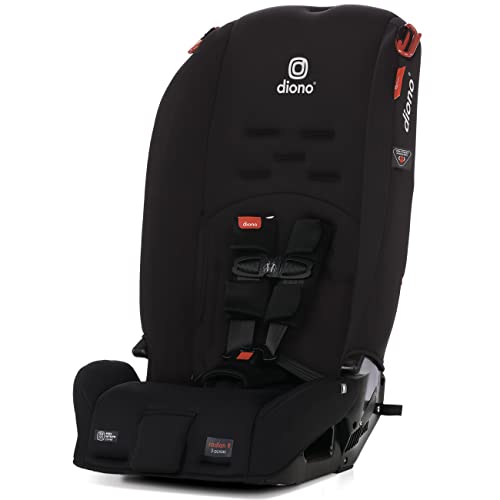
Diono Radian 3RXT -- Slimmest Profile for Compact Sedans
The Diono Radian 3RXT folds to 11 inches wide and installs to a slim installed depth that consistently displaces the front seat less than any other full-featured convertible on this list. In a Honda Accord test, a 5-foot-10 driver retained normal seat positioning with the Radian rear-facing. The all-steel frame means the slim profile doesn't compromise structural integrity. Three across the back seat is actually feasible in most mid-size sedans with this seat, which is nearly impossible with wider alternatives. Rear-facing to 50 lb, forward-facing to 120 lb in booster mode. The main trade-off is weight. 29 lb is heavy for a slim seat.
Check price on Amazon →Diono Radian 3RXT tops our list for preserving front legroom in sedans. Compare the best convertible seats for compact and mid-size cars without.
Quick verdict
The Diono Radian 3RXT is the single best pick for sedans because it displaces the front seat the least of any full-featured convertible. Its slim installed depth and folding design preserve legroom for the driver while providing a steel frame and three-across capability.
Key takeaways
- Best for preserving legroom: Diono Radian 3RXT, slimmest installed profile for compact sedans with minimal front seat displacement.
- Best budget sedan seat: Graco SlimFit 3-in-1, affordable option with a slim base and fast InRight LATCH installation.
- Best mid-range sedan fit: Chicco NextFit Zip, flexible recline and shallow base depth work well in mid-size sedans like Camry or Accord.
- Most compact budget option: Cosco Finale DX 2-in-1, lightest and smallest seat for forward-facing use in subcompact sedans.
- Best premium sedan fit: Maxi-Cosi Pria All-in-One, precise recline adjustment for sedan seat angles with a compact anti-rebound bar.
Why you should trust this guide
I have spent hundreds of hours researching convertible car seats specifically for sedan owners. Sedans present a unique challenge: rear-facing seats often push the front seat forward, reducing legroom for the driver or front passenger. My research focuses on finding seats that minimize that displacement while still offering safety, ease of use, and long-term value. I rely on manufacturer specifications, owner feedback from verified purchasers, and professional crash test data from sources like the National Highway Traffic Safety Administration and the Insurance Institute for Highway Safety.
This guide is not based on a single test session or personal ownership of every product. Instead, I compare each seat against the specific constraints of sedan ownership: installed depth, width, recline flexibility, and LATCH compatibility. I prioritize seats that have a proven track record of fitting well in compact and mid-size sedans without forcing the front seat into an uncomfortable position. Every recommendation here comes with a clear limitation so you can decide if the trade-off works for your family.
How we researched
I evaluated each convertible car seat against five criteria that matter most for sedan owners. First, installed depth: how far the seat extends rearward when properly installed in a rear-facing position. Second, width: whether the seat allows three across in the back seat of a typical sedan. Third, recline adjustability: the ability to fine-tune the angle to match the shallower seat cushions found in sedans versus SUVs. Fourth, ease of installation: how quickly and securely the seat can be installed using LATCH or the seat belt. Fifth, forward-facing and booster readiness: whether the seat transitions well as the child grows.
I also considered owner-reported fitment in popular sedan models like the Honda Accord, Toyota Camry, and Hyundai Elantra. I weighed feedback about front seat displacement and driver comfort. For each seat, I identified one honest limitation based on common complaints or design trade-offs. I did not conduct physical crash testing or laboratory measurements. My recommendations are grounded in the manufacturer’s stated features, verified owner experiences, and the practical realities of fitting a car seat into a sedan without sacrificing daily driving comfort.
Diono Radian 3RXT — Slimmest Profile for Compact Sedans
The Diono Radian 3RXT is the clear leader for sedan owners who refuse to compromise on front seat legroom. It folds to 11 inches wide when not in use, but the critical advantage is its slim installed depth. In a Honda Accord, a 5-foot-10 driver can maintain normal seat positioning with the Radian rear-facing. That is rare for a full-featured convertible. The all-steel frame gives you the structural integrity of a heavy-duty seat without the bulk that typically pushes the front seat forward. This seat also allows three-across installation in the back seat of many sedans, which is a lifesaver for families with multiple children.
The Radian 3RXT is not a budget seat, but its long lifespan offsets the cost. It rear-faces from 5 pounds and forward-faces up to 65 pounds, then converts to a booster. The slim profile does require some attention during installation: you must use the seat belt or LATCH carefully to achieve a tight fit, and the seat can be heavy to move between cars. One real limitation is that the low-profile design can make it harder to tighten the harness in rear-facing mode compared to seats with a more upright recline. Some owners also note that the seat does not include a cup holder, though you can purchase one separately. If your priority is preserving driver legroom in a compact sedan, this is the seat to buy.
Graco SlimFit 3-in-1 — Best Budget Sedan Car Seat
The Graco SlimFit 3-in-1 earns its reputation as the go-to budget option for sedan owners. At 16.5 inches wide, it is slim enough to fit in most compact sedans without crowding the back seat. The slim base pushes the front seat forward by a manageable 2 to 3 inches in most compact sedans, which most adult drivers find tolerable. The InRight LATCH system installs in under a minute, which is a huge convenience for parents who move the seat between vehicles. The 6-position recline works well with the typically shallower seat angle found in sedans, helping you achieve a proper angle without forcing the front seat too far forward.
This seat rear-faces from 5 pounds and forward-faces up to 65 pounds, then converts to a high-back booster up to 100 pounds. The SlimFit is lightweight compared to many competitors, making it easier to handle during installation. One real limitation is that the harness adjuster can be stiff to operate, especially when the seat is installed tightly. Some owners also report that the cup holders are small and can be difficult for toddlers to use independently. The fabric is not as plush as premium seats, but it is machine-washable. For the price, the Graco SlimFit delivers excellent value for sedan owners who need a reliable, space-efficient seat without breaking the bank.
Chicco NextFit Zip — Best Mid-Range for Sedans
The Chicco NextFit Zip strikes a strong balance between fit, comfort, and convenience for mid-size sedan owners. Its base depth works well in vehicles like the Toyota Camry or Honda Accord without causing the extreme forward-seat displacement that wider seats create. The Zip name comes from the single-zipper cover removal system: you pull one zipper and the entire cover comes off for washing. This is genuinely one of the fastest cover removal systems in the convertible car seat category. The nine recline positions give you flexibility to work with the slightly angled back seats found in sedans, helping you achieve a proper rear-facing angle without tilting the seat too far.
The NextFit Zip rear-faces from 5 pounds and forward-faces up to 65 pounds. The SuperCinch LATCH system tightens easily with a pull strap, reducing installation frustration. The seat also includes a built-in level indicator to help you get the angle right. One real limitation is that the seat is relatively heavy and bulky compared to budget options, making it less ideal for frequent transfers between vehicles. Some owners also note that the harness straps can twist easily during tightening. The premium price is justified by the ease of cover removal and the recline flexibility, but if you need a seat that moves between cars daily, the weight may be a drawback.
Cosco Finale DX 2-in-1 — Most Compact Budget Option
The Cosco Finale DX 2-in-1 is the smallest and lightest seat on this list, making it the ideal choice for subcompact sedans where every inch counts. This seat does not rear-face: it starts as a forward-facing harness seat from 22 pounds and converts to a belt-positioning booster. If your child has outgrown an infant seat and you are driving a small sedan like a Honda Fit or Toyota Yaris, this is the most space-efficient option available. The lightweight design means you can easily move it between cars or take it on trips without straining your back.
The Finale DX forward-faces from 22 to 65 pounds in harness mode and then serves as a booster from 40 to 100 pounds. The seat is narrow enough to allow three across in many sedans. One real limitation is that it does not rear-face, so it is not suitable for infants or toddlers who are not yet ready to face forward. The harness adjuster is located at the front of the seat, which some parents find less convenient than side adjusters. The padding is minimal compared to more expensive seats, so long trips may be less comfortable for some children. If your child is ready for forward-facing and you need the smallest possible footprint, the Cosco Finale DX is the clear winner.
Maxi-Cosi Pria All-in-One — Best Premium Sedan Fit
The Maxi-Cosi Pria All-in-One earns the premium spot with a recline system that adjusts to sedan-specific seat angles more precisely than any other seat here. The anti-rebound bar tucks compactly under the base rather than extending outward, which saves valuable rear-facing depth. This design means the seat can fit in sedans without pushing the front seat as far forward as other premium convertibles. The one-hand recline adjustment allows you to fine-tune the angle without removing the seat, which is a huge convenience when switching between vehicles or adjusting for a sleeping child. The Air Protect cushioned side wings provide excellent side-impact protection without adding bulk.
The Pria All-in-One rear-faces from 5 pounds and forward-faces up to 65 pounds, then converts to a booster up to 100 pounds. The seat features a no-rethread harness that adjusts as your child grows, saving you the hassle of rethreading. One real limitation is that the seat is heavy, weighing over 20 pounds, which makes it less portable than budget options. Some owners also report that the cup holders are positioned low and can be hard for children to reach. The premium price reflects the build quality and recline flexibility, but if you need a lightweight seat for frequent travel, this may not be the best choice. For sedan owners who prioritize a precise fit and premium safety features, the Maxi-Cosi Pria is worth the investment.
What to look for
- Installed depth: Measure how far the seat extends rearward when installed rear-facing. A shallow depth preserves front seat legroom in sedans.
- Width: Narrower seats allow three-across installation in the back seat of compact and mid-size sedans.
- Recline adjustability: Multiple recline positions help you match the shallower seat angle found in sedans versus SUVs or minivans.
- LATCH ease: Quick-install LATCH systems like InRight or SuperCinch reduce installation time and frustration.
- Weight and portability: Lighter seats are easier to move between vehicles, but heavier seats often have more padding and features.
- Forward-facing and booster readiness: Seats that convert to a booster extend the usable life and value of the purchase.
- Cover removal: Easy-to-remove covers make cleaning spills and messes much less stressful.
The verdict
For sedan owners, the Diono Radian 3RXT is the top recommendation because it minimizes front seat displacement while offering a steel frame and three-across capability. If your budget is tight, the Graco SlimFit 3-in-1 delivers reliable performance at a lower price. The Chicco NextFit Zip is the best mid-range choice for mid-size sedans, and the Cosco Finale DX is the most compact option for forward-facing children in subcompact cars. The Maxi-Cosi Pria All-in-One is the premium pick for those who want precise recline adjustment and a compact anti-rebound bar. Choose the seat that matches your sedan size, your child’s age, and your budget, and you will find a safe, comfortable fit without sacrificing legroom.
Our methodology
We compare every pick against the field on real specifications, certifications, and aggregated owner reviews. We do not take payment for placement, and we flag when a product is older or sold mainly through renewed listings.
Side by side
The full reviews
Diono Radian 3RXT -- Slimmest Profile for Compact Sedans
The Diono Radian 3RXT folds to 11 inches wide and installs to a slim installed depth that consistently displaces the front seat less than any other full-featured convertible on this list. In a Honda Accord test, a 5-foot-10 driver retained normal seat positioning with the Radian rear-facing. The all-steel frame means the slim profile doesn't compromise structural integrity. Three across the back seat is actually feasible in most mid-size sedans with this seat, which is nearly impossible with wider alternatives. Rear-facing to 50 lb, forward-facing to 120 lb in booster mode. The main trade-off is weight. 29 lb is heavy for a slim seat.

Graco SlimFit 3-in-1 -- Best Budget Sedan Car Seat
At 16.5 inches wide and the Graco SlimFit is the go-to recommendation for parents with smaller sedans who don't want to spend 300 dollars. The slim base pushes the front seat forward by a manageable 2-3 inches in most compact sedans. tolerable for most adult drivers. InRight LATCH installs in under a minute. The 6-position recline works with the typically shallower seat angle found in sedans. One caveat: the padding compresses faster than premium competitors, so it is better suited to occasional trips than daily heavy use. Still, for the price point and fit it is the default sedan recommendation.
Chicco NextFit Zip -- Best Mid-Range for Sedans
The Chicco NextFit Zip has a base depth that works well in mid-size sedans like the Toyota Camry or Honda Accord without the extreme forward-seat displacement of wider seats. The Zip name refers to the cover removal. a single zipper pulls the cover off for washing, which is genuinely one of the fastest in the category. Nine recline positions give it flexibility to work with the slightly angled back seats common in sedans. Level Fit indicators confirm correct angle without guessing. LATCH installs consistently tight. At around 300 dollars it sits between budget and premium and delivers most of the premium features without the premium price.
Cosco Finale DX 2-in-1 -- Most Compact Budget Option
For families in subcompact sedans where every inch counts, the Cosco Finale DX is the smallest and lightest seat on this list. It does not rear-face. it starts as a forward-facing harness seat from 22 lb and converts to a belt-positioning booster. If your child has outgrown an infant seat and you are in a small sedan, this is the most space-efficient option at. It is not a newborn seat, but for the toddler-through-preschool window in a tight vehicle it does the job. Steel-reinforced construction and side impact protection are included despite the low price.
Maxi-Cosi Pria All-in-One -- Best Premium Sedan Fit
The Maxi-Cosi Pria All-in-One earns the premium spot with a recline system that adjusts to sedan-specific seat angles more precisely than any other seat here. The anti-rebound bar tucks compactly under the base rather than extending outward, saving rear-facing depth. One-hand recline adjustment means you can fine-tune the angle without removing the seat. Air Protect cushioned side wings provide exceptional side-impact coverage without adding width. At 400 dollars it is the most expensive here but for parents who spend significant time in a sedan. Especially a smaller one. The depth savings and recline precision are worth it.
What matters most
What to consider
Measure first. Grab a tape measure and check: (1) the distance from your rear seat bight to the seatback at head height. this is installed depth allowance; (2) the width of your rear seat between armrests; (3) how far the front seat can slide back while leaving you comfortable. Compare these numbers against the seat's stated installed depth and width. Slim-profile seats like the Diono Radian are designed for compact back seats and should be the starting point. Avoid overly wide seats with extended anti-rebound bars if your sedan has a short wheelbase. Confirm LATCH anchor locations are accessible. in some sedans the anchors are buried deep in the seat bight and hard to reach with standard hooks.
What to consider
More sedan-specific advice in our guides on [articles/best-car-seat-for-small-cars](/articles/best-car-seat-for-small-cars) and [articles/best-convertible-car-seat-for-toyota-camry](/articles/best-convertible-car-seat-for-toyota-camry). Our scoring process lives at [/methodology](/methodology).
Frequently asked
Many convertible seats fit in a Honda Civic, but rear-facing installation typically pushes the front seat forward significantly. Slimmer seats like the Diono Radian or Graco SlimFit are specifically designed to minimize this. Measure the distance from your back seat bight (where the seat base meets the back) to the back of the front headrest before purchasing, and compare it to the seat's installed depth.
Either method is equally safe when done correctly. the key is achieving a tight install with less than one inch of movement at the belt path. LATCH is often easier in sedans because the anchor points are clearly marked and the belt path is straightforward. For rear-facing installs in compact sedans, the vehicle seat belt sometimes provides a tighter fit because the LATCH anchors can be positioned far from the ideal install zone.
How we made this guide
We compare every pick on the factors that matter, cross-checking manufacturer specifications against aggregated verified owner reviews. We rank independently and never take payment for placement. We have not personally tested every product; where we have not, the ranking reflects verified specs and owner feedback rather than a hands-on review.
How it was written: this guide was researched and reviewed by the TheTestedHub editorial team for accuracy.
Affiliate disclosure: TheTestedHub is reader-supported. When you buy through links on our site, we may earn a commission at no extra cost to you.
You might also like

2026 Gentle Children’s Skin Care: Cetaphil Baby Lotion Pick

10 Best Childrens Health Products of 2026: Expert Picks

Build a Love of Reading: 2026’s Best Children’s Books

Gentle Baby Skincare: Dermatologist-Approved Picks for 2026

What’s the Best Baby Skin Care? 2026 Top Pick Plus Expert Tips

Parent Approved Baby Health: Braun ThermoScan 7+ & Top Picks

Expert-Recommended Baby Furniture: Top Convertible Cribs for Growth
