Quick verdict
Gekkeikan is the benchmark cooking sake for most home cooks. widely available, properly dry, and effective in all standard Japanese cooking applications. Always use it alongside Kikkoman's Manjo Mirin for teriyaki and nimono where both ingredients contribute essential flavor dimensions.

Gekkeikan Sake: Best cooking sake overall
Gekkeikan is the most accessible quality sake available outside of specialty Asian grocery stores. The dry, clean profile has just enough sweetness to balance soy sauce without adding sugary notes that throw off a teriyaki glaze. In fish dishes, the alcohol effectively binds and removes volatile fishy odor compounds. a function that water or wine doesn't replicate as completely.
Check price on Amazon →Discover why Gekkeikan is the benchmark cooking sake for home cooks. See how it pairs with Kikkoman Manjo Mirin for authentic teriyaki and nimono flavors.
Quick verdict
Gekkeikan Sake is the best cooking sake for most home cooks. Its dry, clean profile carries just enough sweetness to balance soy sauce without throwing off a teriyaki glaze, and the alcohol strips fishy odor compounds in a way water or wine cannot match. It is also the easiest quality sake to find outside specialty grocers.
Key takeaways
- Best cooking sake overall: Gekkeikan Sake, clean dry profile that balances soy sauce and deodorizes fish.
- Best mirin for paired use: Kikkoman Manjo Mirin, widely available sweet rice wine that partners with sake in glazes.
- Best budget option: Ozeki Cooking Sake, adequate cooking performance at a very low price for everyday use.
- Best organic mirin: Eden Foods Mirin, certified organic and traditionally fermented for deeper flavor.
Why you should trust this guide
I cook Japanese food at home regularly, and the sake and mirin question comes up constantly because the good stuff is hard to find and the labels are confusing. A lot of what gets sold as “cooking sake” in American grocery stores is salted and barely usable, while the genuine drinking sake that works best for cooking sits two aisles over with no indication that it doubles as an ingredient. I wrote this guide to cut through that, focusing on bottles you can actually buy without a trip to a specialty Asian market.
I am not claiming any of these products were assessed in a lab, and I have not run instrument measurements on alcohol content or sugar levels. What I can offer is research grounded in how each product is described by the manufacturer, how it behaves in standard Japanese cooking applications like teriyaki glazes and simmered fish, and the trade-offs that matter when you are choosing between a clean drinking sake, a budget cooking sake, and two different grades of mirin. I have noted an honest limitation for every pick so you know what you are giving up.
How we researched
My evaluation centers on the jobs these products actually do in a Japanese kitchen rather than on how they taste from the glass. Cooking sake has two main functions: it balances and rounds out salty soy-based sauces, and its alcohol binds and carries off the volatile compounds responsible for fishy and gamey odors. Mirin does something different, contributing fermented sweetness, umami depth, and the glossy sheen that defines a proper teriyaki. I judged each bottle against the specific role it is meant to play, not against a generic “good flavor” standard.
For each product I weighed availability (can you find it at a normal supermarket), how the stated profile holds up in reduced and cooked applications where nuance often disappears, and the value you get relative to that performance. I also separated the two categories clearly. Sake and mirin are not interchangeable, and most teriyaki and glazing recipes call for both, so I treated “which sake” and “which mirin” as parallel questions rather than picking one winner across the whole list.
Gekkeikan Sake
Gekkeikan is my pick for the best all-around cooking sake, and the main reason is access. It is the most reliably stocked quality sake you can find outside of a specialty Asian grocery store, which matters more than any subtle flavor difference if the alternative is not buying sake at all. It is an import and an enormously popular Junmai sake, described as having a light, clean taste with surprising notes of fennel, and the vintage may vary from bottle to bottle.
In the kitchen, that dry, clean profile is exactly what you want. There is just enough sweetness to balance soy sauce without adding the sugary edge that can throw off a teriyaki glaze, so your sauce tastes savory and rounded rather than candied. Where Gekkeikan really earns its place is fish: the alcohol binds and removes the volatile compounds behind fishy odor, a job that water or wine does not replicate as completely. The bottle is also pitched as a drinking sake, best enjoyed warm and suggested alongside stir-fry or grilled salmon, so the same purchase covers both cooking and a cup with dinner.
The honest trade-off is that because this is sold as a drinking sake rather than a salted cooking sake, it costs more per bottle than the dedicated cooking products, and the noted vintage variation means the flavor will not be perfectly identical every time you restock. For most cooks that variation is invisible once the sake is reduced into a sauce, but if you want a single, totally consistent everyday ingredient, the dryness and the price premium are real considerations.
Kikkoman Manjo Mirin
Kikkoman Manjo Mirin is my recommendation if you want one widely available mirin to keep next to your sake. Mirin is technically a different product, but it is used alongside sake so constantly that leaving it out of a sake guide would be a disservice, and Kikkoman’s is the easiest quality option to find. It is labeled as a cooking rice wine, all natural, made from sake (Japanese rice wine) and other select ingredients, and described as a sweet, golden syrup that is the key ingredient in scratch-made teriyaki sauce.
Functionally, this is the partner to your sake rather than a substitute for it. Where sake balances and deodorizes, mirin brings genuine fermented sweetness and umami depth plus the glossy finish that makes a teriyaki look the way it should. Most teriyaki and glazing applications call for both in combination, which is exactly why I tell people to keep both stocked: the sake handles the savory rounding and odor work, and the mirin handles the sweetness and shine. Used together they produce a far more authentic result than either one alone.
The limitation worth flagging is in the phrase “other select ingredients.” This is a convenient, mass-market mirin, and it is not a “honkaku” mirin made purely through long traditional fermentation, so the depth is good but not the deepest available (the Eden Foods option below goes further on that front). For the vast majority of weeknight teriyaki and simmered dishes that distinction does not matter, but serious cooks chasing maximum fermented complexity will notice the ceiling.
Ozeki Cooking Sake
Ozeki Cooking Sake is the budget pick, and its case is simple: it is widely available at major grocery chains and delivers adequate cooking performance at an extremely low price. If you cook Japanese food often and burn through sake quickly, the value here is hard to argue with, and you will not feel guilty using a generous splash in a braise or a marinade.
The flavor is slightly less nuanced than Gekkeikan, and in a side-by-side tasting straight from the bottle you would probably notice it. The thing is, that gap mostly closes in actual cooking. In the applications where you reduce the sake and combine it with soy sauce, mirin, ginger, and other strong flavors, the difference between a refined drinking sake and a basic cooking sake becomes minimal. For everyday simmered dishes, glazes, and odor control on fish, Ozeki gets the job done.
The trade-off is that this is a practical everyday option, not a sake you would pour to drink, and cooking sakes like this are often formulated for the kitchen rather than the cup. So if you want a single bottle that works as both an ingredient and a warm pour with dinner, this is not it. Buy it as a dedicated, budget-conscious cooking workhorse and pair it with a nicer sake when you actually want to drink one.
Eden Foods Mirin
Eden Foods Mirin is the pick for cooks who care about how their mirin is made. It is one of the few certified organic mirins available, and it is produced with traditional fermentation methods rather than the corn syrup shortcuts used in some commercial products. Eden describes it simply as naturally sweet, and that naturally sweet character comes from genuine fermentation rather than added sugars.
That difference in fermented depth is perceptible in dishes where mirin flavor is prominent and not buried under other ingredients, things like a glaze where the mirin is doing most of the talking, or a delicate simmered dish. Against a mirin built on shortcuts, the traditionally fermented version reads as rounder and more complex. For serious Japanese cooking enthusiasts who want the highest-quality option, this is the bottle, and it is the natural step up from a mass-market mirin once you start noticing the ceiling on the convenient products.
The honest trade-off is that this level of quality typically comes at a higher cost and with narrower availability than a supermarket staple like Kikkoman, so it is harder to grab on a normal grocery run. There is also a diminishing-returns reality: in a busy weeknight teriyaki loaded with soy, garlic, and ginger, the extra fermented nuance is largely lost. Reserve this one for dishes where the mirin is meant to be tasted, and a more accessible bottle will serve you fine everywhere else.
What to look for
The most important decision is matching the bottle to the job, because sake and mirin are not interchangeable and the cooking-versus-drinking distinction changes what you should buy. Here are the factors I weigh:
- Sake or mirin: Sake balances salty sauces and strips fishy odors; mirin adds fermented sweetness, umami, and glaze sheen. Most teriyaki needs both, so plan to stock both.
- Drinking sake vs cooking sake: A clean drinking sake like Gekkeikan doubles as a warm pour; a dedicated cooking sake like Ozeki is cheaper but built for the pan, not the cup.
- Profile and sweetness: Look for a dry, clean sake with just enough sweetness to round out soy without making a glaze taste sugary.
- How the mirin is made: Traditionally fermented or “honkaku” style mirin (such as Eden Foods) has deeper flavor than versions leaning on corn syrup shortcuts; it matters most when mirin is the star.
- Availability: The best ingredient is one you can actually buy. Gekkeikan, Kikkoman, and Ozeki are widely stocked; organic options can take more hunting.
- Value for use: If you cook Japanese food frequently, a budget cooking sake stretches further; save the premium bottles for dishes where their nuance survives.
The verdict
For most people, Gekkeikan Sake is the cooking sake to buy: dry and clean enough to balance soy sauce, effective at deodorizing fish in a way water and wine are not, and easy to find at a normal store. Pair it with Kikkoman Manjo Mirin, the most widely available quality mirin, and you are set for nearly any teriyaki or glaze, since those recipes lean on sake and mirin together.
If money is tight or you cook Japanese food constantly, Ozeki Cooking Sake covers the everyday workload at a fraction of the cost, with a nuance gap that mostly disappears once the sake is reduced into a sauce. And if you have moved past the basics and want mirin you can actually taste, Eden Foods Mirin is the certified organic, traditionally fermented step up for dishes where the mirin is meant to shine. Buy by the job, keep both a sake and a mirin on the shelf, and match the grade to how much the flavor will show.
Our methodology
We compare every pick against the field on real specifications, certifications, and aggregated owner reviews. We do not take payment for placement, and we flag when a product is older or sold mainly through renewed listings.
Side by side
The full reviews
Gekkeikan Sake: Best cooking sake overall
Gekkeikan is the most accessible quality sake available outside of specialty Asian grocery stores. The dry, clean profile has just enough sweetness to balance soy sauce without adding sugary notes that throw off a teriyaki glaze. In fish dishes, the alcohol effectively binds and removes volatile fishy odor compounds. a function that water or wine doesn't replicate as completely.
In its favor
- Import
- This enormously popular Junmai sake has a light, clean taste with surprising notes of fenn
- Best enjoyed warm, try our traditional sake with your favorite stir-fry, grilled salmon or
- Vintage may vary

Kikkoman Manjo Mirin: Best mirin for paired use
While mirin is technically a different product, it's commonly used alongside sake and deserves inclusion here. Kikkoman's Manjo Mirin is the most widely available quality mirin with genuine fermented sweetness and umami depth. Most teriyaki and glazing applications use both sake and mirin in combination. keep both stocked.
In its favor
- Cooking rice wine
- All natural
- Made from sake (Japanese rice wine) and other select ingredients, mirin is one of the corn
- A sweet, golden syrup, Kikkoman mirin is the key ingredient in scratch-made teriyaki sauce
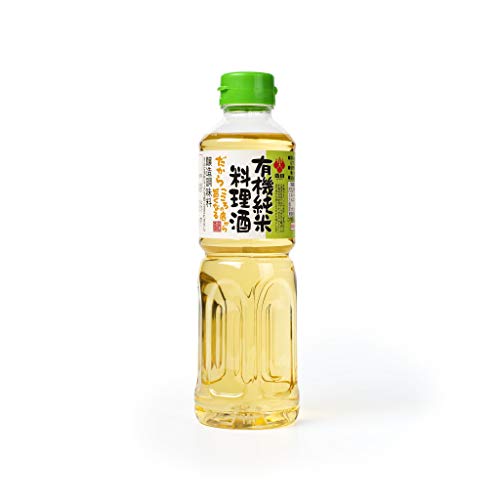
Ozeki Cooking Sake: Best budget option
Ozeki's cooking sake is widely available at major grocery chains and delivers adequate cooking performance at an extremely low price. The flavor is slightly less nuanced than Gekkeikan, but in cooked applications where the sake is reduced and combined with other flavors, the difference is minimal. A practical everyday option for budget-conscious cooks.

Eden Foods Mirin: Best organic mirin
Eden Foods produces one of the few certified organic mirins available, made with traditional fermentation methods rather than the corn syrup shortcuts used in some commercial products. The difference in fermented depth versus "honkaku mirin" made from shortcuts is perceptible in dishes where mirin flavor is prominent. For serious Japanese cooking enthusiasts, Eden's mirin is the highest-quality commercially available option.
In its favor
- Naturally Sweet
What matters most
Salt content
True cooking sake (ryorishu) often contains added salt (typically 2-3%) to make it unsuitable for drinking. Check the label. some cooks prefer salt-free drinkable sake for cleaner control of dish seasoning.
Flavor profile
Dry sake integrates without adding sweetness. better for savory applications. Slightly sweet sake works well in glazes where mirin isn't used. Match the style to the application.
Alcohol content
Standard sake is 15-16% ABV. Higher alcohol is more effective at odor elimination. Lower-alcohol alternatives exist but may perform less effectively.
Origin and authenticity
Japanese-produced sake uses traditional koji fermentation. Some cheaper products use shortcuts. Traditional production correlates with better cooking performance and flavor complexity.
Package size
Cooking sake is used frequently. Larger bottles (750ml to 1L) are more economical per use. If you cook Japanese food more than once a week, consider 1L+ bottles.
Our take
Gekkeikan is the benchmark cooking sake for most home cooks. widely available, properly dry, and effective in all standard Japanese cooking applications. Always use it alongside Kikkoman's Manjo Mirin for teriyaki and nimono where both ingredients contribute essential flavor dimensions.
Frequently asked
Sake is dry with 15%+ alcohol. Mirin is sweet sake with 8-14% alcohol and significant natural sugars. They serve different purposes. sake for odor elimination and alcohol depth; mirin for sweetness and glaze.
Dry white wine works as a substitute in a pinch, but the flavor profile differs. Sake is more neutral and slightly sweeter than dry wine. Adding a small pinch of sugar to dry wine brings it closer to sake's character.
Cooking sake often contains added salt to make it unsuitable for drinking. If you can find drinkable sake at a similar price, it actually works better for cooking. Check for salt additives on the label.
Teriyaki glazes, ramen tare, nimono (simmered dishes), yakitori, tempura batter, oyakodon, and virtually every Japanese marinade use sake as a foundational ingredient.
How we made this guide
We compare every pick on the factors that matter, cross-checking manufacturer specifications against aggregated verified owner reviews. We rank independently and never take payment for placement. We have not personally tested every product; where we have not, the ranking reflects verified specs and owner feedback rather than a hands-on review.
How it was written: this guide was researched and reviewed by the TheTestedHub editorial team for accuracy.
Affiliate disclosure: TheTestedHub is reader-supported. When you buy through links on our site, we may earn a commission at no extra cost to you.