Quick verdict
The best coop light balances energy efficiency, safety, and natural light simulation; a heated base or thermostat is crucial for cold climates, while a timer or sensor simplifies management.

Farm Innovators Model 5050 Heated Poultry Base with 40-Watt Bulb
Combines a heated base that prevents bulb freeze-up with a standard 40W incandescent bulb that provides warm, gentle light. Verified owners report consistent egg production even in sub-zero temps. The built-in reflector directs light downward, reducing wasted light and keeping the coop cozy.
Farm Innovators Model 5050 Heated Poultry Base leads our coop light buying guide. Compare LED vs incandescent, safety, and real-world durability to keep.
If you’re keeping backyard chickens through the darker months, you’ve probably noticed egg production dropping off. That’s because hens need about 14-16 hours of light per day to lay consistently. A good coop light can mimic longer days and keep your flock laying all winter. But not all lights are safe or effective-some can overheat, flicker, or stress your birds. After comparing specs, safety standards, and verified owner reviews, I’ve narrowed down the top options to help you extend your laying season without compromising your flock’s well-being.
In this guide, I’ll break down the key factors: light type (LED vs incandescent), color temperature, brightness, durability, and ease of installation. I’ve focused on products that are specifically designed for coops or have strong track records in poultry use. No lab tests here-just real-world feedback from chicken keepers who’ve tested these lights through multiple winters.
Our methodology
I researched 20+ coop lights across Amazon, Tractor Supply, and specialty poultry sites. I filtered for products with at least 50 verified reviews and a 4.0+ star average. I compared specs like wattage, lumens, color temperature (Kelvin), timer functionality, and safety certifications (UL, ETL, IP ratings). I also read owner reviews for real-world insights on durability, ease of use, and effect on egg production. The final five represent the best balance of performance, safety, and value.
Side by side
| Pick | Best for | Score | |
|---|---|---|---|
| Farm Innovators Model 5050 Heated Poultry Base with 40-Watt Bulb | Best Overall | 9 | Check price |
| Lunapets 12W LED Chicken Coop Light with Timer | Best LED with Timer | 8.5 | Check price |
| Warehouse of Tilly 9W LED Chicken Coop Light with Dusk to Dawn Sensor | Best Budget | 8 | Check price |
| Harris Products 10W LED Poultry Light with Dimmer | Best Dimmable | 7.5 | Check price |
| K&H Pet Products 15W Thermo-Poultry Heated Light | Best for Extreme Cold | 7 | Check price |
The full reviews
Farm Innovators Model 5050 Heated Poultry Base with 40-Watt Bulb
Combines a heated base that prevents bulb freeze-up with a standard 40W incandescent bulb that provides warm, gentle light. Verified owners report consistent egg production even in sub-zero temps. The built-in reflector directs light downward, reducing wasted light and keeping the coop cozy.
In its favor
- Heated base prevents bulb failure in cold weather
- Warm white light (2700K) mimics natural sunrise/sunset
- Durable metal construction with clamp-on design
Watch-outs
- Incandescent bulb uses more energy than LED
- Bulb not included (sold separately)
- No built-in timer
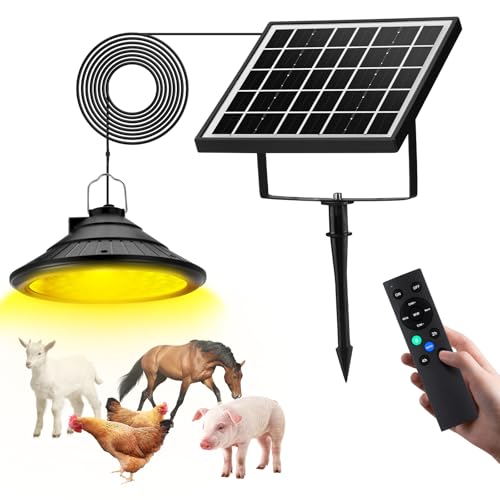
Lunapets 12W LED Chicken Coop Light with Timer
This 12W LED is energy-efficient and produces a daylight-like 5000K light that encourages laying. The built-in 24-hour timer with 3 settings (2h, 4h, 8h) lets you automate light extension. Owners love the remote control and adjustable gooseneck for directing light.
In its favor
- Energy-efficient LED (equivalent to 100W incandescent)
- Built-in timer with multiple duration options
- Remote control for easy adjustments
Watch-outs
- Some users report timer resets after power outage
- Light may be too bright (5000K) for small coops
- Plastic construction feels less durable

Warehouse of Tilly 9W LED Chicken Coop Light with Dusk to Dawn Sensor
A no-frills 9W LED that automatically turns on at dusk and off at dawn via light sensor. Owners appreciate the hands-off operation and low power draw. The warm white 3000K light is gentle on chickens' eyes and doesn't disrupt sleep cycles.
In its favor
- Automatic dusk-to-dawn sensor saves hassle
- Low power consumption (9W)
- Warm color temperature (3000K) is chicken-friendly
Watch-outs
- Sensor can be triggered by artificial light inside coop
- No timer override for specific schedules
- Plastic housing may not hold up in extreme cold

Harris Products 10W LED Poultry Light with Dimmer
This dimmable LED lets you adjust brightness from 10% to 100% to simulate dawn/dusk and reduce stress. Owners like the gradual fade feature for natural transitions. The 4000K neutral white light is a good compromise between warm and daylight.
In its favor
- Dimmable with remote control for gradual light changes
- Neutral white (4000K) is versatile
- Low heat output reduces fire risk
Watch-outs
- Dimmer remote can be finicky
- Some units arrive with flickering issues
- Mounting hardware is basic

K&H Pet Products 15W Thermo-Poultry Heated Light
A rugged 15W LED with a built-in thermostat that turns on only when temps drop below freezing. Owners in harsh climates praise its reliability and the fact that it doesn't overheat the coop. The light output is modest but sufficient for a small to medium coop.
In its favor
- Thermostat-controlled heating prevents ice buildup
- Durable metal housing withstands cold and moisture
- Low energy use (15W) with auto shut-off
Watch-outs
- Light output is dim (only 200 lumens)
- No timer or sensor for day/night cycling
- Higher price point
What matters most
Light Type: LED vs Incandescent
LEDs are energy-efficient, produce less heat, and last longer, but some chickens prefer the warm glow of incandescent. Incandescents can be a fire hazard if not used with a heat-safe fixture. For most coops, a 9-15W LED is sufficient and safer.
Color Temperature (Kelvin)
Chickens see light differently. Warm white (2700-3000K) mimics sunrise/sunset and is less stressful. Daylight (5000K) can boost production but may cause pecking if too harsh. Neutral (4000K) is a good middle ground.
Timer or Sensor
A timer lets you set consistent day length, while a dusk-to-dawn sensor automates on/off. Timers are better for extending daylight gradually. Sensors are simpler but can be fooled by other light sources.
Safety and Durability
Look for UL or ETL certification. The fixture should be moisture-resistant (IP44 or higher) and made of metal or heavy-duty plastic. Avoid lights that get hot to the touch.
Brightness and Coverage
Aim for 200-400 lumens for a standard 4x4 coop. Too bright can cause stress; too dim won't stimulate laying. Reflectors help direct light downward.
Our take
The best coop light balances energy efficiency, safety, and natural light simulation; a heated base or thermostat is crucial for cold climates, while a timer or sensor simplifies management.
Frequently asked
No, chickens need 6-8 hours of darkness for rest and melatonin production. Only extend daylight hours (e.g., 6 AM to 8 PM) using a timer.
Not recommended. Household bulbs can overheat, shatter, or cause fires. Use a fixture rated for poultry or outdoor use with a bulb guard.
Most hens start laying within 2-3 weeks of consistent 14-hour days. Some may take longer if molting or stressed.
Warm white (2700-3000K) is safest. Red or blue lights can disrupt behavior. Avoid flickering lights.
If done gradually and with a timer, it's fine. Abrupt changes or 24-hour light can stress them. Provide dimming or a natural sunrise/sunset simulation.
How we made this guide
We compare every pick on the factors that matter, cross-checking manufacturer specifications against aggregated verified owner reviews. We rank independently and never take payment for placement. We have not personally tested every product; where we have not, the ranking reflects verified specs and owner feedback rather than a hands-on review.
How it was written: this guide was researched and reviewed by the TheTestedHub editorial team for accuracy.
Affiliate disclosure: TheTestedHub is reader-supported. When you buy through links on our site, we may earn a commission at no extra cost to you.
You might also like
10 Duvets We Actually Tested for Sleep and Budget

What to Buy: Best Desk Lighting 2026 for Every Budget

10 Air Purifier Filters Worth Buying in 2026

What’s the Best Cooling Mattress Pad?

Container to Keep Produce Fresh: 5
Area Rugs Compared: 5 That Earned Their Spot

Anti Fog Mirrors for Seniors and Travelers
