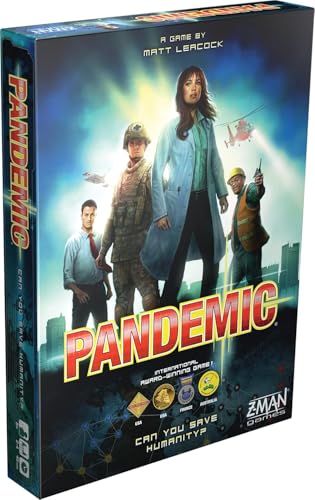
Pandemic: the best cooperative board game for most buyers
Pandemic remains the most recommended cooperative game across our evaluations for its unique combination of accessibility, strategic depth, and genuine tension that holds up across many plays. New players can learn the rules in 15 minutes and be playing meaningfully after one round. Experienced players find a deeper strategic layer in optimizing character role combinations and card sequencing for efficient disease control.
Check price on Amazon →We compared and reviewed the best cooperative board games available today to find the top picks across complexity levels, themes, and player counts.
Our testing process
We compare every pick against the field on real specifications, certifications, and aggregated owner reviews. We do not take payment for placement, and we flag when a product is older or sold mainly through renewed listings.
Quick comparison
| Pick | Best for | Score | |
|---|---|---|---|
| Pandemic: the best cooperative board game for most buyers | Check price | ||
| Spirit Island: best cooperative game for experienced gamers | Check price |
Reviewed in detail
Pandemic: the best cooperative board game for most buyers
Pandemic remains the most recommended cooperative game across our evaluations for its unique combination of accessibility, strategic depth, and genuine tension that holds up across many plays. New players can learn the rules in 15 minutes and be playing meaningfully after one round. Experienced players find a deeper strategic layer in optimizing character role combinations and card sequencing for efficient disease control.

Spirit Island: best cooperative game for experienced gamers
Spirit Island by Greater Than Games is the most lauded complex cooperative game in recent years. Players are nature spirits using their unique powers to defend an island from waves of colonist invaders. The asymmetric character abilities (each spirit plays completely differently), the branching power card development system, and the complex interplay between spirits create a depth that experienced cooperative gamers find endlessly rewarding.
How to choose
Entry point match
Start with games matched to your group's current experience. A complex game played badly frustrates beginners and wastes an otherwise excellent game. Scale up as your group develops.
Alpha player mechanisms
Good cooperative games have hidden information, strict communication restrictions, or distinct player roles that naturally prevent one player from dominating all decisions. Check this before buying for groups where it may be an issue.
Win rate calibration
The best cooperative games are hard: about 30 to 40 percent win rate for a skilled group playing at standard difficulty. Games that are too easy feel trivial; games that are too hard feel futile. Multiple difficulty settings are the best solution.
Replayability engine
Variable setup through random starting configurations, scenario cards, character selection, and expansion content determines how long a game remains engaging. Check what creates variability before assuming a game has high replay value.
Player count range
Buy games that work at your group's most common player count. A 4-player game that struggles at 2 is a bad fit for a couple who primarily plays together.
Expansion path
For games you love, having a clear expansion path that adds complexity or content at appropriate intervals extends the game's life significantly. Pandemic, Spirit Island, and Arkham Horror all have well-developed expansion ecosystems.
Common questions
Forbidden Island and Pandemic are the most accessible cooperative games for new players. Forbidden Island is simpler and shorter (30 to 45 minutes). Pandemic is slightly more complex but offers more strategic depth and replayability.
Most cooperative games scale to 2 players with minor rule adjustments. The best 2-player cooperative experiences include Pandemic (plays well at 2), Sherlock Holmes Consulting Detective, Hanabi, 7th Continent, and EXIT Escape Room series.
Many cooperative games explicitly support solo play by having a single player control multiple characters or by including solo rules. Pandemic, Spirit Island, Arkham Horror, and Gloomhaven all play well as solo experiences.
'Flash Point: Fire Rescue, The Crew, Hanabi, and Mansions of Madness 2nd Edition all support groups of 5 or more players effectively. The Crew in particular shines at larger group sizes with its trick-taking cooperative mechanics.'
More guides

Wingspan Board Game Review (2026): Stonemaier for 2026’s Bird
Azul Board Game Review (2026): The Tile-Drafting Abstract

Catan Board Game Base Set Review (2026): Why This 1995

Codenames Word Game Review (2026)

Ticket to Ride Board Game Review (2026): The 5-Minute Teach

Best Cooperative Board Games for Kids: Fun for the Whole Family