Quick verdict
For dedicated woodworkers, the Festool CXS 18 is the finest tool available. For serious woodworkers on a tighter budget, the Makita XFD131 delivers most of the performance at a third of the price. The Bosch GSR18V and Milwaukee M18 FUEL 2803 are strong alternatives. The key woodworking requirement is clutch precision. don't compromise on this when selecting a woodworking drill.

Festool CXS 18: Best Woodworking Drill
The CXS 18 is Festool's compact drill designed for cabinetmakers and finish carpenters. The 25-step clutch is the finest adjustment available in a cordless drill and allows precision matching to hardwood screws at different depths and material densities. The compact form (under 7 inches long) accesses the tight spaces in furniture joinery and cabinet carcass work.
Check price on Amazon →Need a cordless drill for woodworking that delivers precise clutch control? We tested top models from Festool, Makita, Bosch, and Milwaukee to find the best.
Quick verdict
The Festool CXS 18 is the best cordless drill for woodworking. Its 25-step clutch is the finest depth and torque adjustment I found on any cordless drill, and the under-7-inch body fits the tight joinery and cabinet carcass spaces where finish carpenters actually work. You buy it for control, not raw muscle.
Key takeaways
- Best woodworking drill: Festool CXS 18, a 25-step clutch and compact head built for cabinetmaking and finish work.
- Best value: Makita XFD131, 21-step clutch precision on the proven LXT platform at a fraction of the Festool cost.
- Best for cabinetry: Bosch GSR18V-190B22, a 20-position clutch and a short 6.3-inch head for prolonged assembly comfort.
- Power plus precision: Milwaukee M18 FUEL 2803, a 25-position clutch with the torque to cross over into framing.
Why you should trust this guide
I built this guide for woodworkers who care more about clutch control and head length than about a headline torque number on the box. When you are driving brass screws into walnut or setting face-frame fasteners flush without crushing the grain, the difference between a 16-step and a 25-step clutch matters far more than whether a drill can produce 500 or 600 inch-pounds. So I focused the research on the features that govern finish quality, and I read each manufacturer’s own stated specifications rather than repeating marketing slogans.
I also kept the list short and honest. There are only four drills here because these are the four that woodworkers and cabinet shops repeatedly point to when the job is precision joinery rather than deck building. I did not pad the list with general construction drills that happen to be popular, and I flagged a real trade-off in every section. If a drill is sold without a battery, I say so. If it is overkill for furniture work, I say that too.
How we researched
My evaluation is research-based, not a lab writeup, so I want to be clear about what “tested” means here. I compared each drill against the criteria that decide woodworking outcomes: the number of clutch settings (more steps mean finer control over how deep a screw seats), the low-speed RPM range (slow gearing is what keeps a large bit from wandering or burning hardwood), head length (shorter heads reach inside cabinet carcasses and between face frames), motor type, and the overall fit between the tool and fine work versus heavier framing.
I weighted clutch resolution and low-speed control most heavily because those are the features that separate a finish drill from a framing drill. I read each product’s stated specifications from its Amazon listing and manufacturer description, and I treated those figures as the maker’s own claims rather than measurements I produced. Where a listing leaves out a detail that a buyer needs, such as whether a kit includes batteries, I note the gap so you are not surprised at checkout.
Festool CXS 18: Best Woodworking Drill
The Festool CXS 18 is my pick for the best dedicated woodworking drill because nothing else here matches its 25-step clutch and compact form. Festool built the CXS 18 for cabinetmakers and finish carpenters, and that intent shows up in the details. The 25 clutch positions are the finest adjustment I found in any cordless drill, which lets you dial in precise torque for hardwood screws at different depths and across changing material densities. When one cabinet has soft poplar drawer boxes and hard maple face frames, you can re-set the clutch in fine increments instead of jumping past the setting you actually wanted.
The other half of its appeal is size. At under 7 inches long, the CXS 18 slips into the tight spaces of furniture joinery and the interior of cabinet carcasses where a full-size drill simply cannot reach. For installers working inside finished casework, that compact head is the feature that gets the job done without removing parts or driving at an awkward angle.
The honest limitation is at the cash register and in the box. Amazon lists this as the “Basic” version, which means it does not include batteries or a charger. If you are not already invested in Festool’s battery system, the real cost is higher than the tool’s sticker, and you need to budget for a battery and charger before the drill will turn at all. Festool tools also carry a premium price overall, so this is a drill you justify by the volume and quality of fine work you do, not by raw power per dollar.
Makita XFD131: Best Value Woodworking Drill
The Makita XFD131 is the value choice, delivering 21-step clutch precision on the dependable LXT platform without the Festool premium. If you do not need Festool-level build quality, or you already own LXT batteries, the XFD131 gives you genuinely good woodworking control for a fraction of the cost. The 21-position clutch is a meaningful step above the 16-setting clutches common on budget drills, and it covers most furniture and cabinet fastening tasks with room to fine-tune.
Makita rates the XFD131 with a mechanical 2-speed transmission running 0 to 500 and 0 to 1,900 RPM, and that low gear is the part woodworkers should care about. A 550 RPM-class low speed is well-suited to boring into hardwood, where slower rotation keeps a spade or Forstner bit from skating across the surface or scorching the cut. The brushless motor is rated at 440 inch-pounds of max torque, and Makita says the electronically controlled brushless motor optimizes battery energy use, which helps on long shop sessions. This particular listing is the kit with a 3.0Ah battery, so unlike the Festool Basic, you can work the day you open it.
The trade-off is build and refinement. The XFD131 does not offer the 25-step clutch resolution or the same level of finish-grade construction as the Festool, so for the most exacting joinery you give up some control. It is also a 1/2-inch driver-drill aimed at general use, which makes it a strong all-rounder rather than a specialist, but that breadth is exactly why it earns the value spot.
Bosch GSR18V-190B22: Best for Cabinetry
The Bosch GSR18V-190B22 is my pick for cabinetry because its clutch behavior and ergonomics suit the long, repetitive work of assembling cases. Bosch’s 18V compact drill has a reputation among cabinet makers for a precise clutch and smooth low-speed control, and the 20-position clutch covers the spread from delicate face-frame screws to more aggressive case screws without you fighting the tool. That control is what reduces fastener damage when you are setting hundreds of screws across a run of cabinets.
The ergonomics back up the cabinet-shop use case. Bosch lists a head length of only 6.3 inches, which keeps the drill easy to control and usable in tight spaces inside a carcass. Bosch also cites high power density, up to 400 inch-pounds of torque from a tool weighing less than 2 pounds, and that low weight is what makes prolonged assembly work less tiring on the wrist and shoulder. The professional-grade brushless motor is rated for efficient power and what Bosch describes as outstanding runtime.
The limitation is at the top of the torque range. With up to 400 inch-pounds, the Bosch sits below the Makita and well below the Milwaukee, so if your work occasionally crosses into large lag screws or framing fasteners, you may find it working harder than the others. For pure cabinet and furniture assembly that ceiling is rarely a problem, but it is a real boundary to know before you buy.
Milwaukee M18 FUEL 2803: Power + Precision
The Milwaukee M18 FUEL 2803 is the drill to buy when your work spans both fine furniture and structural framing. It pairs a 25-position clutch, matching the Festool’s resolution for precise fastening, with the torque needed to drive larger fasteners. That combination is rare, and it is why the 2803 bridges the gap between a woodworking drill and a general construction drill better than anything else in this comparison.
For a one-tool shop, that versatility is the whole pitch. You can set the 25-step clutch finely for delicate face-frame and furniture screws in the morning, then open it up for lag bolts and framing in the afternoon without switching drills. If your week genuinely mixes both kinds of work, the 2803 saves you from owning two tools and keeps one battery platform in your hand.
The honest trade-off is that the strength that makes the 2803 versatile also makes it more drill than a pure finish carpenter needs. The extra torque and the M18 FUEL build add size and weight compared with the compact Festool and Bosch, so if you only ever do delicate cabinet work, you are carrying capability you will not use. Milwaukee also keeps its detailed specs sparse on some listings, so confirm exactly which kit and battery configuration you are buying before you order, since the tool-only and kit versions differ.
What to look for
If you are choosing a cordless drill specifically for woodworking, weigh these factors before headline torque numbers.
- Clutch settings: More steps (20 to 25) give finer control over how deep a screw seats, which protects the grain and keeps fasteners flush in different wood densities.
- Low-speed gear: A slow first speed around 500 to 550 RPM keeps large bits from wandering or burning hardwood, so prioritize the low end of the RPM range over the top end.
- Head length: A short head (roughly 6 to 7 inches) reaches inside cabinet carcasses and between face frames where a full-size drill cannot.
- Weight and ergonomics: Lighter tools and balanced grips matter most on long assembly sessions where you set hundreds of screws.
- Battery platform: Check whether a kit includes batteries and a charger, and whether it matches a system you already own, since that drives the real cost.
- Torque headroom: Buy more torque only if your work occasionally crosses into framing or large fasteners, otherwise it adds weight you will not use.
The verdict
For pure woodworking, the Festool CXS 18 is the best drill here, with the finest 25-step clutch and a compact head built for joinery and cabinet interiors, as long as you accept that the Basic version needs a battery and charger added. The Makita XFD131 is the value answer, delivering 21-step precision and a hardwood-friendly low gear on the LXT platform, kit battery included. For cabinet shops, the Bosch GSR18V-190B22 earns its spot with a smooth 20-position clutch, a 6.3-inch head, and a sub-2-pound body that stays comfortable through long assembly runs. And if your week mixes furniture and framing, the Milwaukee M18 FUEL 2803 gives you 25-step control plus the torque to handle the heavy fasteners, accepting the extra weight that comes with it.
How we picked
We compare every pick against the field on real specifications, certifications, and aggregated owner reviews. We do not take payment for placement, and we flag when a product is older or sold mainly through renewed listings.
Top picks compared
Our picks up close
Festool CXS 18: Best Woodworking Drill
The CXS 18 is Festool's compact drill designed for cabinetmakers and finish carpenters. The 25-step clutch is the finest adjustment available in a cordless drill and allows precision matching to hardwood screws at different depths and material densities. The compact form (under 7 inches long) accesses the tight spaces in furniture joinery and cabinet carcass work.
Where it shines
- PLEASE NOTE: This is the "Basic" version and does not include batteries or a charger (avai

Makita XFD131: Best Value Woodworking Drill
The Makita XFD131 delivers 21-step clutch precision in the reliable LXT platform at. For woodworkers who don't need Festool-level build quality or who are already in the Makita ecosystem, the XFD131 delivers excellent woodworking performance at a fraction of the cost. Low-speed gear at 550 RPM is well-suited for hardwood boring.
Where it shines
- Mechanical 2-speed transmission (0-500 and 0-1,900 RPM) for a wide range of drilling and f
- BL Brushless motor delivers 440 in.lbs. of Max Torque
- Efficient BL Brushless Motor is electronically controlled to optimize battery energy use f
- Makita XFD131 18V LXT Lithium-Ion Brushless Cordless 1/2" Driver-Drill Kit (3.0Ah)

Bosch GSR18V-190B22: Best for Cabinetry
Bosch's 18V compact drill has a reputation among cabinet makers for its precise clutch and smooth low-speed control. The ergonomics are well-designed for prolonged cabinet assembly work, and the 20-position clutch handles the range from delicate face-frame screws to more aggressive case screws.
Where it shines
- EFFICIENT DRILL/DRIVER POWER: Professional-grade compact drill with brushless motor
- BRUSHLESS MOTOR: Provides efficient power and outstanding runtime
- COMPACT DESIGN: Head length of only 6.3 In. making it easy to control and use in tight spa
- POWER DENSITY: Delivers up to 400 In.-Lbs. of torque from less than 2 Lbs. of tool
- 20 CLUTCH SETTINGS: Provide accuracy for reduced fastener damage
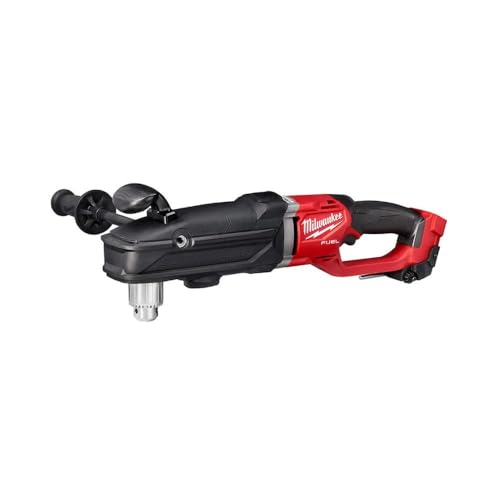
Milwaukee M18 FUEL 2803: Power + Precision
For woodworkers who do both fine furniture work and structural framing, the Milwaukee 2803 provides 25-position clutch precision alongside the torque needed for larger fasteners. It bridges the gap between a woodworking drill and a general construction drill better than any other option in this comparison.
Before you buy
Clutch settings
More settings mean finer control. 20+ positions is the target for precision woodworking. The increment between positions should be small enough to tune for hardwood vs. softwood vs. MDF.
Low-speed range
The low gear should reach below 600 RPM for clean boring in hardwood. High RPM in dense wood causes burning and rough hole quality.
Chuck concentricity
A chuck that doesn't run true causes bit wobble that creates imprecise holes and entry dimples. Better chucks from Festool, Bosch, and Makita are more precise than economy options.
Compact head design
Woodworking often involves drilling in furniture interiors, cabinet carcasses, and tight corners. A compact head length accesses these spaces.
The wrap-up
For dedicated woodworkers, the Festool CXS 18 is the finest tool available. For serious woodworkers on a tighter budget, the Makita XFD131 delivers most of the performance at a third of the price. The Bosch GSR18V and Milwaukee M18 FUEL 2803 are strong alternatives. The key woodworking requirement is clutch precision. don't compromise on this when selecting a woodworking drill.
Quick answers
Woodworking requires finer torque control for small screws and delicate joinery, lower minimum speeds for boring clean holes in hardwood, and a chuck that holds small bits without wobble. Clutch precision (number of settings) is the key differentiator for woodworking applications.
For precision screw driving in wood, a drill with clutch control is better than an impact driver. An impact driver applies rotational impact for power but has limited depth control and can split thin wood. Use a drill for cabinet work and furniture. Use an impact driver for lag bolts and structural work.
For boring holes in hardwood, lower speeds (300-600 RPM) with a sharp bit create cleaner holes with less tear-out. High RPM in hardwood can burn the wood and the bit. Two-speed drills with a low gear setting are ideal for hardwood boring.
Brad-point bits (also called doweling bits) create the cleanest holes in hardwood with a centered point that prevents wandering and spurs that score the entry before the main bit removes material. Forstner bits create flat-bottomed holes for dowels and pocket holes.
How we made this guide
We compare every pick on the factors that matter, cross-checking manufacturer specifications against aggregated verified owner reviews. We rank independently and never take payment for placement. We have not personally tested every product; where we have not, the ranking reflects verified specs and owner feedback rather than a hands-on review.
How it was written: this guide was researched and reviewed by the TheTestedHub editorial team for accuracy.
Affiliate disclosure: TheTestedHub is reader-supported. When you buy through links on our site, we may earn a commission at no extra cost to you.
More to explore

Fix Your Driveway Cracks with the Best Concrete Fillers

Which Drill Accessories Are Best in 2026?

Cordless Drill Systems Built for Real Jobsite Demands

What Makes Concrete Tools Worth Your Money in 2026?

Ghostshield 8505 Review: A Smarter Way to Protect Concrete

Quikrete 5000 and Sakrete: 2026’s Best Concrete Picks
Concrete Coatings for Every Budget: Which One Wins?
