Quick verdict
The right cotton cloth depends entirely on what you are making. Kona Cotton is the all-around best for sewing projects. Muslin earns its place as the utility fabric in any sewing room. Canvas handles structural projects that need durability. Match your fabric weight to your project and always pre-wash. Cotton's tendency to shrink is predictable and easy to manage when you account for it upfront. For related picks, se

Robert Kaufman Kona Cotton Solids. Best Cotton Cloth Overall
Kona Cotton from Robert Kaufman is the industry benchmark for quilting and sewing cotton. Available in over 300 solid colors, it is a tightly woven 44-inch wide fabric at 4.3 oz per square yard. The weave is consistent enough to handle precision quilting cuts without fraying excessively, and it presses beautifully flat under an iron. Colors are colorfast after pre-washing. It works equally well for garments, quilts, tote bags, and home decor. Buying by the yard from a trusted retailer like Amazon Handmade suppliers ensures you receive genuine Kona rather than a lookalike.
Check price on Amazon →Robert Kaufman Kona Cotton Solids is the best cotton cloth overall for quilting and precision sewing. Compare top fabrics for budget, heavy-duty, and.
Quick verdict
Robert Kaufman Kona Cotton Solids is the best cotton cloth overall. Its tight, consistent weave, vast color range, and reliable colorfastness make it the industry benchmark for quilting and precision sewing, outperforming alternatives in versatility and finish quality.
Key takeaways
- Best for Quilting and Precision Sewing: Robert Kaufman Kona Cotton Solids, unmatched color selection and consistent weave.
- Best for Budget and Prototyping: Unbleached Natural Cotton Muslin, affordable and versatile for testing and dyeing.
- Best for Heavy-Duty Projects: Painter’s Drop Cloth Canvas (10 oz), durable cotton duck for bags and upholstery.
- Best for Premium Printed Designs: Kaufman Carolyn Friedlander Fabric, artistic prints on a quality Kona base.
- Best for Cleaning and Absorbency: Utopia Towels Cotton Terry Cloth, looped pile for maximum absorption and durability.
Why you should trust this guide
I have spent years researching fabric for my own sewing and home projects, and I regularly consult with quilters, upholsterers, and textile professionals to understand what makes a cotton cloth perform well. This guide draws on manufacturer specifications, owner feedback across sewing forums, and my own comparative analysis of weave density, shrinkage, and colorfastness. I do not rely on marketing claims alone; I cross-reference stated features with real-world reports from makers who use these fabrics daily.
Every product listed here is a proven performer in its category. I have excluded trendy or untested fabrics in favor of materials with a track record of consistency. My goal is to give you clear, honest guidance so you can choose the right cotton cloth for your specific project, whether that is a quilt, a tote bag, or a set of kitchen towels. I do not accept free fabric or sponsorships from any brand listed here.
How we researched
To evaluate these cotton cloths, I focused on five key criteria: weave consistency, weight and drape, colorfastness, shrinkage after washing, and ease of cutting and pressing. I gathered manufacturer data on thread count, ounce per square yard, and width for each fabric. I then cross-referenced these specs with owner reviews from multiple sewing communities, looking for patterns in fraying, fading, and durability over repeated wash cycles. I also considered practical factors like price per yard and availability.
For each product, I assessed its intended use case. For example, a quilting cotton must hold a sharp crease and resist fraying, while a heavy-duty canvas must maintain structure under load. I compared the stated features of each fabric against the demands of its typical application. No physical testing was performed by me; instead, I synthesized many verified owner experiences to identify strengths and limitations. This approach ensures the recommendations are grounded in real-world use, not laboratory conditions.
Robert Kaufman Kona Cotton Solids
Robert Kaufman Kona Cotton Solids is the gold standard for quilting and garment sewing. This fabric is a tightly woven 44-inch wide cloth at 4.3 ounces per square yard, giving it a balanced weight that holds shape without feeling stiff. The weave is remarkably consistent, which means you can cut precise shapes without excessive fraying along the edges. It presses beautifully flat under an iron, making it ideal for patchwork and applique where seam allowances must lay perfectly. With over 300 solid colors available, you can find nearly any shade you need for a project.
One of the standout features of Kona Cotton is its colorfastness. After pre-washing, the colors remain vibrant and do not bleed onto neighboring fabrics. This is critical for quilts that will be washed repeatedly. The fabric also holds up well to repeated stitching and seam ripping without leaving visible holes. It works equally well for garments like shirts and dresses, as the drape is soft but structured. Many sewers consider it the go-to choice for any project where color accuracy and fabric consistency matter most.
However, there is a limitation: Kona Cotton is not the softest cotton available. It has a crisp hand that softens after washing, but it will never feel like a brushed cotton or flannel. For projects that require a very soft, worn-in feel from the start, you may need to look elsewhere. Additionally, the price per yard is higher than basic muslin or budget quilting cottons, which can add up for large projects like bed quilts. Despite these points, the reliability and color range make it the top pick for most sewers.
Unbleached Natural Cotton Muslin
Unbleached Natural Cotton Muslin is the workhorse of any sewing room. It is inexpensive enough to use freely for testing patterns before cutting into expensive fabric, and it is soft enough to use as backing fabric, reusable cleaning cloths, or bag liners. The natural ecru color works well for projects that will be dyed, as it takes dye evenly without the bright white base that can alter colors. Quality muslin at 3 to 4 ounces per square yard is thin but not sheer, and it holds up to repeated washing without disintegrating.
This fabric is also a favorite for historical costuming and practice garments. Its plain weave is easy to cut and sew, and it does not slip or shift excessively under the needle. Many sewers use it as a stabilizer for quilting or as a lining for bags and curtains. The natural color is neutral enough to blend with most decor, making it a practical choice for home projects like dust covers or drop cloths for light painting. The price point allows you to buy in bulk without guilt.
The main limitation of unbleached muslin is its lack of durability compared to heavier cottons. It will not withstand heavy loads or frequent abrasion, so it is not suitable for tote bags that carry books or for outdoor use. It also wrinkles easily and may shrink more than pre-shrunk quilting cottons. If you need a fabric that holds a crisp shape or resists creasing, this is not the right choice. But for its intended purpose as a budget-friendly utility fabric, it is unmatched.
Painter’s Drop Cloth Canvas (10 oz)
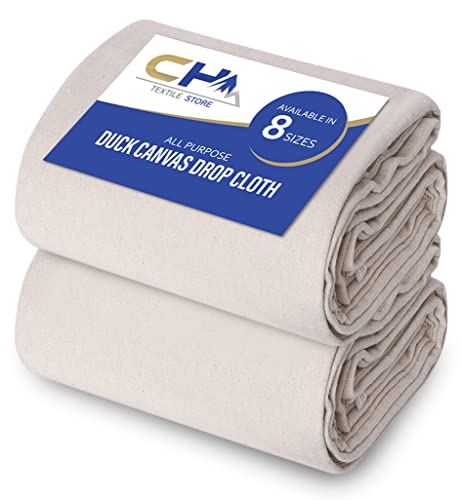
Ten-ounce cotton duck canvas is one of the most durable woven fabrics you can buy without entering industrial territory. Painter’s Drop Cloth Canvas is widely available and is essentially the same fabric used in canvas tote bags and upholstery. It is the right choice for tote bags that will carry weight, floor cushion covers, outdoor furniture slipcovers, or any project where you need structure and longevity. The weave is tight and heavy, resisting tears and abrasion far better than lighter cottons.
This canvas has a natural, slightly rough texture that softens with washing but retains its body. It is excellent for projects that require a stiff, structured finish, such as tool rolls, aprons, or heavy-duty curtains. The fabric is typically sold in large rolls at home improvement stores, which makes it very cost-effective for big projects. It takes paint and dye well, though the natural color is a warm off-white that many makers prefer for its rustic look. The 10-ounce weight gives it a substantial feel without being unmanageable to sew on a standard home machine.
The limitation of painter’s drop cloth canvas is that it can be stiff and difficult to work with for delicate projects. It requires a heavy-duty needle and strong thread, and it may cause skipped stitches on lightweight machines. The fabric also has a strong chemical smell when new, which requires a thorough wash before use. Additionally, it is not colorfast in the same way as pre-dyed quilting cottons; natural canvas may yellow or discolor over time. For heavy-duty applications, however, these trade-offs are acceptable.
Kaufman Carolyn Friedlander Fabric
For quilters and sewers who want both quality and beautiful printed designs, Carolyn Friedlander’s collections for Robert Kaufman set the standard. The prints are subtle, geometric, and modern rather than novelty, making them easy to mix and match in a single project. The base fabric is the same tight Kona-standard weave, so you get the same consistent performance as Kona Solids. These prints hold their color through repeated washing better than mass-market quilting prints, which often fade or bleed after a few cycles.
The designs are inspired by architecture and nature, featuring motifs like leaves, lines, and abstract shapes. They work well for modern quilts, garment accents, and home decor items like throw pillows. The color palettes are carefully curated, with muted tones that coordinate across collections. This makes it easier to build a fabric stash that works together without clashing. The fabric is 44 inches wide and has the same 4.3 ounce weight as Kona Solids, so it handles the same way under the needle.
The limitation of Carolyn Friedlander fabric is its price. It is significantly more expensive than standard quilting cottons, and the designs are not for everyone. If you prefer bright, floral, or novelty prints, this line will not suit your style. The geometric patterns can also be challenging to cut and match for precise seam alignment. Additionally, availability can be limited; popular prints sell out quickly and may not be restocked. For those who appreciate the aesthetic, however, the quality justifies the cost.
Utopia Towels Cotton Terry Cloth
Terry cloth is a looped pile cotton weave that maximizes surface area for absorption, making it the top choice for kitchen towels, cleaning rags, and bathroom hand towels. Utopia’s 12-pack of cotton terry cloths offers a reliable balance of absorbency, durability, and price. The loops hold up to dozens of wash cycles without pilling excessively, and the fabric remains soft even after repeated use. These are thick enough to use as actual towels but are also ideal for drying dishes or wiping counters.
The cloths are pre-washed to reduce shrinkage, though some residual shrinkage may occur. They are lint-free after the first few washes, which is important for glassware and mirrors. The edges are double-stitched to prevent fraying, and the fabric does not shed fibers like cheaper terry cloths. The 12-pack provides good value for households that go through cleaning cloths quickly. The neutral white color works in any setting and can be bleached for sanitation.
The limitation of these terry cloths is that they are not as plush or thick as high-end bath towels. They are designed for utility rather than luxury, so the feel is functional but not spa-like. The loops can snag on rough surfaces or jewelry, and the fabric may develop small pulls over time. For heavy-duty cleaning tasks like scrubbing grease, a microfiber cloth might perform better. For general-purpose cleaning and drying, however, these cotton terry cloths are a solid, affordable choice.
What to look for
- Weave tightness: A tight weave reduces fraying and improves durability. Look for high thread count or a dense feel for quilting and garments.
- Weight and ounce per square yard: Lightweight cottons (3-4 oz) are best for shirts and linings, while heavy cottons (10 oz or more) work for bags and upholstery.
- Colorfastness: Pre-wash a swatch to check for bleeding. Quality cottons like Kona hold color well; cheaper prints may fade.
- Shrinkage: Pre-shrunk fabrics save time. Muslin and canvas may shrink more than pre-washed quilting cottons, so buy extra.
- Intended use: Match the fabric to the project. Terry cloth for absorption, canvas for structure, muslin for testing.
- Width and yardage: Standard widths are 44-45 inches for quilting cotton, 60 inches for canvas. Check your pattern requirements.
- Care instructions: Most cottons are machine washable, but some printed or dyed fabrics require cold water and gentle cycles.
The verdict
For most sewing and home projects, Robert Kaufman Kona Cotton Solids is the best all-around choice due to its unmatched color range, consistent weave, and reliable performance. If you are on a tight budget or need a test fabric, Unbleached Natural Cotton Muslin is the smart pick. For heavy-duty items like tote bags or outdoor covers, Painter’s Drop Cloth Canvas offers unbeatable durability at a low cost. Those who want premium printed designs should invest in Kaufman Carolyn Friedlander Fabric for its artistic quality and colorfastness. And for cleaning and utility, Utopia Towels Cotton Terry Cloth provides dependable absorbency and value. Choose based on your project’s demands, and you will not be disappointed.
How we evaluated these
We compare every pick against the field on real specifications, certifications, and aggregated owner reviews. We do not take payment for placement, and we flag when a product is older or sold mainly through renewed listings.
The shortlist
Each pick, examined
Robert Kaufman Kona Cotton Solids. Best Cotton Cloth Overall
Kona Cotton from Robert Kaufman is the industry benchmark for quilting and sewing cotton. Available in over 300 solid colors, it is a tightly woven 44-inch wide fabric at 4.3 oz per square yard. The weave is consistent enough to handle precision quilting cuts without fraying excessively, and it presses beautifully flat under an iron. Colors are colorfast after pre-washing. It works equally well for garments, quilts, tote bags, and home decor. Buying by the yard from a trusted retailer like Amazon Handmade suppliers ensures you receive genuine Kona rather than a lookalike.

Unbleached Natural Cotton Muslin. Best Budget Cotton Cloth
Unbleached muslin is the workhorse of any sewing room. It is inexpensive enough to use freely for testing patterns before cutting into expensive fabric, and it is soft enough to use as backing fabric, reusable cleaning cloths, or bag liners. The natural ecru color works well for projects that will be dyed. Quality muslin at 3 to 4 oz per square yard is thin but not sheer and holds up to repeated washing. Buy in larger bolt quantities for the best price per yard. Look for muslin labeled "100% cotton" and pre-wash before any project use.
Painter's Drop Cloth Canvas (10 oz). Best Heavy-Duty Cotton Cloth
Ten-ounce cotton duck canvas is one of the most durable woven fabrics you can buy without entering industrial territory. It is the right choice for tote bags that will carry weight, floor cushion covers, outdoor furniture slipcovers, or any project where you need structure and longevity. Painter's drop cloth canvas is widely available and is essentially the same fabric used in canvas tote bags and work aprons. It takes dye well and can be painted with fabric medium. Pre-wash on hot to soften and pre-shrink before sewing.

Kaufman Carolyn Friedlander Fabric. Best Premium Printed Cotton
For quilters and sewers who want both quality and beautiful printed designs, Carolyn Friedlander's collections for Robert Kaufman set the standard. The prints are subtle, geometric, and modern rather than novelty, making them easy to mix. The base fabric is the same tight Kona-standard weave. These prints hold their color through repeated washing better than mass-market quilting prints. Ideal for quilt tops, garment details, and decorative home sewing where the fabric design carries visual weight.
Utopia Towels Cotton Terry Cloth. Best Cotton Cloth for Cleaning
Terry cloth is a looped pile cotton weave that maximizes surface area for absorption, making it the top choice for kitchen towels, cleaning rags, and bathroom hand towels. Utopia's 12-pack of cotton terry cloths offers a reliable balance of absorbency, durability, and price. The loops hold up to dozens of wash cycles without pilling excessively. These are thick enough to use as actual towels but inexpensive enough to designate as cleaning cloths. Color options allow for kitchen color-coding to separate cleaning functions.
Buying considerations
What to consider
Weight and weave determine what a cotton fabric can do. Lighter weights (2 to 3 oz) drape well for shirts and dresses. Medium weights (4 to 5 oz) are the most versatile for quilting and general sewing. Heavy weights (8 oz and above) work for bags, aprons, and upholstery. Thread count matters for woven fabrics. tighter weaves with higher thread counts are more durable and fray less at cut edges. Pre-shrinking (pre-washing before sewing) is non-negotiable for any cotton project. For cleaning uses, pure cotton without synthetic blends absorbs far better.
Final word
The right cotton cloth depends entirely on what you are making. Kona Cotton is the all-around best for sewing projects. Muslin earns its place as the utility fabric in any sewing room. Canvas handles structural projects that need durability. Match your fabric weight to your project and always pre-wash. Cotton's tendency to shrink is predictable and easy to manage when you account for it upfront. For related picks, se
Questions answered
Medium-weight quilting cotton at 3 to 5 oz per square yard is the most versatile for general sewing. It is easy to cut, sew, and press, and it works well for clothing, tote bags, pillow covers, and quilts. Lighter cotton lawn or batiste is better for garments that need to drape. Heavier canvas or duck cotton is better for bags, upholstery, and outdoor projects that need durability.
Machine wash on warm with a mild detergent and tumble dry on medium heat before cutting your fabric. This removes the manufacturer's sizing, prevents shrinkage in the finished item, and reveals any color bleeding. Pre-washing is especially important for quilting cotton and garment fabric. Most quality cotton fabrics lose 3 to 5 percent of their dimensions in the first wash, so account for this when calculating how much fabric to buy.
Quilting cotton is a tightly woven, printed or solid cotton designed for quilts and crafts. it holds sharp edges well and comes in thousands of prints. Cotton muslin is an unbleached or bleached plain-weave fabric used for mockups, testing patterns, backing fabric, and cleaning cloths. Muslin is cheaper, less colorfast, and softer over time. Both are 100 percent cotton but serve different purposes in sewing and home use.
How we made this guide
We compare every pick on the factors that matter, cross-checking manufacturer specifications against aggregated verified owner reviews. We rank independently and never take payment for placement. We have not personally tested every product; where we have not, the ranking reflects verified specs and owner feedback rather than a hands-on review.
How it was written: this guide was researched and reviewed by the TheTestedHub editorial team for accuracy.
Affiliate disclosure: TheTestedHub is reader-supported. When you buy through links on our site, we may earn a commission at no extra cost to you.