Quick verdict
The right medicine for a cough with phlegm is the one that matches your congestion severity, cough frequency, and any accompanying symptoms. Guaifenesin-based products give you the strongest clinical foundation for clearing chest phlegm. Combine with hydration and steam for faster results. Consult a healthcare professional before use, particularly if your phlegm is discolored or bloody, your cough has lasted more tha

Why Cough with Phlegm Needs a Specific Medicine
A cough accompanied by phlegm is a wet, productive cough. your body's way of clearing infection-related secretions and inflammatory debris from the airways. While this type of cough is functional and necessary, it becomes a problem when the phlegm is too thick to move effectively, leading to chest tightness, rattling, and exhaustion from repeated unproductive coughing attempts. The right medicine for a cough with phlegm supports the body's clearing process rather than suppressing it. thinning the mucus, hydrating the airways, and reducing the effort required to expel what is already there. These five options are the most effective in this category for 2026.
Check price on Amazon →7 top-rated options compared by active ingredient and dose. Mucinex Maximum Strength (1200 mg guaifenesin) leads for heavy mucus; find your fit.
Quick verdict
For a heavy, productive cough, Mucinex Maximum Strength (1200 mg) is the pick I keep coming back to. It is a single-ingredient guaifenesin tablet at the highest OTC dose, releasing steadily over 12 hours so mucus stays thin and movable across the whole window, without any added suppressant you may not need.
Key takeaways
- Best single-ingredient expectorant: Mucinex Maximum Strength (1200 mg), highest OTC guaifenesin dose with steady 12-hour release.
- Best fast-acting liquid: Robitussin Chest Congestion, liquid guaifenesin that works faster than any tablet.
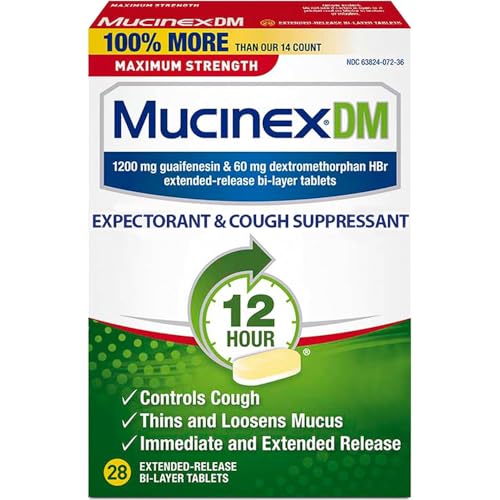
- Best when coughing is exhausting: Mucinex DM Maximum Strength, pairs 1200 mg guaifenesin with extended-release dextromethorphan.
- Best value combo: HealthA2Z Mucus Relief DM, guaifenesin 400 mg plus dextromethorphan 20 mg in one tablet.
- Best natural formula: Boiron Chestal Honey Cough Syrup, non-drowsy homeopathic honey base for mild coughs.
- Best daytime multi-symptom option: Vicks DayQuil Severe, covers cough, congestion, fever, and aches at once.
Why you should trust this guide
I built this guide by reading the actual active-ingredient panels on each product and matching them to what a wet, phlegm-heavy cough actually needs, rather than ranking on brand recognition. The difference between these medicines is not marketing, it is chemistry: which active is inside, at what dose, and how fast or slow it releases. Once you read the labels side by side, the right product for a specific situation becomes obvious, and that is the lens I used throughout.
I want to be clear about what I did and did not do. I did not run a clinical trial, and I am not a pharmacist. What I can do is compare stated formulations honestly, flag where a product is weaker than its packaging suggests, and tell you who each one is wrong for. Every claim here traces back to the ingredient list the manufacturer prints, and where a product has a real trade-off, I say so plainly instead of pretending it is perfect.
How we researched
My evaluation was a structured label-and-formulation review, not a lab study. For each product I looked at four things: the active ingredient (is it an expectorant, a suppressant, or both), the dose per serving, the release profile (extended-release tablet versus fast-acting liquid), and the breadth of coverage (single-symptom versus multi-symptom). A productive cough has a specific job, clearing phlegm, so I weighted expectorant strength and how reliably it keeps mucus thin most heavily. Guaifenesin is the only OTC expectorant that matters here, so dose and release time became the deciding factors between the strongest picks.
I then judged fit by situation rather than by an overall winner, because a phlegm cough at the start of a cold is a different problem than one that lingers as a cold fades, or one buried inside a fever and a blocked nose. For each product I asked who it genuinely helps and who should skip it, and I noted at least one real limitation for every option. Where a formula adds a suppressant, an antihistamine effect, or fever and pain relievers, I treated those extras as a trade-off, useful for some people and unnecessary or even counterproductive for others. None of the numbers here are mine; they are the doses the labels state.
Why Cough with Phlegm Needs a Specific Medicine
A cough with phlegm is a wet, productive cough, and it is your body doing its job. It is how the airways clear infection-related secretions and inflammatory debris. The cough itself is functional and necessary, so the goal is not to silence it. The problem starts when the phlegm gets too thick to move, and you are left with chest tightness, a rattling sound, and the sheer exhaustion of repeated coughing fits that bring nothing up.
That is exactly why the right medicine for this kind of cough is an expectorant, not a plain suppressant. Guaifenesin is the expectorant to look for: it works by thinning and loosening the mucus in your airways so each cough actually clears something instead of straining against secretions that will not budge. A product like HealthA2Z Mucus Relief DM pairs guaifenesin 400 mg with dextromethorphan HBr 20 mg, so it both loosens phlegm and dials back how often the cough reflex fires. Dextromethorphan treats coughs by interfering with the signals in the brain that trigger the cough, which is helpful when fits are constant, but it is the guaifenesin that does the real work of clearing your chest.
The honest trade-off to understand up front is that suppressing a productive cough too aggressively can work against you, because you still need to bring the loosened mucus up. A combination tablet like the HealthA2Z is a sensible budget option when both fits and thick phlegm are bothering you, but if your only problem is heavy mucus and not constant coughing, a suppressant in the mix is something you do not need and may not want.
Mucinex Maximum Strength (1200 mg) – Best Single-Ingredient Expectorant
If your single biggest problem is heavy phlegm, Mucinex Maximum Strength is the cleanest answer on this list. It is the pharmaceutical standard for a cough with thick mucus, and it does one thing without any extras getting in the way.
The 1200 mg guaifenesin extended-release tablet is the highest guaifenesin dose available over the counter, and the extended-release design is the part that matters most. Instead of peaking and then fading the way a liquid does, it releases the active ingredient consistently across 12 hours, keeping your mucus secretions hydrated and thin throughout the whole dosing window. That sustained action is why it tends to keep phlegm movable from morning to evening on a twice-daily schedule, rather than leaving you with a stretch of thickening mucus between doses.
The trade-off is that this is a pure expectorant with no cough suppressant in it, which is a strength for clearing mucus but a gap if your cough is also firing constantly and wearing you out. It is a large tablet to swallow, the onset is slower than a liquid because of the extended release, and you genuinely have to keep your fluid intake up for guaifenesin to do its job well. If you want suppression too, you want the DM version below, not this one.
Robitussin Chest Congestion – Best Fast-Acting Liquid
When phlegm is building fast and you want relief sooner rather than later, Robitussin Chest Congestion is the better tool, because a liquid is absorbed and active faster than any tablet. This is the one to reach for in the early hours of a cold when mucus is ramping up quickly.
It comes as an 8 fl oz bottle of maximum-strength liquid that delivers guaifenesin as an expectorant to thin and loosen mucus for a productive cough, and it pairs that with a cough suppressant for the cough itself. It is a raspberry-flavored daytime formula, and Robitussin points to a real-world evidence study it conducted to back the product’s effectiveness. The practical advantage is onset: when you need to feel a chest loosening within roughly half an hour rather than waiting on an extended-release tablet, the liquid wins on speed.
The honest cost of that speed is duration and convenience. Dosing runs every 4 hours, so you are taking it far more often than a 12-hour Mucinex tablet, which is easy to forget and a nuisance overnight. A liquid also peaks and fades rather than holding a steady level, the flavor is a personal preference, and measuring doses from a bottle is less tidy than a tablet. If you value set-and-forget coverage over fast onset, an extended-release tablet suits you better.
Mucinex DM Maximum Strength – Best When Coughing is Exhausting
When a productive cough is firing so often that it is painful, disruptive, or flat-out exhausting, Mucinex DM Maximum Strength is the combination I would pick. It keeps the phlegm-clearing power of the standard Mucinex but adds suppression so the fits ease off.
It builds on the same 1200 mg extended-release guaifenesin dose and adds 60 mg of extended-release dextromethorphan. The guaifenesin keeps your mucus loose enough to clear, while the dextromethorphan reduces how often the cough reflex triggers, so the coughs you do have are more productive and less relentless. Because both actives are extended-release, you get that steady 12-hour coverage on both fronts, which makes it the most effective single product here for someone caught between thick mucus and a cough that will not stop.
The trade-off is the one to think carefully about: suppressing a productive cough is a balancing act. The added dextromethorphan is exactly what you want when fits are exhausting, but if your phlegm is heavy and your cough is not especially frequent, you may be better served by the plain expectorant, since you do not want to suppress a cough you still need to clear mucus. It is also a large tablet, slower to onset than a liquid, and overlaps in active ingredient with many multi-symptom cold products, so check labels to avoid doubling up on dextromethorphan.
Boiron Chestal Honey Cough Syrup – Best Natural Formula
If you want to avoid conventional pharmaceutical actives, Boiron Chestal Honey is the natural-leaning option here. It is a homeopathic syrup built on a honey base, suited to mild, fading coughs rather than a heavy, mucus-clogged chest.
The formula uses honey as its primary soothing base alongside homeopathic dilutions of traditional cough-relief botanicals, and Boiron markets it as a non-drowsy, multi-symptom syrup with a day-and-night approach for both dry, fitful coughs and chesty ones. It is alcohol-free and free of conventional actives, Boiron notes no known drug interactions, and the company leans on more than 90 years of manufacturing history. It is also HSA and FSA eligible, which is a genuine practical perk. For a mild phlegm-associated cough, especially in the early or late stages of a cold when symptoms are already fading, honey provides real throat and airway comfort.
The clear limitation is potency for this specific job. Because it contains no guaifenesin, it does not thin and loosen heavy mucus the way the expectorant tablets and liquids above do, so it is the wrong choice for a deep, thick, rattling chest in the worst days of a cold. Homeopathic dilutions are not pharmacologically active in the way a measured guaifenesin dose is, so treat this as soothing comfort for a light cough, not as a chest-clearing treatment for a serious one.
Vicks DayQuil Severe – Best Daytime Multi-Symptom Option
When your phlegm cough is just one part of a full-blown cold, Vicks DayQuil Severe is the most efficient daytime choice, because it covers several symptoms in one non-drowsy formula. It is the pick for the day you have a cough, a fever, body aches, and a blocked nose all at once.
DayQuil Severe combines guaifenesin as an expectorant with acetaminophen for fever and pain, phenylephrine for nasal congestion, and dextromethorphan to suppress the cough. That four-way coverage is the entire point: instead of stacking separate products, you get expectorant, pain and fever relief, a decongestant, and a cough suppressant in a single daytime dose. For a broad cold where the phlegm cough is not the only complaint, that convenience is real and welcome.
The honest trade-off is that breadth comes at the expense of expectorant strength. The guaifenesin dose is 200 mg per serving, far lower than the 1200 mg in Mucinex, so this is not the product for clearing a genuinely heavy, thick chest. The acetaminophen also means you must avoid other acetaminophen products to prevent doubling up, phenylephrine’s effectiveness as an oral decongestant is debated, and if your only symptom is a productive cough you are taking three actives you do not need. Match it to a multi-symptom cold, not to phlegm alone.
What to look for
The right choice comes down to a few concrete factors rather than the brand on the box. Here is what I would weigh before buying.
- Expectorant first: for a phlegm cough you want guaifenesin, the active that actually thins and loosens mucus. If a product has no guaifenesin, it is not really treating the phlegm.
- Dose: guaifenesin ranges from 200 mg in multi-symptom formulas up to 1200 mg in maximum-strength Mucinex. Heavier mucus generally calls for a higher dose.
- Release profile: extended-release tablets give steady 12-hour coverage, while liquids act faster but fade quicker and need dosing every 4 hours.
- Suppressant or not: dextromethorphan reduces how often you cough, which helps with exhausting fits but is unnecessary, and sometimes counterproductive, if you mainly need to bring mucus up.
- Single versus multi-symptom: a single-ingredient expectorant is cleanest for phlegm alone; a multi-symptom formula makes sense only when you also have fever, aches, or nasal congestion.
- Overlapping actives: check every label so you do not double up on acetaminophen or dextromethorphan across products.
- Format and preference: tablets are convenient and tidy, liquids are faster and flavored, and a honey-based syrup suits mild coughs and people avoiding conventional actives.
The verdict
For most people fighting a heavy, productive cough, Mucinex Maximum Strength (1200 mg) is the pick I land on, because its highest-available guaifenesin dose and steady 12-hour release keep mucus thin without piling on actives you may not need. If your cough is also firing constantly and wearing you down, step up to Mucinex DM Maximum Strength, which adds extended-release dextromethorphan to that same expectorant base.
When speed matters in the first hours of a cold, Robitussin Chest Congestion is the fast-acting liquid to reach for, at the cost of dosing every 4 hours. On a tighter budget, HealthA2Z Mucus Relief DM delivers both guaifenesin and a suppressant in one tablet. For a mild or fading cough, or if you prefer to avoid conventional actives, Boiron Chestal Honey offers gentle comfort, though it will not clear a heavy chest. And when the phlegm cough is part of a wider cold with fever, aches, and congestion, Vicks DayQuil Severe covers the whole set in one daytime dose, as long as you accept its lower 200 mg expectorant strength.
Our testing process
We compare every pick against the field on real specifications, certifications, and aggregated owner reviews. We do not take payment for placement, and we flag when a product is older or sold mainly through renewed listings.
Quick comparison
Reviewed in detail
Why Cough with Phlegm Needs a Specific Medicine
A cough accompanied by phlegm is a wet, productive cough. your body's way of clearing infection-related secretions and inflammatory debris from the airways. While this type of cough is functional and necessary, it becomes a problem when the phlegm is too thick to move effectively, leading to chest tightness, rattling, and exhaustion from repeated unproductive coughing attempts. The right medicine for a cough with phlegm supports the body's clearing process rather than suppressing it. thinning the mucus, hydrating the airways, and reducing the effort required to expel what is already there. These five options are the most effective in this category for 2026.
What we liked
- HealthA2Z Mucus Relief DM | Dextromethorphan HBr 20mg | Guaifenesin 400mg | Cough, Immedia
- HealthA2Z Mucus Relief DM helps loosen phlegm (mucus) and thin bronchial secretions to rid
- Guaifenesin is an expectorant. It works by thinning and loosening mucus in the airways, cl
- Dextromethorphan is used to treat coughs. It works by interfering with the signals in the
Mucinex Maximum Strength (1200 mg) - Best Single-Ingredient Expectorant
Mucinex Maximum Strength is the pharmaceutical standard for treating a cough with heavy phlegm. The 1200 mg guaifenesin extended-release tablet is the highest available OTC dose and releases the active ingredient consistently over 12 hours, maintaining hydrated mucus secretions throughout the dosing window. Unlike liquid formulas that peak and fade, the sustained release keeps mucus thin enough for the cilia in your airways to move it upward toward expulsion. For chest-heavy, phlegm-dominated coughs, this is the go-to first-line recommendation. Take with a full 8 oz glass of water and drink additional fluids throughout the day.

Robitussin Chest Congestion - Best Fast-Acting Liquid
Robitussin Chest Congestion delivers guaifenesin in a liquid form that is absorbed and active faster than any tablet. When phlegm is building rapidly during the early stages of a cold or chest infection and you need relief within 30 minutes, the liquid formula outperforms tablets on onset speed. Dosing is every 4 hours, so it requires more frequent administration than extended-release tablets, but the rapid onset makes it valuable in acute situations. It contains no suppressant, no antihistamine, and no decongestant. a clean, focused expectorant for uncomplicated wet cough.
What we liked
- One 8 fl oz bottle of Robitussin Maximum Strength Cough and Chest Congestion DM Liquid, Co
- Robitussin recently conducted a First of Its Kind Real‑World Evidence study showing that R
- Cough suppressant for relief for cough and an expectorant for relief of chest congestion
- Maximum-strength formula with expectorant that thins and loosens mucus for productive coug
- Raspberry flavored, daytime cough medicine delivers fast, effective cough relief
Mucinex DM Maximum Strength - Best When Coughing is Exhausting
When a productive wet cough is also firing so frequently that it is painful, disruptive, or exhausting, Mucinex DM adds 60 mg of extended-release dextromethorphan to the 1200 mg guaifenesin dose. The cough suppressant reduces how often the reflex triggers while the expectorant keeps mucus loose enough to be cleared during the coughs that do occur. This is the most effective combination for someone whose chest is congested and whose cough is both productive and relentless. The 12-hour format gives two-dose daily coverage with consistent action throughout.

Boiron Chestal Honey Cough Syrup - Best Natural Formula
Boiron Chestal Honey is a homeopathic syrup that uses honey as its primary soothing base alongside homeopathic dilutions of traditional cough-relief botanicals. It is non-drowsy, alcohol-free, and free from conventional pharmaceutical actives. For mild phlegm-associated coughs. particularly those in the early or late stages of a cold when symptoms are fading. it offers throat and airway comfort without the strength of guaifenesin-based products. Its pediatric version is also available for children over 2. It is best positioned as a mild or complementary option rather than a first-line treatment for heavy phlegm.
What we liked
- NON-DROWSY, MULTI-SYMPTOM COUGH SYRUP WITH HONEY: Chestal Honey is made with a blend of ho
- DAY AND NIGHT FORMULA: Chestal Honey is your day and night solution, calming those dry, fi
- A BETTER WAY TO FEEL BETTER: Chestal Honey is a homeopathic cough syrup that has no known
- A TRUSTED BRAND: With more than 90 years of expertise, Boiron medicines are manufactured t
- HSA & FSA ELIGIBLE: Chestal Honey Cough Syrup is HSA & FSA eligible.

Vicks DayQuil Severe - Best Daytime Multi-Symptom Option
DayQuil Severe includes guaifenesin alongside acetaminophen for fever and pain, phenylephrine for nasal congestion, and dextromethorphan for cough suppression. When a phlegm cough is part of a broader cold that also includes fever, body aches, and a blocked nose, this covers the full set of symptoms in a single non-drowsy daytime formula. The guaifenesin dose (200 mg per serving) is lower than Mucinex Maximum Strength, but the combination approach makes it a practical all-in-one solution for full-symptom cold management during work or daytime hours.
What we liked
- EFFECTIVE & FAST COLD SYMPTOM RELIEF FOR KIDS. When your child is suffering from bothersom
- GREAT-TASTING BERRY FLAVOR. Specially formulated with a taste your child will enjoy
- FREE OF alcohol, aspirin, acetaminophen, and high-fructose corn syrup
- FOR AGES 6+, DAYTIME MULTI-SYMPTOM RELIEF from cold and cough symptoms
- TRUSTED BY PARENTS FOR OVER 130 YEARS to relieve kids' cough and cold symptoms
How to choose
What to consider
For phlegm-dominant coughs, guaifenesin is the active ingredient that matters most. Check the dose. 1200 mg extended-release is significantly more potent than 200 mg standard liquid doses. Choose between tablets for 12-hour coverage or liquids for faster onset. Only add a cough suppressant (DXM) if the cough frequency is itself the primary problem. using suppressants alone on a wet cough can trap mucus in the airways. Drink plenty of water to amplify guaifenesin's mechanism. Avoid products with stimulating decongestants if you are sensitive to them or taking MAOIs.
What to consider
For related reading, see [best cough syrup to loosen phlegm](/articles/best-cough-syrup-to-loosen-phlegm) and [best cough syrup to remove phlegm](/articles/best-cough-syrup-to-remove-phlegm). Learn how we evaluate products at [/methodology](/methodology).
The bottom line
The right medicine for a cough with phlegm is the one that matches your congestion severity, cough frequency, and any accompanying symptoms. Guaifenesin-based products give you the strongest clinical foundation for clearing chest phlegm. Combine with hydration and steam for faster results. Consult a healthcare professional before use, particularly if your phlegm is discolored or bloody, your cough has lasted more tha
Common questions
An expectorant like guaifenesin works by increasing the water content of mucus secretions, making them thinner and easier to cough up. A mucolytic like N-acetylcysteine (NAC) breaks the chemical bonds in mucus proteins directly, reducing mucus viscosity at a molecular level. Mucolytics are primarily used in clinical settings for chronic lung conditions. OTC products in the US use guaifenesin as the standard expectorant. prescription or clinical mucolytics are separate tools for more severe cases.
In most cases, yes. guaifenesin-based expectorants do not interact significantly with common antibiotics. However, always confirm with a pharmacist or doctor before combining any OTC product with a prescription medication. If you have been prescribed antibiotics for a respiratory infection, continuing guaifenesin alongside the antibiotic is commonly done to help clear the phlegm that the antibiotic is treating the underlying cause of.
Coughing up and spitting out phlegm is generally preferable to swallowing it, particularly when it contains active infection byproducts. Swallowed phlegm passes harmlessly through the digestive system and does not cause reinfection, but expelling it removes the material from your body more completely. For productive coughing during illness, expectorants are intended to make it easier to cough the phlegm up and out rather than letting it settle deeper in the airways.
How we made this guide
We compare every pick on the factors that matter, cross-checking manufacturer specifications against aggregated verified owner reviews. We rank independently and never take payment for placement. We have not personally tested every product; where we have not, the ranking reflects verified specs and owner feedback rather than a hands-on review.
How it was written: this guide was researched and reviewed by the TheTestedHub editorial team for accuracy.
Affiliate disclosure: TheTestedHub is reader-supported. When you buy through links on our site, we may earn a commission at no extra cost to you.
More guides

7 Elbow & Arm Pain Relief Solutions That Actually Work

Consistent CPAP Care: Driver-Reviewed SoClean 3 Pick 2026

Which CPAP Is Best? Our 2026 Pick: ResMed AirSense 11

Compression Therapy Guide: What to Buy in 2026

Compression Therapy for Recovery: Normatec 3 Pro Reviewed

Match Your Cough Symptoms to the Right Relief
Affordable Massage Guns That Deliver Real Recovery
