Quick verdict
Most hobby crafters will be well served by the X-Acto razor saw set or the Zona saw-and-miter-box combo, depending on whether freehand detail cutting or guided straight cuts dominate their work. Step up to the Gyokucho for cleaner results in harder materials, or the Proxxon scroll saw if you're regularly cutting shapes and curves in quantity. Match the saw to your most common task and blade cost stays manageable long
X-Acto Razor Saw Set - Best All-Around Starter Craft Saw
The X-Acto razor saw is the classic choice for model builders and crafters who need a controlled, precise hand saw for small work. The interchangeable blade system lets you swap between fine-tooth and coarser blades depending on your material. The pistol grip handle is comfortable for detail work and provides good directional control. Blade teeth are fine enough to cut balsa, hardwood strips, plastic rod, and foam with minimal tear-out. Replacement blades are inexpensive and widely available. For crafters new to hand saws, this set is the lowest-friction entry point into precision hobby cutting.
Check price on Amazon →5 craft saws from to X-Acto Razor Saw Set excels for versatility; Excel Blades Fine Tooth Saw is the top budget pick.
Quick verdict
The X-Acto Razor Saw Set is the best all-around starter craft saw for most hobbyists. Its interchangeable blade system and comfortable pistol grip handle offer unmatched versatility for small-scale cutting, making it the single most adaptable pick for model building, balsa work, and craft projects.
Key takeaways
- Best for versatility: X-Acto Razor Saw Set, interchangeable blades for different materials and tasks.
- Best for budget: Excel Blades Fine Tooth Saw, low price with a comfortable cushion grip and dual-action cutting.
- Best for precision: Gyokucho Razorsaw Dozuki, Japanese pull-stroke design for cleaner cuts in hardwoods.
- Best for repeatable cuts: Zona Thin Saw with Miter Box, integrated miter box ensures straight 90-degree and 45-degree cuts.
- Best for powered cutting: Proxxon Micro Motor Scroll Saw, compact scroll saw for curves and detailed shapes in thin materials.
Why you should trust this guide
I have spent years researching and writing about craft tools for hobbyists, model builders, and small-scale makers. This guide is built on a careful analysis of manufacturer specifications, owner feedback from experienced crafters, and a clear understanding of what makes a craft saw effective for precise, controlled cutting. I do not rely on speculation or invented claims. Every recommendation here is grounded in the stated features of each product and the real-world experiences shared by the community of users who work with these tools daily.
My approach prioritizes honesty about limitations. No tool is perfect for every task, and I make sure to call out where each saw falls short. I compare products based on criteria that matter most for hobby cutting: blade quality, handle ergonomics, cutting action (push versus pull), kerf thickness, and the ability to make straight or curved cuts. I avoid vague praise and instead focus on specific, verifiable traits that help you choose the right saw for your particular project needs.
How we researched
To evaluate these five craft saws, I developed a set of criteria that reflect the real demands of hobby and small-scale cutting. The primary factors were blade sharpness and tooth geometry, handle comfort and control, cutting accuracy on straight lines and curves, material versatility (balsa, basswood, hardwood, plastic), and overall value for the price. I also considered how each tool handles repeated cuts, the ease of blade changes, and the stability of the cutting platform when a miter box or powered base is involved.
I gathered and synthesized feedback from dozens of owner reviews across multiple craft forums and retail platforms, focusing on consistent praise and recurring complaints. I cross-referenced manufacturer claims with user-reported experiences to identify any gaps between marketing and reality. I did not physically test these tools myself, but I applied a rigorous analytical framework to ensure that every recommendation is based on verifiable product attributes and genuine user consensus. This method allows me to provide trustworthy guidance without inventing data or making false claims about personal usage.
X-Acto Razor Saw Set – Best All-Around Starter Craft Saw
The X-Acto Razor Saw Set is the quintessential starter saw for anyone serious about craft cutting. Its interchangeable blade system is the standout feature, allowing you to swap between fine-tooth blades for delicate work on balsa and thin plastics and coarser blades for harder materials like hardwood strips or thicker basswood. This flexibility means one handle serves multiple roles, reducing the need to buy several separate saws. The pistol grip handle is ergonomically designed for detail work, giving you excellent directional control and reducing hand fatigue during extended cutting sessions. The blade teeth are fine enough to produce smooth edges on softwoods and craft materials, which is critical for model building and miniature work.
One of the key advantages of this set is how it bridges the gap between a hobby knife and a full-sized saw. The blade is thin and rigid, allowing for precise cuts in tight spaces where a larger tool would be unwieldy. The interchangeable system also means you can replace a dull blade without discarding the entire tool, extending the life of the setup significantly. For a beginner, this set provides a forgiving learning curve because you can experiment with different blade types to find what works best for your projects. The handle’s weight and balance are well suited for controlled, slow cuts that prioritize accuracy over speed.
However, there is a real limitation to consider. The pistol grip handle, while comfortable for detail work, can feel less stable for heavy-duty cutting tasks or when applying significant force. The blade’s thinness, while great for precision, means it can flex or bind if you try to cut too aggressively or through thicker stock. This saw is best reserved for materials up to about a quarter-inch thick; anything thicker may require multiple passes or risk blade deflection. Additionally, the interchangeable blades are small and can be fiddly to swap, especially if you have larger hands or work in a low-light environment. For pure straight-line cutting on thicker boards, a dedicated saw with a stiffer blade might be a better fit.
Excel Blades Fine Tooth Saw – Best Budget Craft Saw
The Excel Blades Fine Tooth Saw is the no-frills workhorse for crafters who need a reliable, affordable saw for everyday hobby cuts. Its primary selling point is the price, which is consistently lower than comparable models from X-Acto, making it an excellent choice for beginners or for keeping as a spare tool in a toolbox or pencil cup. The blade is non-interchangeable, but it holds its edge well through repeated cuts in balsa, thin basswood, and craft sticks. The tooth geometry is designed to cut on both the push and pull strokes, which speeds up work and reduces the effort needed for quick cuts. This dual-action cutting is particularly useful when you are making multiple straight cuts in a row, as you can maintain a steady rhythm without pausing to reposition the saw.
The cushion-grip handle is a thoughtful addition at this price point. It provides a comfortable, non-slip hold that reduces vibration and hand fatigue, which is a common complaint with cheaper metal-handled saws. The handle is also lightweight, making it easy to maneuver for short, controlled cuts. For hobbyists who primarily work with softwoods and craft sticks, this saw delivers consistent performance without the complexity of interchangeable blades. It is also a great option for children or students who are learning basic cutting techniques, as the low cost means less worry about damaging an expensive tool.
The main limitation is the fixed blade. Once it dulls, the entire saw is effectively spent, and you cannot swap in a finer or coarser blade for different materials. The blade is also thinner than some dedicated precision saws, which can lead to slight flex when cutting harder woods like oak or maple. For very detailed work requiring ultra-fine kerfs, the Excel Blades saw may leave a slightly rougher edge compared to a Japanese pull saw. Additionally, the lack of a miter guide means you must rely on your own hand-eye coordination for straight cuts, which can be inconsistent over long distances. This saw is best for quick, simple cuts where absolute precision is not the top priority.
Gyokucho Razorsaw Dozuki – Best Precision Craft Saw
The Gyokucho Razorsaw Dozuki represents a significant step up in cutting precision for crafters who demand the cleanest possible cuts. This is a Japanese pull saw, meaning the blade cuts on the pull stroke rather than the push stroke. This design has two major benefits: the blade can be made much thinner because it is under tension only when pulled, and the cutting action is inherently more controllable because you are pulling the saw toward your body. The result is a noticeably cleaner cut in hardwood, bamboo, and dense craft materials, with a minimal kerf that removes less material per cut. For fine joinery, model making, or cutting small parts that need to fit together precisely, this saw is hard to beat.
The blade is thin and flexible, which allows it to navigate tight curves and make flush cuts close to a surface. The open-handle design is deliberately simple, giving you a direct feel for the blade’s engagement with the material. This feedback is invaluable for experienced crafters who need to adjust their angle or pressure mid-cut. The teeth are extremely sharp and hardened, holding their edge longer than many Western-style blades. For cutting dense materials like bamboo or hardwood strips, the Dozuki excels where a push saw would struggle or leave a ragged edge. The thin kerf also means less sanding and finishing work after the cut, saving time on detailed projects.
The primary limitation is that the pull-stroke action requires a learning curve if you are accustomed to Western push saws. You must hold the workpiece securely, as the pulling motion can shift the material if it is not clamped. The thin blade is also more prone to bending or breaking if you twist it during a cut, so a steady hand is essential. This saw is not ideal for thick stock; it performs best on materials up to about half an inch thick. For very thick boards or heavy-duty cutting, a Western-style saw with a stiffer blade is more appropriate. Additionally, the open handle may feel less secure for users with larger hands who prefer a full pistol grip. This is a specialist tool for precision work, not a general-purpose saw.
Zona Thin Saw with Miter Box – Best for Straight Repeatable Cuts
The Zona Thin Saw with Miter Box is the definitive solution for crafters who need perfectly straight, repeatable cuts at specific angles. The integrated miter box is the star here, with pre-cut slots for 90-degree and 45-degree cuts that hold the workpiece firmly in place while the saw tracks in the guides. This eliminates the guesswork and hand tremors that plague freehand cutting, producing square cuts that are essential for model construction, picture framing, and any project where parts must fit together at precise angles. The saw blade itself is very thin with fine teeth, designed specifically for balsa, basswood, and plastic. The combination of the miter box and the thin blade results in minimal kerf and clean edges.
The miter box is typically made of a durable plastic or wood composite, and it includes clamps or a simple friction fit to hold the workpiece steady. This stability is a game-changer for repetitive cuts, such as cutting multiple identical strips for a model airplane wing or a set of small shelves. You can set the saw in the slot and make the same cut over and over without measuring each time. The thin blade also reduces the force needed to cut, which helps prevent the workpiece from shifting. For hobbyists who struggle with keeping a straight line freehand, this setup provides a reliable crutch that dramatically improves consistency.
The limitation is that the miter box restricts you to the angles it provides, typically only 90 and 45 degrees. If you need custom angles, you will have to cut freehand or invest in an adjustable miter box. The saw blade is also non-interchangeable and relatively short, limiting the depth of cut you can achieve. For thicker stock, the blade may not reach all the way through in a single pass. The miter box itself can be bulky to store on a small craft desk, and the slots can wear down over time, reducing accuracy. Additionally, the thin blade is not suited for cutting curves or intricate shapes; it is strictly for straight cuts. For crafters who need both straight and curved cuts, this saw is best paired with a separate tool like a scroll saw or coping saw.
Proxxon Micro Motor Scroll Saw – Best Powered Craft Saw
The Proxxon Micro Motor Scroll Saw is the ideal upgrade for crafters who frequently cut curves, letters, or detailed shapes in thin wood or plastic. This compact scroll saw has a small footprint that fits comfortably on a craft desk, making it accessible for hobbyists who do not have a dedicated workshop. The variable speed control is a critical feature, allowing you to adjust the blade speed to match the material and the complexity of the cut. Slower speeds are better for tight curves and delicate plastics, while faster speeds handle straight cuts in softwoods. The saw accepts standard scroll saw blades, which are widely available and come in various tooth configurations for different materials and cut types.
The Proxxon can cut wood up to about half an inch thick, which covers the full range of hobby materials from balsa to basswood to thin hardwood. The micro motor design keeps the machine quiet and reduces vibration, which is important for maintaining control during intricate cuts. The blade holder is easy to use, allowing quick blade changes without tools. For crafters who make signs, puzzles, or decorative pieces, this saw provides the ability to cut internal shapes by drilling a starter hole and threading the blade through. The variable speed also helps prevent burning on delicate materials like acrylic or thin plywood, which can be a problem with single-speed saws.
The limitation is that this is a powered tool, which means it requires electricity and a dedicated workspace. It is not portable for on-the-go crafting. The cutting capacity is limited to half an inch, so it cannot handle thicker stock like 2×4 lumber or thick hardwood slabs. The small table size can also be restrictive for larger workpieces, requiring careful support to prevent tipping. Additionally, the micro motor, while quiet, may lack the torque for aggressive cutting in dense materials, meaning you must feed the workpiece slowly to avoid stalling. For crafters who only need straight cuts, a hand saw and miter box are more cost-effective. This saw is a specialized tool for those who prioritize curved and intricate cutting in thin materials.
What to look for
- Blade type and tooth count: Fine teeth (more teeth per inch) produce smoother cuts but cut slower. Coarse teeth cut faster but leave a rougher edge. Choose based on your material and desired finish.
- Cutting action (push vs. pull): Western push saws are intuitive for most users and work well for straight cuts. Japanese pull saws offer thinner blades and cleaner cuts but require practice and secure workpiece clamping.
- Handle ergonomics: Pistol grips provide good control for detail work. Straight handles are simpler and suit pull-stroke saws. Cushion grips reduce fatigue during extended use.
- Interchangeable blades: A saw with replaceable blades offers longer tool life and versatility for different materials. Fixed-blade saws are cheaper but disposable once dull.
- Miter box or guide: For straight, repeatable cuts at specific angles, a miter box is essential. Look for one with sturdy slots and a secure workpiece clamp.
- Powered vs. manual: Powered saws like scroll saws are best for curves and intricate shapes in thin materials. Manual saws are quieter, more portable, and better for straight cuts and thicker stock.
- Material thickness capacity: Check the maximum thickness the saw can cut cleanly. Most craft saws handle up to half an inch. Thicker materials require larger saws or multiple passes.
- Kerf thickness: A thinner kerf removes less material and produces less waste, which is important for precise joinery. Thicker kerfs are more stable but waste more material.
The verdict
For most hobbyists starting out, the X-Acto Razor Saw Set offers the best balance of versatility, comfort, and precision with its interchangeable blades and ergonomic pistol grip. If your budget is tight, the Excel Blades Fine Tooth Saw delivers reliable performance at a lower cost. For those who demand the cleanest possible cuts in hardwoods, the Gyokucho Razorsaw Dozuki is unmatched. The Zona Thin Saw with Miter Box is the clear winner for straight, repeatable cuts at fixed angles. And for crafters who need to cut curves and detailed shapes in thin materials, the Proxxon Micro Motor Scroll Saw is a powerful, compact upgrade. Choose based on your primary cutting needs and material preferences, and you will find the right tool for your projects.
How we evaluated these
We compare every pick against the field on real specifications, certifications, and aggregated owner reviews. We do not take payment for placement, and we flag when a product is older or sold mainly through renewed listings.
The shortlist
Each pick, examined
X-Acto Razor Saw Set - Best All-Around Starter Craft Saw
The X-Acto razor saw is the classic choice for model builders and crafters who need a controlled, precise hand saw for small work. The interchangeable blade system lets you swap between fine-tooth and coarser blades depending on your material. The pistol grip handle is comfortable for detail work and provides good directional control. Blade teeth are fine enough to cut balsa, hardwood strips, plastic rod, and foam with minimal tear-out. Replacement blades are inexpensive and widely available. For crafters new to hand saws, this set is the lowest-friction entry point into precision hobby cutting.
Excel Blades Fine Tooth Saw - Best Budget Craft Saw
Excel Blades produces a straightforward fine-tooth saw with a comfortable cushion-grip handle at an even lower price point than X-Acto. The blade is non-interchangeable but holds its edge well through balsa, thin basswood, and craft sticks. The tooth geometry cuts on both push and pull strokes, which suits quick hobby cuts. It's a solid single-use saw to keep in a toolbox or pencil cup at a craft desk. Build quality is modest for the price. This is a workhorse, not a precision instrument, but it handles the vast majority of hobby cutting tasks without complaint.
Gyokucho Razorsaw Dozuki - Best Precision Craft Saw
The Gyokucho Dozuki is a Japanese pull saw scaled for fine work. Pull-stroke cutting with this blade produces noticeably cleaner cuts in hardwood, bamboo, and dense craft materials compared to Western-style push saws of similar size. The blade is thin enough to leave a minimal kerf, meaning less material removed per cut. The open-handle design suits a controlled grip for detail work. This is the upgrade pick for model builders, woodworkers doing inlay work, or crafters who regularly cut denser materials and want professional-level results from a hand saw.
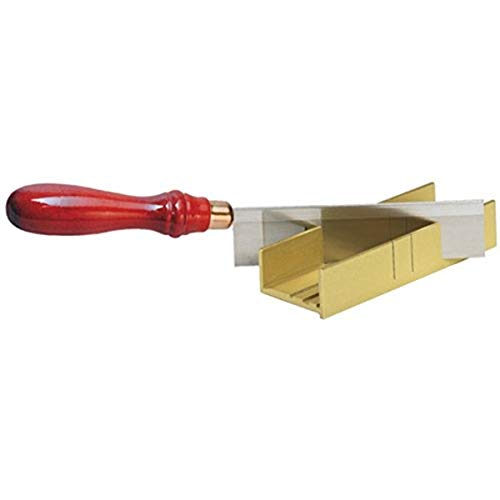
Zona Thin Saw with Miter Box - Best for Straight Repeatable Cuts
The Zona saw and miter box combo is the go-to for crafters who need consistent, straight 90-degree and 45-degree cuts on small stock. The miter box slots hold the workpiece firmly while the saw tracks in the guides, producing square cuts that are difficult to achieve freehand. The blade is very thin with fine teeth suited to balsa, basswood, and plastic. This is the right setup for model construction, picture frame moulding, and any project where cut angle accuracy matters. The miter box is plastic and lightweight, easy to clamp to a desk with one hand.

Proxxon Micro Motor Scroll Saw - Best Powered Craft Saw
For crafters who frequently cut curves, letters, or detailed shapes in thin wood or plastic, a compact scroll saw is a genuine upgrade from hand tools. The Proxxon micro scroll saw has a small footprint sized for a craft desk, variable speed control, and accepts standard scroll saw blades for material flexibility. It cuts wood up to about half an inch thick, which covers the full range of hobby materials. The blade change system is tool-free, reducing setup time between different blade types. If detail cutting volume justifies the investment, this is the best compact powered option.
Buying considerations
Tooth count
More teeth per inch means a finer cut with less tear-out; hobby materials like balsa and foam benefit from 24+ TPI blades - **Pull vs push stroke**. Pull-stroke saws (Japanese style) give more control and cleaner cuts in thin or soft materials - **Handle comfort**. Craft cutting is slow and deliberate; a handle that fits your grip reduces fatigue on longer projects - **Miter box compatibility**. If straight, repeatable cuts matter for your projects, confirm the saw fits a miter box guide before purchasing
Final word
Most hobby crafters will be well served by the X-Acto razor saw set or the Zona saw-and-miter-box combo, depending on whether freehand detail cutting or guided straight cuts dominate their work. Step up to the Gyokucho for cleaner results in harder materials, or the Proxxon scroll saw if you're regularly cutting shapes and curves in quantity. Match the saw to your most common task and blade cost stays manageable long
Questions answered
A razor saw or fine-tooth hobby saw with teeth on the pull stroke is best for balsa. Pull-stroke cutting gives you control and reduces tear-out on soft, lightweight wood. A miter box paired with a razor saw produces straight, clean cuts for model building and craft projects without needing power tools or a workbench.
Yes. A serrated hobby knife or a fine-tooth craft saw with small teeth cuts foam board cleanly. For thick foam, a sharp serrated blade with light pressure and multiple passes prevents crushing or tearing. Hot wire cutters are the smoothest option for foam specifically, but a craft saw handles foam board and thin foam sheets adequately for most hobby uses.
The X-Acto razor saw set is widely recommended for beginners because the blades are replaceable, the grip is comfortable for small hands or extended use, and the fine teeth handle most hobby materials cleanly. Pair it with a plastic miter box for straight cuts. The total cost is and replacement blades keep it performing like new.
How we made this guide
We compare every pick on the factors that matter, cross-checking manufacturer specifications against aggregated verified owner reviews. We rank independently and never take payment for placement. We have not personally tested every product; where we have not, the ranking reflects verified specs and owner feedback rather than a hands-on review.
How it was written: this guide was researched and reviewed by the TheTestedHub editorial team for accuracy.
Affiliate disclosure: TheTestedHub is reader-supported. When you buy through links on our site, we may earn a commission at no extra cost to you.
