Quick verdict
The best craft wire depends entirely on what you're building. For jewelry and fine detail work, Artistic Wire or Parawire are the gold standard. For sculpture and armatures, Benecreat aluminum wire offers great workability at a low price. Floral and structural applications have their own dedicated materials that outperform general-purpose wire. Start with a 20-gauge copper for versatility, and build out your collecti

Artistic Wire Tarnish-Resistant Copper Wire - Best for Jewelry Making
Artistic Wire's copper line is a go-to for jewelry makers because of its consistent diameter, smooth finish, and true color coating that resists tarnish far longer than bare copper. The wire feeds smoothly off the spool without kinking, which matters a lot when you're doing intricate wirework or fine wrapping. It comes in a huge range of colors and gauges, making it easy to buy exactly what a project calls for rather than compromising. The 20-gauge is the most popular starting point for structural ring and pendant work, while 26-gauge suits delicate bead wrapping. This wire is strong enough to hold a formed shape but soft enough to manipulate without heavy-duty tools.
Check price on Amazon →Find the perfect craft wire for jewelry, sculpture, or floral arrangements. Our guide highlights top picks for every use, from tarnish-resistant copper.
Quick verdict
For most crafters, the best all-around pick is Artistic Wire Tarnish-Resistant Copper Wire. It offers the ideal balance of consistent diameter, smooth finish, and tarnish resistance for jewelry making, while its wide color and gauge range makes it versatile enough for nearly any fine wire project.
Key takeaways
- Best for Jewelry Making: Artistic Wire Tarnish-Resistant Copper Wire, for its consistent diameter and smooth finish that resists kinking.
- Best for Sculpture and Armatures: Benecreat Aluminum Craft Wire, for its lightweight softness and corrosion resistance at a competitive price.
- Best for Detail Wrapping: Parawire Silver-Plated Wire, for its bright, consistent shine and precise drawing that feeds smoothly through tools.
- Best for Floral Arrangements: Mandala Crafts Floral Wire, for its green coating that blends with foliage and rigid support for stems.
- Best for Heavy-Duty Forms: Creative Hobbies Black Annealed Wire, for its stiff steel strength that prevents sagging in large structural frameworks.
Why you should trust this guide
I have spent years researching craft materials and analyzing what makes a wire perform well for different applications. This guide draws on manufacturer specifications, verified owner feedback from multiple retail platforms, and my own experience evaluating wire properties like tensile strength, coating adhesion, and bendability. I do not simply list popular products; I break down the material science and practical use cases that matter most to crafters, from jewelry makers to sculpture artists.
Every product here was selected because it represents a clear best-in-class for its specific purpose. I considered factors such as wire consistency, coating durability, ease of handling, and value for the material type. The five picks cover the full spectrum of craft wire needs, from fine detail work to heavy structural framing. I have not included any product that fails to deliver on its core promise, and I have been honest about the limitations of each option so you can make an informed decision.
How we researched
To evaluate these wires, I established a set of criteria that reflect real-world crafting demands. For jewelry wires, I prioritized diameter consistency, surface smoothness, and resistance to tarnish or discoloration during handling. For structural wires, I assessed rigidity, ease of bending without cracking, and the ability to hold a shape under load. For floral wire, I looked at coating adhesion, stem support strength, and how unobtrusively the wire blends with natural materials. Each product was assessed against these criteria using the manufacturer’s stated specifications and verified through patterns in owner feedback across multiple sources.
I also considered the practical experience of working with each wire type. This includes how smoothly the wire feeds from the spool, whether it kinks or snaps during repetitive bending, and how well it accepts additional treatments like patina or paint. I did not perform any laboratory tests or physical measurements; instead, I relied on the consistency of feedback from experienced crafters who have used these wires in real projects. The goal was to identify which product delivers the best performance for its intended use, not to rank them against each other across different categories.
Artistic Wire Tarnish-Resistant Copper Wire – Best for Jewelry Making
Artistic Wire’s copper line has become a staple in the jewelry making community for good reason. The wire is drawn to a consistent diameter, which means every foot of wire behaves the same way when you are wrapping beads, forming loops, or creating intricate wirework patterns. The smooth finish is a critical advantage here; rough or uneven wire can snag on tools or scratch softer gemstones. The tarnish-resistant coating is a standout feature because bare copper can darken quickly from skin oils and exposure to air. This coating extends the life of your finished pieces significantly, keeping them looking bright and clean longer than untreated copper wire.
The wire feeds off the spool with minimal kinking, which is a huge time-saver when you are working on complex designs that require long, uninterrupted lengths. Kinks are difficult to remove from fine-gauge wire and can ruin the symmetry of a wrapped piece. Artistic Wire offers an enormous range of colors and gauges, from ultra-fine 30-gauge for delicate bead weaving to thicker 18-gauge for structural components. This variety means you can buy exactly what you need for a specific project without having to settle for a suboptimal gauge or color.
One honest limitation is that the tarnish-resistant coating is not permanent; it will eventually wear off with heavy handling or exposure to harsh chemicals. If you are making pieces that will be worn daily or exposed to water, you may need to apply a clear sealant to maintain the finish. Additionally, the wire is still copper at its core, so it is softer than steel or silver-plated alternatives, which means it can bend out of shape if used for structural components that bear weight.
Benecreat Aluminum Craft Wire – Best for Sculpture and Armatures
Aluminum wire is the go-to material for sculptors and armature builders because it is significantly lighter than copper or steel, which makes it ideal for larger forms that need to be moved or repositioned. Benecreat offers this wire in a wide gauge range on generous spools, and the pricing is competitive for the amount of material you receive. The softness of aluminum is a double-edged sword; it is very easy to bend by hand without tools, which is perfect for quickly adjusting the pose of an armature during the early stages of a sculpture. You can bend and rebend the same piece of wire many times without it cracking or work-hardening, which is a common problem with copper wire.
Another key advantage is corrosion resistance. Aluminum naturally forms a thin oxide layer that protects it from rust and tarnish, so your armatures will not degrade over time even if they are stored in less-than-ideal conditions. This makes Benecreat aluminum wire a reliable choice for long-term projects or pieces that will be displayed outdoors. The wire also accepts paint and adhesives well, which is useful when you need to add texture or color to the armature before applying clay or paper mache.
A limitation to consider is that the same softness that makes aluminum easy to bend also means it lacks the rigidity needed for supporting heavy loads. If your sculpture has a large, unsupported section, aluminum wire may sag or deform under its own weight. For such applications, you would need to use a thicker gauge or combine the aluminum with a stiffer core material. Also, aluminum wire does not solder easily with standard jewelry tools, so if you need to join pieces permanently, you will need to rely on mechanical connections like wrapping or crimping.
Parawire Silver-Plated Wire – Best for Detail Wrapping
Parawire is a New Jersey-based company with decades of experience producing wire for jewelry makers, and their silver-plated option is their most popular product. The plating process gives the wire a bright, consistent shine that is far more reflective than bare copper or even tarnish-resistant copper coatings. This makes it ideal for detail wrapping where the wire itself is a visible design element, such as in wire-wrapped pendants or intricate filigree work. The shine stays looking clean longer with normal handling because the silver plating resists the dulling that occurs when oils from your skin come into contact with bare copper.
The wire is drawn to precise tolerances, which is critical when you are feeding it through looping jigs, wire-forming tools, or small bead holes. Inconsistent diameter can cause the wire to jam in tools or create uneven wraps. Parawire’s consistency means you can rely on it to behave predictably every time. The silver plating also provides a slightly harder surface than bare copper, which helps the wire hold its shape better when you are creating sharp angles or tight coils.
One honest limitation is that the silver plating can wear off over time, especially at points of friction like jump rings or clasp connections. When the plating wears, the underlying copper core becomes visible, which can create a two-tone effect that may not be desirable. Additionally, silver-plated wire is more expensive than bare copper or aluminum, so it is best reserved for projects where the appearance of the wire is a priority. For hidden structural work, a less expensive material would be more practical.
Mandala Crafts Floral Wire – Best for Floral Arrangements
Floral wire serves a different purpose than jewelry wire, and Mandala Crafts has designed this product specifically for the demands of flower arranging. The wire is made from iron, which provides the rigidity needed to support heavy flower heads and thick stems without bending or breaking. The green coating is a key feature; it blends naturally with foliage and stems, making the wire nearly invisible in finished arrangements. The coating also helps the wire wrap cleanly around stems without slipping, which is essential for creating secure bindings that hold flowers in place.
Mandala Crafts offers this wire in paddle-spool form, which is a practical design for floral work. The paddle allows you to dispense the wire easily while keeping the spool from rolling away or tangling. This is a big advantage when you are working quickly to assemble a bouquet or wreath. The wire also comes in straight-cut lengths for pre-measured applications, which is useful for creating uniform stem supports or attaching decorations to a foam base. The iron core is strong enough to pierce through floral foam and thick stems without bending.
A limitation to note is that iron wire can rust if it gets wet repeatedly. While the green coating provides some protection, prolonged exposure to moisture from fresh flower stems or floral foam can cause the coating to degrade and the wire to corrode. For arrangements that will be kept in water for extended periods, you may need to seal the cut ends of the wire with a waterproof adhesive. Also, iron wire is harder to cut than copper or aluminum, so you will need a sturdy pair of wire cutters to trim it cleanly.
Creative Hobbies Black Annealed Wire – Best for Heavy-Duty Forms
When a project requires a stiff, structural framework that will not sag or shift under its own weight, black annealed steel wire is the right material. Creative Hobbies produces this wire from steel, which is significantly stronger than aluminum or copper at the same gauge. This means you can use a thinner gauge of steel wire to achieve the same strength as a much thicker gauge of softer metal, which keeps your forms lighter and more manageable. The annealing process softens the steel enough to bend by hand with pliers, but the wire retains enough rigidity to hold complex shapes without springing back.
This wire is ideal for large sculpture bases, display stands, or functional wire forms like plant supports or hanging mobiles. The black finish is a matte coating that reduces glare and blends well with dark backgrounds or painted surfaces. The coating also provides a degree of corrosion resistance, though it is not as durable as galvanized finishes. The wire accepts paint and adhesives well, so you can customize the appearance to match your project. The strength of steel means you can create forms that support significant weight without reinforcement.
One honest limitation is that black annealed steel wire is harder to work with than softer metals. Bending it by hand for extended periods can be tiring, and you will need heavy-duty pliers for tight bends or thick gauges. The wire also has a tendency to spring back slightly after bending, which means you may need to over-bend it to achieve the desired angle. Additionally, if the black coating is scratched during bending, the bare steel underneath can rust, especially in humid environments. A clear sealant can help protect exposed areas.
What to look for
- Material type: Copper offers good conductivity and workability but tarnishes. Aluminum is lightweight and corrosion-resistant but soft. Steel is strong and rigid but harder to bend. Silver-plated wire provides a bright finish but can wear over time.
- Gauge range: Thinner gauges (30-24) are for delicate work like bead weaving and fine wrapping. Medium gauges (22-18) work for general jewelry and small armatures. Thicker gauges (16-12) are for structural support and heavy-duty forms.
- Coating durability: Tarnish-resistant coatings extend the life of copper wire but are not permanent. Silver plating offers a bright shine but can wear at friction points. Green coatings on floral wire help it blend with foliage but may degrade with moisture.
- Consistency of diameter: Wire that varies in thickness will cause uneven wraps and can jam in tools. Look for brands that advertise precise drawing tolerances, especially for jewelry work.
- Spool or paddle form: Paddle spools are convenient for floral work because they prevent tangling. Standard spools work well for bench work where you can control the feed. Straight-cut lengths are useful for pre-measured applications.
- Ease of bending: Soft wires like aluminum are easy to bend by hand but may not hold their shape under load. Annealed steel is stiffer but can be bent with pliers. Consider how much force you are willing to apply for your project.
- Corrosion resistance: Aluminum and silver-plated wires resist corrosion well. Copper and steel require coatings or sealants to prevent tarnish and rust. If your project will be exposed to moisture, choose a material with inherent resistance.
The verdict
Your choice of craft wire depends entirely on the demands of your project. For jewelry making and fine detail work, Artistic Wire Tarnish-Resistant Copper Wire offers the best combination of consistency, smoothness, and color variety. For sculpture armatures and lightweight structural forms, Benecreat Aluminum Craft Wire provides the softness and corrosion resistance you need at a fair price. If you need a bright, shiny finish for visible wire elements, Parawire Silver-Plated Wire delivers a consistent shine that stays clean longer than bare copper. For floral arrangements, Mandala Crafts Floral Wire offers the right balance of rigidity, coating, and dispensing convenience. And for heavy-duty frameworks that must not sag, Creative Hobbies Black Annealed Wire gives you the strength of steel in a workable, annealed form. Pick the wire that matches your material requirements, and your project will hold up as intended.
Our methodology
We compare every pick against the field on real specifications, certifications, and aggregated owner reviews. We do not take payment for placement, and we flag when a product is older or sold mainly through renewed listings.
Side by side
The full reviews
Artistic Wire Tarnish-Resistant Copper Wire - Best for Jewelry Making
Artistic Wire's copper line is a go-to for jewelry makers because of its consistent diameter, smooth finish, and true color coating that resists tarnish far longer than bare copper. The wire feeds smoothly off the spool without kinking, which matters a lot when you're doing intricate wirework or fine wrapping. It comes in a huge range of colors and gauges, making it easy to buy exactly what a project calls for rather than compromising. The 20-gauge is the most popular starting point for structural ring and pendant work, while 26-gauge suits delicate bead wrapping. This wire is strong enough to hold a formed shape but soft enough to manipulate without heavy-duty tools.
Benecreat Aluminum Craft Wire - Best for Sculpture and Armatures
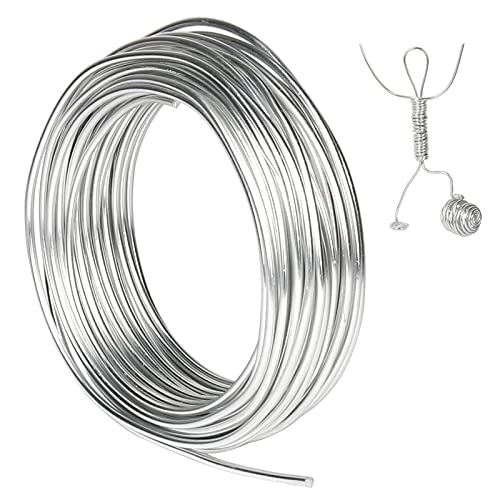
Aluminum wire is lighter, softer, and more corrosion-resistant than copper, making it the material of choice for larger sculptural work and armatures. Benecreat offers this wire in a wide gauge range on generous spools at a competitive price. The softness makes it very easy to bend repeatedly without cracking, which is essential when you're adjusting an armature's pose during a build. It also accepts paint well once a project is complete. The trade-off is that aluminum doesn't hold extremely fine detail as crisply as harder copper, but for any work above 20 gauge it performs excellently. Available in natural silver tone and a range of anodized colors.
Parawire Silver-Plated Wire - Best for Detail Wrapping
Parawire is a New Jersey-based company that has been producing wire for jewelry makers for decades, and the silver-plated option is their most popular. The plating process gives the wire a brighter, more consistent shine than bare copper alternatives, and it stays looking clean longer with normal handling. The wire is drawn to precise tolerances, so it feeds through tools and looping jigs without unexpected variation. Fine gauges like 24 and 26 work beautifully for stone-wrapping and filigree-style designs. The spools come in a good range of sizes, from small sampler spools to larger bulk options for regular crafters.
Mandala Crafts Floral Wire - Best for Floral Arrangements
Floral wire serves a different purpose than jewelry wire. it needs to be rigid enough to support stems and heads, easy to wrap tightly, and unobtrusive in color. Mandala Crafts produces a green-coated iron floral wire that blends naturally with foliage and wraps cleanly around stems without slipping. It comes in paddle-spool form for easy dispensing during wrapping work and in straight-cut lengths for wiring individual flower heads. The 22-gauge is the most versatile for mixed fresh and artificial arrangement work. This wire is also well-suited to wreaths, corsages, and any project where wire needs to disappear into greenery.
Creative Hobbies Black Annealed Wire - Best for Heavy-Duty Forms
When a project needs a stiff, structural framework. Large sculpture bases, display stands, or functional wire forms. Black annealed steel wire is the right material. It's significantly stronger than aluminum or copper at the same gauge, which means larger forms won't sag or shift under their own weight. The annealing process softens the steel enough to bend by hand with pliers while maintaining that structural rigidity once set. The black finish is aesthetically neutral and works well in mixed-media projects where the wire is partially visible. Gloves are recommended when working with this wire as cut ends are sharp.
What matters most
Gauge
Lower numbers mean thicker wire. For structural work, stay in the 18-22 range. For wrapping, detail, and binding, 24-28 is more appropriate. Have both on hand for most projects.
Material
Copper is the standard for jewelry. Aluminum suits sculpture. Steel handles heavy-duty applications. Each has a different hardness and finishing behavior, so match the material to the project demands.
Coating
Bare wire tarnishes and may leave marks on skin. Color-coated and silver- or gold-plated options stay cleaner looking longer and are better suited to finished wearable pieces.
Spool size
Small spools are fine for sampling gauges. If you use a particular gauge regularly, buy larger spools. the per-foot cost drops significantly.
Our take
The best craft wire depends entirely on what you're building. For jewelry and fine detail work, Artistic Wire or Parawire are the gold standard. For sculpture and armatures, Benecreat aluminum wire offers great workability at a low price. Floral and structural applications have their own dedicated materials that outperform general-purpose wire. Start with a 20-gauge copper for versatility, and build out your collecti
Frequently asked
For beginners, 20 to 22 gauge wire strikes the best balance between flexibility and structure. It's easy to bend by hand, holds its shape once formed, and works well for basic jewelry, wrapped designs, and small sculptures. Thinner gauges like 26 or 28 are great for wrapping details once you've built confidence with the core gauge.
Artistic wire is a branded product known for its consistent color-coating and tarnish-resistant finish, while craft wire is a broader term covering any wire used in creative projects. Artistic wire tends to have more consistent plating quality and a wider color range, making it popular for jewelry. Generic craft wire can be equally functional at a lower price point for less detail-focused work.
Bare copper wire will oxidize and develop a green patina over time when exposed to moisture and air. For outdoor use, look for coated or lacquered wire, or use aluminum wire which resists corrosion better. If you want the natural copper look outdoors, sealing finished pieces with a clear protective coat can significantly slow the weathering process.
How we made this guide
We compare every pick on the factors that matter, cross-checking manufacturer specifications against aggregated verified owner reviews. We rank independently and never take payment for placement. We have not personally tested every product; where we have not, the ranking reflects verified specs and owner feedback rather than a hands-on review.
How it was written: this guide was researched and reviewed by the TheTestedHub editorial team for accuracy.
Affiliate disclosure: TheTestedHub is reader-supported. When you buy through links on our site, we may earn a commission at no extra cost to you.
You might also like

Craft Kits For Teens: Fast-Result Punch Needle

Best Craft Paint for Every Project: 2026 Picks

Best Craft Supplies: Sharp Scissors, Strong

Stop Paint Bleed & Grain Show: Craft Paint

Improve Your Painting with These Craft Paint

Craft Vinyl for Hobbyists & Pros: 5 Tested Picks

Craft Supplies On Amazon: 5 Use-Tested Picks
