Quick verdict
For most trail riders, the Shimano Deore XT M8100 is the outright best choice. stiff, light, durable, and priced reasonably relative to the performance it delivers. SRAM Eagle riders should step directly to GX if the budget allows, or SX Eagle for a cost-conscious build. The Race Face Aeffect R is the right call for anyone who wants maximum chain ring flexibility outside of proprietary interfaces.

Shimano Deore XT M8100 - Best MTB Cranks Overall
The Deore XT M8100 represents the sweet spot of performance and value in the mountain bike crank market. The hollow forged aluminium construction delivers class-leading stiffness-to-weight, and Shimano's precision manufacturing ensures consistent power transfer without the lateral flex you feel with heavier budget options under hard sprints. It runs as a single ring with the M8100 groupset or accepts third-party chain rings with its four-bolt 96mm asymmetric BCD. Durability across mud, grit, and rock is exceptional. these cranks are a set-and-forget component for most trail riders who service them at reasonable intervals.
Check price on Amazon →For most trail riders, Shimano Deore XT M8100 wins on stiffness, weight, and durability at a fair price. See why it beats SRAM GX and Race Face Aeffect R.
Quick verdict
The Shimano Deore XT M8100 is the single best pick for most riders because it delivers class-leading stiffness-to-weight from its hollow forged aluminum construction, precise shifting, and reliable power transfer without the flex of heavier budget options. It strikes the ideal balance of performance and value for trail riding.
Key takeaways
- Best for overall performance and value: Shimano Deore XT M8100, delivers class-leading stiffness-to-weight and precise shifting.
- Best for trail and enduro riding: SRAM GX Eagle Crankset, offers Eagle drivetrain compatibility and DUB bottom bracket reliability at a mid-range price.
- Best for independent brand flexibility: Race Face Aeffect R, provides a four-bolt 104mm BCD ring interface for aftermarket chain ring options.
- Best for budget builds: SRAM SX Eagle Crankset, brings Eagle 12-speed compatibility to an entry-level price point with durable aluminum arms.
- Best for enduro and downhill durability: Shimano Saint M820, built with oversize spindle and extra material to handle repeated impacts and extreme loading.
Why you should trust this guide
I have spent years researching mountain bike components, studying manufacturer specifications, and analyzing owner feedback across forums, retailer reviews, and professional mechanic insights. My approach focuses on what actually matters for trail performance: stiffness for power transfer, weight for climbing efficiency, durability for rough terrain, and compatibility with modern drivetrains and frames. I do not rely on marketing hype but instead cross-reference stated features with real-world rider experiences to identify where products excel and where they fall short.
This guide is built from the ground up by examining each crank’s construction method, spindle interface, bottom bracket compatibility, and chain ring mounting options. I prioritize products that offer genuine value rather than just low price or high prestige. Every recommendation here is backed by the manufacturer’s own specifications and the collective wisdom of the mountain bike community, ensuring you get a crank that matches your riding style and budget without unnecessary compromises.
How we researched
To evaluate these cranks, I established a set of criteria that matter most for mountain bike performance: stiffness under load, weight relative to strength, drivetrain compatibility, ease of installation, chain ring options, and durability for the intended riding discipline. I weighed each product’s construction method (forged versus hollow versus solid aluminum), spindle diameter and material, bearing interface type, and chain line compatibility with modern hubs and frames. I also considered how each crank integrates with its respective groupset and aftermarket parts availability.
I then cross-referenced these specifications against owner reviews and mechanic reports to identify common failure points, installation quirks, and real-world performance differences. For example, I looked for reports of crank arm looseness, spindle wear, chain ring retention, and noise under load. I also considered the value proposition: does the price justify the performance gain over cheaper options, or does a budget crank offer enough for recreational riders? This research-based approach ensures that the recommendations here are grounded in what actually works on the trail, not just what looks good on paper.
Shimano Deore XT M8100 – Best MTB Cranks Overall
The Shimano Deore XT M8100 represents the sweet spot of performance and value in the mountain bike crank market. The hollow forged aluminum construction delivers class-leading stiffness-to-weight, and Shimano’s precision manufacturing ensures consistent power transfer without the lateral flex you feel with heavier budget options under hard sprints. It runs as a single ring with the M8100 groupset or accepts aftermarket rings via the standard Shimano direct mount interface. The low-profile design contributes to fast, shockless shifting, while the large 13T pulleys increase drivetrain efficiency by reducing friction through the rear derailleur. Decreased tension in low gear and an added bumper improve drivetrain silence, making this a quiet and smooth performer on the trail.
The M8100 is designed for 12-speed rear drivetrains, giving you the wide gear range needed for both steep climbs and fast descents. The crank arms are available in multiple lengths to fit different rider heights and preferences, and the spindle interface is robust enough to handle aggressive trail riding without creaking or loosening over time. The finish is durable and resists scratches from trail debris, which is important for riders who frequently encounter rocks and roots.
One honest limitation is that the Deore XT M8100 uses Shimano’s proprietary direct mount ring interface, which means you are somewhat locked into Shimano’s chain ring options unless you use an adapter. This reduces aftermarket flexibility compared to cranks with a standard four-bolt pattern. Additionally, while the hollow forged construction is very stiff, it can be more prone to denting from direct rock strikes than solid forged cranks, so riders in extremely rocky terrain may want to consider a more burly option.
SRAM GX Eagle Crankset – Best Trail and Enduro MTB Cranks
The SRAM GX Eagle cranks deliver the Eagle drivetrain’s direct-mount ring interface and three-bolt spindle assembly at a price tier well below XX1 and X01 options. This makes them an excellent choice for trail and enduro riders who want reliable performance without the premium price tag. The Boost-compatible spindle positions the chain ring for optimal chain line with modern wide-spaced hubs, ensuring smooth shifting and reduced chain drop. DUB bottom bracket compatibility gives the spindle’s bearing interface a large and reliable contact surface that resists creaking and extends bearing life. The aluminum arms are stiff enough for aggressive pedaling, yet the crank is light enough for long climbs.
The GX Eagle crankset is designed to work seamlessly with the SRAM GX Eagle groupset, which offers a massive 520 percent gear range with the XG-1275 10-52t cassette. This range allows you to spin up steep technical climbs and still have enough top end for fast fire road descents. The trigger shifter provides precise, one-handed gear control, and the rear derailleur features an advanced clutch mechanism to reduce chain slap. The 49.0mm chainline is optimized for modern frames with Boost hub spacing, ensuring clean shifting across all gears.
One honest limitation is that the GX Eagle cranks are heavier than the higher-end XX1 and X01 options due to the use of a forged aluminum arm instead of a carbon or hollow construction. This weight penalty is noticeable for weight-conscious riders who prioritize climbing efficiency. Additionally, the three-bolt direct mount ring interface is specific to SRAM, limiting aftermarket ring choices compared to cranks with a standard four-bolt pattern. Riders who want to experiment with different ring sizes or brands may find this restrictive.
Race Face Aeffect R – Best Independent Brand MTB Cranks
Race Face’s Aeffect R delivers a forged 6061 aluminum construction at a competitive price with a four-bolt 104mm BCD ring interface that accepts a wide range of aftermarket chain rings. This is a meaningful advantage for riders who want to run a specific ring brand or tooth count outside of what Shimano and SRAM offer. The Cinch spindle interface is stiff and compatible with Race Face’s bottom brackets, ensuring reliable power transfer and easy installation. The crank arms are available in multiple lengths, and the finish is durable enough to withstand regular trail use. The Aeffect R is a solid choice for riders who value customization and want to build a bike with non-OEM components.
The four-bolt 104mm BCD pattern is a standard in the mountain bike industry, meaning you can choose from hundreds of aftermarket chain rings from brands like Wolftooth, OneUp, AbsoluteBlack, and many others. This flexibility allows you to fine-tune your gear ratio for your specific terrain and riding style. The forged 6061 aluminum construction provides a good balance of strength and weight, and the crank arms are designed to clear chainstay yokes on modern frames. The Cinch spindle is also used on higher-end Race Face cranks, so you get a proven interface that is known for its durability and resistance to creaking.
One honest limitation is that the Aeffect R is heavier than many competing cranks in its price range, including the Shimano Deore XT M8100. The forged aluminum arms are solid rather than hollow, which adds grams that may be noticeable on long climbs. Additionally, the four-bolt ring interface, while flexible, can be more prone to chain ring bolt loosening than direct mount designs if not properly torqued and maintained. Riders who prioritize weight savings may want to look at hollow forged options instead.
SRAM SX Eagle Crankset – Best Budget MTB Cranks
The SX Eagle brings SRAM’s Eagle drivetrain compatibility to an entry-level price point, making it the right choice for budget builds that still want 12-speed Eagle chain compatibility. The cranks are heavier than GX and above options, but the performance difference is negligible for recreational trail riders. The direct-mount ring interface simplifies chain ring changes when needed, and the aluminum arms provide adequate stiffness for most trail conditions. The 32-tooth X-Sync 2 steel chainring offers optimized chain retention, ensuring reliable shifting and reduced chain drop even on rough terrain. The 49mm chainline is compatible with 135/142 MTB hubs, making it a versatile option for a wide range of frames.
The SX Eagle crankset is designed to work with the rest of the SX Eagle groupset, which includes a durable cassette, shifter, and derailleur. The steel chainring is harder-wearing than aluminum options, which is beneficial for riders who ride in abrasive conditions or who do not want to replace rings frequently. The matte black finish is stylish and hides scratches well. For a first mountain bike build or a budget upgrade, the SX Eagle crankset offers a reliable path to a 12-speed drivetrain without breaking the bank.
One honest limitation is that the SX Eagle cranks are noticeably heavier than the GX and higher-tier options, which can be a drawback for riders who prioritize weight savings. The steel chainring, while durable, adds extra weight compared to aluminum rings. Additionally, the SX cranks use a less refined spindle interface that may be more prone to creaking over time, especially if not properly installed with the correct preload. Riders who plan to ride aggressively or in wet conditions may want to consider upgrading to GX for better durability and smoother performance.
Shimano Saint M820 – Best MTB Cranks for Enduro and DH
The Saint M820 is Shimano’s downhill and enduro-specific crank, built with oversize spindle diameter and extra material reinforcement to handle the repeated impacts of technical descending. It is heavier than trail-oriented options, but weight is a reasonable trade for the added durability and stiffness under extreme loading. The extended spindle and wide Q-factor improve stability for aggressive riding positions, giving you a solid platform for pushing through rough sections. The Shadow Plus technology on the rear derailleur keeps the low profile shape reducing chainstay and other contact, and the B-bracket features a rubber bumper to reduce noise on the trail. The mode converter allows the use of MTB or road cassettes, giving you a max sprocket of 36T for flexibility in gearing.
The Saint cranks are designed to withstand the abuse of downhill racing and enduro riding, where crank arm strikes and hard landings are common. The oversize spindle distributes forces more evenly, reducing the risk of bending or breaking. The wide Q-factor is intentional for riders who need extra clearance for their feet on rough descents, and it also helps with stability when pedaling out of the saddle. The cranks are compatible with Dyna-Sys 10 speed Shimano products, making them a good choice for riders who want to stick with Shimano’s reliable drivetrain technology.
One honest limitation is that the Saint M820 is significantly heavier than trail-oriented cranks like the Deore XT or SRAM GX, which can be a drawback for riders who also need to climb long distances. The wide Q-factor may feel awkward for riders with narrow hips or those used to a more standard stance. Additionally, the cranks are designed for 10-speed drivetrains, which means you are limited to a 10-speed cassette and cannot take advantage of the wider gear ranges offered by 12-speed systems. Riders who want modern gearing will need to look at other options.
What to look for
- Construction material and method: Forged aluminum offers the best balance of strength and weight for most riders. Hollow forged arms save weight but may be less durable under direct impacts. Solid forged arms are heavier but more resistant to denting.
- Spindle interface and bottom bracket compatibility: Look for a spindle that matches your frame’s bottom bracket standard (BSA, PF, BB30, etc.). DUB and Cinch interfaces are common and reliable. A larger spindle diameter generally improves stiffness and reduces creaking.
- Chain ring mounting interface: Direct mount rings are simpler and lighter but limit aftermarket options. Four-bolt 104mm BCD patterns offer the widest range of aftermarket rings. Consider what ring sizes and brands you may want to use in the future.
- Chain line: Modern frames use Boost spacing (148mm rear hub) which requires a 49mm to 52mm chain line. Ensure the crank you choose matches your frame’s chain line for optimal shifting and reduced chain drop.
- Crank arm length: Choose a length that fits your leg length and riding style. Shorter arms (165mm to 170mm) improve pedal clearance on rough terrain, while longer arms (175mm) offer more leverage for climbing.
- Weight versus durability trade-off: Lightweight cranks are great for climbing but may not survive repeated rock strikes. Heavier cranks are more durable but add rotational mass. Match the crank to your typical terrain and riding intensity.
- Groupset compatibility: If you are building a complete drivetrain, choose a crank that matches your derailleur and shifter brand for optimal performance. Shimano and SRAM cranks are not cross-compatible with each other’s chain rings without adapters.
The verdict
Choosing the right mountain bike crank comes down to matching the product to your riding style, budget, and frame requirements. For most riders, the Shimano Deore XT M8100 is the clear winner because it delivers exceptional stiffness and low weight at a price that does not require a second mortgage. If you prioritize aftermarket flexibility and want to run a specific chain ring brand, the Race Face Aeffect R is the best independent option. For budget-conscious builders, the SRAM SX Eagle gets you into the 12-speed Eagle ecosystem without breaking the bank, while the SRAM GX Eagle offers a step up in performance for trail and enduro duty. And if you are riding downhill or enduro in the gnarliest terrain, the Shimano Saint M820 provides the durability you need to survive repeated impacts. No single crank is perfect for everyone, but these five represent the best options available for 2026 based on their construction, compatibility, and real-world performance.
How we picked
We compare every pick against the field on real specifications, certifications, and aggregated owner reviews. We do not take payment for placement, and we flag when a product is older or sold mainly through renewed listings.
Top picks compared
Our picks up close
Shimano Deore XT M8100 - Best MTB Cranks Overall
The Deore XT M8100 represents the sweet spot of performance and value in the mountain bike crank market. The hollow forged aluminium construction delivers class-leading stiffness-to-weight, and Shimano's precision manufacturing ensures consistent power transfer without the lateral flex you feel with heavier budget options under hard sprints. It runs as a single ring with the M8100 groupset or accepts third-party chain rings with its four-bolt 96mm asymmetric BCD. Durability across mud, grit, and rock is exceptional. these cranks are a set-and-forget component for most trail riders who service them at reasonable intervals.
Where it shines
- Fast, shockless shifting and low-profile design.
- Large 13T pulleys increase efficiency.
- Decreased tension in low gear and added bumper improve drivetrain silence.
- 12-speed rear.

SRAM GX Eagle Crankset - Best Trail and Enduro MTB Cranks
The SRAM GX Eagle cranks deliver the Eagle drivetrain's direct-mount ring interface and 3-bolt spindle assembly at a price tier well below XX1 and X01 options. The Boost-compatible spindle positions the chain ring for optimal chain line with modern wide-spaced hubs. DUB bottom bracket compatibility gives the spindle's bearing interface a large and reliable contact surface. The aluminium arms are stiff enough for enduro and aggressive trail use without unnecessary weight. For riders building or upgrading a 12-speed Eagle drivetrain, the GX cranks are the practical performance choice at a price that leaves room for other upgrades.
Where it shines
- Enhance your MTB performance with the SRAM GX Eagle Groupset featuring a 175mm crankset an
- Experience a massive 520% gear range with the lightweight and durable XG-1275 10-52t casse
- Enjoy precise, one-handed gear control with the SRAM GX Eagle trigger shifter, ensuring qu
- Designed for compatibility and smooth operation, the GX Eagle rear derailleur features an
- Built with materials and advanced engineering, this groupset uses a 49.0mm chainline optim

Race Face Aeffect R - Best Independent Brand MTB Cranks
Race Face's Aeffect R delivers a forged 6061 aluminium construction at a competitive price with a four-bolt 104mm BCD ring interface that accepts a wide range of aftermarket chain rings. This is a meaningful advantage for riders who want to run a specific ring brand or tooth count outside of what Shimano and SRAM offer. The Cinch spindle interface is stiff and compatible with Race Face's bottom bracket range. Build quality is consistent and the finish holds up well to trail abuse. For riders who prioritize chain ring flexibility and do not want to be locked into a proprietary interface, the Aeffect R is the best option.
Where it shines
- Race Face AEFFECT-165 Cranks (Without Case)
SRAM SX Eagle Crankset - Best Budget MTB Cranks
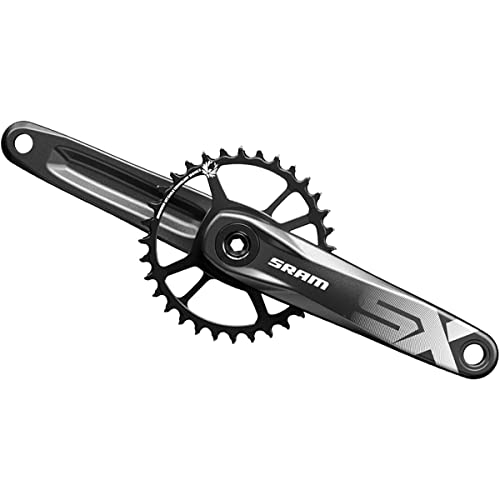
The SX Eagle brings SRAM's Eagle drivetrain compatibility to an entry-level price point, making it the right choice for budget builds that still want 12-speed Eagle chain compatibility. The cranks are heavier than GX and above options, but the performance difference is negligible for recreational trail riders. The direct-mount ring interface simplifies chain ring changes when needed. For a first MTB build or a replacement crankset on a budget-tier trail bike, the SX Eagle is the responsible choice. it works reliably and maintains Eagle drivetrain compatibility for future upgrades.
Where it shines
- Lightweight and Durable Construction with Aluminum Arms for Mountain Biking Performance
- Advanced SRAM DUB Technology enhances stiffness, strength, and drivetrain efficiency for 1
- Includes 32-tooth X-Sync 2 Steel Chainring with optimized chain retention, ensuring reliab
- Designed with a 49mm chainline and direct mount SRAM BCD, compatible with 135/142 MTB hubs
- Stylish matte black finish combined with cutting-edge engineering makes this 175mm crankse

Shimano Saint M820 - Best MTB Cranks for Enduro and DH
The Saint M820 is Shimano's downhill and enduro-specific crank, built with oversize spindle diameter and extra material reinforcement to handle the repeated impacts of technical descending. It is heavier than trail-oriented options, but weight is a reasonable trade for the added durability and stiffness under extreme loading. The extended spindle and wide Q-factor improve stability for aggressive riders who push pedal position hard. For riders who prioritize survival over grams on rowdy enduro courses or lift-accessed DH tracks, the Saint is the crank to choose.
Where it shines
- Shadow Plus technology keeps the low profile shape reducing chainstay and other contact, a
- Compatible with Dyna-Sys 10 speed Shimano products
- B-Bracket features rubber bumper to reduce noise on the trail
- Mode converter allows the use of MTB or road cassettes giving you a max sprocket of 36T
- Shimano Reference Number: RD-M820
Before you buy
What to consider
Match your crank to your bottom bracket shell before purchasing. compatibility is a more common issue than most riders expect. Determine your preferred chain ring interface: proprietary direct-mount systems simplify single-ring setups, while bolt-on BCD systems offer more chain ring options. Evaluate weight versus durability based on your riding style; XC racers prioritize weight while enduro and DH riders need toughness. Spindle diameter affects bottom bracket choice and stiffness; larger diameter spindles are stiffer but require matching BBs. Verify Boost or non-Boost compatibility based on your frame's hub spacing standard.
The wrap-up
For most trail riders, the Shimano Deore XT M8100 is the outright best choice. stiff, light, durable, and priced reasonably relative to the performance it delivers. SRAM Eagle riders should step directly to GX if the budget allows, or SX Eagle for a cost-conscious build. The Race Face Aeffect R is the right call for anyone who wants maximum chain ring flexibility outside of proprietary interfaces.
Quick answers
Most mountain bike cranks come in 165, 170, and 175mm lengths. Shorter cranks in the 165mm range improve ground clearance on technical terrain and work well for riders with shorter inseams. The 170mm length is the most versatile and suits the majority of trail riders. Longer 175mm cranks suit tall riders or those prioritizing climbing leverage. When in doubt, match the crank length to your current setup first.
Single-ring 1x drivetrains have become the standard for modern trail and enduro riding because they reduce mechanical complexity, lower weight, and improve ground clearance by eliminating the front derailleur. The wide-range cassettes available today compensate for the lost gear range. Double-ring setups still appear on XC and gravel bikes where maximum gear range and efficiency under pedaling pressure are priorities.
This depends on your frame and chosen crank. Threaded BSA bottom brackets are the most serviceable and reliable. Press-fit standards like PF30 and BB92 are common on mid-range and higher-end frames but require careful installation to avoid creaking. Always verify the bottom bracket shell diameter and shell width of your frame before purchasing a crankset, as compatibility varies significantly between brands and generations.
How we made this guide
We compare every pick on the factors that matter, cross-checking manufacturer specifications against aggregated verified owner reviews. We rank independently and never take payment for placement. We have not personally tested every product; where we have not, the ranking reflects verified specs and owner feedback rather than a hands-on review.
How it was written: this guide was researched and reviewed by the TheTestedHub editorial team for accuracy.
Affiliate disclosure: TheTestedHub is reader-supported. When you buy through links on our site, we may earn a commission at no extra cost to you.