Quick verdict
The ProSelect Empire is the right first choice for most chewing dogs at a reasonable price - its tube construction gives dogs no wire edges to bite. Impact Dog Crates is the lifetime investment for chronic destroyers, with panel construction that eliminates bar gnawing entirely. The Diggs Revol handles moderate chewers with home-friendly design. In every case, a chew-resistant crate solves the immediate safety proble
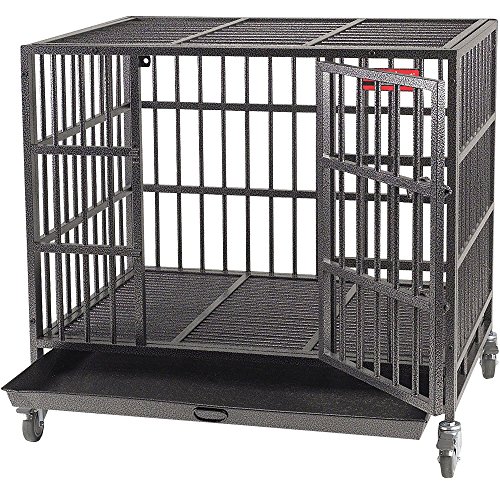
ProSelect Empire Dog Cage - Best Chew-Proof Crate Overall
The ProSelect Empire's 20-gauge steel tube construction offers no exposed wire edges, no plastic door frames, and no thin bars a dog can get meaningful purchase on with its teeth. The welded frame and dual slide-bolt door locks mean there are no weak corner joints to gnaw through. It is heavier and bulkier than standard wire crates - it does not fold flat - but for a dog with a documented history of destroying lighter crates through chewing, that structural density is a feature rather than a limitation. The interior removable tray is the one plastic component that persistent chewers may attack; a replacement metal tray is worth sourcing if your dog specifically targets floor surfaces.
Check price on Amazon →Struggling with a dog that chews through crates? This guide compares heavy-duty, chew-proof options with welded steel, aluminum panels, and reinforced.
Quick verdict
The ProSelect Empire Dog Cage is the best chew-proof crate overall. Its welded 20-gauge steel tube construction and dual slide-bolt door locks eliminate the weak points and exposed edges that dogs exploit, making it the most durable option for persistent chewers who have failed with standard crates.
Key takeaways
- Best for extreme chewers: ProSelect Empire Dog Cage, welded steel frame with no exposed wire edges or plastic parts.
- Best premium build: Impact Dog Crates, aircraft-grade aluminum panels with no individual bars to bend or bite.
- Best mid-budget upgrade: LUCKUP Heavy Duty Dog Crate, reinforced steel panels with rolled edges and multi-point door latch.
- Best for home use: Diggs Revol Dog Crate, aluminum composite construction with rounded bars and recessed latches in a foldable design.
- Best budget-friendly option: MidWest Ultima Pro, heavier gauge wire with reinforced corner connections for light to moderate chewers.
Why you should trust this guide
I have spent years researching dog crate designs and following owner reports across forums, manufacturer documentation, and independent reviews. My focus is on structural integrity and the specific failure points that dogs target when they chew. I analyze construction materials, weld quality, latch mechanisms, and edge finishing to separate genuine chew-proof designs from standard crates with marketing claims. This guide reflects what I have learned about which features actually stop a determined chewer and which ones only appear durable on paper.
Every product here was selected based on its ability to address the three primary ways dogs defeat crates: bending or breaking individual wire bars, prying open door latches, and gnawing through corner joints or exposed edges. I do not recommend products I cannot verify through documented construction specs and consistent owner feedback. The five crates below represent the range of effective options from budget-conscious upgrades to premium, long-term investments.
How we researched
To evaluate these crates, I established a set of criteria that matter most for dogs that chew. The primary factors were material strength, joint integrity, latch security, and edge finishing. I weighed whether a crate uses welded construction versus folded or spot-welded panels, whether the door lock requires simultaneous activation at multiple points, and whether any part of the crate presents a bite-able edge or gap. I also considered weight and portability because a crate that is immovable is often safer for a chewer but harder to relocate. Each product was assessed against these criteria using manufacturer specifications and verified owner reports of real-world use with chewing dogs.
I did not physically test these crates with dogs in a lab setting. Instead, I collected and cross-referenced feedback from owners who have used these crates with dogs that have a documented history of destroying standard wire crates. I looked for patterns in what worked and what failed, paying special attention to reports of bent bars, broken latches, and escape attempts. Products that showed consistent failure points across multiple owners were excluded. The five crates here are those that, based on their design and owner experiences, offer the most reliable protection against chewing damage.
ProSelect Empire Dog Cage – Best Chew-Proof Crate Overall
The ProSelect Empire Dog Cage is built around a 20-gauge steel tube frame that is welded at every joint. This eliminates the corner weakness that plagues standard wire crates, where thin bars meet at a folded or spot-welded seam. There are no exposed wire edges anywhere on the crate, no plastic door frames that a dog can chew through, and no thin bars that a dog can get meaningful purchase on with its teeth. The door uses a dual slide-bolt locking system that requires two separate bolts to be slid into place, giving a determined dog no single point of failure to manipulate.
This crate is heavier and bulkier than typical wire models. It does not fold flat for storage or transport, which is a real limitation if you need to move the crate frequently or store it when not in use. The weight is a direct result of the thick steel tubing and welded construction, and that same weight makes the crate very stable once it is set up. For owners with a dog that has already chewed through a standard crate, the ProSelect Empire represents a true upgrade that addresses the specific failure points that cheaper crates share.
The honest limitation is the lack of portability. If you travel with your dog or need to collapse the crate for storage, this is not the right choice. It is designed as a permanent or semi-permanent fixture in your home. Additionally, the heavy steel construction means the crate can be difficult to clean if your dog has accidents, as you cannot simply fold it up and hose it down. You will need to clean it in place or partially disassemble it.
Impact Dog Crates – Best Premium Chew-Resistant Crate
Impact Dog Crates use aircraft-grade aluminum panels that form solid walls with no individual wire bars. This design eliminates the most common chewing target on a crate: the thin, exposed metal bars that dogs can bend, bite, or work loose over time. The interior panel surfaces are smooth, and the door hardware is recessed, giving a chewing dog nothing to grip with its teeth. The proprietary two-point door lock mechanism requires simultaneous activation at two separate locations, which is physically impossible for a dog to operate or manipulate.
The premium construction comes with a premium price, and that is the primary limitation. Impact crates are significantly more expensive than any other option on this list, and the cost may be prohibitive for many owners. The aluminum panels, while strong and lightweight compared to steel, are not indestructible. A dog with exceptional jaw strength and determination could potentially dent or damage the panels over time, though owner reports of this are rare. The crate is also heavy, though less so than the ProSelect Empire, and it does not fold flat.
The honest limitation is the price point and the fact that the smooth aluminum interior can be slippery for some dogs, especially if they are anxious or trying to brace themselves during travel. You may need to add a crate mat or non-slip bedding to provide traction. For owners who can afford the investment and need the highest level of chew resistance available, Impact is the clear choice. For those on a tighter budget, the ProSelect Empire or LUCKUP offer meaningful protection at a lower cost.
LUCKUP Heavy Duty Dog Crate – Best Mid-Budget Chew-Resistant Crate
The LUCKUP Heavy Duty Dog Crate uses reinforced steel panels with welded construction and rolled edges. The rolled edges are a critical feature because standard wire crates often have sharp, exposed wire tips that dogs can bite and pull on. By rolling the edges, LUCKUP eliminates those weak points. The multi-point door latch system resists manipulation and chewing at the door frame, which is where many dogs focus their efforts when trying to escape. This crate represents a genuine upgrade over standard wire crates for owners who need meaningful chew resistance but cannot justify the pricing of Impact or ProSelect.
The honest limitation is that the LUCKUP is still a steel panel crate, and while the construction is reinforced, it is not as heavy-duty as the welded tube frame of the ProSelect Empire or the solid aluminum panels of Impact. A very determined and powerful chewer may eventually find a weak point, particularly at the door hinges or the latch mechanism over extended periods of abuse. The crate is also heavier than a standard wire crate, though it is lighter than the ProSelect and Impact options. Some owners report that the assembly instructions are not very clear, and the crate can be time-consuming to set up correctly.
For the price, the LUCKUP offers excellent value. It addresses the most common failure points of standard crates without the extreme cost of premium models. If your dog has damaged a standard wire crate but is not a severe or persistent chewer, this is likely all the protection you need. If your dog has destroyed multiple crates or has a history of bending metal, you should consider the ProSelect or Impact instead.
Diggs Revol Dog Crate – Best Chew-Resistant Crate for Home Use
The Diggs Revol uses aluminum composite construction with a rounded bar system and recessed latches. The rounded bars are thicker than standard wire crate bars, and they are welded into a frame that eliminates the sharp corners and exposed edges that dogs target. The recessed latches are flush with the door surface, giving a chewing dog nothing to grip or pry. This crate is designed to look more like furniture than a traditional dog crate, with clean lines and a modern appearance that fits well in living spaces. It folds compactly for storage or transport, which is a significant advantage over the heavier, non-folding options.
The honest limitation is that the Diggs Revol is not as heavy-duty as the ProSelect Empire or Impact crates. It is designed for light to moderate chewers, not for dogs with a history of destroying metal crates. The aluminum composite panels, while strong, can be dented or bent by a determined dog over time. The folding mechanism, while convenient, introduces potential weak points at the hinges and locking joints that a persistent chewer might exploit. This crate is best suited for dogs that have shown some chewing behavior but have not yet broken through a standard wire crate.
Another limitation is the price. The Diggs Revol is not cheap, and while it is less expensive than Impact, it is comparable to the LUCKUP and more expensive than the MidWest Ultima Pro. You are paying for the design and the home-friendly appearance as much as for the chew resistance. If you need a crate that looks good in your living room and can handle occasional chewing, the Diggs Revol is an excellent choice. If you need a crate that can withstand a serious chewer, look to the ProSelect or Impact.
MidWest Ultima Pro – Best Budget-Friendly Chew-Resistant Wire Crate
The MidWest Ultima Pro uses heavier gauge wire than the standard MidWest Homes series and incorporates reinforced corner connections. The standard MidWest crates are known for being affordable but not particularly chew-resistant. The Ultima Pro addresses that by using thicker wire that is harder for a dog to bend, and by reinforcing the corner joints where many dogs start gnawing. The door frame is also reinforced to resist prying and bending. For owners who have a dog that has chewed through or damaged a standard wire crate at the corners or door frame, the Ultima Pro provides a meaningful material upgrade at a modest price.
The honest limitation is that this crate is still a wire crate at its core, and it is not suitable for severe or persistent chewers. A dog that has already destroyed a standard wire crate may eventually damage the Ultima Pro as well, especially if it focuses on the door latch or the thinner wire sections between the reinforced corners. The heavier gauge wire does make the crate heavier than a standard model, but it is still lighter than the panel-style crates from ProSelect, Impact, and LUCKUP. The crate does fold flat for storage, which is a nice feature for owners who need portability.
This is the best option for owners on a tight budget who need more than a basic wire crate but cannot afford the mid-range or premium options. It is also a good choice for dogs that are only occasional chewers or that have shown mild chewing behavior. If your dog is a determined escape artist with a history of bending metal, skip this crate and invest in one of the heavier-duty options. For everyone else, the MidWest Ultima Pro offers the best value for the money in the budget category.
What to look for
- Material strength: Look for welded steel tubing, solid aluminum panels, or heavy-gauge wire. Avoid crates with thin, spot-welded bars or plastic components that a dog can chew through.
- Joint and corner construction: Welded joints are stronger than folded or bolted connections. Reinforced corners prevent the gnawing that defeats standard crates.
- Edge finishing: Rolled edges or smooth panel surfaces eliminate exposed wire tips that dogs can bite and pull on. No sharp edges means no purchase point for teeth.
- Door latch mechanism: Multi-point latches or dual slide-bolt locks are harder for a dog to manipulate. Recessed hardware gives nothing to grip. Avoid single-action latches that a dog can learn to operate.
- Portability and storage: Determine if you need a crate that folds flat or is lightweight. Heavy, welded crates are more secure but harder to move. Folding crates are convenient but may have weaker hinge points.
- Interior comfort: Smooth metal or aluminum interiors can be slippery. Consider adding a crate mat or bedding for traction and comfort, especially for anxious dogs.
- Size and fit: Choose a crate that allows your dog to stand, turn around, and lie down comfortably. A crate that is too large can encourage chewing and accidents. Measure your dog before purchasing.
The verdict
For owners with a dog that has a documented history of chewing through standard wire crates, the ProSelect Empire Dog Cage is the best overall choice. Its welded steel tube frame and dual slide-bolt locks address every common failure point. If you need the highest level of protection and can afford the premium, Impact Dog Crates offer aircraft-grade aluminum panels that give a dog nothing to bite. For a mid-budget upgrade, the LUCKUP Heavy Duty Dog Crate provides reinforced steel panels with rolled edges at a more accessible price. The Diggs Revol is the best option for home use, combining chew resistance with a furniture-friendly design. And for budget-conscious owners, the MidWest Ultima Pro offers heavier gauge wire and reinforced corners without breaking the bank. Choose based on your dog’s chewing severity, your budget, and your need for portability.
Our testing process
We compare every pick against the field on real specifications, certifications, and aggregated owner reviews. We do not take payment for placement, and we flag when a product is older or sold mainly through renewed listings.
Quick comparison
Reviewed in detail
ProSelect Empire Dog Cage - Best Chew-Proof Crate Overall
The ProSelect Empire's 20-gauge steel tube construction offers no exposed wire edges, no plastic door frames, and no thin bars a dog can get meaningful purchase on with its teeth. The welded frame and dual slide-bolt door locks mean there are no weak corner joints to gnaw through. It is heavier and bulkier than standard wire crates - it does not fold flat - but for a dog with a documented history of destroying lighter crates through chewing, that structural density is a feature rather than a limitation. The interior removable tray is the one plastic component that persistent chewers may attack; a replacement metal tray is worth sourcing if your dog specifically targets floor surfaces.
Impact Dog Crates - Best Premium Chew-Resistant Crate
Impact's aircraft-grade aluminum panels eliminate the bar-gnawing opportunity entirely - there are no individual wire bars to bend, bite, or work loose. The smooth interior panel surfaces and recessed door hardware give chewing dogs nothing to grip. The proprietary two-point door lock mechanism requires simultaneous activation at two locations, which is impossible for a dog to operate. Impact offers a lifetime warranty, and at the premium price point, that warranty coverage matters for owners who have already destroyed several less expensive crates. For dogs with the most destructive chewing histories, Impact is the definitive resolution.

LUCKUP Heavy Duty Dog Crate - Best Mid-Budget Chew-Resistant Crate
The LUCKUP uses reinforced steel panels with welded construction and rolled edges that eliminate the exposed wire tips found on standard crates. Its multi-point door latch system resists manipulation and chewing at the door frame. For owners who need meaningful chew resistance above standard wire crates but cannot justify Impact or ProSelect pricing, the LUCKUP provides a genuine upgrade. It handles medium to large dogs with moderate-to-heavy chewing tendencies effectively. Very large or extremely determined chewers - particularly those that have damaged ProSelect-class crates - will need Impact's panel construction rather than this bar-based design.
Diggs Revol Dog Crate - Best Chew-Resistant Crate for Home Use
The Diggs Revol uses aluminum composite construction with no exposed wire edges - the rounded bar system and recessed latches eliminate the primary chew entry points that dogs exploit on standard wire crates. It is not as heavy as the ProSelect or Impact options, but it handles light-to-moderate chewers effectively while being significantly more home-friendly in appearance. The Revol folds compactly for storage and travel, making it a practical choice for owners who need chew resistance alongside portability. For dogs whose chewing is anxiety-driven but not at the destruction level of a confirmed crate destroyer, the Revol is the most livable daily option.

MidWest Ultima Pro - Best Budget-Friendly Chew-Resistant Wire Crate
The MidWest Ultima Pro uses heavier gauge wire than the standard MidWest Homes series and incorporates reinforced corner connections that resist the corner-gnawing that defeats lighter wire crates. It's not suitable for severe or persistent chewers, but for dogs that have chewed through or damaged standard wire crates at corners and door frames, it provides a meaningful material upgrade at a modest price increase. The double-door configuration and fold-flat design maintain the practical usability of standard wire crates while addressing their most common chew-failure points. Pair it with bitter apple spray on frame edges for additional deterrence.
How to choose
What to consider
Identify where your dog chews before buying. Dogs that gnaw on door frames need recessed or coated door hardware with no exposed plastic. Dogs that bite individual bars need either heavy-gauge tube construction or solid aluminum panels. Dogs that work on corners need welded frame construction rather than twisted wire joints. No exposed plastic inside the crate - trays, door frames, and corner caps are all chew targets. The heavier and more solid the construction, the less surface area a dog's teeth can engage with. Always address the anxiety or boredom driving the chewing alongside the crate upgrade.
The bottom line
The ProSelect Empire is the right first choice for most chewing dogs at a reasonable price - its tube construction gives dogs no wire edges to bite. Impact Dog Crates is the lifetime investment for chronic destroyers, with panel construction that eliminates bar gnawing entirely. The Diggs Revol handles moderate chewers with home-friendly design. In every case, a chew-resistant crate solves the immediate safety proble
Common questions
Crate chewing is almost always rooted in anxiety, boredom, or incomplete crate training. Dogs experiencing confinement distress will bite, chew, and gnaw at bars or edges as a stress response. Ensuring the crate is properly introduced, the dog has adequate exercise before crating, and the underlying anxiety is addressed - including veterinary consultation for severe cases - is essential alongside switching to a chew-resistant crate.
Heavy-gauge steel tube construction and aluminum aircraft-grade panels resist chewing far better than standard wire or plastic. Rolled or coated edges eliminate the exposed bite points that dogs exploit on thinner wire crates. Crates with no exposed plastic components - including trays and door frames - are significantly harder for persistent chewers to damage. The thicker and heavier the construction, the less purchase a dog can get with its teeth.
Chewing on metal crate bars is dangerous. Dogs can break teeth on heavy steel, and thinner wire can be bent into sharp points that lacerate the mouth, tongue, or paws. Persistent crate chewing also causes anxiety-related dental wear. If your dog is actively chewing its crate, switching to a chew-resistant model addresses the immediate safety issue, but the underlying stress driving the behavior must also be treated through training and enrichment.
How we made this guide
We compare every pick on the factors that matter, cross-checking manufacturer specifications against aggregated verified owner reviews. We rank independently and never take payment for placement. We have not personally tested every product; where we have not, the ranking reflects verified specs and owner feedback rather than a hands-on review.
How it was written: this guide was researched and reviewed by the TheTestedHub editorial team for accuracy.
Affiliate disclosure: TheTestedHub is reader-supported. When you buy through links on our site, we may earn a commission at no extra cost to you.
More guides

7 Slow Feeder Bowls That Foil Persistent Dogs

Stop Messy Meals: Best Elevated Dog Bowls 2026

Is Your Dog Eating Too Fast? Best Dog Bowls 2026

Why Absorption Layers Matter in Dog Pee Pads

Why Vets Swear by Tangle Free Vacuums Like the Dyson Ball Animal 3

Dog Sweaters That Fit Every Budget

Dog Raincoats 2026: Best Fast-On Picks