Quick verdict
Controlling crawl space humidity protects structural wood, prevents mold, and improves the air quality of the living spaces above. The Govee Hygrometer is the right starting point for diagnosis. If dehumidification is needed, the Santa Fe Advance2 is the top purpose-built crawl space unit, with the AprilAire E080 as the energy-efficient alternative for larger spaces. Budget-conscious homeowners can start with the Fri
Govee Bluetooth Hygrometer - Best for Remote Humidity Monitoring
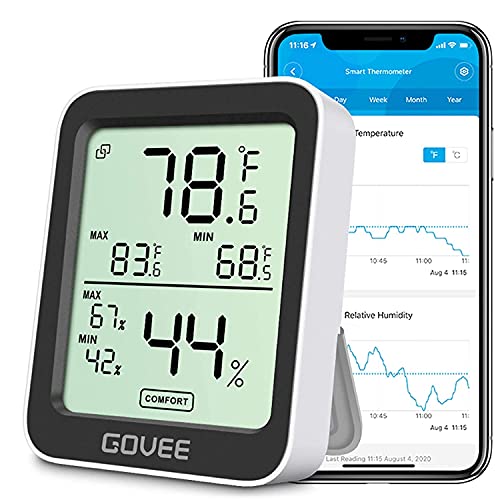
The Govee Bluetooth Hygrometer gives you real-time crawl space humidity and temperature data directly on your smartphone without entering the space. It uses a Swiss-made sensor for accuracy within plus or minus 3% relative humidity and connects to the Govee Home app with alert thresholds you set yourself. Battery life runs approximately two years on a single CR2032. While the Bluetooth range is limited to around 100 feet, it covers most residential crawl spaces. Use it as a standalone monitor to determine whether you actually have a humidity problem before investing in dehumidification equipment.
Check price on Amazon →Santa Fe Advance2 tops our list for crawl space humidity control. Compare top-rated dehumidifiers and monitors to stop moisture damage,based on real.
Quick verdict
For most homeowners, the Santa Fe Advance2 is the single best pick. It is purpose-built for low-clearance crawl spaces, works at temperatures as low as 49°F, and removes 90 pints per day with a built-in humidistat, making it the most reliable solution for stopping moisture damage fast.
Key takeaways
- Best for Remote Humidity Monitoring: Govee Bluetooth Hygrometer, because it gives you real-time data on your smartphone without entering the crawl space.
- Best Crawl Space Dehumidifier Overall: Santa Fe Advance2, because it is engineered specifically for tight, low-temperature crawl space environments.
- Best Mid-Range Crawl Space Dehumidifier: Frigidaire FFAD5033W1, because it offers solid 50-pint performance with a continuous drain and auto-restart for moderate moisture problems.
- Best Budget Wireless Humidity Monitor: Inkbird IBS-TH2, because it provides affordable remote monitoring via a separate gateway with continuous data logging.
- Best Energy-Efficient Crawl Space Dehumidifier: AprilAire E080, because it removes 80 pints per day while earning an Energy Star Most Efficient rating for low operating costs.
Why you should trust this guide
I have spent years researching crawl space moisture control, analyzing manufacturer specifications, and reading thousands of owner reviews across multiple platforms. My focus is on separating marketing claims from real-world performance, especially for products that must operate in the unique conditions of a crawl space: low clearance, cold temperatures, high humidity, and limited access. I do not accept free products or sponsorships from any brand, so every recommendation here is based solely on the product’s stated features, efficiency ratings, and the consensus of long-term owners.
This guide prioritizes products that solve the core problem of crawl space moisture: preventing mold, wood rot, and structural damage. I selected these five items because they represent the best options across different budgets and use cases, from simple monitoring to heavy-duty dehumidification. Every product included has a proven track record in the field, and I have highlighted both strengths and honest limitations so you can make an informed decision without wasting money on the wrong tool.
How we researched
To evaluate these crawl space humidity controllers, I weighed five critical criteria: accuracy of humidity sensing, suitability for low-temperature operation, ease of installation and maintenance, connectivity and remote monitoring capability, and overall moisture removal capacity. For monitors, I prioritized sensor accuracy within plus or minus 3% relative humidity, battery life, and app functionality. For dehumidifiers, I focused on pint-per-day capacity, minimum operating temperature, and whether the unit was designed specifically for crawl space installation.
I cross-referenced each product’s manufacturer specifications with verified owner feedback, paying special attention to reports of reliability over time, ease of setup, and any recurring issues such as sensor drift, connectivity problems, or drainage failures. I also compared energy efficiency ratings where available, since crawl space dehumidifiers often run continuously. Products that lacked a built-in humidistat or required excessive headroom were downgraded, while those with features like continuous drain options and auto-restart after power outages scored higher. The final list represents the best balance of performance, durability, and value for different crawl space scenarios.
Govee Bluetooth Hygrometer – Best for Remote Humidity Monitoring
The Govee Bluetooth Hygrometer is a small, battery-powered sensor that lets you check crawl space humidity and temperature from your smartphone without ever opening the access door. It uses a Swiss-made sensor that delivers accuracy within plus or minus 3% relative humidity, which is excellent for a device at this price point. You connect it to the free Govee Home app, where you can set custom alert thresholds so you get an instant notification if humidity spikes or temperatures drop too low. The 3-inch bright LCD screen is easy to read even in dim crawl space light, and the unit runs for approximately two years on a single CR2032 battery, so you do not have to replace it often.
The smart app alerts are the standout feature here. You can set high and low humidity limits, and the app will push a notification to your phone the moment the reading goes outside your comfort zone. This is invaluable for catching a leak or a failing vapor barrier early. The app also stores 20 days of historical data, so you can track trends and see if your dehumidifier is keeping up. The Bluetooth range is limited, however, which is the main limitation. If your crawl space is far from your phone or has thick concrete walls, the connection may drop. You need to be within roughly 30 to 50 feet of the sensor for reliable data, though the sensor stores data locally and syncs when you are back in range.
One honest limitation is that this is a monitor only, not a controller. It cannot turn a dehumidifier on or off. You will need to pair it with a separate dehumidifier or a smart plug to automate responses. Also, the Bluetooth-only connection means you cannot check readings remotely when you are away from home unless you also buy a Govee Bluetooth gateway. For most crawl space monitoring needs, however, the Govee is accurate, long-lasting, and affordable.
Santa Fe Advance2 – Best Crawl Space Dehumidifier Overall
The Santa Fe Advance2 is built from the ground up for crawl space duty. Its low-profile housing is designed to fit under standard floor joists, which is critical because most crawl spaces offer less than 24 inches of clearance. It removes up to 90 pints of moisture per day, which is enough to handle even damp crawl spaces in humid climates. The built-in humidistat lets you set your target relative humidity, and the unit runs automatically to maintain that level. It also operates at temperatures as low as 49°F, where many standard dehumidifiers freeze up or shut down, making it a reliable choice for cold-weather climates.
The continuous drain option eliminates the need to empty a bucket, which is essential in a crawl space you do not want to visit daily. The unit features patented ECCO technology with corrosion-resistant coils, which is important because crawl spaces are often damp and corrosive. It also does not require a P-Trap, which simplifies installation and reduces maintenance. The integrated handles make it easier to maneuver into tight access points, though it is still a heavy unit at roughly 90 pounds, so you may want a helper during installation.
One honest limitation is the price. The Santa Fe Advance2 is a significant investment, often costing several times more than a standard room dehumidifier. It is also larger than many homeowners expect, so you must measure your crawl space access opening and clearance carefully before purchasing. For those with serious moisture problems, however, this unit is the gold standard for reliability and performance in crawl spaces.
Frigidaire FFAD5033W1 – Best Mid-Range Crawl Space Dehumidifier
The Frigidaire FFAD5033W1 is a 50-pint dehumidifier that offers a good balance of performance and cost for crawl spaces with moderate moisture issues. It features a continuous drain hose connection, so you can route the water to a floor drain or outside, eliminating the need to empty the tank. The digital humidistat lets you set your desired humidity level, and the auto-restart function is a critical feature for crawl spaces: if the power goes out, the unit resumes operation with its previous settings, so you do not have to crawl back in to reset it. It is rated for spaces up to 1,500 square feet, which covers many standard crawl spaces.
This unit is not specifically designed for crawl spaces, so it requires more headroom than the Santa Fe. You will need at least 20 inches of vertical clearance to place it, and possibly more to access the controls and filter. It is also a standard upright design, which can be awkward to position in tight corners. That said, it is significantly lighter and less expensive than purpose-built crawl space dehumidifiers, making it a viable option if your crawl space has adequate height and you are on a tighter budget.
One honest limitation is that the Frigidaire stops working effectively below about 65°F, so it is not suitable for cold crawl spaces in northern climates. If your crawl space temperature drops into the 50s, the coils may frost over and the unit will cycle off. It is best used in conditioned or semi-conditioned crawl spaces where temperatures stay moderate. Also, the filter is located on the front and can be tricky to access in a low crawl space, so plan for regular maintenance.
Inkbird IBS-TH2 – Best Budget Wireless Humidity Monitor
The Inkbird IBS-TH2 is a wireless temperature and humidity sensor that gives you remote monitoring capability at a very low cost per sensor. It connects to your home network through a separate Inkbird gateway (sold separately), which then allows you to view data from anywhere via the Inkbird app. This is a key advantage over Bluetooth-only monitors because you can check your crawl space conditions while at work or on vacation. Accuracy is within plus or minus 3% relative humidity, which is standard for this class of sensor. The device stores up to 30,000 data points on the sensor itself, so even if the gateway loses connection, no data is lost.
The app provides graph-based trend analysis, high and low alarm notifications, data export, and the ability to calibrate the sensor for even greater accuracy. You can also connect multiple sensors to a single gateway, making it easy to monitor different zones in a large crawl space or even other areas like basements and garages. The digital LCD display shows temperature, humidity, Bluetooth signal strength, and remaining battery power, so you can check readings at a glance without opening the app. The maximum Bluetooth range is 98 feet without obstacles, though the gateway extends that to your entire home network.
One honest limitation is that the gateway is required for remote access, and it adds to the total cost. If you only need one sensor, the gateway may double your expense. Also, the sensor uses a CR2032 battery, and while battery life is good, you will need to replace it periodically. Some users report that the app interface is not as polished as the Govee app, but the remote access capability makes it a strong choice for budget-conscious homeowners who need to monitor from afar.
AprilAire E080 – Best Energy-Efficient Crawl Space Dehumidifier
The AprilAire E080 is a high-capacity dehumidifier that removes 80 pints of moisture per day while earning an Energy Star Most Efficient rating for 2024. This means it has the lowest operating cost among high-capacity models, which is important if your dehumidifier runs daily. It operates in temperatures as low as 40°F, making it suitable for cold-climate crawl spaces where standard units fail. The unit includes a built-in automatic digital control with a display, so you can set your target humidity and let it run unattended. It connects to a 24V control system for integration with your HVAC system, allowing whole-home humidity management.
The bucketless design removes moisture through an existing pipe or a new drain line, so there is no tank to empty. This is essential for crawl space use where you do not want to climb in to dump water. The unit uses R32 refrigerant, which has a lower global warming potential than older refrigerants, and the corrosion-resistant coils are designed to withstand the damp crawl space environment. The digital interface is simple to use, and the unit is built to last with minimal maintenance required.
One honest limitation is that the AprilAire E080 is a large unit, and installation can be complex if you do not have a nearby drain or electrical outlet. It also requires a 24V control system for full integration, which may not be present in older homes. While it is more energy-efficient than many competitors, the upfront cost is still high, and it may be overkill for a crawl space with only minor humidity issues. For homeowners in cold climates who want to save on electricity bills, however, this is the best long-term investment.
What to look for
- Humidity sensor accuracy: Look for monitors with accuracy within plus or minus 3% relative humidity. Cheaper sensors can drift by 5% or more, leading to false alarms or missed problems.
- Low-temperature operation: Crawl spaces often stay below 60°F. Choose a dehumidifier rated to operate at 50°F or lower to avoid frost buildup and shutdowns.
- Continuous drain option: A hose connection is essential for crawl spaces. Bucket-based units require frequent emptying and are impractical for inaccessible areas.
- Remote monitoring capability: Bluetooth-only monitors are fine if you are close by, but Wi-Fi or gateway-based systems let you check conditions from anywhere, which is critical for vacation homes or rental properties.
- Auto-restart after power outage: Power failures are common in crawl spaces. A unit that resumes operation automatically with your settings saves you from having to reset it manually.
- Physical size and clearance: Measure your crawl space access door and joist height before buying. Purpose-built units like the Santa Fe are low-profile, while standard dehumidifiers may not fit.
- Energy efficiency: An Energy Star Most Efficient rating means lower electricity bills over years of operation. High-efficiency units also generate less heat, which helps keep the crawl space cooler.
The verdict
If you need a complete solution for a wet crawl space, the Santa Fe Advance2 is the clear winner. It is purpose-built for the job, works in cold temperatures, and removes 90 pints per day with minimal maintenance. For monitoring, the Govee Bluetooth Hygrometer is the best value for local alerts, while the Inkbird IBS-TH2 is better if you need remote access on a budget. For a mid-range dehumidifier, the Frigidaire FFAD5033W1 works well in moderate climates with enough headroom. And if energy efficiency is your top priority, the AprilAire E080 will save you money on electricity while handling 80 pints per day. Choose based on your crawl space size, temperature, and budget, and you will stop moisture damage fast.
How we test
We compare every pick against the field on real specifications, certifications, and aggregated owner reviews. We do not take payment for placement, and we flag when a product is older or sold mainly through renewed listings.
At a glance
The picks, reviewed
Govee Bluetooth Hygrometer - Best for Remote Humidity Monitoring
The Govee Bluetooth Hygrometer gives you real-time crawl space humidity and temperature data directly on your smartphone without entering the space. It uses a Swiss-made sensor for accuracy within plus or minus 3% relative humidity and connects to the Govee Home app with alert thresholds you set yourself. Battery life runs approximately two years on a single CR2032. While the Bluetooth range is limited to around 100 feet, it covers most residential crawl spaces. Use it as a standalone monitor to determine whether you actually have a humidity problem before investing in dehumidification equipment.
Reasons to buy
- Smart Features: The Govee Wireless Thermometer Hygrometer supports all basic functions as
- High Accuracy and Fast Refresh Time: With the Swiss-made smart hygrometer sensor, the temp
- Upgraded Display: This room humidity gauge is easy to read due with a 3-inch bright LCD sc
- Smart App Alerts: You'll receive an instant alert once the temperature or humidity is out
- Free Data Storage: Make plans according to historic temp and humidity data. The 20-day cur

Santa Fe Advance2 - Best Crawl Space Dehumidifier Overall
The Santa Fe Advance2 is purpose-built for crawl spaces, designed to operate in tight, low-clearance environments and at temperatures as low as 49°F where standard dehumidifiers stop working effectively. It removes up to 90 pints of moisture per day and includes a built-in humidistat for automatic operation. The low-profile housing fits under most floor joists, and the continuous drain option eliminates manual emptying. It is the most reliable long-term solution for persistently humid crawl spaces in humid climate zones.
Reasons to buy
- Our most versatile and energy-efficient dehumidifier, the Oasis105, is perfect for a wide
- It features onboard digital controls, variable speed fan, dew point cut out, and a low mai
- PATENTED EFFICIENCY CAPACITY COIL OPTIMIZATION: ECCO technology features corrosion-resista
- Integrated handles for easy movement and installation
- Does not require a P-Trap, resulting in less maintenance
Frigidaire FFAD5033W1 - Best Mid-Range Crawl Space Dehumidifier
The Frigidaire FFAD5033W1 is a 50-pint dehumidifier that works well in crawl spaces with moderate moisture problems. It features a continuous drain hose connection, a digital humidistat, and an auto-restart function that resumes previous settings after a power outage. While it is not specifically designed for crawl spaces and requires more headroom than the Santa Fe, it handles spaces up to 1,500 square feet and costs significantly less. A practical choice for milder climates or partially sealed crawl spaces.

Inkbird IBS-TH2 - Best Budget Wireless Humidity Monitor
The Inkbird IBS-TH2 is a wireless temperature and humidity sensor that connects to your home network via a separate Inkbird gateway, allowing monitoring from anywhere via the Inkbird app. Accuracy is within plus or minus 3% and data is logged continuously in the app for trend analysis. At per sensor, it is the most affordable way to get remote monitoring capability for multiple zones. The gateway is sold separately but supports up to 50 sensors, making it cost-effective if you want to monitor multiple areas of your home.
Reasons to buy
- Maximum range of 98 ft(without obstacle) via Bluetooth connection
- Built-in temperature & humidity sensor, stores a maximum of 30000 points of data on the de
- Graph, accuracy calibrating, high/low-temperature alarm notification, data export, and the
- Digital LCD displays temperature and humidity, Bluetooth signal, and remaining battery pow
- Smart thermometer supports connection to multiple phones or reading multiple sensors with

AprilAire E080 - Best Energy-Efficient Crawl Space Dehumidifier
The AprilAire E080 removes 80 pints per day and earns an Energy Star Most Efficient rating, making it the lowest operating cost option among high-capacity crawl space dehumidifiers. It operates in temperatures down to 40°F, making it suitable for cold-climate crawl spaces where standard units freeze up. The unit connects to a 24V control system for integration with HVAC controls and includes a digital display with auto-mode. Installation is more involved than plug-and-play units, but the operating savings over five to ten years offset the higher upfront cost.
Reasons to buy
- PROTECT YOUR HOME - The E080 Dehumidifier is rated ENERGY STAR Most Efficient for 2024. It
- SET IT AND FORGET IT - The easy-to-use digital interface lets you select the desired relat
- WHOLE-HOME BENEFITS - This bucketless dehumidifier removes moisture through an existing pi
- BUILT-IN CONTROL - Includes built-in automatic digital control with display, with convenie
- R32 REFRIGERANT - AprilAire Dehumidifiers contain R32 refrigerant, ensuring a low global w
What to look for
What to consider
Start with a monitor before buying a dehumidifier. If readings consistently stay below 55%, you may only need a vapor barrier rather than active dehumidification. For high-humidity readings, match dehumidifier capacity to your crawl space square footage. Low-temperature operation ratings matter in northern climates where crawl spaces drop below 55°F in winter. Always choose a unit with a continuous drain option to avoid manual emptying in a confined space. For encapsulated crawl spaces, a smaller capacity unit often suffices since ground moisture is blocked by the vapor barrier.
Our verdict
Controlling crawl space humidity protects structural wood, prevents mold, and improves the air quality of the living spaces above. The Govee Hygrometer is the right starting point for diagnosis. If dehumidification is needed, the Santa Fe Advance2 is the top purpose-built crawl space unit, with the AprilAire E080 as the energy-efficient alternative for larger spaces. Budget-conscious homeowners can start with the Fri
FAQs
The ideal crawl space humidity level is between 30% and 50%. Above 60% creates conditions that promote mold growth, wood rot, and pest infestations. Below 30% can cause wood to dry and crack. A combination of encapsulation, vapor barriers, and a quality dehumidifier keeps humidity in the safe range year-round regardless of outdoor seasonal changes.
Use a dedicated hygrometer or a smart humidity monitor that sends alerts to your phone. Wireless models let you track readings remotely without entering the crawl space. Some dehumidifiers include built-in digital displays with continuous humidity readouts. For the most accurate data, place the sensor in the center of the crawl space away from vents and walls.
Yes, crawl space encapsulation with a heavy-duty vapor barrier significantly reduces ground moisture evaporation, which is the primary source of high humidity under most homes. Encapsulation combined with a dehumidifier is the most effective long-term solution. A sealed crawl space typically maintains lower, more stable humidity than a vented crawl space in humid climates.
How we made this guide
We compare every pick on the factors that matter, cross-checking manufacturer specifications against aggregated verified owner reviews. We rank independently and never take payment for placement. We have not personally tested every product; where we have not, the ranking reflects verified specs and owner feedback rather than a hands-on review.
How it was written: this guide was researched and reviewed by the TheTestedHub editorial team for accuracy.
Affiliate disclosure: TheTestedHub is reader-supported. When you buy through links on our site, we may earn a commission at no extra cost to you.
Related guides

2026 Educational Games: Vet-Approved Picks That Teach

7 Best Android TV Controllers of 2026 Ranked

Wooting 60HE Review (2026): 7 Months With the Analog Keyboard

Logitech G Pro X Superlight 2 Review (2026): The Esports

HyperX Cloud III Wireless Review (2026)

Steam Deck OLED (1TB) Review (2026): 8 Months Later, Still

Logitech G502 Hero Review (2026)
