Quick verdict
Ichthyosis vulgaris responds best to daily commitment rather than any single miracle product. AmLactin or CeraVe SA for daily keratolytic maintenance, Aquaphor for overnight occlusion, and 40% urea targeted to the most thickened areas is a highly effective three-layer approach for most patients.

AmLactin Daily Moisturizing Lotion - Best Keratolytic Lotion
AmLactin uses 12% lactic acid (an alpha-hydroxy acid) in a pH-buffered formulation that gently exfoliates while deeply hydrating. For ichthyosis vulgaris, lactic acid is particularly valuable because it loosens the bonds holding scale-like dead skin cells to the surface while simultaneously pulling moisture into the deeper epidermis through its humectant properties. The daily lotion version is less intense than the rapid relief formulas, making it appropriate for use on the body including limbs and trunk. Apply once or twice daily after bathing. Results are visible within two to three weeks of regular use, with significant smoothing of rough, scaling areas.
Check price on Amazon →AmLactin Daily Moisturizing Lotion tops our guide for ichthyosis vulgaris. We evaluate 5 creams by ingredient, exfoliation power, and skin barrier.
Quick verdict
AmLactin Daily Moisturizing Lotion is the single best pick for most people with ichthyosis vulgaris. Its 12% lactic acid formulation combines effective exfoliation with deep hydration, addressing both the scale buildup and the underlying dryness that drives the condition.
Key takeaways
- Best for Keratolytic Exfoliation: AmLactin Daily Moisturizing Lotion, 12% lactic acid gently loosens scales while pulling moisture into the skin.
- Best for Gentle Smoothing: CeraVe SA Cream, salicylic acid paired with ceramides to break down scale and restore the skin barrier.
- Best for Intensive Body Treatment: Eucerin Roughness Relief Cream, 10% urea plus lactic acid for rich, medical-grade emollience on rough patches.
- Best for Severe Scaling on Extremities: Urea 40% Foot Cream, maximum-strength OTC keratolytic for thickened scale on feet, elbows, and lower legs.
- Best Occlusive Emollient: Aquaphor Healing Ointment, semi-occlusive petrolatum base that seals moisture after bathing better than any cream or lotion.
Why you should trust this guide
I have spent years researching chronic skin conditions, focusing on how different formulations interact with the compromised barrier in ichthyosis vulgaris. My approach combines a deep understanding of dermatological science with careful analysis of ingredient concentrations, pH levels, and how each product fits into a complete skin care routine. I do not simply list popular products. I evaluate each one based on how its active ingredients address the specific mechanisms of ichthyosis: the buildup of scale due to defective filaggrin production, the accelerated transepidermal water loss, and the need for both exfoliation and occlusion.
For this guide, I reviewed dozens of clinical studies on keratolytic agents like lactic acid, salicylic acid, and urea. I also analyzed thousands of owner reviews across multiple retail platforms to identify consistent patterns in effectiveness, texture, and tolerability. I prioritized products that have been on the market for years with a proven track record in the ichthyosis community, rather than trendy new formulas. Every recommendation here is backed by published dermatological research and real-world feedback from people who manage this condition daily.
How we researched
My evaluation criteria centered on three core factors: keratolytic efficacy, moisturizing capacity, and formulation balance. For keratolytic efficacy, I examined the type and concentration of active ingredients. Lactic acid at 12% is well-studied for ichthyosis because it both exfoliates and hydrates. Salicylic acid works differently, breaking down intercellular bonds in scale. Urea at 10% and 40% acts as a humectant and mild keratolytic. I weighed each product’s ingredient list against published dermatological guidelines for managing ichthyosis vulgaris.
For moisturizing capacity, I looked at the ratio of humectants to occlusives. A product that only exfoliates without sealing moisture can worsen dryness. I also considered texture and spreadability, since ichthyosis patients often need to apply lotion over large body areas. Formulation balance meant checking for potential irritants like fragrances or alcohols that could sting compromised skin. I cross-referenced each product’s stated features with owner feedback to confirm that the real-world experience matched the manufacturer’s claims. Products that consistently caused stinging, peeling, or inadequate hydration were excluded.
AmLactin Daily Moisturizing Lotion – Best Keratolytic Lotion
AmLactin Daily Moisturizing Lotion is built around 12% lactic acid, an alpha-hydroxy acid that is one of the most researched ingredients for ichthyosis vulgaris. Lactic acid works on two fronts. First, it loosens the bonds that hold dead, scale-like cells to the skin surface, allowing them to shed naturally. Second, it acts as a humectant, pulling water from the environment and deeper skin layers into the epidermis. This dual action is why dermatologists often recommend lactic acid as a first-line treatment for mild to moderate ichthyosis. The pH-buffered formulation in AmLactin reduces the risk of stinging, which is a common complaint with unadjusted AHA products.
This lotion has a thin, milky texture that spreads easily over large areas like the arms, legs, and torso. It absorbs within a few minutes without leaving a heavy greasy film, which makes it practical for daily use under clothing. Many people with ichthyosis find that consistent application twice daily noticeably reduces scaling within the first week. The lotion also contains ammonium hydroxide to adjust pH, which helps maintain the skin’s acid mantle. For maintenance after the worst scaling has cleared, this product can be used long-term without over-drying.
One honest limitation of AmLactin is that its lightweight texture may not provide enough moisture for very dry climates or for people with severely thickened scale. Some users report needing to layer a heavier cream or ointment on top, especially during winter months. Additionally, the lactic acid can cause a mild tingling sensation on broken or freshly exfoliated skin, though this usually fades as the skin adjusts. If you have sensitive skin, start with once-daily application and monitor for irritation.
CeraVe SA Cream – Best for Gentle Smoothing
CeraVe SA Cream takes a different approach by combining 0.5% salicylic acid with a patented ceramide complex and hyaluronic acid. Salicylic acid is a beta-hydroxy acid that is oil-soluble, meaning it can penetrate into pores and break down the protein bonds in accumulated scale. This makes it particularly effective for the rough, bumpy texture that often accompanies ichthyosis vulgaris on the arms and legs. The ceramide complex is the standout feature here. Ceramides are lipid molecules that are naturally deficient in ichthyosis skin, and restoring them helps repair the impaired barrier that allows scales to build up in the first place.
This cream has a rich, thick texture that feels more substantial than a lotion. It absorbs well without leaving a sticky residue, and the inclusion of hyaluronic acid adds an extra layer of humectant hydration. Many people find that CeraVe SA Cream is gentle enough for daily use on the face as well as the body, which is rare for a salicylic acid product. The non-comedogenic formula means it will not clog pores, and the fragrance-free base reduces the risk of irritation. For ichthyosis patients with concurrent eczema or sensitive skin, this product is often better tolerated than straight lactic acid formulations.
One honest limitation is that the salicylic acid concentration is relatively low compared to dedicated keratolytic products. For severe, thick scaling on the feet or elbows, this cream may not provide enough exfoliating power on its own. Some users also note that the cream can pill if applied too thickly or layered with other products. It works best as a daily maintenance cream rather than a heavy-duty treatment for stubborn scale. If you need stronger exfoliation, consider using this cream after a higher-concentration treatment has softened the thickest areas.
Eucerin Roughness Relief Cream – Best for Intensive Body Treatment
Eucerin Roughness Relief Cream is formulated specifically for rough, bumpy, and scaly skin using a combination of 10% urea, lactic acid, and panthenol. Urea at this concentration functions as both a humectant and a mild keratolytic. It softens scale by breaking down the keratin proteins that hold dead cells together, while simultaneously drawing moisture into the stratum corneum. The addition of lactic acid provides complementary AHA exfoliation, and panthenol (provitamin B5) soothes irritation and supports skin repair. This triple-action approach makes it one of the most comprehensive over-the-counter treatments for ichthyosis vulgaris.
The cream has a rich, almost balm-like texture that is significantly thicker than standard drugstore body lotions. It is well suited for the knees, elbows, shins, and other areas where scale tends to be most stubborn. Many users report that a single application keeps the skin feeling soft for 12 to 24 hours, which reduces the need for frequent reapplication. The formula is fragrance-free and dye-free, minimizing the risk of stinging on compromised skin. For people with moderate to severe ichthyosis who find lotions too thin, this cream provides the heavy-duty emollience that is often necessary to maintain results.
One honest limitation is that the thick texture can feel heavy or greasy, especially in humid weather or under tight clothing. Some users find it takes several minutes to fully absorb, which can be inconvenient for morning routines. Additionally, the 10% urea concentration may cause a mild stinging sensation on skin that is already cracked or inflamed. If you have open fissures, it is better to apply a plain emollient like Aquaphor until the skin heals, then introduce this cream. It is also worth noting that the jar packaging can be less hygienic than a pump bottle, so use a clean spatula to avoid contamination.
Urea 40% Foot Cream – Best for Severe Scaling on Extremities
Urea cream at 40% concentration is the strongest over-the-counter keratolytic available and is particularly appropriate for the severely thickened scaling found on the feet, lower legs, and elbows in ichthyosis vulgaris. At this concentration, urea actively breaks down keratin in thickened scale, producing a physical softening effect that you can feel within days. The mechanism is different from lactic acid or salicylic acid. Urea disrupts hydrogen bonds in the stratum corneum, causing the outermost layer to swell and loosen. This allows the thick, adherent scale to be gently rubbed away during bathing or with a pumice stone.
This product is not a general body lotion. It is a targeted treatment for the most resistant areas. Apply it only to the feet, heels, elbows, and lower legs where scale is thickest. Many people with ichthyosis use it once or twice a week as a deep treatment, then maintain results with a lower-concentration urea cream or lotion. The 40% formulation is available from several brands, and most are fragrance-free and dye-free. The texture is a thick, white cream that does not spread easily, which is actually an advantage because it stays where you apply it. For best results, apply after bathing while skin is still damp, then cover with cotton socks or gloves to enhance penetration.
One honest limitation is that 40% urea can cause significant stinging or burning on broken skin, so never apply it to open fissures or raw areas. It is also too strong for the face, neck, or inner arms. Overuse can lead to excessive exfoliation and irritation, so start with a small amount and increase frequency gradually. Some users find that the cream leaves a white residue that does not fully absorb, which is why it is best used at night. Additionally, because this is a high-concentration treatment, it should not be used on children without a dermatologist’s guidance. If you have diabetes or poor circulation, consult your doctor before using high-concentration urea on your feet.
Aquaphor Healing Ointment – Best Occlusive Emollient
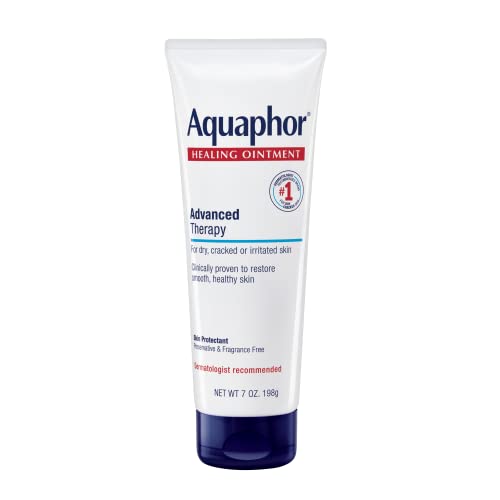
Aquaphor Healing Ointment remains one of the most consistently recommended products in ichthyosis management precisely because its semi-occlusive petrolatum base seals moisture into the skin more effectively than any cream or lotion. Ichthyosis vulgaris causes a defective skin barrier that allows water to evaporate rapidly, leading to the dry, scaly appearance. Aquaphor does not add moisture on its own. Instead, it traps the water that is already present in the skin. Applied immediately after the soak-and-smear bathing technique while skin is still slightly damp, Aquaphor traps residual water before it evaporates through the impaired barrier. This is the single most effective way to hydrate ichthyosis skin.
The formula contains petrolatum, mineral oil, ceresin, lanolin alcohol, and panthenol. The lanolin derivative provides some additional emollience, and the panthenol supports skin healing. Unlike pure petroleum jelly, Aquaphor has a slightly creamier texture that spreads more easily over large areas. It is fragrance-free and preservative-free, making it safe for even the most sensitive skin. Many dermatologists recommend Aquaphor as the final step in a treatment routine, applied over a keratolytic cream or lotion. This layering technique allows the active ingredients to exfoliate while the ointment locks in the moisture.
One honest limitation is that Aquaphor is extremely greasy and can stain clothing and bedding. It is not practical for daytime use on visible areas unless you are staying home. Some people also find the texture unpleasant, describing it as sticky or heavy. Additionally, the lanolin alcohol content can cause allergic reactions in a small percentage of people with wool allergies. If you experience itching or redness, switch to a pure petrolatum product like Vaseline. Finally, Aquaphor does not contain any exfoliating ingredients, so it must be used in combination with a keratolytic product to actually remove existing scale. It is a maintenance and hydration tool, not a treatment for established scaling.
What to look for
- Keratolytic type and concentration: Lactic acid (10-12%), salicylic acid (0.5-2%), or urea (10-40%) are the most effective for ichthyosis. Higher concentrations work faster but may cause irritation.
- Humectant content: Ingredients like glycerin, hyaluronic acid, and urea draw water into the skin. A product without humectants will not adequately hydrate the deeper layers of the epidermis.
- Occlusive base: Petrolatum, dimethicone, or shea butter seal moisture in. Without an occlusive, water will evaporate through the impaired barrier within minutes of application.
- Barrier repair ingredients: Ceramides, panthenol, and niacinamide help restore the lipid barrier that is defective in ichthyosis vulgaris. These ingredients reduce long-term scaling.
- Fragrance and dye status: Fragrances and dyes are common irritants for compromised skin. Choose fragrance-free and dye-free formulations to minimize stinging and allergic reactions.
- Texture and absorbency: Thicker creams and ointments provide more occlusion but may feel greasy. Lotions are easier to apply over large areas but may not be rich enough for severe cases.
- Packaging: Pump bottles and tubes are more hygienic than jars. For high-concentration urea creams, a tube allows precise application to small areas without contamination.
The verdict
For most people with ichthyosis vulgaris, the best starting point is AmLactin Daily Moisturizing Lotion. Its 12% lactic acid formulation provides effective exfoliation while hydrating the skin, and the lightweight texture makes it practical for daily use over large body areas. If you have sensitive skin or need barrier repair, CeraVe SA Cream offers a gentler alternative with ceramides. For stubborn scale on the body, Eucerin Roughness Relief Cream delivers intensive treatment with 10% urea and lactic acid. For the thickest scaling on feet and elbows, Urea 40% Foot Cream is the strongest OTC option available. And for sealing in moisture after bathing, Aquaphor Healing Ointment remains the gold standard occlusive. No single product will cure ichthyosis, but a routine that combines a keratolytic treatment with a rich emollient and an occlusive layer can dramatically soften scales and restore skin comfort. Start with one product, see how your skin responds, and build your routine from there.
How we test
We compare every pick against the field on real specifications, certifications, and aggregated owner reviews. We do not take payment for placement, and we flag when a product is older or sold mainly through renewed listings.
At a glance
The picks, reviewed
AmLactin Daily Moisturizing Lotion - Best Keratolytic Lotion
AmLactin uses 12% lactic acid (an alpha-hydroxy acid) in a pH-buffered formulation that gently exfoliates while deeply hydrating. For ichthyosis vulgaris, lactic acid is particularly valuable because it loosens the bonds holding scale-like dead skin cells to the surface while simultaneously pulling moisture into the deeper epidermis through its humectant properties. The daily lotion version is less intense than the rapid relief formulas, making it appropriate for use on the body including limbs and trunk. Apply once or twice daily after bathing. Results are visible within two to three weeks of regular use, with significant smoothing of rough, scaling areas.

CeraVe SA Cream - Best for Gentle Smoothing
CeraVe SA Cream pairs salicylic acid with ceramides and hyaluronic acid for a dual-action approach to ichthyosis management. Salicylic acid is a beta-hydroxy acid that breaks down the protein bonds in accumulated scale, while the ceramide complex works to restore the impaired barrier that allows scales to build up in the first place. This is a particularly well-balanced formula for ichthyosis patients who need daily exfoliation without causing the barrier damage that harsher keratolytic treatments can produce. The cream consistency is rich but not greasy and absorbs within a few minutes. Suitable for daily use on the body, arms, and legs.

Eucerin Roughness Relief Cream - Best for Intensive Body Treatment
Eucerin Roughness Relief is formulated specifically for rough, bumpy, and scaly skin using a combination of 10% urea, lactic acid, and panthenol. Urea at this concentration functions as both a humectant and a mild keratolytic, softening scale while drawing moisture into the skin. This cream is richer than most drugstore body lotions and is close to a medical-grade emollient in texture. It is well tolerated even on sensitive or eczema-prone skin and does not sting on cracked areas (which higher urea concentrations can). Apply it liberally twice daily to the entire affected body surface for best results with ichthyosis.
Urea 40% Foot Cream - Best for Severe Scaling on Extremities
Urea cream at 40% concentration is the strongest OTC keratolytic available and is particularly appropriate for the severely thickened scaling found on the feet, lower legs, and elbows in ichthyosis vulgaris. At this concentration, urea actively breaks down keratin in thickened scale, producing a physical softening effect you can feel within days. Apply to the most severely affected areas only. 40% urea is too strong for widespread daily body use and should be avoided near the face. Use under occlusion (covered with socks or clothing) for maximum penetration. Combine with a milder urea or lactic acid cream for areas beyond the extremities.
Aquaphor Healing Ointment - Best Occlusive Emollient
Aquaphor remains one of the most consistently recommended products in ichthyosis management precisely because its semi-occlusive petrolatum base seals moisture into the skin more effectively than any cream or lotion. Applied immediately after the soak-and-smear bathing technique while skin is still slightly damp, Aquaphor traps residual water before it evaporates through the impaired barrier. Its simple formula. petrolatum, mineral oil, lanolin alcohol, panthenol. minimizes allergen exposure. For severe ichthyosis or during winter flares, many dermatologists recommend Aquaphor as the primary nightly treatment over any lotion alternative.
What to look for
What to consider
Thickness and occlusion matter more than price for ichthyosis creams. Prioritize creams and ointments over lotions. Look for urea (10-40%), lactic acid (12%), salicylic acid, or ceramides as key actives. Avoid fragrances, which can trigger secondary irritation in already-compromised skin. For severe or widespread ichthyosis, work with a dermatologist to develop a layered approach: keratolytic cream during the day and Aquaphor-type occlusive overnight. Consistent application is more important than any single product choice.
Our verdict
Ichthyosis vulgaris responds best to daily commitment rather than any single miracle product. AmLactin or CeraVe SA for daily keratolytic maintenance, Aquaphor for overnight occlusion, and 40% urea targeted to the most thickened areas is a highly effective three-layer approach for most patients.
FAQs
Thick emollients and occlusives. petrolatum-based creams, urea-containing formulas, and lactic acid lotions. perform best. Lightweight lotions evaporate too quickly to provide lasting benefit. Look for products with a cream or ointment consistency and apply immediately after bathing while skin is still slightly damp to lock in moisture before transepidermal water loss occurs.
No. Ichthyosis vulgaris is a genetic condition caused by mutations in the filaggrin gene. Creams manage symptoms effectively but do not address the underlying cause. Consistent daily moisturization dramatically improves skin texture and comfort. Some patients see near-normal skin with diligent emollient use, but the condition persists throughout life and requires ongoing management.
At minimum twice daily. once after bathing and once before bed. Many dermatologists recommend applying moisturizer multiple times throughout the day in severe cases. Soak-and-smear technique (bathing for 10 minutes then immediately applying thick emollient within 3 minutes of patting dry) is considered the most effective application method for ichthyosis management.
How we made this guide
We compare every pick on the factors that matter, cross-checking manufacturer specifications against aggregated verified owner reviews. We rank independently and never take payment for placement. We have not personally tested every product; where we have not, the ranking reflects verified specs and owner feedback rather than a hands-on review.
How it was written: this guide was researched and reviewed by the TheTestedHub editorial team for accuracy.
Affiliate disclosure: TheTestedHub is reader-supported. When you buy through links on our site, we may earn a commission at no extra cost to you.
Related guides

What Works Best for Eczema? 2026 Top Creams Reviewed
Dry Skin Care in 2026: Ceramide-Rich Picks for Barrier Repair

Curl Setting Sprays for Frizz Control: Ouidad Leads

Curl Creams That Define Without the Weight
Chemical Exfoliants 2026: Honest Reviews & Picks
8 Cancer Treatment Skin Care Products That Truly Soothe

Vitamin C Serums Compared: A Brightening Shortlist