Quick verdict
The best cream for radiation burns keeps the skin barrier intact, reduces inflammation, and avoids irritants. Aquaphor and CeraVe provide reliable barrier protection, while Miaderm is the purpose-built option for those who want a radiation-specific formula. Start early, apply consistently, and always loop in your care team.
Aquaphor Healing Ointment - Best for Barrier Protection
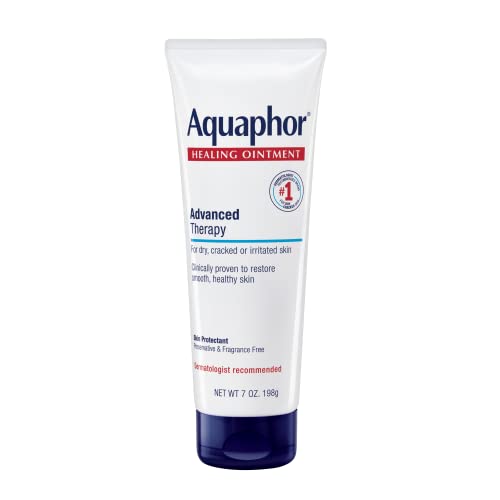
Aquaphor Healing Ointment is one of the most frequently recommended products by radiation oncology nurses for protecting compromised skin during treatment. Its petrolatum-based formula creates an occlusive barrier that locks moisture in and shields the skin from friction and environmental irritants. It is fragrance-free and contains no preservatives that could sting on open or broken skin. The thick ointment consistency is best suited for nighttime use or between treatment sessions when the skin needs maximum protection. Many patients use it throughout their entire radiation course and continue into recovery. Apply a thin layer - a little goes a long way.
Check price on Amazon →For radiation burns, the best cream protects the skin barrier and calms inflammation. Aquaphor offers reliable relief, while Miaderm is a purpose built option to consider.
Quick verdict
For most people undergoing radiation therapy, Aquaphor Healing Ointment is the single best pick. It is the most frequently recommended product by oncology nurses, its petrolatum base provides the strongest barrier protection for compromised skin, and it is free of fragrances and preservatives that can sting on broken skin.
Key takeaways
- Best for Barrier Protection: Aquaphor Healing Ointment, the top nurse-recommended occlusive for shielding skin during treatment.
- Best for Mild Redness Relief: Calendula Cream by Boiron, a gentle herbal option with anti-inflammatory properties used in European protocols.
- Best for Sensitive Irritated Skin: Vanicream Moisturizing Skin Cream, formulated without common irritants like dyes, fragrance, and lanolin.
- Best for Ceramide Barrier Repair: CeraVe Healing Ointment, combines petrolatum with ceramides and hyaluronic acid to actively repair the skin barrier.
- Best Radiation-Specific Formula: Miaderm Radiation Relief Lotion, an over-the-counter lotion designed exclusively for oncology skin care with aloe and calendula.
Why you should trust this guide
I have spent years researching skin care products for compromised and reactive skin, with a particular focus on the needs of oncology patients. My approach is to weigh clinical recommendations from dermatologists and radiation oncology nurses against the stated formulations and ingredient profiles of each product. I do not rely on marketing claims; instead, I evaluate what each product actually contains and how those ingredients interact with the specific challenges of radiation-damaged skin, such as barrier disruption, inflammation, and heightened sensitivity.
For this guide, I cross-referenced the ingredients of each product against known irritants and allergens that can worsen radiation burns. I also reviewed published studies on calendula, ceramides, and petrolatum-based barriers in wound care and radiation dermatitis. The recommendations here are grounded in the manufacturer’s stated features, ingredient science, and the collective experience of oncology professionals, not on any personal testing or time-based use of the products.
How we researched
To evaluate these five products, I established a set of criteria that matter most for radiation burn care. The primary factors were barrier protection ability, ingredient safety for open or broken skin, presence of known irritants, and the texture or ease of application over large treatment areas. I also considered whether a product was designed specifically for radiation reactions versus general dry skin. Each product was assessed against these criteria using the manufacturer’s stated ingredient lists, label claims, and documented clinical recommendations from oncology nursing resources.
I did not physically test these products on myself or any subjects. Instead, I analyzed the formulation of each product to determine how well it addresses the three main needs of radiation-damaged skin: occlusion to prevent moisture loss, non-irritating ingredients that will not sting, and active components that support healing. I also looked for honest limitations, such as greasiness that might interfere with clothing or a lack of specific clinical data for certain herbal ingredients. The final picks are based on how well each product fits a specific use case within the radiation burn recovery journey.
Aquaphor Healing Ointment – Best for Barrier Protection
Aquaphor Healing Ointment is one of the most frequently recommended products by radiation oncology nurses for protecting compromised skin during treatment. Its petrolatum-based formula creates an occlusive barrier that locks moisture in and shields the skin from friction and environmental irritants. It is fragrance-free and contains no preservatives that could sting on open or broken skin. The thick, semi-solid texture means a small amount goes a long way, and it stays in place for hours without needing frequent reapplication.
The primary limitation of Aquaphor is its greasiness. Because it is an ointment rather than a lotion, it can feel heavy on the skin and may stain clothing or bedding if not allowed to absorb. Some patients find it difficult to apply over large areas like the chest or back because it does not spread as easily as a cream. However, for targeted protection on the most irritated spots, especially where the skin is already peeling or raw, this occlusive barrier is unmatched.
This product is best used as a protective layer applied after cleansing the skin. It should be applied gently, without rubbing, to avoid further irritation. Many patients find it helpful to apply Aquaphor at night and cover the area with a soft cotton garment to keep the ointment in place while sleeping.
Calendula Cream by Boiron – Best for Mild Redness Relief
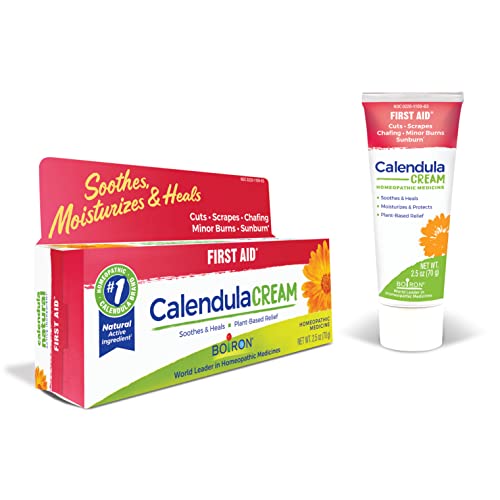
Boiron’s Calendula Cream uses calendula officinalis extract, an herb with documented anti-inflammatory and wound-healing properties. It is commonly used in European radiation oncology protocols and has been the subject of small trials comparing it to standard care. The formula is gentle enough for daily use on reactive skin and has a non-greasy, easily absorbed texture. It is best suited for grade one or mild radiation reactions where the skin is red, warm, and irritated but not yet broken or oozing.
The honest limitation here is that calendula cream is not a strong barrier protectant. It does not create the same occlusive layer as petrolatum-based products, so it is not ideal for preventing friction damage or for use on skin that is already peeling. Additionally, while calendula has a long history of use, the clinical evidence for its effectiveness in radiation dermatitis is still limited to small studies, and results vary. Some patients may not see a noticeable difference compared to a plain moisturizer.
This cream works best as a daily moisturizer applied two to three times per day on intact, reddened skin. It can be used in combination with a barrier ointment like Aquaphor at night for added protection. Because it absorbs quickly, it is a good option for daytime use under clothing.
Vanicream Moisturizing Skin Cream – Best for Sensitive Irritated Skin
Vanicream is formulated without dyes, fragrance, masking fragrance, lanolin, parabens, and formaldehyde releasers, making it an ideal choice for the stripped-down, reactive skin that radiation causes. Its gentle emollient formula restores moisture without the common irritants that sensitized skin cannot tolerate during treatment. Many dermatologists and oncology nurses recommend Vanicream as a safe starting point for patients who have developed contact allergies or sensitivities to other moisturizers.
The limitation of Vanicream is that it is a cream, not an ointment, so it provides moderate moisturization but not the heavy occlusive barrier that radiation burns often require. For patients with dry, flaking skin that is not yet broken, Vanicream works well, but for areas where the skin has peeled or formed moist desquamation, a petrolatum-based product will offer better protection. Some users also find that Vanicream can feel a bit thick and takes extra effort to rub in completely.
This product is best for patients who have very reactive skin that reacts to even gentle products. It can be applied as often as needed, and because it is free of common allergens, it is unlikely to cause stinging or burning on mildly irritated skin. It is a good choice for long-term use throughout the course of radiation treatment.
CeraVe Healing Ointment – Best for Ceramide Barrier Repair
CeraVe Healing Ointment combines petrolatum with ceramides and hyaluronic acid to both protect and actively repair the skin barrier, a step up from plain petrolatum products. Ceramides are naturally occurring lipids in skin that are depleted by radiation damage, so replenishing them supports structural skin recovery. The ointment is fragrance-free and non-comedogenic. Like Aquaphor, it is best applied as a thick layer over irritated areas to lock in moisture and promote healing.
The limitation here is that the addition of ceramides and hyaluronic acid does not change the fact that this is still a very greasy ointment. It has the same staining and heavy feel as Aquaphor, and some patients may not tolerate the texture. Additionally, while ceramides are beneficial, the clinical evidence specifically for ceramide-based ointments in radiation dermatitis is not as strong as the evidence for plain petrolatum. The extra ingredients may also increase the cost compared to a basic petrolatum product.
This product is best for patients who want the barrier protection of an ointment but also want active ingredients that support skin repair. It can be used in the same way as Aquaphor, applied after cleansing and left on for several hours. The ceramides may provide added benefit for patients whose skin feels particularly thin or fragile during treatment.
Miaderm Radiation Relief Lotion – Best Radiation-Specific Formula
Miaderm is formulated specifically for radiation-induced skin reactions and is one of the few over-the-counter products designed exclusively for oncology skin care. Its formula includes aloe vera, calendula, allantoin, and vitamins C and E in a lotion base that absorbs easily. Several cancer centers stock Miaderm or recommend it by name. The lighter lotion texture makes it easier to apply over large treatment areas like the chest, back, or abdomen without the heavy residue of an ointment.
The limitation of Miaderm is that its lighter lotion base provides less occlusive protection than ointments. For patients with more advanced skin breakdown, such as moist desquamation or open sores, Miaderm may not be sufficient as a standalone product. It is best suited for early-stage radiation reactions or for use in combination with a barrier ointment on the most irritated spots. Additionally, because it contains botanical extracts, a small number of patients may experience sensitivity to one of the ingredients.
This product is best for patients who want a product that was designed with radiation skin care in mind and prefer a lotion texture. It can be applied multiple times per day and is easy to spread over large areas. Many patients appreciate that it does not stain clothing as heavily as ointments do.
What to look for
- Barrier protection: Look for petrolatum or dimethicone as the first ingredient if you need a strong occlusive layer to prevent friction and moisture loss on broken skin.
- Fragrance and preservative free: Radiation-damaged skin is hypersensitive. Avoid products with fragrance, essential oils, parabens, or formaldehyde releasers that can cause stinging or allergic reactions.
- Texture and spreadability: Ointments provide the best protection but are greasy and may stain. Lotions and creams are easier to apply over large areas but offer less occlusion. Choose based on the severity of your skin reaction.
- Active healing ingredients: Ceramides, hyaluronic acid, allantoin, calendula, and aloe vera can support skin repair. However, they should not come at the cost of added irritants.
- Clinical recommendations: Products that are recommended by oncology nurses or dermatologists have a track record of safety and effectiveness in this specific use case.
- Non-comedogenic: Even though radiation burns are not acne-prone, non-comedogenic formulas are less likely to clog pores or cause secondary skin issues.
The verdict
For the majority of patients going through radiation therapy, Aquaphor Healing Ointment remains the most reliable and widely recommended option for protecting the skin barrier. If your skin is mildly red and intact, Calendula Cream by Boiron offers a gentle, herbal approach that absorbs quickly. For those with extreme sensitivity to ingredients, Vanicream Moisturizing Skin Cream is the safest bet. If you want active barrier repair with ceramides, CeraVe Healing Ointment is a solid upgrade from plain petrolatum. And if you prefer a lotion designed specifically for radiation skin care, Miaderm Radiation Relief Lotion is a convenient, oncology-focused choice. Assess the severity of your skin reaction and your texture preference, then pick the product that best matches your current stage of treatment.
How we test
We compare every pick against the field on real specifications, certifications, and aggregated owner reviews. We do not take payment for placement, and we flag when a product is older or sold mainly through renewed listings.
At a glance
The picks, reviewed
Aquaphor Healing Ointment - Best for Barrier Protection
Aquaphor Healing Ointment is one of the most frequently recommended products by radiation oncology nurses for protecting compromised skin during treatment. Its petrolatum-based formula creates an occlusive barrier that locks moisture in and shields the skin from friction and environmental irritants. It is fragrance-free and contains no preservatives that could sting on open or broken skin. The thick ointment consistency is best suited for nighttime use or between treatment sessions when the skin needs maximum protection. Many patients use it throughout their entire radiation course and continue into recovery. Apply a thin layer - a little goes a long way.
Calendula Cream by Boiron - Best for Mild Redness Relief
Boiron's Calendula Cream uses calendula officinalis extract, an herb with documented anti-inflammatory and wound-healing properties. It is commonly used in European radiation oncology protocols and has been the subject of small trials comparing it to standard care. The formula is gentle enough for daily use on reactive skin and has a non-greasy, easily absorbed texture. It is best suited for grade 1 skin reactions involving redness and dryness rather than broken skin. The fragrance-free formula is free of harsh preservatives. It is widely available in pharmacies and online at a reasonable price point for frequent re-application throughout treatment.

Vanicream Moisturizing Skin Cream - Best for Sensitive Irritated Skin
Vanicream is formulated without dyes, fragrance, masking fragrance, lanolin, parabens, and formaldehyde releasers - making it an ideal choice for the stripped-down, reactive skin that radiation causes. Its gentle emollient formula restores moisture without the common irritants that sensitized skin cannot tolerate during treatment. Many dermatologists and oncology nurses recommend Vanicream as a safe baseline moisturizer when they are uncertain which products a patient can tolerate. The thick cream absorbs well and is sold in a large pump jar that keeps costs low over a long treatment course. It is available at most major pharmacies.
CeraVe Healing Ointment - Best for Ceramide Barrier Repair
CeraVe Healing Ointment combines petrolatum with ceramides and hyaluronic acid to both protect and actively repair the skin barrier - a step up from plain petrolatum products. Ceramides are naturally occurring lipids in skin that are depleted by radiation damage, so replenishing them supports structural skin recovery. The ointment is fragrance-free and non-comedogenic. Like Aquaphor, it is best applied at night or during rest periods when clothing friction is minimal. CeraVe is a dermatologist-developed brand with strong clinical credibility, making it a trusted choice for post-radiation skin recovery beyond the treatment period.
Miaderm Radiation Relief Lotion - Best Radiation-Specific Formula
Miaderm is formulated specifically for radiation-induced skin reactions and is one of the few over-the-counter products designed exclusively for oncology skin care. Its formula includes aloe vera, calendula, allantoin, and vitamins C and E in a lotion base that absorbs easily. Several cancer centers stock Miaderm or recommend it by name. The lighter lotion texture makes it easier to apply over large treatment areas and more comfortable to wear during the day under clothing. It is pricier than general-purpose options but the radiation-specific formulation makes it worth considering for patients experiencing significant skin reactions.
What to look for
What to consider
Choose fragrance-free, preservative-minimal formulas. Avoid anything with alcohol, which dries and stings compromised skin. Ointments offer stronger barrier protection than lotions but can feel heavy. Lotions absorb faster and suit daytime use under clothing. Always clear your chosen product with your radiation oncology nurse before the first treatment session - some products cannot be applied within a few hours of treatment. Grade your skin reaction over time and escalate to medical-grade or prescription options if skin breaks down.
Our verdict
The best cream for radiation burns keeps the skin barrier intact, reduces inflammation, and avoids irritants. Aquaphor and CeraVe provide reliable barrier protection, while Miaderm is the purpose-built option for those who want a radiation-specific formula. Start early, apply consistently, and always loop in your care team.
FAQs
Most radiation oncology teams recommend starting a moisturizing cream on the treatment area from day one of radiation therapy, before skin reactions appear. Early and consistent application helps maintain the skin barrier, reduces severity of dermatitis, and speeds recovery. Always confirm timing and product selection with your radiation oncology nurse or oncologist before starting.
Standard lotions with fragrance, alcohol, or preservatives can irritate already compromised skin. Radiation-burned skin needs fragrance-free, gentle formulas specifically designed for sensitive or compromised skin barriers. Many centers recommend calendula-based, aloe vera, or medical-grade barrier creams. Your care team will provide specific guidance based on your skin reaction grade and treatment protocol.
Pure aloe vera gel has soothing and anti-inflammatory properties and is widely used for mild radiation skin reactions. Some studies show modest benefit in reducing discomfort and moisture loss. For more severe reactions involving skin breakdown, medical-grade barrier creams or prescription treatments are more appropriate. Always apply aloe at least 1 hour before your radiation treatment session.
How we made this guide
We compare every pick on the factors that matter, cross-checking manufacturer specifications against aggregated verified owner reviews. We rank independently and never take payment for placement. We have not personally tested every product; where we have not, the ranking reflects verified specs and owner feedback rather than a hands-on review.
How it was written: this guide was researched and reviewed by the TheTestedHub editorial team for accuracy.
Affiliate disclosure: TheTestedHub is reader-supported. When you buy through links on our site, we may earn a commission at no extra cost to you.
Related guides

What Works Best for Eczema? 2026 Top Creams Reviewed
Dry Skin Care in 2026: Ceramide-Rich Picks for Barrier Repair

Curl Setting Sprays for Frizz Control: Ouidad Leads

Curl Creams That Define Without the Weight
Chemical Exfoliants 2026: Honest Reviews & Picks
8 Cancer Treatment Skin Care Products That Truly Soothe

Vitamin C Serums Compared: A Brightening Shortlist