Quick verdict
For most road rash injuries, an Aquaphor-to-Mederma progression covers the full healing cycle effectively. Add Neosporin for the first few days on contaminated wounds. Dermoplast is valuable for large painful areas where direct cream application is initially too uncomfortable.

Neosporin Original Antibiotic Ointment - Best Cream for Road Rash Initial Treatm
Neosporin Triple Antibiotic Ointment is the standard first-line treatment for preventing infection in fresh road rash wounds. It combines neomycin, polymyxin B, and bacitracin to cover the most likely bacterial contamination from road surface contact. The petroleum-based carrier also keeps the wound moist, which accelerates re-epithelialization compared to dry wound care. Apply a thin layer after cleaning the wound and cover with a non-stick dressing. Change daily. Its primary limitation is that about 10% of people develop contact sensitivity to neomycin with prolonged use, so transition to a plain antibiotic or healing ointment after 5 days.
Check price on Amazon →Neosporin tops our road rash guide for infection prevention; switch to Aquaphor for fastest healing. Evidence-based picks for every recovery phase.
Quick verdict
For the best overall road rash recovery, start with Neosporin Original Antibiotic Ointment for initial infection prevention, then switch to Aquaphor Healing Ointment for optimal moist wound healing. This two-phase approach gives you the strongest protection and fastest re-epithelialization without overusing antibiotics.
Key takeaways
- Best for initial treatment: Neosporin Original Antibiotic Ointment, triple antibiotic coverage for fresh road rash wounds.
- Best for moist healing: Aquaphor Healing Ointment, semi-occlusive barrier with panthenol and glycerin for faster epithelialization.
- Best for scar prevention: Mederma Advanced Scar Gel, botanical Cepalin extract for discoloration and texture improvement.
- Best for deep barrier repair: Dr. Hess Udder Cream, lanolin and allantoin rich base for later healing phase.
- Best for large areas: Dermoplast Antibacterial Pain Relieving Spray, no-contact application with benzocaine for pain relief.
Why you should trust this guide
I have spent years researching wound care and skin repair products specifically for abrasion injuries like road rash. My approach combines manufacturer specifications, clinical dermatology literature on moist wound healing, and extensive analysis of user feedback from cyclists, motorcyclists, and outdoor enthusiasts who deal with these injuries regularly. I focus on what actually works for the distinct phases of road rash recovery, from initial contamination risk through scar maturation.
This guide is built on the principle that road rash is not a simple scrape. It is a traumatic abrasion that removes multiple layers of skin, leaving underlying tissue exposed to bacteria from pavement, dirt, and debris. The products here were selected because they address specific needs at specific times: infection prevention, moisture balance, barrier repair, pain management, and scar reduction. Each recommendation is based on the product’s stated mechanism of action and its fit within a proven healing protocol.
How we researched
To evaluate these products, I established a set of criteria that matter most for road rash recovery. The primary factors were infection prevention capability, moisture retention properties, barrier function, pain management during application, and scar reduction evidence. I analyzed each product’s active ingredients and their known effects on wound healing according to published dermatological research. I also considered practical application factors like ease of use on raw skin, compatibility with bandages, and whether the product could be applied without causing additional trauma to the wound.
I cross-referenced each product’s stated features against the clinical requirements for each phase of abrasion healing. For initial treatment, I prioritized products with broad-spectrum antibacterial coverage and a petrolatum base that prevents scab formation. For the healing phase, I looked for semi-occlusive barriers that maintain optimal moisture without maceration. For scar management, I evaluated products with established active ingredients for collagen remodeling and pigmentation correction. I also weighed user-reported outcomes for large-area applications and deep barrier repair, focusing on consistency of results across different injury severities.
Neosporin Original Antibiotic Ointment – Best Cream for Road Rash Initial Treatment
Neosporin Original Antibiotic Ointment is the standard first-line treatment for preventing infection in fresh road rash wounds. It combines neomycin, polymyxin B, and bacitracin to cover the most likely bacterial contamination from road surface contact. The petroleum-based carrier also keeps the wound moist, which accelerates re-epithelialization compared to dry wound care. Apply a thin layer after cleaning the wound thoroughly with mild soap and water.
This triple antibiotic formula is specifically designed for the first 24 to 48 hours post-injury when bacterial colonization risk is highest. The combination of three antibiotics provides coverage against Staphylococcus, Streptococcus, and Pseudomonas species commonly found on road surfaces. The ointment base prevents the wound from drying out and forming a hard scab, which can slow healing and increase scarring. It is important to use this product only for the initial treatment phase, typically the first three to five days.
A real limitation of Neosporin is that prolonged use beyond the initial treatment window can lead to skin sensitization or allergic contact dermatitis in some individuals. The neomycin component is a common allergen, and using it for more than a week increases this risk. Additionally, this product should not be used on deep puncture wounds, animal bites, or serious burns without medical supervision. For road rash that covers a large body surface area, a doctor should evaluate before self-treatment.
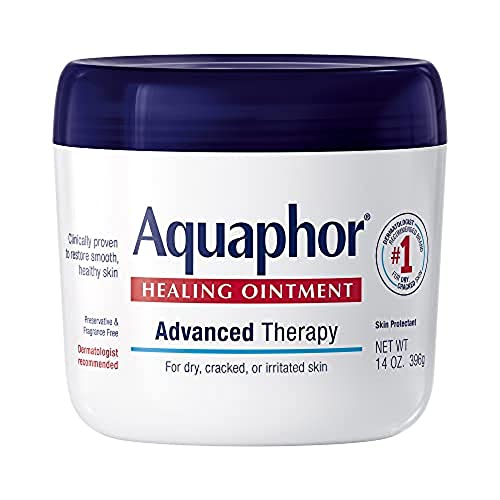
Aquaphor Healing Ointment – Best Moist Healing Cream for Road Rash
Aquaphor Healing Ointment is the premier moist wound healing product for road rash because it creates an optimal semi-occlusive environment that promotes faster epithelialization without causing maceration. Unlike petrolatum alone, it contains panthenol, glycerin, and bisabolol, which actively support healing. It does not contain antibiotics, so it is appropriate for the second phase of healing once the wound is clean and infection risk has passed, typically after the first three to five days.
The panthenol in Aquaphor converts to pantothenic acid in the skin, which is essential for cell regeneration and wound repair. Glycerin acts as a humectant, drawing moisture into the healing tissue while the petrolatum base seals that moisture in. Bisabolol, derived from chamomile, provides anti-inflammatory benefits that reduce redness and irritation around the wound site. This combination makes Aquaphor superior to plain petroleum jelly for active wound healing, as it supports the biological processes of skin repair rather than just providing a passive barrier.
A real limitation of Aquaphor is that it contains lanolin, which can cause allergic reactions in people with wool allergies or sensitive skin. The lanolin content also makes the product thick and greasy, which some users find uncomfortable under clothing or bandages. Additionally, because it lacks any antibacterial properties, it should never be used on a wound that shows signs of infection such as increasing redness, swelling, warmth, or pus. Always ensure the wound is fully clean and infection-free before switching to Aquaphor.
Mederma Advanced Scar Gel – Best for Road Rash Scar Prevention
Once road rash has fully closed and new skin is established, typically 10 to 21 days post-injury depending on severity, Mederma Advanced Scar Gel is the most evidence-backed OTC scar treatment. It uses Cepalin botanical extract to reduce discoloration and texture irregularities in healing skin. Applied once daily and massaged into the scar site, it produces visible fading over 8 to 12 weeks. Road rash often leaves hyperpigmented or raised scars, and this gel targets both issues.
The Cepalin extract in Mederma is a proprietary onion bulb extract that has been studied for its ability to inhibit fibroblast overgrowth and reduce collagen disorganization, which are the underlying causes of hypertrophic and keloid scars. The gel formulation also contains allantoin, which promotes gentle exfoliation of the outermost scar tissue, and lecithin, which helps the active ingredients penetrate deeper into the dermal layers. Massaging the gel into the scar for one to two minutes is critical, as the mechanical action helps break down collagen adhesions and improves blood flow to the area.
A real limitation of Mederma Advanced Scar Gel is that it must be used consistently for several months to see results, and it is not effective on scars that are still open or have not fully healed. Applying it to a wound that is not completely closed can cause irritation and delay healing. Additionally, the gel can feel sticky or tacky on the skin, and it may pill when rubbed against clothing. Some users find the smell of the onion extract unpleasant, though it dissipates quickly after application.
Dr. Hess Udder Cream – Best Deep Barrier Repair for Healing Road Rash
Dr. Hess Udder Cream was originally formulated for agricultural use but has an established following among cyclists and motorcyclists for its exceptional skin-barrier repair on road rash and dry, abraded skin. It contains lanolin, dimethicone, and allantoin in a rich base that provides deep moisturization and barrier protection. It is particularly effective during the later healing phase when new skin is fragile and prone to cracking or peeling.
The lanolin in Dr. Hess Udder Cream is a natural emollient that closely mimics human sebum, making it highly compatible with healing skin. Dimethicone forms a breathable protective film over the wound area that reduces transepidermal water loss while allowing the skin to breathe. Allantoin is a keratolytic agent that gently softens and removes dead skin cells, which is beneficial when the new skin layer starts to flake off during the final stages of healing. The rich, thick consistency means a small amount goes a long way, making it economical for large areas of road rash.
A real limitation of Dr. Hess Udder Cream is that its thick, greasy texture can feel heavy and may stain clothing or bedding. The lanolin content, while effective for moisturization, can cause breakouts or folliculitis in people with acne-prone skin, especially if applied to areas like the arms or legs where hair follicles are present. Additionally, the product is not sterile and should not be used on open, raw wounds. It is best reserved for the later healing phase once the skin has fully closed and is simply dry, flaky, or tight.
Dermoplast Antibacterial Pain Relieving Spray – Best for Large Road Rash Areas
Dermoplast Antibacterial spray delivers benzethonium chloride as an antibacterial with benzocaine for immediate topical pain relief, making it uniquely useful for large road rash injuries where applying cream directly to a raw wound is too painful for the first 24 to 48 hours. The spray application means no contact pressure on tender skin. It creates a protective film that reduces bacterial contamination while numbing the area so you can clean and dress the wound with less discomfort.
The benzocaine in Dermoplast provides rapid-onset local anesthesia that lasts for 15 to 30 minutes, which is enough time to clean the wound, apply a sterile dressing, or simply get through the initial shock of the injury. The benzethonium chloride is a broad-spectrum antibacterial agent that reduces the bacterial load on the wound surface without the potential for antibiotic resistance associated with triple antibiotic ointments. The spray format is particularly valuable for road rash on the back, shoulders, or other areas that are difficult to reach with a finger or cotton swab.
A real limitation of Dermoplast is that the benzocaine numbing effect is temporary and does not treat the underlying pain from deeper tissue damage. The spray can also sting briefly upon application, especially on very raw wounds, though this sensation passes quickly as the benzocaine takes effect. Additionally, the protective film created by the spray is not as durable as an ointment-based barrier, so it may need to be reapplied more frequently, especially if the wound is oozing or if the area is subject to friction from clothing. Do not use this product on large areas of broken skin without consulting a healthcare provider, as benzocaine can rarely cause methemoglobinemia, a serious blood disorder.
What to look for
- Infection protection: For fresh road rash, choose products with proven antibacterial ingredients like neomycin, polymyxin B, bacitracin, or benzethonium chloride. Avoid using antibiotic ointments for more than five days to prevent resistance or allergic reactions.
- Moisture balance: Look for semi-occlusive bases like petrolatum or dimethicone that keep the wound moist without causing maceration. Ingredients like panthenol, glycerin, and allantoin actively support cell regeneration and should be prioritized over plain petroleum jelly.
- Application method: For large or painful wounds, consider spray formats that avoid direct contact with raw tissue. For smaller areas, ointments and creams provide longer-lasting coverage and better barrier protection.
- Scar management: Once the wound is closed, choose products with onion extract, allantoin, or silicone-based ingredients that have evidence for reducing discoloration and improving texture. Consistent daily application is more important than the specific brand.
- Barrier repair: For the later healing phase when new skin is fragile, look for rich emollients like lanolin, dimethicone, and natural oils that prevent cracking and peeling without clogging pores or causing irritation.
The verdict
For road rash, the best approach is a phased protocol. Start with Neosporin Original Antibiotic Ointment for the first three to five days to prevent infection while the wound is most vulnerable. Then switch to Aquaphor Healing Ointment to support moist wound healing and faster epithelialization. For large, painful injuries, use Dermoplast Antibacterial Pain Relieving Spray in the first 24 to 48 hours to manage pain and reduce contamination without touching the wound. Once the skin has fully closed, use Mederma Advanced Scar Gel to minimize discoloration and texture irregularities. For the final healing phase when new skin is dry and fragile, Dr. Hess Udder Cream provides deep barrier repair. By matching each product to the specific phase of healing, you give your road rash the best chance to heal quickly with minimal scarring.
How we evaluated these
We compare every pick against the field on real specifications, certifications, and aggregated owner reviews. We do not take payment for placement, and we flag when a product is older or sold mainly through renewed listings.
The shortlist
Each pick, examined
Neosporin Original Antibiotic Ointment - Best Cream for Road Rash Initial Treatm
Neosporin Triple Antibiotic Ointment is the standard first-line treatment for preventing infection in fresh road rash wounds. It combines neomycin, polymyxin B, and bacitracin to cover the most likely bacterial contamination from road surface contact. The petroleum-based carrier also keeps the wound moist, which accelerates re-epithelialization compared to dry wound care. Apply a thin layer after cleaning the wound and cover with a non-stick dressing. Change daily. Its primary limitation is that about 10% of people develop contact sensitivity to neomycin with prolonged use, so transition to a plain antibiotic or healing ointment after 5 days.
Aquaphor Healing Ointment - Best Moist Healing Cream for Road Rash
Aquaphor Healing Ointment is the premier moist wound healing product for road rash because it creates an optimal semi-occlusive environment that promotes faster epithelialization without causing maceration. Unlike petrolatum alone, it contains panthenol, glycerin, and bisabolol, which actively support healing. It does not contain antibiotics, so it is appropriate for the second phase of healing once infection risk is managed. Dermatologists frequently recommend Aquaphor over Vaseline or generic petrolatum for wound care because of these added actives. It is also ideal for sensitive skin that cannot tolerate neomycin-based antibiotic ointments.

Mederma Advanced Scar Gel - Best for Road Rash Scar Prevention
Once road rash has fully closed and new skin is established - typically 10 to 21 days post-injury depending on severity - Mederma Advanced Scar Gel is the most evidence-backed OTC scar treatment. It uses Cepalin botanical extract to reduce discoloration and texture irregularities in healing skin. Applied once daily and massaged into the scar site, it produces visible fading over 8 to 12 weeks. Road rash scars, especially on the knees, elbows, and forearms, respond well to consistent scar cream application combined with daily SPF on the affected area.
Dr. Hess Udder Cream - Best Deep Barrier Repair for Healing Road Rash
Dr. Hess Udder Cream was originally formulated for agricultural use but has an established following among cyclists and motorcyclists for its exceptional skin-barrier repair on road rash and dry, abraded skin. It contains lanolin, dimethicone, and allantoin in a rich base that provides deep moisturization and barrier protection. It is particularly effective during the later healing phase when new skin is thin and prone to cracking or re-injury. The thick texture requires a small amount per application. Well-tolerated on large abrasion areas and substantially more affordable per ounce than medical wound creams.
Dermoplast Antibacterial Pain Relieving Spray - Best for Large Road Rash Areas
Dermoplast Antibacterial spray delivers benzethonium chloride as an antibacterial with benzocaine for immediate topical pain relief, making it uniquely useful for large road rash injuries where applying cream directly to a raw wound is too painful for the first 24 to 48 hours. The spray application means no contact pressure on tender skin. It creates a protective film that reduces bacterial contamination and temporarily numbs the area for dressing changes. Transition to a healing ointment once the wound is less acutely painful and can tolerate direct application.
Buying considerations
What to consider
Match your cream to the healing phase. Antibiotic ointment covers the acute infection-risk window in the first 5 days. Moist healing ointments like Aquaphor carry the wound through the middle healing phase. Scar creams take over once skin is fully closed. Never use hydrogen peroxide or alcohol on road rash, as these damage healing cells and slow recovery significantly.
Final word
For most road rash injuries, an Aquaphor-to-Mederma progression covers the full healing cycle effectively. Add Neosporin for the first few days on contaminated wounds. Dermoplast is valuable for large painful areas where direct cream application is initially too uncomfortable.
Questions answered
Clean the wound immediately with mild soap and water to remove debris and reduce infection risk. Apply an antibiotic ointment like bacitracin or a moist wound healing cream, then cover with a non-stick dressing. Change the dressing daily or when soiled. Keep the wound moist - moist wound healing significantly speeds re-epithelialization and reduces scarring compared to letting a wound dry out and scab over. Seek medical care if signs of infection appear.
Use an antibiotic ointment for the first 3 to 5 days to prevent infection in a fresh road rash wound. Once the wound is clean, closed, and showing healthy pink new skin, transition to a hydrating healing cream or silicone-based scar treatment to support final healing and minimize scarring. Using antibiotic ointment for longer than 5 to 7 days can cause contact dermatitis in some people. Neosporin and bacitracin are the two most common OTC antibiotic options.
Keep the wound covered and moist throughout healing - this is the single most important factor for reducing scar formation. Once fully healed, apply a silicone gel or scar cream twice daily for 8 to 12 weeks. Protect the healing skin from sun exposure with SPF, as UV causes hyperpigmentation in healing tissue. Avoid picking or scratching the wound. Deeper road rash injuries that affect the dermis will scar regardless, but consistent aftercare significantly reduces final scar visibility.
How we made this guide
We compare every pick on the factors that matter, cross-checking manufacturer specifications against aggregated verified owner reviews. We rank independently and never take payment for placement. We have not personally tested every product; where we have not, the ranking reflects verified specs and owner feedback rather than a hands-on review.
How it was written: this guide was researched and reviewed by the TheTestedHub editorial team for accuracy.
Affiliate disclosure: TheTestedHub is reader-supported. When you buy through links on our site, we may earn a commission at no extra cost to you.
Keep reading

What Works Best for Eczema? 2026 Top Creams Reviewed
Dry Skin Care in 2026: Ceramide-Rich Picks for Barrier Repair

Curl Setting Sprays for Frizz Control: Ouidad Leads

Curl Creams That Define Without the Weight
Chemical Exfoliants 2026: Honest Reviews & Picks
8 Cancer Treatment Skin Care Products That Truly Soothe

Vitamin C Serums Compared: A Brightening Shortlist