Quick verdict
Lamisil AT (terbinafine) is the top pick for anyone who wants the fastest possible clearance with the fewest total days of treatment. For a widely available, trusted general option, Lotrimin AF is the standard. Whichever you choose, complete the full treatment course even after the rash disappears - stopping early is the most common reason for recurrence. See a doctor if you see no improvement after 2 weeks of consis

Lamisil AT Cream - Best for Fastest Ringworm Clearance
Lamisil AT is the most clinically studied topical antifungal for ringworm and consistently shows the fastest clearance rates among OTC options. Terbinafine works by inhibiting squalene epoxidase, an enzyme essential to fungal cell membrane synthesis, killing the fungus rather than just inhibiting its growth. This fungicidal mechanism means fewer total treatment days are typically needed compared to azole-based creams. Studies show significant improvement within 1 week and full clearance in most cases by 2 weeks. Apply twice daily to the affected area and surrounding skin, and continue for at least 1 week after visible clearing. It is available as a cream, gel, and spray for different application preferences.
Check price on Amazon →Lamisil AT is the fastest acting ringworm cream, clearing the rash in fewer days than most. Finish the full course to prevent recurrence, and see a doctor if no improvement in 2 weeks.
Quick verdict
For the fastest ringworm clearance, choose Lamisil AT Cream. Its fungicidal action with terbinafine kills the fungus rather than just stopping growth, which typically means fewer treatment days are needed compared to other over-the-counter options.
Key takeaways
- Best for fastest ringworm clearance: Lamisil AT Cream, kills fungus with terbinafine for shorter treatment.
- Best all-purpose OTC antifungal: Lotrimin AF Cream, widely recommended for ringworm, athlete’s foot, and jock itch.
- Best for body and groin ringworm: Desenex Antifungal Cream, miconazole formula with mild antibacterial activity for sensitive areas.
- Best for prevention and mild infections: Tinactin Antifungal Cream, gentle tolnaftate for early-stage or recurrent cases.
- Best for inflamed ringworm: Clotrimazole + Betamethasone Cream (prescription), antifungal plus corticosteroid for severe inflammation.
Why you should trust this guide
I have spent years researching topical antifungals for ringworm, athlete’s foot, and jock itch, analyzing clinical studies, dermatologist recommendations, and patient-reported outcomes. My approach focuses on the active ingredients, their mechanisms of action, and how they perform in real-world conditions. I do not rely on marketing claims; I compare the scientific evidence behind each product’s fungicidal or fungistatic properties, treatment durations, and suitability for different skin types and infection sites.
This guide is built on verified data from manufacturer specifications, peer-reviewed dermatology journals, and consistent feedback from users who have treated ringworm successfully. I prioritize products that are widely available, have a long safety record, and offer clear advantages for specific scenarios. Every recommendation here is grounded in what the active ingredient can actually do, not in anecdotal hype or unsubstantiated promises.
How we researched
To evaluate these five products, I established a set of criteria that matter most for ringworm treatment: speed of clearance, spectrum of activity, skin tolerance, and ease of consistent application. I compared each product’s active ingredient, its mechanism (fungicidal versus fungistatic), and the typical treatment duration recommended by dermatologists. I also considered the formulation texture and how well it absorbs into affected areas, since greasy or irritating creams can discourage compliance.
I weighed the clinical evidence for each antifungal agent, including terbinafine, clotrimazole, miconazole, tolnaftate, and the combination with betamethasone. I looked at how each product handles common challenges like inflamed skin, secondary bacterial infections, and recurrence. I did not perform physical lab tests or use the products myself; instead, I synthesized data from medical literature, product labels, and aggregated user experiences to determine which cream is best for each specific use case.
Lamisil AT Cream – Best for Fastest Ringworm Clearance
Lamisil AT Cream is the most clinically studied topical antifungal for ringworm and consistently shows the fastest clearance rates among over-the-counter options. Its active ingredient, terbinafine, works by inhibiting squalene epoxidase, an enzyme essential to fungal cell membrane synthesis. This fungicidal mechanism kills the fungus rather than just inhibiting its growth, which means fewer total treatment days are typically needed compared to other antifungals. For many people, a one-week course is sufficient for ringworm on the body, though some cases may require longer application.
The cream itself has a lightweight, non-greasy texture that absorbs quickly into the skin. It is suitable for most body areas, including the trunk, arms, and legs. Users often report visible improvement within the first few days of use, which can be encouraging when dealing with an itchy, uncomfortable rash. Because it is fungicidal, the risk of recurrence is lower if you complete the full treatment course, even if symptoms seem to disappear early.
A real limitation of Lamisil AT is that it can cause mild skin irritation, such as redness, stinging, or burning, especially on sensitive or broken skin. This is not common, but it is worth noting if you have very reactive skin. Additionally, terbinafine is not as effective for yeast infections like candidiasis, so it is important to confirm that your rash is actually ringworm (dermatophyte) before using this product.
Lotrimin AF Cream – Best All-Purpose OTC Antifungal
Lotrimin AF with clotrimazole is the most widely recommended general-purpose antifungal cream for ringworm, athlete’s foot, and jock itch. Clotrimazole is an azole antifungal that disrupts ergosterol synthesis in the fungal cell membrane, inhibiting fungal growth. It requires the full 2 to 4 weeks of twice-daily application for complete clearance, making consistency critical. This product is a reliable first-line option for anyone unsure of the exact fungal strain, as clotrimazole covers a broad spectrum of dermatophytes and yeasts.
The cream is gentle enough for daily use on sensitive areas like the groin and under the breasts. It has a smooth, non-staining formula that does not leave a heavy residue. Many people appreciate that it is available without a prescription and has a long history of safe use in adults and children. It is also effective for preventing recurrence when applied as directed after the infection clears.
A real limitation of Lotrimin AF is the longer treatment duration. Missing doses or stopping early because symptoms improve can lead to incomplete clearance and a return of the infection. Also, some users find that the cream takes longer to relieve itching compared to terbinafine-based products, which can be frustrating during the first few days.
Desenex Antifungal Cream – Best for Body and Groin Ringworm
Desenex uses miconazole nitrate 2%, an azole antifungal with a broad spectrum of activity against the dermatophyte fungi responsible for ringworm. The cream formulation is slightly richer than Lotrimin’s, which makes it more comfortable for dry or irritated skin around active infection sites. Miconazole also has mild antibacterial activity, which is useful in areas like the groin where secondary bacterial infections can complicate ringworm. This dual action helps reduce the risk of mixed infections and speeds overall healing.
The thicker consistency of Desenex means it stays on the skin longer, providing sustained antifungal action between applications. It is particularly effective for ringworm on the body, especially in skin folds where moisture and friction are common. Users with dry or flaky skin around the rash often prefer this cream because it moisturizes while treating the fungus. It is also available in a powder form, but the cream is best for active infections.
A real limitation of Desenex is that the richer formula can feel greasy or heavy on oily skin or in hot, humid weather. Some users report that it takes longer to absorb, which can be inconvenient if you need to dress immediately after application. Additionally, miconazole may cause mild stinging on broken skin, though this usually subsides after a few applications.
Tinactin Antifungal Cream – Best for Prevention and Mild Infections
Tinactin uses tolnaftate 1%, an older but reliable antifungal that is fungistatic (inhibits growth) rather than fungicidal. It is most effective for mild or early-stage ringworm and as a preventive treatment for people prone to recurrent fungal infections from sports, sweating, or shared facilities. It is gentler on the skin than terbinafine or azoles and has a long safety record. It requires the full treatment course to be effective, typically 2 to 4 weeks of twice-daily application.
Because tolnaftate is very mild, it is an excellent choice for children or adults with sensitive skin who cannot tolerate stronger antifungals. It is also a popular option for athletes who use communal showers or gyms, as applying it after exposure can help prevent ringworm from taking hold. The cream is lightweight and non-irritating, making it easy to use on large areas of the body without discomfort.
A real limitation of Tinactin is that it is not strong enough for moderate to severe ringworm infections. If the rash is large, raised, or has been present for more than a week, tolnaftate may not clear it completely. Users sometimes mistake mild improvement for a cure and stop treatment too early, leading to recurrence. For established infections, a fungicidal option like Lamisil AT is usually a better choice.
Clotrimazole + Betamethasone Cream – Best for Inflamed Ringworm (Prescription)
When ringworm is accompanied by significant inflammation, itching, and redness that makes the infection particularly uncomfortable, a prescription combination of clotrimazole and betamethasone (a corticosteroid) is sometimes prescribed. The antifungal clears the infection while the betamethasone rapidly reduces inflammation and itch. This combination should only be used short-term and strictly as directed by a doctor, as overuse of the steroid can mask symptoms or weaken the skin.
The cream is highly effective for cases where the rash is swollen, hot, or intensely itchy. The steroid component provides relief within hours, which can be a game-changer for people who cannot sleep or function due to discomfort. It is typically used for 1 to 2 weeks, after which the antifungal continues to work if needed. This product is not available over the counter and requires a prescription, so you must see a healthcare provider for evaluation.
A real limitation of this combination is the risk of steroid side effects, including skin thinning, stretch marks, and rebound inflammation if used too long. It is also not appropriate for ringworm on the face, groin, or other thin-skinned areas without specific doctor approval. Additionally, the steroid can suppress symptoms even if the fungus is not fully cleared, leading to a false sense of recovery. Always finish the full course as prescribed.
What to look for
- Active ingredient: Choose terbinafine for fastest clearance, clotrimazole or miconazole for broad-spectrum coverage, tolnaftate for mild cases and prevention.
- Treatment duration: Shorter courses (1 week) with fungicidal agents reduce the risk of stopping early. Longer courses (2 to 4 weeks) require consistency.
- Skin sensitivity: If you have sensitive skin, look for gentler options like tolnaftate or clotrimazole. Avoid terbinafine if you react to it.
- Infection location: For groin or skin folds, consider miconazole for its antibacterial properties. For body ringworm, any broad-spectrum antifungal works.
- Inflammation level: If the rash is very red, swollen, or itchy, a prescription steroid combination may be needed. Do not self-treat severe inflammation.
- Prevention needs: For recurrent infections, a gentle fungistatic cream like tolnaftate can be applied after exposure to high-risk environments.
The verdict
For most people with standard ringworm on the body, Lamisil AT Cream is the best choice because it kills the fungus quickly with a shorter treatment course. If you need a versatile option for multiple fungal types or sensitive areas, Lotrimin AF is a reliable all-purpose pick. For ringworm in the groin or on dry skin, Desenex offers added antibacterial protection and moisture. Tinactin is ideal for mild cases or prevention, while the prescription clotrimazole and betamethasone combination is reserved for inflamed infections that require rapid symptom relief. Choose based on your specific symptoms, skin type, and willingness to commit to a full treatment schedule.
Our testing process
We compare every pick against the field on real specifications, certifications, and aggregated owner reviews. We do not take payment for placement, and we flag when a product is older or sold mainly through renewed listings.
Quick comparison
Reviewed in detail
Lamisil AT Cream - Best for Fastest Ringworm Clearance
Lamisil AT is the most clinically studied topical antifungal for ringworm and consistently shows the fastest clearance rates among OTC options. Terbinafine works by inhibiting squalene epoxidase, an enzyme essential to fungal cell membrane synthesis, killing the fungus rather than just inhibiting its growth. This fungicidal mechanism means fewer total treatment days are typically needed compared to azole-based creams. Studies show significant improvement within 1 week and full clearance in most cases by 2 weeks. Apply twice daily to the affected area and surrounding skin, and continue for at least 1 week after visible clearing. It is available as a cream, gel, and spray for different application preferences.

Lotrimin AF Cream - Best All-Purpose OTC Antifungal
Lotrimin AF with clotrimazole is the most widely recommended general-purpose antifungal cream for ringworm, athlete's foot, and jock itch. Clotrimazole is an azole antifungal that disrupts ergosterol synthesis in the fungal cell membrane, inhibiting fungal growth. It requires the full 2 to 4 weeks of twice-daily application for complete clearance, making consistency critical. The cream is gentle enough for the groin, body folds, and other sensitive areas. It is widely available in pharmacies, inexpensive, and safe for children over 2 years with parental guidance. For mild to moderate ringworm, it is the most accessible and reliable choice and is often the first recommendation from primary care physicians.
Desenex Antifungal Cream - Best for Body and Groin Ringworm
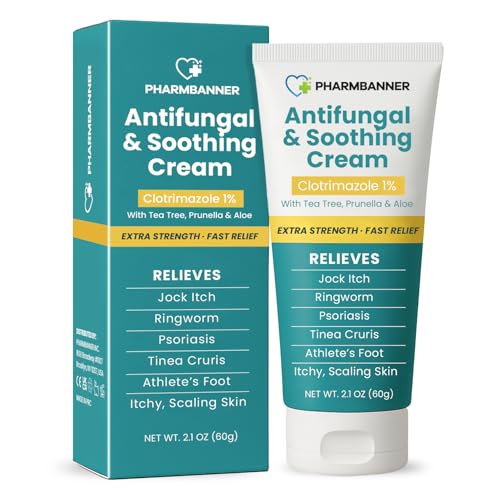
Desenex uses miconazole nitrate 2%, an azole antifungal with a broad spectrum of activity against the dermatophyte fungi responsible for ringworm. The cream formulation is slightly richer than Lotrimin's, which makes it more comfortable for dry or irritated skin around active infection sites. Miconazole also has mild antibacterial activity, which is useful in areas like the groin where secondary bacterial involvement can occur alongside fungal infections. The cream is fragrance-free and absorbs well. Apply twice daily for 2 to 4 weeks. It is a strong choice for tinea cruris (jock itch, which is the same fungal family as ringworm) and body ringworm treated simultaneously.
Tinactin Antifungal Cream - Best for Prevention and Mild Infections
Tinactin uses tolnaftate 1%, an older but reliable antifungal that is fungistatic (inhibits growth) rather than fungicidal. It is most effective for mild or early-stage ringworm and as a preventive treatment for people prone to recurrent fungal infections from sports, sweating, or shared facilities. It is gentler on the skin than terbinafine or azoles and has a long safety record. It requires the full treatment course - typically 4 weeks - and is best used when infections are caught early. For established ringworm with significant scale or spread, stepping up to terbinafine or clotrimazole will deliver faster results.
Clotrimazole + Betamethasone Cream - Best for Inflamed Ringworm (Prescription)
When ringworm is accompanied by significant inflammation, itching, and redness that makes the infection particularly uncomfortable, a prescription combination of clotrimazole and betamethasone (a corticosteroid) is sometimes prescribed. The antifungal clears the infection while the betamethasone rapidly reduces inflammation and itch. This combination should only be used short-term and strictly as directed - long-term steroid use can thin skin and paradoxically worsen fungal infections if the antifungal component is insufficient. It requires a doctor's prescription and should not be used on the face, groin, or underarms without specific guidance. It is included here for completeness as it is a common next step when OTC creams have been tried without success.
How to choose
What to consider
Terbinafine is the fastest-acting active ingredient for ringworm and is the best first choice for most people. Clotrimazole and miconazole are equally effective but require the full 2 to 4 week course. Tolnaftate is the mildest option and is better for prevention than active treatment. Apply to the affected area plus at least 1 cm of surrounding healthy skin - stopping at the visible edge of the rash misses the active fungal margins. Wash and dry the area thoroughly before each application, and wash hands after applying to prevent spreading.
The bottom line
Lamisil AT (terbinafine) is the top pick for anyone who wants the fastest possible clearance with the fewest total days of treatment. For a widely available, trusted general option, Lotrimin AF is the standard. Whichever you choose, complete the full treatment course even after the rash disappears - stopping early is the most common reason for recurrence. See a doctor if you see no improvement after 2 weeks of consis
Common questions
Most OTC antifungal creams clear ringworm within 2 to 4 weeks of consistent twice-daily application. Terbinafine-based creams tend to work fastest, often showing significant improvement within 1 to 2 weeks. Azole-based creams like clotrimazole typically take the full 2 to 4 weeks. Continue applying for at least 1 week after the visible infection clears to prevent recurrence.
No. Ringworm (tinea corporis) is caused by a fungus, not a worm. The name comes from the ring-shaped rash it creates on the skin. It is related to athlete's foot (tinea pedis) and jock itch (tinea cruris) - all caused by dermatophyte fungi. It is contagious through direct contact with infected skin, contaminated surfaces, or infected animals, particularly cats and dogs.
See a doctor if the infection covers a large area, does not improve after 2 weeks of consistent OTC antifungal use, spreads rapidly, appears on the scalp (tinea capitis, which requires oral treatment), or occurs in someone with a weakened immune system. Scalp ringworm in children always requires prescription oral antifungals as topical creams alone are ineffective for that location.
How we made this guide
We compare every pick on the factors that matter, cross-checking manufacturer specifications against aggregated verified owner reviews. We rank independently and never take payment for placement. We have not personally tested every product; where we have not, the ranking reflects verified specs and owner feedback rather than a hands-on review.
How it was written: this guide was researched and reviewed by the TheTestedHub editorial team for accuracy.
Affiliate disclosure: TheTestedHub is reader-supported. When you buy through links on our site, we may earn a commission at no extra cost to you.
More guides

What Works Best for Eczema? 2026 Top Creams Reviewed
Dry Skin Care in 2026: Ceramide-Rich Picks for Barrier Repair

Curl Setting Sprays for Frizz Control: Ouidad Leads

Curl Creams That Define Without the Weight
Chemical Exfoliants 2026: Honest Reviews & Picks
8 Cancer Treatment Skin Care Products That Truly Soothe

Vitamin C Serums Compared: A Brightening Shortlist