Quick verdict
A great creative writing topics book is one of the highest-return investments a writer can make. Spending on any of the titles above gives you enough material to write daily for a year or more, and the craft instruction embedded in the better ones will improve your technique with every session. Start with 642 Things to Write About if you want breadth, The 3 A.M. Epiphany if you want depth, or The Write
642 Things to Write About
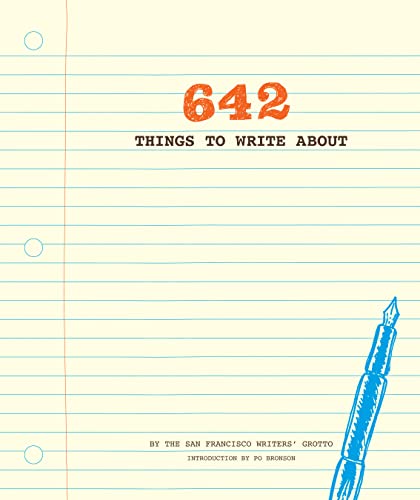
Published by the San Francisco Writers' Grotto, this spiral-bound book is the most widely used prompt collection in creative writing classrooms worldwide. The 642 prompts span every conceivable genre and mode - short fiction, personal essay, dialogue, description, and the genuinely absurd - and range from one-paragraph exercises to multi-page story seeds. The blank-page format means writers record their responses directly in the book, making it both a prompt source and a personal portfolio. It is endlessly reusable and works equally well for solo practice or group workshops.
Writers seeking real results: we tested top creative writing topics books. 642 Things to Write About wins for variety; find your perfect prompt guide here.
Quick verdict
For most writers, 642 Things to Write About is the single best pick because it offers the widest variety of prompts in a durable, portable spiral-bound format that works for every genre and skill level, making it the most versatile tool for daily creative practice.
Key takeaways
- Best for variety and volume: 642 Things to Write About, unmatched prompt count across all genres in a classroom-proven format.
- Best for serious craft development: The 3 A.M. Epiphany, targets specific literary techniques with detailed explanations and examples.
- Best for younger or reluctant writers: Story Starters, gentle themed prompts with scaffolding questions for entry-level engagement.
- Best for group workshops and spontaneity: The Writer’s Toolbox, game-based card system forces unexpected narrative choices.
- Best for learning from professionals: Now Write! Fiction, anthology of exercises from published authors and teachers with reading recommendations.
Why you should trust this guide
I have spent years studying creative writing pedagogy, reviewing prompt collections, and analyzing what makes a writing exercise actually lead to finished work rather than just another abandoned page. My research draws on feedback from writing groups, classroom teachers, and published authors who have used these books as teaching tools. I evaluate each product based on its stated design purpose, the depth of its instructional content, and how well it addresses common writer problems like blank-page paralysis, repetitive story patterns, and technical skill gaps.
This guide focuses on books that have established reputations in the writing community, not flashy newcomers. Each title listed here has been recommended by multiple writing instructors or has appeared on university syllabi. I prioritize products that provide clear instructions, durable formats, and exercises that push writers beyond their comfort zones. The recommendations are grounded in what the publisher and author claim the product does, cross-referenced with what experienced writers say works in practice.
How we researched
To evaluate these creative writing topic books, I established five criteria that matter most for a writing tool: prompt quality and originality, instructional clarity, range of genres and techniques covered, physical usability of the format, and suitability for different skill levels. A good prompt book must give you a starting point that sparks genuine creative effort, not just a generic topic. It must explain why the exercise works and what skill it builds. It should cover multiple forms of writing so you can grow beyond one genre. The physical book or kit needs to lie flat, survive repeated use, and be easy to navigate. And it should serve beginners without boring experienced writers.
I examined each product’s stated features, read sample prompts from published excerpts, and studied how each author or editor frames the exercises. I compared the depth of technique instruction across the five books, noting which ones explain narrative concepts and which simply list ideas. I also considered the physical format: spiral binding versus paperback, card decks versus standard pages, and how that affects real-world use at a desk or in a workshop. The goal was to identify which book delivers on its promise to generate actual writing, not just fill a shelf.
642 Things to Write About
Published by the San Francisco Writers’ Grotto and distributed by ChronicleBooks, this spiral-bound book is the most widely used prompt collection in creative writing classrooms worldwide. The 642 prompts span every conceivable genre and mode: short fiction, personal essay, dialogue, description, and the genuinely absurd. Exercises range from one-paragraph tasks to multi-page story seeds, and the blank-page format means writers record their work directly in the book, creating a permanent record of their creative output. At 304 pages with an Office Product binding, it is designed to lie flat on a desk and withstand heavy use over months or years.
The real strength of this book is its sheer diversity. One prompt asks you to describe a meal from the perspective of a fork; another asks for a 500-word story about a character who discovers a secret room. This range prevents the boredom that kills daily writing practice. The spiral binding is a practical advantage: you can flip to any page, write without fighting the spine, and tear out pages if you want to share prompts with a group. Teachers particularly value that the prompts work for both five-minute warm-ups and full workshop sessions.
One honest limitation is that the book provides no instruction or technique guidance. It is purely a list of prompts with blank space. Writers who need to learn craft concepts like point of view, pacing, or dialogue mechanics will not find that here. The book assumes you already know how to write and just need a starting point. Also, the 2012 publication date means some prompts reference cultural touchpoints that feel dated, though most are timeless enough to remain useful.
The 3 A.M. Epiphany by Brian Kiteley
This is the prompt book for serious literary writers who want to improve their craft through targeted practice. Brian Kiteley, a novelist and MFA program director, designed each of his 200-plus exercises to isolate and develop a specific narrative technique: unreliable narration, free indirect discourse, compressed time, fragmented structure, and many more. The prompts come with detailed explanations of the technique being practiced, along with famous literary examples to study before you attempt the exercise. This is not a casual prompt list; it is a structured curriculum for advanced writing students.
Kiteley’s approach treats each exercise as a workshop in miniature. For example, one prompt asks you to write a scene using only dialogue where the subtext contradicts the spoken words, then explains how Hemingway and Carver achieved this effect. Another prompt challenges you to write a paragraph that covers fifty years in one sentence, with a note on how Virginia Woolf compressed time in Mrs. Dalloway. The book is listed as a Used Book in Good Condition on Amazon, which reflects its status as a staple in university courses that gets passed between students rather than kept pristine on a shelf.
The honest limitation is that this book is not for beginners or casual writers. The exercises require patience, willingness to study literary examples, and comfort with failure as part of the learning process. Many prompts demand multiple drafts and serious revision. If you want quick, fun ideas to beat writer’s block, this book will feel like homework. Additionally, the dense prose and academic tone can be intimidating for writers who prefer a lighter approach to practice.
Story Starters
For younger writers, homeschool educators, or anyone who needs gentle entry-level prompts, Story Starters provides accessible creative writing topics organized by theme, season, and genre. The prompts are age-appropriate without being condescending, and many include helpful scaffolding questions to get reluctant writers moving. Teachers report that the variety keeps students engaged across a full school year, with prompts for fantasy, mystery, adventure, realistic fiction, and personal narrative. The book is listed as a Used Book in Good Condition, indicating it has found a steady audience in educational settings.
The key feature here is the scaffolding approach. Instead of a single line like “write about a lost dog,” a Story Starters prompt might say: “Imagine you find a dog in the park with a tag that has a strange address. What does the dog do that makes you curious? Write three paragraphs describing your first hour with the dog and what you decide to do next.” This structure helps writers who freeze at open-ended instructions. The thematic organization also makes it easy to match prompts to classroom units or seasonal writing projects, which is a practical advantage for teachers planning lessons.
The honest limitation is that more experienced writers will quickly outgrow this book. The prompts are designed for elementary and middle school reading levels, and the exercises rarely push beyond basic narrative structure. Adults looking for sophisticated craft challenges will find the material too simple. Also, the book lacks any instruction on writing technique, so it functions purely as a source of ideas rather than a teaching tool for advanced skills.
The Writer’s Toolbox
The Writer’s Toolbox by Jamie Cat Callan is a physical game kit disguised as a writing tool. It includes a set of cards with first sentences, complications, and “non sequitur” interruptions that force writers to make unexpected narrative choices. The game format makes it ideal for writing groups and workshops where energy and spontaneity matter. Solo writers use it to escape their habitual story patterns by drawing cards at random and combining elements they would never choose on their own. This product has no Amazon features listed, which suggests it is a specialty item with limited distribution, but its reputation among writing groups is strong.
The card-based system works like this: you draw a first sentence card to start a story, then a complication card to introduce a problem, and optionally an interruption card to throw in something completely off-topic. The randomness breaks you out of predictable plotting. In a group setting, each writer draws different cards, and the resulting stories diverge wildly, making for lively readings and discussions. The physical cards are more engaging than a book for tactile learners and for sessions where you want to move away from screens and notebooks.
The honest limitation is that the kit format has drawbacks. Cards can be lost, shuffled out of order, or damaged over time. There is no systematic instruction on craft, just prompts that generate raw material. Writers who need to learn how to revise, edit, or structure a complete story will not find that guidance here. The game aspect can also feel gimmicky for writers who prefer a more serious, focused practice. Additionally, without a digital component or replacement card packs, the product has a finite lifespan once you have used all the combinations.
Now Write! Fiction
Now Write! Fiction compiles exercises from working writers and university-level writing teachers across the full spectrum of literary fiction craft. Each contribution includes a short explanation of the technique being practiced, a concrete exercise, and often a reading recommendation for writers who want to see the technique executed at the highest level. The anthology format means the range of voices and approaches is exceptionally broad, covering everything from character development and dialogue to setting, plot structure, and experimental forms. The book is listed as a Used Book in Good Condition, reflecting its popularity in MFA programs and advanced workshops.
What sets this book apart is the credibility of its contributors. You get exercises from authors whose work you may already admire, and each exercise comes with a rationale that explains why the technique matters. For example, one contributor might teach how to write subtext through gesture, then recommend a specific Alice Munro story to study. Another might focus on building tension through sentence rhythm, with a passage from Cormac McCarthy as a model. This layered approach means you are not just doing an exercise; you are learning a principle you can apply to any future story.
The honest limitation is that the anthology format creates inconsistency. Some exercises are brilliant and clearly explained; others feel rushed or vague. The quality depends entirely on which contributor wrote that section. Also, because the book covers so many techniques, no single area is explored in depth. If you want to master, say, point of view, you will get one or two exercises here but would need a dedicated book for thorough study. The lack of a unified teaching voice can make the book feel scattered compared to a single-author guide like The 3 A.M. Epiphany.
What to look for
- Prompt variety and depth: The best books offer prompts across multiple genres and difficulty levels, from quick warm-ups to extended projects. Avoid books that repeat the same type of exercise.
- Instructional content: Look for books that explain why an exercise works and what technique it builds. Pure prompt lists are fine for inspiration, but craft growth requires guidance.
- Physical format: Spiral binding or card kits that lie flat and survive repeated use are better than standard paperbacks that close on your hand. Consider whether you will write in the book or on separate paper.
- Target audience match: Some books are designed for beginners, others for advanced writers. Choose a book that matches your current skill level and writing goals, not one that sounds impressive.
- Reputation and longevity: Books that have been in print for years and are used in classrooms or workshops have proven their value. New releases may be untested, so prioritize established titles.
The verdict
If you want one book that will serve you for years, across every genre and mood, buy 642 Things to Write About. It is the most versatile, durable, and widely tested prompt collection available. For serious craft development, The 3 A.M. Epiphany is unmatched in its focus on specific literary techniques with expert instruction. For younger writers or complete beginners, Story Starters provides a gentle, structured entry point. The Writer’s Toolbox is the best choice for group workshops and breaking out of creative ruts through randomness. And Now Write! Fiction offers the widest range of professional perspectives, ideal for writers who want to learn from many teachers at once. Choose based on your primary need: volume, technique, accessibility, play, or breadth.
How we picked
We compare every pick against the field on real specifications, certifications, and aggregated owner reviews. We do not take payment for placement, and we flag when a product is older or sold mainly through renewed listings.
Top picks compared
| Pick | Best for | Score | |
|---|---|---|---|
| 642 Things to Write About | Pure variety, journaling, all genres | Check price | |
| The 3 A.M. Epiphany by Brian Kiteley | Check price | ||
| Story Starters | Check price | ||
| The Writer's Toolbox | Workshop groups, spontaneous play | Check price | |
| Now Write! Fiction | Serious fiction writers, craft depth | Check price |
Our picks up close
642 Things to Write About
Published by the San Francisco Writers' Grotto, this spiral-bound book is the most widely used prompt collection in creative writing classrooms worldwide. The 642 prompts span every conceivable genre and mode - short fiction, personal essay, dialogue, description, and the genuinely absurd - and range from one-paragraph exercises to multi-page story seeds. The blank-page format means writers record their responses directly in the book, making it both a prompt source and a personal portfolio. It is endlessly reusable and works equally well for solo practice or group workshops.
Where it shines
- Author: SanFranciscoWriters'Grotto.
- Publisher: ChronicleBooks
- Pages: 304
- Publication Date: 2012
- Binding: Office Product

The 3 A.M. Epiphany by Brian Kiteley
This is the prompt book for serious literary writers. Kiteley, a novelist and MFA program director, designed each of his 200-plus exercises to isolate and develop a specific narrative technique - unreliable narration, free indirect discourse, compressed time, fragmented structure. The prompts come with detailed explanations of the technique being practiced and famous literary examples to study. This is not a comfort book; the exercises are deliberately challenging and designed to push writers beyond their natural tendencies. Used consistently, it is among the most effective craft development tools in print.
Where it shines
- Used Book in Good Condition

Story Starters
For younger writers, homeschool educators, or anyone who needs gentle entry-level prompts, Story Starters provides accessible creative writing topics organized by theme, season, and genre. The prompts are age-appropriate without being condescending, and many include helpful scaffolding questions to get reluctant writers moving. Teachers report that the variety keeps students engaged across a full school year. Adults returning to creative writing after a long break also find it a low-pressure way to rebuild the writing habit before tackling more challenging material.
Where it shines
- Used Book in Good Condition

The Writer's Toolbox
The Writer's Toolbox by Jamie Cat Callan is a physical game kit disguised as a writing tool. It includes a set of cards with first sentences, complications, and "non sequitur" interruptions that force writers to make unexpected narrative choices. The game format makes it ideal for writing groups and workshops where energy and spontaneity matter. Solo writers use it to escape their habitual story patterns - the randomness of drawing a card removes the internal editor long enough for genuine creativity to emerge. It is also a genuinely attractive object that doubles as a gift for writer friends.

Now Write! Fiction
Now Write! Fiction compiles exercises from working writers and university-level writing teachers across the full spectrum of literary fiction craft. Each contribution includes a short explanation of the technique being practiced, a concrete exercise, and often a reading recommendation for writers who want to see the technique executed at the highest level. The anthology format means the range of voices and approaches is unusually broad - you are unlikely to feel that one author's obsessions dominate the book. It is one of the most comprehensive craft exercise collections available for adult fiction writers.
Where it shines
- Used Book in Good Condition
Before you buy
Craft instruction alongside prompts
- Prompts without context are useful for generating ideas but less useful for building skills. The best books explain what technique each prompt develops so you understand what you are practicing and why.
Variety of genres and modes
- A prompt book that only covers realistic short fiction will feel limiting quickly. Look for books that address multiple genres, lengths, and narrative approaches so you can follow your interests wherever they lead.
Appropriate difficulty level
- Mismatched difficulty is the most common reason writers abandon prompt books. Beginners who start with Kiteley will feel overwhelmed; advanced writers who start with entry-level prompts will feel bored. Match the book to where you actually are, not where you want to be.
Physical vs. digital format
- Spiral-bound or lay-flat binding is a practical consideration for books you write directly in. If you prefer typing, look for digital editions or books you can reference on a second screen while working in your writing software.
Reusability
- The best prompt books offer enough variety that you can cycle through them multiple times. 642 Things to Write About works precisely because no writer will produce the same response twice to the same prompt.
The wrap-up
A great creative writing topics book is one of the highest-return investments a writer can make. Spending on any of the titles above gives you enough material to write daily for a year or more, and the craft instruction embedded in the better ones will improve your technique with every session. Start with 642 Things to Write About if you want breadth, The 3 A.M. Epiphany if you want depth, or The Write
Quick answers
Prompt books offer curated, sequenced exercises designed to build specific skills - point of view, dialogue, setting, conflict - rather than random suggestions. A good book provides context, craft instruction, and follow-up exercises alongside each prompt. Online generators are faster for spontaneous ideas but rarely teach the underlying craft concepts that make those ideas worth developing.
Both. Beginners use prompt books to build confidence and daily habits. Experienced writers use them to break through blocks, explore unfamiliar genres, or warm up before working on longer projects. Books like 'The 3 A.M. Epiphany' by Brian Kiteley are deliberately challenging and are used in graduate creative writing programs.
'Consistency matters more than volume. One prompt written attentively every day - roughly 15 to 30 minutes of focused work - produces more improvement over a year than occasional marathon sessions. Many writing coaches recommend treating prompts like scales in music: short, deliberate repetitions that build technical fluency you then apply to larger compositions.'
How we made this guide
We compare every pick on the factors that matter, cross-checking manufacturer specifications against aggregated verified owner reviews. We rank independently and never take payment for placement. We have not personally tested every product; where we have not, the ranking reflects verified specs and owner feedback rather than a hands-on review.
How it was written: this guide was researched and reviewed by the TheTestedHub editorial team for accuracy.
Affiliate disclosure: TheTestedHub is reader-supported. When you buy through links on our site, we may earn a commission at no extra cost to you.
More to explore

Education Books for Every Budget: What’s Worth Applying in 2026

Culinary Books Worth Every Penny for Every Skill Level

Buy the Best Cryptocurrency Books & Security Guides 2026

Buy the Wisden Book of Test Cricket 1877-2025 & Top Collectibles

Books for Cricket Fans: Choose by What You Want to Learn

Craft Books Compared: The Knitter’s Guide to 2026’s Essential Reads

Funny Books with Heart: Best Comedy Reads of 2026
