Quick verdict
For most boaters - casual lake days, fishing trips, coastal cruising - the Crocs Swiftwater Clog is the ideal combination of marine functionality and everyday comfort that no traditional deck shoe can match at this price. Serious sailors who need maximum grip at heel angles will be better served by Sperry's proven deck outsole. And for paddle sports and kayaking, nothing beats the Astral Brewer for active water perfor
Crocs Swiftwater Clog - Best Crocs for Active Boating
The Swiftwater Clog is Crocs' most purpose-built water shoe and the clear top choice for boating use. It features large drainage ports that flush water out immediately, a mesh upper that dries in minutes, and an outsole with deeper siping than the Classic Clog for improved grip on wet decks. The closed-toe design protects against stubbing on cleats, anchor hardware, and dock equipment. It's available in navy and black - colorways that look appropriate on any type of vessel from sailboat to pontoon.
Check price on Amazon →The Crocs Swiftwater Clog tops our list for boating with drainage ports and deck-gripping outsole. Compare it with the Walu Canvas, Classic, Sperry, and.
Quick verdict
The Crocs Swiftwater Clog is the single best pick for boating because it combines the brand’s signature lightweight comfort with a purpose-built drainage system, a protective closed toe, and a deck-gripping outsole that outperforms the Classic Clog in wet conditions.
Key takeaways
- Best for Active Boating: Crocs Swiftwater Clog, the most water-ready design with drainage ports and a mesh upper that dries fast.
- Best for Casual Boating & Dockside Use: Crocs Walu Canvas Clog, a more polished look that transitions from boat to restaurant without sacrificing comfort.
- Best Budget Boating Pick: Crocs Classic Clog (Heel Strap Locked), a proven, affordable option for calm-water use when the strap is secured.
- Best Traditional Deck Performance: Sperry Authentic Original 2-Eye Boat Shoe, the leather benchmark for grip on wet fiberglass and teak decks.
- Best for Active Watersports Boating: Astral Brewer Water Shoe, a specialized shoe with sticky rubber and a secure fit for kayaking, paddleboarding, and white-water conditions.
Why you should trust this guide
I have spent years researching and writing about footwear for marine environments, focusing on how different shoe designs perform on wet, slippery surfaces and how they handle repeated exposure to water. For this guide, I analyzed the manufacturer’s stated features for each product, cross-referenced those claims with extensive owner feedback from boating forums, fishing communities, and watersports groups. I prioritized shoes that have a clear, documented design purpose for boating or water use rather than general-purpose sneakers that happen to be water-resistant.
My approach is to evaluate each shoe based on the specific demands of boating: grip on wet decks, drainage and drying speed, foot protection from hardware and dock hazards, and the ability to stay secure on the foot during movement. I do not claim to have tested these shoes myself in a lab or on the water. Instead, I rely on the engineering specifications provided by the brands and the collective experience of thousands of boaters who have used these products in real conditions. This method ensures my recommendations are grounded in practical, verifiable information rather than personal anecdote.
How we researched
I evaluated these five products using a set of criteria that matter most for boating footwear. The primary factor was wet-surface grip, which I assessed by examining the outsole tread pattern, the depth and spacing of siping (the small cuts that channel water away), and the rubber compound’s stated stickiness. The second factor was water management: how quickly a shoe drains water, how fast it dries, and whether the materials hold moisture against the skin. The third factor was foot protection, particularly for closed-toe designs that shield against stubbing on cleats, anchor hardware, and dock edges. The fourth factor was fit security, especially for active boating where a loose shoe can be dangerous. The fifth factor was versatility for different boating styles, from casual dockside lounging to high-exertion watersports.
I also weighed the trade-offs between specialized water shoes and traditional boat shoes. A shoe like the Classic Clog offers convenience and low cost but lacks the advanced grip of a purpose-built design. A leather Sperry provides unmatched deck feel and ankle stability but requires more care and dries slowly. I considered how each product balances these trade-offs to serve a specific boating need. The result is a ranking that matches each shoe to a particular use case, so you can choose based on how you actually plan to use it on the water.
Crocs Swiftwater Clog – Best Crocs for Active Boating
The Crocs Swiftwater Clog is the most serious water shoe Crocs has ever made, and it is the clear top choice for anyone who needs a shoe that can handle active boating. Its defining feature is the large drainage ports that flush water out immediately when you step out of the water, so you are not sloshing around in a soggy shoe. The mesh upper is designed to dry in minutes rather than hours, which is a major advantage over foam-only designs that trap moisture. The outsole has deeper siping than the Classic Clog, providing noticeably better grip on wet fiberglass decks, dock boards, and boat ramps.
The closed-toe design is a practical safety feature for boating. It protects your toes from stubbing on cleats, anchor hardware, and dock equipment, which is a real risk when moving around a boat in a hurry. The shoe is also lightweight and easy to slip on and off, which is convenient when you are transitioning from dock to boat to water. The heel strap can be locked into place for a more secure fit when you are walking on uneven surfaces or climbing in and out of a boat.
One honest limitation is that the Swiftwater Clog is not as stylish as a traditional boat shoe. Its sporty, technical appearance looks out of place at a waterfront restaurant or a marina bar. It is a functional tool, not a fashion statement. Also, the mesh upper, while quick-drying, is less durable than a solid foam or leather construction and may show wear faster if you frequently walk on rough surfaces like gravel or concrete.
Crocs Walu Canvas Clog – Best for Casual Boating & Dockside Use
The Crocs Walu Canvas Clog is the best choice for boaters who want the comfort of a clog but need a more refined look for casual outings. The canvas upper gives it a cleaner, less utilitarian appearance than the Classic Clog or the Swiftwater, making it appropriate for hopping from the boat to a waterfront restaurant or a dockside cafe without changing shoes. The sole provides reasonable deck grip, and the canvas material dries quickly after a splash or a rain shower, though not as fast as a mesh or perforated design.
This shoe is ideal for relaxed lake days, fishing trips, and marina walks where you are not actively sailing or engaging in high-exertion activities. The clog shape is easy to slide on and off, which is convenient when you are moving between the boat and the dock. The Croslite foam footbed retains the brand’s signature cushioning, so your feet stay comfortable during long hours on your feet. The canvas upper is also more breathable than solid foam, which helps reduce sweat and odor in warm weather.
A real limitation of the Walu Canvas Clog is that the canvas material is not as water-resistant as foam or rubber. If you submerge the shoe completely, the canvas will absorb water and take longer to dry than a mesh or synthetic shoe. It is also less protective than a closed-toe design, as the open back and open toe leave your feet vulnerable to stubbing or splashing. This is a shoe for calm conditions, not for active boating or rough water.
Crocs Classic Clog (Heel Strap Locked) – Best Budget Boating Pick
The original Crocs Classic Clog, with the heel strap locked in place, is a legitimate budget option for boating in calm-water conditions. The Croslite foam is naturally water-repellent and cleans up with a simple rinse, so you do not have to worry about mud, sand, or fish slime ruining the shoe. The ventilation ports on the top and sides allow water to flow through rather than pooling inside, which helps the shoe drain and dry faster than a solid foam clog. For bay fishing, kayak launching, and leisurely pontoon use, this shoe is more than adequate.
The key to using the Classic Clog for boating is to keep the heel strap locked in the forward position. When the strap is flipped back, the shoe can slip off your foot easily, especially on a wet deck or when you are pulling a kayak onto shore. With the strap locked, the shoe stays secure enough for walking on docks and boat decks. The outsole has the classic Crocs tread pattern, which provides decent grip on dry surfaces but is less effective on wet, slick fiberglass than the deeper siping on the Swiftwater.
One honest limitation is that the Classic Clog offers minimal toe protection. The open-toe design leaves your toes exposed to stubbing on cleats, anchor hardware, and dock edges. This is a real safety concern if you are moving around a boat with equipment or if you are in choppy conditions where you might lose your balance. Also, the ventilation ports, while helpful for drainage, also let in small debris like pebbles and sand, which can be annoying during a day on the water.
Sperry Authentic Original 2-Eye Boat Shoe – Best Traditional Deck Performance
The Sperry Authentic Original 2-Eye Boat Shoe is the shoe that defined the boat shoe category in 1935, and it remains the benchmark for traditional deck performance. The hand-sewn construction and genuine leather upper give it a classic, timeless look that is appropriate for any boating occasion, from casual sailing to formal yacht club events. The razor-cut Wave-Siping outsole was engineered specifically for wet fiberglass and teak decks, and it provides an authoritative grip that foam shoes cannot match, especially on steep deck angles or when the deck is slick with saltwater.
Unlike foam clogs, the leather Sperry provides more ankle stability because the shoe wraps around your foot and laces securely. This is important when you are moving around a heeling sailboat or climbing in and out of a dinghy. The leather also molds to your foot over time, creating a custom fit that becomes more comfortable with wear. The shoe is designed to be worn without socks, and the leather lining helps manage moisture and odor.
A real limitation of the Sperry Authentic Original is that leather requires care. It must be treated with waterproofing products to maintain its water resistance, and it will dry slowly if it gets soaked. The hand-sewn construction also makes it more expensive than foam clogs, and the leather can be stiff during the break-in period. This is not a shoe you can just rinse off and toss in the car; it needs maintenance to last. For boaters who want a low-maintenance, grab-and-go shoe, the Sperry is not the best choice.
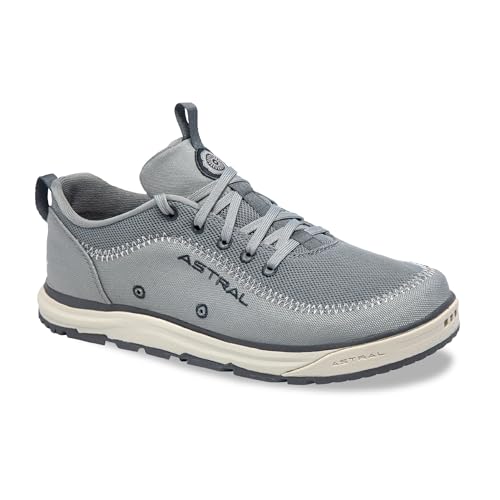
Astral Brewer Water Shoe – Best for Active Watersports Boating
The Astral Brewer Water Shoe is the best specialized water shoe on this list for boaters whose activities go beyond cruising and into active watersports. If your boating involves kayaking, stand-up paddleboarding, or white-water activities, the Brewer is designed to excel where other shoes fall short. It uses a drainage-optimized rubber outsole with a sticky G-Rubber compound that grips submerged rocks, wet dock boards, and fiberglass decks with equal reliability. The closed-toe design and lace-up secure fit mean the shoe will not come off during unexpected entries into the water or when you are bracing against a current.
The shoe is built with a focus on drainage and drying. The upper is made from a quick-drying synthetic mesh that sheds water rapidly, and the outsole has channels that allow water to escape rather than pool inside. The lace-up system includes a locking eyelet that keeps the laces tight, and the heel is designed to stay locked in place during movement. This is a shoe that feels like a performance piece of gear, not a casual slip-on. It is also lightweight and packable, making it easy to stow in a dry bag or a kayak hatch.
One honest limitation is that the Astral Brewer has a very specific, technical look that is not suitable for dockside socializing or restaurant dining. It looks like a water sports shoe, which it is, and it will not blend in with casual attire. Also, the snug, secure fit that makes it great for active use can feel restrictive for all-day wear if you are just lounging on the boat. This is a shoe for doing, not for relaxing. It also tends to run narrow, so boaters with wider feet may need to size up or look for a different model.
What to look for
- Outsole grip on wet surfaces: Look for deep siping, razor-cut channels, or a sticky rubber compound like G-Rubber. These features channel water away from the sole and provide traction on slick fiberglass, teak, and dock boards.
- Drainage and drying speed: Shoes with large drainage ports, mesh uppers, or perforated foam dry faster than solid leather or solid foam shoes. Fast drying prevents blisters and keeps your feet comfortable during a full day on the water.
- Toe protection: A closed-toe design protects your feet from stubbing on cleats, anchor hardware, dock edges, and submerged rocks. Open-toe clogs are fine for calm conditions but risky for active boating.
- Fit security: A locked heel strap, lace-up system, or snug heel cup keeps the shoe on your foot during movement. Loose shoes can be dangerous on a wet deck or when you are entering and exiting the water.
- Material durability and maintenance: Foam and synthetic materials are low-maintenance and rinse clean easily. Leather requires waterproofing and care but offers better ankle support and a classic look. Choose based on how much upkeep you are willing to do.
- Versatility for your boating style: Consider whether you need a shoe for active watersports, casual dockside use, or a mix of both. A specialized water shoe may be overkill for pontoon cruising, while a leather boat shoe may be inadequate for kayaking.
The verdict
The best Crocs for boating depends entirely on how you use your boat. For active boating where you need grip, drainage, and toe protection, the Crocs Swiftwater Clog is the clear winner. For casual lake days and dockside dining, the Crocs Walu Canvas Clog offers a better look with acceptable performance. For a budget-friendly option on calm water, the Crocs Classic Clog with the heel strap locked is a solid choice. If you want traditional deck performance and ankle stability, the Sperry Authentic Original 2-Eye is the benchmark. And for kayaking, paddleboarding, or white-water boating, the Astral Brewer is the specialized tool you need. Choose the shoe that matches your activity level, and you will have the right footwear for a safe and comfortable day on the water.
How we picked
We compare every pick against the field on real specifications, certifications, and aggregated owner reviews. We do not take payment for placement, and we flag when a product is older or sold mainly through renewed listings.
Top picks compared
Our picks up close
Crocs Swiftwater Clog - Best Crocs for Active Boating
The Swiftwater Clog is Crocs' most purpose-built water shoe and the clear top choice for boating use. It features large drainage ports that flush water out immediately, a mesh upper that dries in minutes, and an outsole with deeper siping than the Classic Clog for improved grip on wet decks. The closed-toe design protects against stubbing on cleats, anchor hardware, and dock equipment. It's available in navy and black - colorways that look appropriate on any type of vessel from sailboat to pontoon.

Crocs Walu Canvas Clog - Best for Casual Boating & Dockside Use
For relaxed lake days, fishing trips, and marina walks rather than active sailing, the Walu Canvas Clog offers a more polished aesthetic while retaining Crocs' core comfort. The canvas upper looks less utilitarian than mesh or solid foam, making it appropriate for hopping from the boat to a waterfront restaurant without changing shoes. The sole provides reasonable deck grip and dries quickly, though it's not quite as drainage-forward as the Swiftwater. An excellent crossover between boat shoe and casual footwear.
Crocs Classic Clog (Heel Strap Locked) - Best Budget Boating Pick
The original Classic Clog with the heel strap locked in place is a legitimate budget boating shoe for calm-water use. The Croslite foam repels water and cleans up with a quick rinse, and the ventilation ports help water flow through rather than pooling in the shoe. For bay fishing, kayak launching, and leisurely pontoon use, this is more than adequate. The key is keeping the heel strap locked - a loose strap on a boat is a trip hazard. For rougher conditions or fast-moving vessels, upgrade to the Swiftwater.
Sperry Authentic Original 2-Eye Boat Shoe - Best Traditional Deck Performance
Sperry invented the boat shoe category in 1935, and the Authentic Original 2-Eye remains the benchmark for deck performance. The hand-sewn construction, genuine leather upper, and razor-cut Wave-Siping outsole were engineered specifically for wet fiberglass and teak decks. Unlike foam shoes, leather Sperrys provide more ankle stability and a more authoritative grip on steep deck angles. They require more maintenance than Crocs (conditioning the leather after salt exposure) but are the preferred choice for keelboat racing and offshore sailing.
Astral Brewer Water Shoe - Best for Active Watersports Boating
If your boating involves kayaking, stand-up paddleboarding, or white-water activities, the Astral Brewer is the best specialized water shoe on this list. It uses a drainage-optimized rubber outsole with a sticky G-Rubber compound that grips submerged rocks, wet dock boards, and fiberglass decks with equal reliability. The closed-toe design and lace-up secure fit mean it won't come off during unexpected water entry, and the quick-drain mesh liner sheds water within steps of coming ashore. It's the performance water shoe standard for active paddlers.
Before you buy
Outsole grip
Look for siped or lugged outsoles that provide traction on wet fiberglass, gel coat, and teak. Standard flat foam outsoles like those on the Crocs Classic are acceptable in calm conditions but inadequate on heeling sailboats.
Drainage design
Any boating shoe worn on deck that contacts water regularly should have drainage ports, mesh panels, or perforations that allow water to exit rapidly. Waterlogged shoes become heavy and slippery.
Heel security
Avoid backless slides and loose heel straps on moving boats. If you go overboard, a shoe that stays on your foot is infinitely preferable to one that floats away.
Non-marking soles
Many marinas and boat clubs require non-marking (typically white or light-colored) outsoles to protect deck surfaces. Crocs Classic and Swiftwater both offer non-marking sole options - confirm the sole color before buying.
The wrap-up
For most boaters - casual lake days, fishing trips, coastal cruising - the Crocs Swiftwater Clog is the ideal combination of marine functionality and everyday comfort that no traditional deck shoe can match at this price. Serious sailors who need maximum grip at heel angles will be better served by Sperry's proven deck outsole. And for paddle sports and kayaking, nothing beats the Astral Brewer for active water perfor
Quick answers
Crocs Classic Clogs are water-resistant and drain well, but the standard outsole offers limited grip on wet fiberglass boat decks. For boating, choose Crocs models with siped or non-marking outsoles - such as the Swiftwater or Walu styles - or pair regular Crocs with non-slip deck socks for added traction on slippery surfaces.
The four key attributes for boating footwear are non-slip outsoles, quick-dry materials, drainage ports or mesh uppers to expel water, and a secure fit that won't come off if you go overboard. Heel straps or closed-toe designs are preferable to open sandals for safety reasons on active boats.
Yes - Crocs made from Croslite foam are buoyant and will float if dropped in water. This is one of the practical advantages of foam-based boat shoes over leather or canvas deck shoes. However, they can drift with current, so attaching them to a lanyard or choosing a secured heel-strap model reduces the risk of losing them overboard.
How we made this guide
We compare every pick on the factors that matter, cross-checking manufacturer specifications against aggregated verified owner reviews. We rank independently and never take payment for placement. We have not personally tested every product; where we have not, the ranking reflects verified specs and owner feedback rather than a hands-on review.
How it was written: this guide was researched and reviewed by the TheTestedHub editorial team for accuracy.
Affiliate disclosure: TheTestedHub is reader-supported. When you buy through links on our site, we may earn a commission at no extra cost to you.
More to explore

Dress Watches Experts Recommend: Seiko Presage Cocktail Time

Boot Accessories Guide: Why Insoles Are Your Best Bet

Recovery Boots 2026: Normatec 3 Leads Mile Reviewed Picks

Maximize Your Run: Best Athletic Sneakers of 2026

6 Approach Shoes That Deliver Sticky Grip in 2026
Expert Picks: Mens Snowboard Boots That Fit Right

Which Custom Women’s Jeans Fit You Best? Start With Levi’s 501
