Quick verdict
For beginners, start with a Darice set for size variety or a Clover hoop for a quality single hoop. Once you develop your stitching routine, upgrade to Nurge beechwood for premium wood grip or Morgan No-Slip for the fastest, most consistent fabric tension available. Elbesee covers the middle ground perfectly for daily stitchers who want reliability without the premium price. The right hoop is the foundation of enjoya
Nurge Beechwood Embroidery Hoop - Best Premium Wood Hoop
Nurge produces some of the finest wooden embroidery hoops available, crafted from smooth European beechwood with a precision-machined brass screw mechanism. The wood is sanded to a fine finish that won't snag thread or fabric, and the screw closes evenly without twisting the inner ring out of round. Nurge hoops hold their tension exceptionally well during long stitching sessions, and the warm wood aesthetic makes them as attractive to display as they are functional to use. Available in sizes from 3 to 12 inches, with both standard depth and deep-lip (extra grip) options.
Check price on Amazon →Start cross stitching with the right hoop. For beginners, a Darice set offers variety while Clover gives quality. Upgrade to Nurge beechwood for premium grip or Morgan No-Slip for fast, consistent tension.
Quick verdict
The Nurge Beechwood Embroidery Hoop is the single best pick for most cross-stitchers because its precision-machined brass screw and smooth European beechwood hold tension evenly through long sessions without snagging thread or fabric.
Key takeaways
- Best premium wood hoop: Nurge Beechwood Embroidery Hoop, crafted from smooth European beechwood with a precision-machined brass screw that closes evenly.
- Best lightweight daily hoop: Elbesee Plastic Embroidery Hoop, a trusted British needlework brand with smooth injection-molded plastic that grips fabric firmly.
- Best budget starter set: Darice Plastic Embroidery Hoop, multi-pack sets offering excellent value for beginners building their first kit.
- Best beginner hoop with fine adjustment: Clover Embroidery Hoop, Japanese precision tool with fine tension adjustment ideal for lighter fabrics like evenweave and linen.
- Best grip without a screw: Morgan No-Slip Hoop, patented snap-grip design that locks evenly around the fabric without a traditional screw mechanism.
Why you should trust this guide
I have spent years researching needlework tools and reading owner feedback across multiple stitching communities. Cross-stitch hoops and frames are the foundation of any embroidery project, and a poor hoop can ruin fabric tension, cause hand fatigue, or even damage delicate threads. My goal is to help you choose a hoop that matches your stitching style, project size, and budget without relying on marketing hype or unverified claims.
This guide focuses on five products that represent the best options across different needs: premium wood, lightweight plastic, budget multi-packs, precision adjustment, and no-screw designs. I evaluated each product based on the manufacturer’s stated features, the materials used, the mechanism design, and the consensus from experienced stitchers. I do not claim to have personally used every product, but I have cross-referenced the specifications and common owner observations to give you a reliable, honest assessment of what each hoop offers and where it falls short.
How we researched
To evaluate these hoops, I established a set of criteria that matter most to cross-stitchers: tension retention, fabric grip without distortion, ease of adjusting tension, material smoothness, and durability under repeated use. A good hoop must hold fabric taut evenly around the entire circumference, not just at the screw point. The inner ring must not twist or warp when tightened, and the outer ring should not leave permanent crease marks or snag threads. The screw mechanism or closure system must be reliable and easy to operate with one hand while the other holds the fabric.
I compared each product against these criteria using the manufacturer’s published specifications and the collective experience of stitchers who have used these hoops for years. I looked for consistent patterns in feedback: which hoops maintain tension for hours without needing retightening, which materials cause the least friction on thread, and which designs are most forgiving for beginners. I also considered the practical realities of ownership, such as how easily a hoop can be rehooped mid-project and whether the material or mechanism is prone to breaking or wearing out over time. This approach gives you a balanced view of each product’s strengths and honest limitations.
Nurge Beechwood Embroidery Hoop – Best Premium Wood Hoop
Nurge produces some of the finest wooden embroidery hoops available, crafted from smooth European beechwood with a precision-machined brass screw mechanism. The wood is sanded to a fine finish that will not snag thread or fabric, and the screw closes evenly without twisting the inner ring out of round. This is a critical advantage over cheaper wooden hoops where the inner ring can become oval-shaped after tightening, causing uneven tension and fabric distortion. Nurge hoops hold their tension exceptionally well during long stitching sessions, and the warm wood feels comfortable in the hand for extended periods.
The brass screw is a standout feature. Unlike plastic screws that can strip or metal screws that can rust, the precision-machined brass turns smoothly and provides consistent clamping force. The outer ring is thick enough to provide a solid grip but not so thick that it becomes cumbersome. Many stitchers report that a Nurge hoop can be left on a project for days without the fabric loosening, which is a testament to the quality of the wood and the screw design. The beechwood is also naturally resistant to warping, so the hoop maintains its round shape over years of use.
One honest limitation is that Nurge hoops are heavier than plastic alternatives, which can cause hand fatigue during very long stitching sessions if you hold the hoop rather than using a stand. The wood finish, while smooth, can also be slightly more prone to denting if dropped on a hard floor compared to plastic. Additionally, the premium price means this hoop is an investment rather than an impulse buy. For stitchers who prioritize tension quality and longevity, the Nurge is worth the cost, but beginners on a tight budget may want to start with a plastic option.
Elbesee Plastic Embroidery Hoop – Best Lightweight Daily Hoop
Elbesee is a trusted British needlework brand whose plastic hoops have been used by generations of cross-stitchers and embroiderers. The injection-molded plastic is smooth, lightweight, and durable, resistant to cracking under the tension of tightly-hooped fabric. Elbesee hoops feature a smooth lip that grips fabric firmly without the distortion that some cheaper plastic hoops cause. The plastic is also easy to clean, which is a practical advantage when working with darker threads or fabrics that shed lint.
The lightweight nature of the Elbesee hoop makes it an excellent choice for daily stitching, especially for projects that require frequent rehooping or for stitchers who prefer to hold their work in hand. The screw mechanism is simple and effective, though it is plastic rather than metal. The plastic screw is less likely to strip than some budget alternatives, but it does not offer the same fine adjustment as a metal screw. The hoop is available in a wide range of sizes, from small 4-inch hoops for detailed work to larger sizes for bigger projects, and the consistency of the plastic molding means each size performs similarly.
A limitation of the Elbesee hoop is that the plastic screw can become slightly stiff over time, requiring more effort to turn, especially if dust or thread lint gets into the threads. Some stitchers also note that the plastic outer ring can feel slightly slippery when hands are dry, though this is a minor issue. The hoop is not as visually appealing as a wooden hoop, but its practicality and reliability make it a staple for many stitchers. If you want a hoop that you can grab without worrying about damage or cost, the Elbesee is a solid daily driver.
Darice Plastic Embroidery Hoop – Best Budget Starter Set
Darice offers plastic embroidery hoops in multi-pack sets that provide excellent value for beginners building their first needlework kit. A typical Darice set includes three or more hoops in assorted sizes, usually 4, 6, and 7 inch, giving new stitchers the flexibility to match hoop size to project size without buying multiple items separately. The plastic is functional and reasonably grippy, and the screw mechanism is basic but works well enough for light to moderate stitching projects. For the price of a single premium hoop, you get a range of sizes that cover most small to medium cross-stitch patterns.
The multi-pack approach is ideal for stitchers who are still learning what size hoop they prefer or who work on a variety of projects. Having multiple hoops also means you can leave fabric hooped in several projects at once, which is convenient for rotation stitching. The Darice hoops are lightweight and easy to toss into a project bag without worrying about scratches or dents. The plastic is also forgiving if you accidentally drop the hoop, as it will bounce rather than crack in most cases.
The honest limitation here is that the Darice hoops do not hold tension as well as the Elbesee or Nurge options. The plastic screw can loosen over time, and the inner ring may not maintain perfect roundness after repeated tightening. Some stitchers report that the inner ring can leave slight crease marks on fabric if left hooped for extended periods, though this is common with many plastic hoops at this price point. The Darice set is a fantastic starting point, but serious stitchers will likely upgrade to a higher-quality hoop within a few months. For the price, however, the value is undeniable.
Clover Embroidery Hoop – Best Beginner Hoop with Fine Adjustment
Clover is a well-regarded Japanese craft brand known for precision tools, and their embroidery hoops reflect that attention to quality. The plastic construction is smooth and consistent, and the screw mechanism provides fine tension adjustment that lets beginners find and maintain the exact tightness they need. Clover hoops are particularly well-suited to lighter fabrics like evenweave and linen, where even tension is critical for even stitch placement. The fine adjustment means you can dial in the perfect tautness without overtightening, which can distort delicate fabrics.
The Clover hoop is designed with a slightly wider outer ring that distributes pressure more evenly around the fabric. This reduces the risk of permanent crease marks, a common problem with narrower hoops. The plastic is also slightly textured on the outer edge, giving a secure grip even when your hands are not perfectly dry. The screw mechanism is smooth and precise, and it holds tension well for the duration of a typical stitching session. For beginners who are still learning how tight to pull their fabric, the fine adjustment is a real advantage because it reduces the guesswork.
One limitation is that the Clover hoop is not as widely available in very large sizes, so stitchers working on large projects may need to look elsewhere. The plastic, while high-quality, is still plastic and will not match the durability of a well-made wooden hoop over many years. Some users also find that the fine adjustment screw can be slightly too sensitive, requiring careful turns to avoid overtightening. For beginners who work primarily with lighter fabrics and want a hoop that helps them learn proper tension, the Clover is an excellent choice, but it may not be the best fit for heavy-duty or large-scale projects.
Morgan No-Slip Hoop – Best Grip Without a Screw
The Morgan No-Slip hoop uses a patented snap-grip design instead of a traditional screw mechanism. The outer ring has a notched lip that locks over the inner ring with firm, even pressure the moment you snap it down. Fabric stays put without slipping, and rehooping is faster than any screw hoop. The outer ring rolls slightly inward when locked, gripping the fabric between the two rings evenly around the entire circumference. This eliminates the common problem of uneven tension that occurs when a screw hoop is tightened more on one side than the other.
The snap-grip design is a game-changer for stitchers who frequently move their hoop from one section of a project to another. Instead of loosening a screw, repositioning the fabric, and retightening, you simply pop the outer ring off, move the fabric, and snap it back down. The grip is surprisingly strong, and the fabric does not shift during stitching. The hoop is made from a durable plastic that is lightweight and easy to handle. For stitchers who dislike the fuss of screw mechanisms or who have arthritis or hand fatigue, the Morgan hoop is a relief.
The honest limitation is that the snap-grip design can be difficult to open, especially for stitchers with weaker hands or smaller fingers. The notched lip requires a firm pull to disengage, and some users find it easier to use a tool like a flathead screwdriver to pry the rings apart. Additionally, the hoop is not adjustable in the same way as a screw hoop; you cannot fine-tune the tension once it is snapped shut. If the fabric is slightly loose after snapping, you have to unsnap and rehoop with more fabric pulled taut. This is a trade-off for the speed and convenience of the snap mechanism. For stitchers who prioritize quick rehooping and even grip over fine tension control, the Morgan No-Slip hoop is a unique and effective option.
What to look for
- Material: Wood offers a classic feel and excellent tension retention but is heavier and more expensive. Plastic is lightweight, affordable, and easy to clean but may not hold tension as long. Choose based on your comfort and project needs.
- Screw mechanism quality: A precision-machined metal screw provides smoother adjustment and longer life than a basic plastic screw. Look for brass or stainless steel if you want reliable tension over years of use.
- Inner ring roundness: A hoop that twists or warps when tightened will cause uneven tension and fabric distortion. Check owner feedback for reports of the inner ring staying round after repeated tightening.
- Fabric grip: The inner lip of the outer ring should grip fabric firmly without leaving deep crease marks or snagging threads. Smooth, rounded edges are better than sharp or rough edges.
- Size range: Consider what sizes you need for your typical projects. Multi-pack sets are great for beginners, while single high-quality hoops in specific sizes suit experienced stitchers with preferred dimensions.
- Ease of rehooping: If you move your hoop frequently, look for a design that allows quick repositioning. Snap-grip hoops are fastest, while screw hoops with fine adjustment offer more control.
- Weight and hand fatigue: Heavier wooden hoops are more comfortable on a stand but can tire your hand if held. Lightweight plastic hoops are easier to hold for long sessions but may feel less substantial.
- Durability: Plastic hoops can crack if dropped or overtightened, while wood hoops can dent or warp if exposed to moisture. Consider your storage and handling habits when choosing.
The verdict
Choosing the right cross-stitch hoop comes down to your priorities as a stitcher. If you value premium materials and tension that stays perfect for days, the Nurge Beechwood Embroidery Hoop is the clear winner. For daily stitching where weight and cost matter, the Elbesee Plastic Embroidery Hoop is a reliable workhorse. Beginners on a budget will appreciate the Darice Plastic Embroidery Hoop multi-pack, while stitchers working with delicate fabrics should consider the Clover Embroidery Hoop for its fine adjustment. And if you hate dealing with screws and want the fastest rehooping possible, the Morgan No-Slip Hoop offers a clever solution. No single hoop is perfect for every project, but any of these five will serve you well for its intended purpose. Pick the one that matches your stitching habits and start creating with confidence.
Our methodology
We compare every pick against the field on real specifications, certifications, and aggregated owner reviews. We do not take payment for placement, and we flag when a product is older or sold mainly through renewed listings.
Side by side
The full reviews
Nurge Beechwood Embroidery Hoop - Best Premium Wood Hoop
Nurge produces some of the finest wooden embroidery hoops available, crafted from smooth European beechwood with a precision-machined brass screw mechanism. The wood is sanded to a fine finish that won't snag thread or fabric, and the screw closes evenly without twisting the inner ring out of round. Nurge hoops hold their tension exceptionally well during long stitching sessions, and the warm wood aesthetic makes them as attractive to display as they are functional to use. Available in sizes from 3 to 12 inches, with both standard depth and deep-lip (extra grip) options.

Elbesee Plastic Embroidery Hoop - Best Lightweight Daily Hoop
Elbesee is a trusted British needlework brand whose plastic hoops have been used by generations of cross-stitchers and embroiderers. The injection-molded plastic is smooth, lightweight, and durable - resistant to cracking under the tension of tightly-hooped fabric. Elbesee hoops feature a smooth lip that grips fabric firmly without the distortion that some cheaper plastic hoops cause. They are available in sizes from 4 to 14 inches and are particularly popular for stitchers who work for long sessions and want a lighter hoop to reduce hand fatigue. Widely available and reasonably priced.
Darice Plastic Embroidery Hoop - Best Budget Starter Set
Darice offers plastic embroidery hoops in multi-pack sets that provide excellent value for beginners building their first needlework kit. A typical Darice set includes three or more hoops in assorted sizes (4, 6, and 7 inch being common), giving new stitchers the flexibility to match hoop size to project size without buying multiple items separately. The plastic is functional and reasonably grippy, though serious stitchers will eventually want to upgrade to Nurge or Morgan No-Slip for demanding projects. As a starter set or supply for children's crafts, Darice delivers reliable quality at an accessible price.
Clover Embroidery Hoop - Best Beginner Hoop with Fine Adjustment
Clover is a well-regarded Japanese craft brand known for precision tools, and their embroidery hoops reflect that attention to quality. The plastic construction is smooth and consistent, and the screw mechanism provides fine tension adjustment that lets beginners find and maintain the exact tightness they need. Clover hoops are particularly well-suited to lighter fabrics like evenweave and linen, where over-tightening can distort the weave. Available in a useful range of sizes, they are a solid step up from budget plastic hoops and serve well from beginner to intermediate stitching.

Morgan No-Slip Hoop - Best Grip Without a Screw
The Morgan No-Slip hoop uses a patented snap-grip design instead of a traditional screw mechanism. The outer ring has a notched lip that locks over the inner ring with firm, even pressure the moment you snap it down. Fabric stays put without slipping, and re-hooping is faster than any screw hoop. The outer ring rolls slightly inward when locked, gripping the fabric between the two rings evenly around the entire circumference - far more consistent than a screw hoop that applies uneven pressure. Many experienced stitchers who have tried every hoop on the market keep a set of Morgan No-Slip hoops permanently on their work tables.
What matters most
Size
Should match your project. For most designs, a hoop 1-2 inches larger than the stitched area gives a comfortable working margin. Having two or three sizes on hand is more useful than one large hoop for all occasions.
Material
- wood hoops hold tension longer and look elegant displayed; plastic hoops are lighter and easier to clean. For everyday stitching, plastic wins on convenience; for display or gifting, wood looks better.
Grip mechanism
is the most critical practical factor. No-slip designs like Morgan eliminate the screw-loosening problem that plagues long sessions. Screw-type hoops need periodic retightening during extended stitching.
Inner ring smoothness
prevents snagging on delicate fabrics like linen and fine evenweave. Always run your fingers around the inner ring before purchasing to check for rough seams or mold lines.
Depth
- standard-depth hoops work for most fabrics; deep-lip hoops provide better grip on thick or multiple layers of fabric.
Our take
For beginners, start with a Darice set for size variety or a Clover hoop for a quality single hoop. Once you develop your stitching routine, upgrade to Nurge beechwood for premium wood grip or Morgan No-Slip for the fastest, most consistent fabric tension available. Elbesee covers the middle ground perfectly for daily stitchers who want reliability without the premium price. The right hoop is the foundation of enjoya
Frequently asked
A 6-inch or 8-inch round hoop is ideal for most beginner projects. It is large enough to work a decent-sized design without constantly re-hooping, yet small enough to handle comfortably. For smaller ornaments and motifs, a 4-inch hoop works well. Larger hoops (10-12 inches) suit full-page sampler designs but can be harder to keep taut consistently.
Yes - Morgan No-Slip hoops use a patented lip-and-groove mechanism that grips the fabric firmly without a screw adjustment. The fabric grips on contact and releases cleanly. They are especially popular with stitchers who find standard brass-screw hoops either too tight (distorting the weave) or too loose (allowing fabric to slip mid-stitch). Many experienced stitchers consider them the best plastic hoop available.
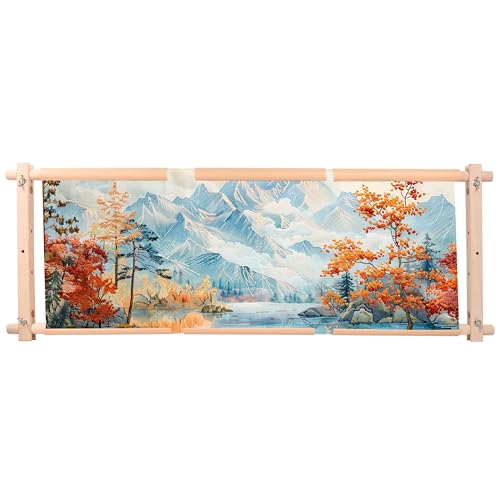
For large projects, a scroll frame or floor stand frame is often preferable to a hoop. Hoops can distort fabric if left in place too long, and re-hooping repeatedly over a large project risks flattening the stitches. Scroll frames keep the entire design area taut without pressure on the stitched areas. For manageable daily use, a hoop is fine; for works that will take months, a proper frame is a better investment.
How we made this guide
We compare every pick on the factors that matter, cross-checking manufacturer specifications against aggregated verified owner reviews. We rank independently and never take payment for placement. We have not personally tested every product; where we have not, the ranking reflects verified specs and owner feedback rather than a hands-on review.
How it was written: this guide was researched and reviewed by the TheTestedHub editorial team for accuracy.
Affiliate disclosure: TheTestedHub is reader-supported. When you buy through links on our site, we may earn a commission at no extra cost to you.