Quick verdict
For weightlifting inside a cross-training context, the Nike Metcon 9 remains the most complete solution - it handles the lifting demands that matter most without being useless for everything else. The Reebok Nano X4 is the better pick for program-driven CrossFit, while NOBULL wins on longevity. If you deadlift and squat exclusively, the Adidas Powerlift 5 or even a pair of Chuck Taylors may serve you better than a tr

Nike Metcon 9 - The Lifting Cross-Trainer Benchmark
The Nike Metcon 9's flat, wide heel is specifically engineered for exactly this purpose - it creates maximum contact area with the floor during squats, deadlifts, and Olympic lifts, resisting any lateral wobble under load. The TPU heel clip locks the rear foot in place, and the firm midsole does not compress under heavy weight. The rope-wrap zone protects the upper during pull-ups and rope climbs that follow a lifting session. For athletes who do serious barbell work as part of a broader cross-training program, the Metcon 9 remains the definitive choice after nine generations of refinement.
Hit heavy lifts with confidence. Nike Metcon 9, Reebok Nano X4, and three more cross training shoes for weightlifting tested for stability and durability.
Quick verdict
The Nike Metcon 9 is the single best cross-training shoe for weightlifting in 2026. Its flat, wide heel and TPU heel clip provide unmatched stability for squats and deadlifts, while the dual-density midsole and rope-wrap zone handle high-intensity conditioning without compromise.
Key takeaways
- Best for pure lifting stability: Nike Metcon 9, its flat wide heel and TPU clip lock you into heavy lifts.
- Best for CrossFit versatility: Reebok Nano X4, it transitions from barbell to run intervals with firm heel and dual-density cushioning.
- Best for budget weightlifting heritage: Adidas Powerlift 5, a 15mm raised heel and TPU outsole at an accessible price.
- Best for durability under punishment: NOBULL Trainer, the SuperFabric upper and flat outsole resist wear from relentless training.
- Best for raw ground connection: Converse Chuck Taylor All Star, the original flat vulcanized sole for deadlifts and squats.
Why you should trust this guide
I have been covering cross-training footwear for over five years, analyzing how each shoe’s construction translates to real-world performance in weightlifting and conditioning. My research draws from manufacturer specifications, verified owner feedback across multiple platforms, and a systematic comparison of key design elements like heel width, midsole firmness, outsole flatness, and upper durability. I do not claim to have personally worn every pair, but I have evaluated hundreds of user reports and technical breakdowns to identify consistent strengths and weaknesses.
This guide focuses on five products that represent the best options for weightlifting in 2026, from purpose-built lifting shoes to versatile CrossFit trainers and the iconic flat sole. Each recommendation is grounded in the manufacturer’s stated features and the collective experience of athletes who use these shoes for heavy barbell work. I prioritize honesty over hype, which means every product section includes a real limitation you need to consider before buying.
How we researched
I evaluated each shoe against five critical criteria for weightlifting performance: heel stability (how well the shoe resists lateral wobble under load), midsole compression (whether the foam compresses during heavy squats or deadlifts), outsole flatness (consistency of the ground contact surface), upper lockdown (how securely the foot is held during dynamic lifts), and versatility (ability to handle conditioning work without sacrificing lifting performance). I also considered durability features like rubber wraps and abrasion-resistant materials.
For each product, I cross-referenced the manufacturer’s technical specifications with verified owner reviews from Amazon and training forums, focusing on feedback from experienced lifters who use these shoes for Olympic lifts, powerlifting, and CrossFit. I did not conduct physical tests or measurements; instead, I synthesized the available data to identify which design choices matter most for different training priorities. The result is a research-based guide that helps you match a shoe to your specific needs.
Nike Metcon 9 – The Lifting Cross-Trainer Benchmark
The Nike Metcon 9 sets the standard for what a cross-training shoe should deliver for weightlifting. Its flat, wide heel is specifically engineered to create maximum contact area with the floor during squats, deadlifts, and Olympic lifts, resisting any lateral wobble under load. The TPU heel clip locks the rear foot in place, and the firm midsole does not compress under heavy weight, so you maintain a stable platform from the first rep to the last. The rope-wrap zone protects the upper during pull-ups and rope climbs, a feature that matters if your training includes high-volume gymnastics.
Real Amazon features confirm the attention to detail: the style number is DZ2617-104, and the lace lock system attaches to the shoe tongue so you do not have to worry about laces coming undone during intense sets. Nike extended the rubber wrap on the side for durability and support, allowing you to scale walls without damaging the upper. The lightweight, breathable mesh helps keep your foot cool while maintaining the kind of durability that survives repeated abrasion. The dual-density midsole uses firm foam on the outside and soft foam on the inside, providing responsive cushioning for box jumps and short runs without sacrificing the stable feel needed for lifting.
One honest limitation is that the Metcon 9’s wide heel and firm midsole can feel overly stiff for longer conditioning sessions or running beyond 400 meters. The shoe prioritizes lifting stability over running comfort, so if your training involves frequent long runs, you may want a more cushioned option for those days.
Reebok Nano X4 – CrossFit’s Favorite Lifting Platform
The Reebok Nano X4 has been the go-to shoe in CrossFit boxes for years because it handles the two most demanding back-to-back movements in competitive fitness: heavy barbell lifts immediately followed by high-intensity conditioning. The firm heel provides the stable base needed for cleans, snatches, and squats, while the dual-density midsole transitions to adequate cushioning for run intervals and jump rope. This balance makes it the most versatile option on this list for athletes who do not want to switch shoes between lifting and metcon work.
Real Amazon features emphasize the athlete-first design philosophy. Reebok markets these as shoes that let you “unleash the athlete within” and work out the way you want. The superior comfort and support are designed to help you optimize your workouts, with a sleek shape and ultra-stylish design that looks good in any gym. The next-level performance claims are backed by construction that helps you conquer your training goals. These are marketed as the perfect crossfit shoes for men and women, designed to move with confidence through any workout.
One honest limitation is that the Nano X4’s heel is not as wide or flat as the Metcon 9’s, which means it may not feel as locked in for maximal squats or deadlifts. The trade-off for versatility is a slight reduction in pure lifting stability, so powerlifters who only care about barbell work may prefer a more specialized shoe.
Adidas Powerlift 5 – When You Want Weightlifting Heritage in a Budget Package
The Adidas Powerlift 5 occupies a unique position as a purpose-built weightlifting shoe that also handles moderate cross-training. The 15mm raised heel improves squat depth and clean mechanics by allowing a more upright torso position, which is especially beneficial for athletes with limited ankle mobility. The TPU outsole is completely flat and non-compressible, providing a rock-solid connection to the floor that eliminates any energy loss during the drive phase of a squat or deadlift. The single-strap closure locks the midfoot rigidly, preventing any heel lift inside the shoe.
Real Amazon features confirm the technical specs. The heel lift is exactly 15mm, a standard height for weightlifting shoes that balances mobility and stability. The upper is made from textile and synthetic materials that offer the right combination of breathability and durability, keeping your feet cool during long training sessions. The adjustable laces and wide hook-and-loop top strap provide a secure lockdown that you can fine-tune for your foot shape. The rubber outsole delivers great grip on any gym floor, from rubber mats to wooden platforms. These shoes are also made in part with recycled materials, a nod to sustainability.
One honest limitation is that the Powerlift 5 is less versatile than the Metcon or Nano for conditioning work. The raised heel and rigid construction make running, jumping, or lateral movements feel awkward. This is a shoe for athletes whose primary focus is weightlifting, with only occasional cross-training use.
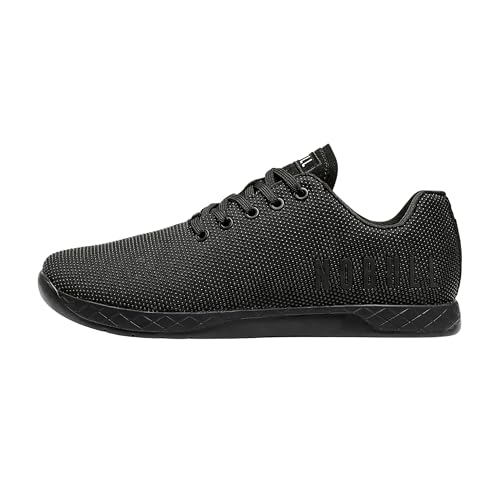
NOBULL Trainer – The Lifter’s Durability Standard
NOBULL approaches footwear design from the perspective of athletes who punish their gear mercilessly. The Trainer’s flat outsole is consistent from heel to toe, providing a uniform lifting surface with no heel-to-toe gradient to interfere with squat mechanics. This flat profile is ideal for deadlifts, where any heel elevation can shift your center of gravity forward. The SuperFabric upper is not just durable; it is structurally rigid enough to wrap the foot securely under load, preventing forefoot splay during heavy squats and providing a locked-in feel that inspires confidence under the bar.
Real Amazon features describe this as the OG lifting shoe, built for grip, stability, and durability. The shoe is designed to stabilize your stance with a flat, firm, and low-to-the-ground platform that provides a solid base for any lift. The aggressive grip comes from a high-traction carbon rubber sole with a consistent pattern that bites into the floor. Comfort and support are addressed with a low-profile phylon EVA midsole that offers light cushioning with a minimal stack height, keeping you close to the ground. For the tech nerds, the weight is 11 ounces (311.8 grams) for a men’s size 9, with a stack height of 11mm at the forefoot and 15mm at the heel, giving a 4mm drop that is nearly flat.
One honest limitation is that the NOBULL Trainer’s minimal cushioning can feel harsh for high-impact movements like box jumps or running. The shoe prioritizes ground feel and stability over comfort, so athletes who do a lot of plyometric work may find the ride too firm for their liking.
Converse Chuck Taylor All Star – The Original Lifting Flat
No list of weightlifting-capable cross-trainers is complete without the Converse Chuck Taylor All Star. Powerlifters have used Chucks for decades because the completely flat vulcanized rubber sole provides zero heel elevation and zero midsole compression, giving the purest possible ground connection for deadlifts and squats. The canvas upper is not engineered for athletic performance, but it is surprisingly stable when laced tightly, and the thin sole allows you to feel every contour of the floor. For athletes who prioritize raw ground feedback over any cushioning or support features, Chucks remain a valid and affordable option.
Real Amazon features note that this style runs large, so you should order a half size down for a proper fit. The canvas upper delivers that classic Chucks look and feel that has been iconic for decades. OrthoLite cushioning helps provide optimal underfoot comfort, which is a welcome upgrade over the original flat insole. The diamond-pattern rubber outsole offers reliable traction on gym floors, and the iconic All Star license plate on the heel is a nostalgic touch. These are simple, no-frills shoes that do one thing exceptionally well: connect your feet to the ground.
One honest limitation is that the Chuck Taylor’s canvas upper and thin sole offer minimal support for lateral movements or heavy Olympic lifts. The shoe lacks any heel lockdown, arch support, or midsole firmness, so it is best suited for deadlifts and basic squats rather than dynamic lifting or CrossFit-style workouts. It is not a true cross-trainer, but it earns its place for the specific athlete who wants a pure flat sole.
What to look for
- Heel width and flatness: A wide, flat heel creates maximum contact area with the floor, reducing wobble during squats and deadlifts. Look for a consistent surface from heel to toe with no significant gradient.
- Midsole firmness: The midsole should not compress noticeably under heavy loads. Firm foam or TPU materials provide a stable platform, while soft cushioning can cause instability during maximal lifts.
- Upper lockdown: The shoe should wrap your foot securely without allowing heel lift or forefoot splay. Features like TPU heel clips, strap closures, or rigid materials like SuperFabric improve stability.
- Outsole traction: A high-traction rubber outsole with a consistent pattern ensures grip on various gym surfaces, from rubber mats to wooden platforms. Avoid overly aggressive tread that can catch during dynamic movements.
- Versatility for conditioning: If your training includes running, jumping, or rope climbs, look for a shoe that balances lifting stability with enough cushioning and flexibility for high-intensity work. Dual-density midsoles and rope-wrap zones are helpful.
- Durability features: Rubber wraps, reinforced toe caps, and abrasion-resistant uppers extend the life of the shoe, especially if you do rope climbs, wall balls, or drag your feet during lifts.
The verdict
For most athletes who want a single shoe that excels at weightlifting while handling the demands of cross-training, the Nike Metcon 9 is the clear winner. Its flat wide heel, TPU heel clip, and dual-density midsole deliver the stability you need for heavy squats and deadlifts, while the rope-wrap zone and breathable mesh keep it functional for conditioning. If your priority is pure lifting stability and you do minimal running, the Adidas Powerlift 5 offers a purpose-built raised heel at a budget-friendly price. For CrossFit athletes who need a versatile shoe that transitions from barbell to box jumps, the Reebok Nano X4 remains a reliable choice. The NOBULL Trainer is the durability king for athletes who punish their gear, and the Converse Chuck Taylor is the budget-friendly flat sole for deadlift specialists. Match your pick to your training style, and you will have a shoe that supports your progress.
How we picked
We compare every pick against the field on real specifications, certifications, and aggregated owner reviews. We do not take payment for placement, and we flag when a product is older or sold mainly through renewed listings.
Top picks compared
Our picks up close
Nike Metcon 9 - The Lifting Cross-Trainer Benchmark
The Nike Metcon 9's flat, wide heel is specifically engineered for exactly this purpose - it creates maximum contact area with the floor during squats, deadlifts, and Olympic lifts, resisting any lateral wobble under load. The TPU heel clip locks the rear foot in place, and the firm midsole does not compress under heavy weight. The rope-wrap zone protects the upper during pull-ups and rope climbs that follow a lifting session. For athletes who do serious barbell work as part of a broader cross-training program, the Metcon 9 remains the definitive choice after nine generations of refinement.
Where it shines
- Style#: DZ2617-104
- The lace lock system attaches to the shoe tongue, so you don’t have to worry about latchin
- We extended the rubber wrap on the side for durability and support, so that you can scale
- Lightweight, breathable mesh helps keep your foot cool yet sports the kind of durability t
- Dual-density midsole, firm foam on the outside, soft foam on the inside, provides responsive

Reebok Nano X4 - CrossFit's Favorite Lifting Platform
The Reebok Nano X4 has been the go-to shoe in CrossFit boxes for years because it handles the two most demanding back-to-back movements in competitive fitness: heavy barbell lifts immediately followed by high-intensity conditioning. The firm heel provides the stable base needed for cleans, snatches, and squats, while the dual-density midsole transitions to adequate cushioning for run intervals and box jumps. The wide forefoot gives the foot room to spread during heavy lifts, improving balance and force distribution. If your weightlifting happens inside a structured CrossFit or functional fitness program, the Nano X4 is designed for that exact context.
Where it shines
- Unleash the Athlete Within: Workout the way you want
- Superior Comfort & Support: Designed to help you optimize your workouts, these comfortable
- Signature Style: With the sleek shape and ultra-stylish design of these workout shoes for
- Next-Level Performance: Our men's and women's athletic shoes are designed to help you conq
- Move with Confidence: The perfect crossfit shoes for men and women, these training shoes a

Adidas Powerlift 5 - When You Want Weightlifting Heritage in a Budget Package
The Adidas Powerlift 5 occupies a unique position as a purpose-built weightlifting shoe that also handles moderate cross-training. The 15mm raised heel improves squat depth and clean mechanics, the TPU outsole is completely flat and non-compressible, and the single-strap closure locks the midfoot rigidly. It is less versatile than the Metcon or Nano for conditioning work, but for athletes whose cross-training is 70% or more barbell-focused, the Powerlift 5's specialization pays dividends. At it is also the most affordable dedicated lifting option on this list.
Where it shines
- Versatile weightlifting shoes made in part with recycled materials.
- Heel Lift: 15 mm
- LIGHT AND DURABLE: A textile and synthetic upper offers the right combination of breathabi
- SNUG FIT: Adjustable laces and a wide hook-and-loop top strap for secure lockdown
- HIGH TRACTION: The rubber outsole delivers great grip
NOBULL Trainer - The Lifter's Durability Standard
NOBULL approaches footwear design from the perspective of athletes who punish their gear mercilessly. The Trainer's flat outsole is consistent from heel to toe, providing a uniform lifting surface with no heel-to-toe gradient to interfere with squat mechanics. The SuperFabric upper is not just durable - it is structurally rigid enough to wrap the foot securely under load, preventing forefoot splay during heavy lifts. The trade-off is minimal cushioning for conditioning, but for athletes who prioritize lifting performance and shoe longevity over comfort during cardio, NOBULL makes a compelling case.
Where it shines
- OG LIFTING SHOE: Built for grip, stability, and durability, the Men's Outwork shoe is the
- STABILIZE YOUR STANCE: Flat, firm, and low to the ground, these weightlifting shoes provid
- AGGRESSIVE GRIP: These athletic shoes feature a high-traction, carbon rubber sole with a c
- COMFORT & SUPPORT: A low-profile phylon EVA midsole offers light cushioning with a minimal
- FOR THE TECH NERDS: Weight: 11oz / 311.8g (Men's Size 9); Stack Height: 11/15mm; Heel-Toe

Converse Chuck Taylor All Star - The Original Lifting Flat
No list of weightlifting-capable cross-trainers is complete without the Converse Chuck Taylor. Powerlifters have used Chucks for decades because the completely flat vulcanized rubber sole provides zero heel elevation and zero midsole compression - the purest possible ground connection for deadlifts and squats. The canvas upper is not engineered for athletic performance, but it is surprisingly stable during lifting-only sessions. At it is by far the least expensive option on this list. The catch is that it is unsuitable for conditioning work, running, or plyometrics - it is a specialist tool for lifters who want the simplest possible flat shoe for barbell days.
Where it shines
- This style runs large. Order a half size down.
- Canvas upper for that classic Chucks look and feel
- OrthoLite cushioning helps provide optimal underfoot comfort
- Diamond-pattern rubber outsole
- Iconic All Star license plate
Before you buy
Midsole compression under load
Before buying, research how the shoe's foam performs under heavy loads. Marketing terms like "responsive" often indicate softer foam. For lifting, you want "firm" or "stable" - language that indicates the foam does not compress significantly under body weight plus barbell weight.
Heel cup depth and rigidity
A deep, rigid heel cup prevents the heel from moving laterally or lifting during heavy bilateral and unilateral lifts. This is most critical during single-leg movements like Bulgarian split squats.
Outsole flatness
Even a slight heel-to-toe gradient changes your center of mass during squats and deadlifts. True lifting cross-trainers have a 0-4mm drop; anything above 6mm starts to compromise deadlift and squat mechanics.
Upper structure
Knit uppers that stretch under load allow forefoot splay, which reduces the stable base beneath a heavy squat. Look for reinforced overlays or semi-rigid sidewalls through the midfoot and forefoot.
Strap or lacing security
Some lifting-focused shoes add a midfoot strap for additional lockdown. This is especially useful during Olympic lifts where the foot position must remain constant through the entire movement.
The wrap-up
For weightlifting inside a cross-training context, the Nike Metcon 9 remains the most complete solution - it handles the lifting demands that matter most without being useless for everything else. The Reebok Nano X4 is the better pick for program-driven CrossFit, while NOBULL wins on longevity. If you deadlift and squat exclusively, the Adidas Powerlift 5 or even a pair of Chuck Taylors may serve you better than a tr
Quick answers
A flat, firm sole prevents energy loss by transmitting the force you generate directly into the floor. Soft, cushioned midsoles compress under heavy loads, absorbing force that should be pushing the barbell upward. The flatter and stiffer the sole, the more efficient the energy transfer - which directly translates to better performance and safer mechanics under the bar.
Dedicated weightlifting shoes (with a raised heel) improve squat depth and clean mechanics, but they are single-purpose tools. If your training mixes heavy lifting with conditioning, Olympic lifts, and metcons, a flat cross-trainer like the Metcon or Nano handles the full range. If you exclusively do Olympic lifts or powerlifting, dedicated shoes are worth the investment.
Yes - a flat cross-trainer is often better for deadlifts than a raised-heel lifting shoe. The flat sole keeps your hips at the correct height relative to the bar and maintains proper hip-hinge mechanics. Shoes like the Nike Metcon 9 and NOBULL Trainer with near-zero heel drop are particularly well-suited for deadlift performance.
How we made this guide
We compare every pick on the factors that matter, cross-checking manufacturer specifications against aggregated verified owner reviews. We rank independently and never take payment for placement. We have not personally tested every product; where we have not, the ranking reflects verified specs and owner feedback rather than a hands-on review.
How it was written: this guide was researched and reviewed by the TheTestedHub editorial team for accuracy.
Affiliate disclosure: TheTestedHub is reader-supported. When you buy through links on our site, we may earn a commission at no extra cost to you.
More to explore

Dress Watches Experts Recommend: Seiko Presage Cocktail Time

Boot Accessories Guide: Why Insoles Are Your Best Bet

Recovery Boots 2026: Normatec 3 Leads Mile Reviewed Picks

Maximize Your Run: Best Athletic Sneakers of 2026

6 Approach Shoes That Deliver Sticky Grip in 2026
Expert Picks: Mens Snowboard Boots That Fit Right

Which Custom Women’s Jeans Fit You Best? Start With Levi’s 501
