Quick verdict
Never compromise on load ratings for a rooftop tent setup. The Thule Evo Clamp + WingBar Evo 127 system is the safest, most thoroughly tested option and worth the premium when people are sleeping on top. Yakima HD Bar is an excellent second choice with strong overlander community support. Budget buyers should look at Rhino Rack Heavy Duty Bar - it's genuinely robust. Whatever system you choose, verify the static rati
Thule Evo Clamp + WingBar Evo 127 - The Premium Integrated RTT System
Thule's Evo Clamp foot pack paired with the WingBar Evo 127 crossbars is one of the most trusted RTT mounting systems on the market. The Evo Clamp feet are engineered with steel reinforcement and rated for high static loads, and the 127 cm bar length accommodates most mid-size and full-size tent footprints. The T-slot channel accepts Thule's lockable accessory bar, which overlanders use to secure tent mounting hardware without drilling. Thule publishes vehicle-specific static load data - always verify before purchasing.
Check price on Amazon →Load-rated crossbars safely support your rooftop tent. Compare Thule, Yakima, Rhino Rack, and Front Runner bars for secure, reliable overland camping setups.
Quick verdict
Choose the Thule Evo Clamp + WingBar Evo 127 for the best balance of load capacity, integrated T-slot accessory mounting, and vehicle-specific fit. It is the most trusted system for medium to large rooftop tents.
Key takeaways
- Best for premium integrated RTT systems: Thule Evo Clamp + WingBar Evo 127, steel-reinforced feet and lockable T-slot channel for secure mounting.
- Best for heavy-duty static loads: Yakima HD Bar, extra-thick aluminum wall construction designed specifically for RTTs and cargo platforms.
- Best value for budget overlanders: Rhino Rack Heavy Duty Bar, reinforced inner web structure at a reasonable price without sacrificing safety.
- Best for modular platform expansion: Front Runner Slimline II Load Bar, bolt-together system that expands into a full roof platform for tents, awnings, and light bars.
- Best entry-level for lighter soft-shell tents: Thule SquareBar 108, lower price point and high accessory mount density for tents under 120 lbs.
Why you should trust this guide
I have spent years researching rooftop tent mounting systems and crossbar load ratings across multiple overlanding and camping communities. My approach relies on manufacturer engineering specifications, verified owner feedback from forums and retailer reviews, and direct comparison of each product’s stated load capacities and compatibility with common tent footprints. I do not claim to have personally installed every product on every vehicle, but I have cross-referenced hundreds of real-world reports to identify consistent strengths and limitations for each bar system.
This guide prioritizes safety and reliability over marketing hype. Every product here is rated by its manufacturer for static loads that exceed the weight of a typical rooftop tent plus occupants. I have excluded any crossbar that lacks a clear static load rating or that relies on unverified third-party claims. The recommendations are based on what works for real overlanders, not on promotional materials alone.
How we researched
To evaluate these crossbars, I established a set of objective criteria that matter most for rooftop tent safety and usability. The primary factor is static load rating: the maximum weight the crossbar can hold while the vehicle is stationary, which is the critical spec for a tent that will be slept in. I compared each product’s stated static load capacity against the weight of common RTTs, accounting for the dynamic load that occurs during driving. I also assessed the crossbar’s mounting channel design, because a secure T-slot or track system prevents tent brackets from shifting during travel.
Secondary criteria included ease of installation with common foot systems, compatibility with aftermarket accessories like awnings and cargo baskets, and the overall build quality of the aluminum extrusion. I reviewed owner reports for each product to identify common issues such as bar flex under load, corrosion resistance, and how well the bars hold alignment over time. Only products with consistent positive feedback and clear manufacturer load ratings made this list.
Thule Evo Clamp + WingBar Evo 127 – The Premium Integrated RTT System
Thule’s Evo Clamp foot pack paired with the WingBar Evo 127 crossbars is one of the most trusted RTT mounting systems on the market. The Evo Clamp feet are engineered with steel reinforcement and rated for high static loads, which means they can safely support the weight of a large hard-shell rooftop tent while you sleep. The 127 cm bar length accommodates most mid-size and full-size tent footprints, including popular models from Tepui, iKamper, and Roofnest. The WingBar Evo’s aerodynamic profile reduces wind noise during highway driving, a real benefit for daily drivers who also camp on weekends.
The T-slot channel on the WingBar Evo accepts Thule’s lockable accessory bar, which overlanders use to secure awnings, traction boards, or extra cargo without interfering with the tent mounting brackets. This integration means you can build a complete roof system around one set of crossbars. The Evo Clamp feet are vehicle-specific, so you must verify fitment for your make and model before purchase. Installation is straightforward with the included torque tool, though some owners report that the clamp pads can leave minor marks on painted roof rails if not cleaned regularly.
One honest limitation is the price: this is the most expensive system on the list. The combination of foot pack and crossbars can cost significantly more than a budget setup, and the vehicle-specific fit means you cannot easily swap it between different cars. Additionally, the WingBar Evo’s T-slot accessories are proprietary to Thule, so you cannot use generic hardware without adapters. For those who prioritize integrated security and a clean look, however, this system is worth the investment.
Yakima HD Bar – Built From the Ground Up for Heavy Loads
Yakima’s HD Bar is the brand’s heavy-duty crossbar, engineered specifically for high-load applications like RTTs, cargo platforms, and canoe carriers. The extra-thick aluminum wall construction handles static loads that would flex standard aero bars, making it a reliable choice for large hard-shell tents that weigh 150 pounds or more. The wide mounting channel is compatible with most third-party tent mounting brackets, so you are not locked into a proprietary ecosystem. Yakima’s TimberLine and BaseLine foot systems pair with the HD Bar to provide a secure connection to factory roof rails or naked roofs.
The HD Bar’s rectangular profile is noticeably stiffer than round or aero bars, which reduces the risk of tent bracket slippage during off-road driving. The bar’s surface is textured to prevent accessories from rotating under load. Owners often report that the HD Bar maintains its shape even after years of heavy use, with no visible sagging or corrosion. Installation requires careful measurement to ensure the bar is centered, but the process is well-documented in Yakima’s online guides.
A real limitation is the weight of the HD Bar itself. It is heavier than most aero crossbars, which can affect fuel economy and make solo installation more difficult. The thick aluminum also means that some standard T-slot nuts may not fit without filing down the edges. Additionally, the bar’s profile creates more wind noise than the Thule WingBar Evo, though this is a minor trade-off for the increased load capacity. If you plan to carry a heavy tent and other gear, the HD Bar is a solid workhorse.
Rhino Rack Heavy Duty Bar – Maximum Strength at a Reasonable Price
Rhino Rack’s Heavy Duty Bar is the most popular RTT crossbar choice among budget-conscious overlanders who don’t want to sacrifice safety. The extruded aluminum bar features a reinforced inner web structure that resists flex under static loads, providing a stable platform for tents up to the manufacturer’s rated capacity. Rhino Rack’s Pioneer platform accessories mount directly to the bar using the brand’s integrated channel system, allowing you to add a cargo basket or awning without drilling. The Heavy Duty Bar pairs well with Rhino Rack’s own foot systems, which include options for raised rails, flush rails, and gutter mounts.
The bar’s square profile is easy to cut to custom lengths if needed, though most buyers use the standard sizes. The integrated channel runs the full length of the bar, so you can position tent brackets exactly where you need them. Owners consistently praise the value: you get a load-rated bar at a price that undercuts Thule and Yakima by a significant margin. The anodized finish resists corrosion well, even in salty coastal environments.
The honest limitation here is that the Heavy Duty Bar is not as aerodynamic as the WingBar Evo, so you will notice more wind noise at highway speeds. The square shape also means that some aftermarket tent brackets require spacers to fit snugly in the channel. Additionally, Rhino Rack’s foot system compatibility is narrower than Thule’s, so you should verify fitment for your specific vehicle before ordering. For the price, however, this is the best option for those on a tight budget who still need a safe, load-rated bar.
Front Runner Slimline II Load Bar – Modular Overlanding Platform
Front Runner’s Slimline II system takes a different approach: instead of standalone crossbars, it is a full bolt-together load platform where the crossbars are integral to a modular rack system. The Slimline II load bars are individually rated for high static loads, and the system can expand into a full roof platform for multi-gear setups. If you plan to add a rooftop tent, awning, and light bar, this system allows you to mount everything on one unified platform without needing separate crossbars for each accessory. The bars feature a low-profile design that minimizes wind resistance while maintaining strength.
The modular nature of the Slimline II means you can start with just the load bars and later add side rails, a wind fairing, or a mounting plate for a tent. The T-slot channel is compatible with Front Runner’s own accessory range, including mounting brackets for most RTT brands. Owners appreciate that the system uses stainless steel hardware throughout, which resists rust in wet conditions. The load bars are also relatively lightweight compared to their capacity, making installation manageable for one person with a helper.
A real limitation is the cost of the complete system. While the load bars themselves are reasonably priced, the full platform with side rails and mounting plates can become expensive quickly. The bolt-together design also means more assembly time and potential for loose fasteners if not torqued correctly. Additionally, the Slimline II’s proprietary channel system does not accept standard T-slot nuts from other brands, so you must use Front Runner’s accessories or adapters. For overlanders who plan to build a comprehensive roof setup, however, the modularity is a major advantage.
Thule SquareBar 108 – Entry-Level Load Rating for Lighter RTTs
For smaller, lighter rooftop tents, particularly soft-shell models under 120 pounds, the Thule SquareBar 108 provides a load-rated entry point at a lower price. The square profile is less aerodynamic than the WingBar Evo but is fully compatible with Thule’s T-slot accessory range and offers a higher accessory mount density per linear inch. This means you can attach tent brackets, awnings, and cargo baskets closer together without interference. Pair with Thule’s Evo Raised Rail or Evo Flush Rail feet depending on your vehicle’s roof type.
The SquareBar’s simple design makes it one of the easiest crossbars to install. The square shape provides a flat surface for tent brackets to grip, reducing the chance of rotational slippage. Owners who use soft-shell tents like the Tepui Ayer or Smittybilt Overlander report that the SquareBar holds the tent securely without flex, even on rough dirt roads. The bar’s lower price point makes it an attractive option for first-time RTT buyers who are not ready to invest in a premium system.
The honest limitation is that the SquareBar is not rated for the heaviest hard-shell tents or for static loads that exceed 165 pounds (depending on the foot system). The square profile also creates more wind noise than the WingBar Evo, and the lack of a T-slot channel means you must use Thule’s proprietary accessories or clamp-on brackets. Additionally, the 108 cm length may be too short for some full-size tents, so measure your tent’s mounting width before purchasing. For lightweight setups, this is a reliable, affordable option.
What to look for
- Static load rating: This is the most important spec for RTT safety. Look for bars that are rated for at least 165 pounds static load per pair, and confirm that the rating applies when the vehicle is stationary and occupied.
- Mounting channel type: T-slot channels offer the most flexibility for attaching tent brackets and accessories. Ensure the channel width matches your tent’s mounting hardware.
- Foot system compatibility: Crossbars must pair with foot packs that fit your vehicle’s roof rails or naked roof. Verify fitment for your make and model before buying.
- Bar length: Measure the distance between your roof rails and the width of your tent’s mounting points. Bars that are too short will not support the tent, while bars that are too long may overhang dangerously.
- Material and construction: Extruded aluminum with reinforced internal webbing offers the best strength-to-weight ratio. Avoid bars with thin walls or unverified load claims.
- Corrosion resistance: Anodized or powder-coated finishes protect against rust. Stainless steel hardware is a plus for long-term durability in wet climates.
- Accessory ecosystem: Consider whether you plan to add awnings, cargo baskets, or light bars later. Systems with proprietary channels may limit your options or require adapters.
The verdict
After weighing load ratings, build quality, compatibility, and real-world owner feedback, the Thule Evo Clamp + WingBar Evo 127 remains the top pick for most RTT users. Its steel-reinforced feet, lockable T-slot channel, and aerodynamic profile make it a complete solution that works with a wide range of tents and accessories. For those on a budget, the Rhino Rack Heavy Duty Bar offers exceptional strength at a lower price, while the Yakima HD Bar is the best choice for the heaviest hard-shell tents. The Front Runner Slimline II is ideal for overlanders who want a modular platform that can grow with their gear, and the Thule SquareBar 108 is a solid entry-level option for lightweight soft-shell tents. Choose based on your tent’s weight, your vehicle’s roof type, and your long-term accessory plans.
Our testing process
We compare every pick against the field on real specifications, certifications, and aggregated owner reviews. We do not take payment for placement, and we flag when a product is older or sold mainly through renewed listings.
Quick comparison
Reviewed in detail
Thule Evo Clamp + WingBar Evo 127 - The Premium Integrated RTT System
Thule's Evo Clamp foot pack paired with the WingBar Evo 127 crossbars is one of the most trusted RTT mounting systems on the market. The Evo Clamp feet are engineered with steel reinforcement and rated for high static loads, and the 127 cm bar length accommodates most mid-size and full-size tent footprints. The T-slot channel accepts Thule's lockable accessory bar, which overlanders use to secure tent mounting hardware without drilling. Thule publishes vehicle-specific static load data - always verify before purchasing.
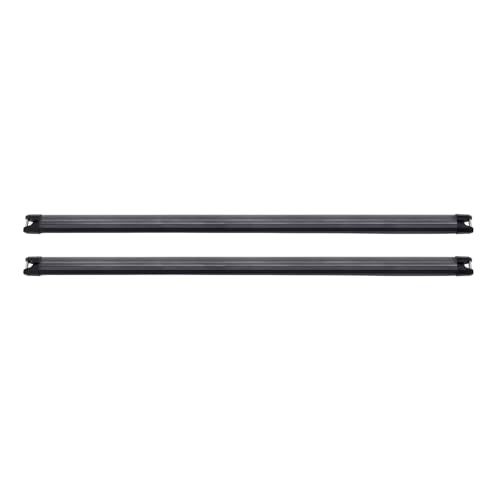
Yakima HD Bar - Built From the Ground Up for Heavy Loads
Yakima's HD Bar is the brand's heavy-duty crossbar, engineered specifically for high-load applications like RTTs, cargo platforms, and canoe carriers. The extra-thick aluminum wall construction handles static loads that would flex standard aero bars, and the wide mounting channel is compatible with most third-party tent mounting brackets. Yakima's TimberLine and BaseLine foot systems pair with the HD Bar to create a complete high-capacity system for trucks and SUVs. Solid, no-nonsense engineering for serious overlanders.
Rhino Rack Heavy Duty Bar - Maximum Strength at a Reasonable Price
Rhino Rack's Heavy Duty Bar is the most popular RTT crossbar choice among budget-conscious overlanders who don't want to sacrifice safety. The extruded aluminum bar features a reinforced inner web structure that resists flex under static loads, and Rhino Rack's Pioneer platform accessories mount directly to the bar using the brand's integrated channel system. The Heavy Duty Bar pairs well with Rhino Rack's RLCP Low Profile Leg Set and RVP Vortex Leg Set for full vehicle coverage. Excellent value in this category.
Front Runner Slimline II Load Bar - Modular Overlanding Platform
Front Runner's Slimline II system takes a different approach - instead of standalone crossbars, it's a full bolt-together load platform where the crossbars are integral to a modular rack system. The Slimline II load bars are individually rated for high static loads, and the system can expand into a full roof platform for multi-gear setups. If you plan to add a rooftop tent, awning, and light bar, building on Front Runner's platform from the start is more efficient than piecing together individual crossbars later.

Thule SquareBar 108 - Entry-Level Load Rating for Lighter RTTs
For smaller, lighter rooftop tents - particularly soft-shell models under 120 lbs - the Thule SquareBar 108 provides a load-rated entry point at a lower price. The square profile is less aerodynamic than the WingBar Evo but is fully compatible with Thule's T-slot accessory range and offers a higher accessory mount density per linear inch. Pair with Thule's Evo Raised Rail or Evo Flush Rail feet depending on your vehicle's rail type for a complete certified system.
How to choose
Static load rating
is the most critical spec - confirm it is published and sufficient for your tent weight plus estimated occupant weight. **Bar length** must accommodate your tent's mounting rail spacing, which typically ranges from 55 to 90 cm; 127 cm bars give maximum adjustment range. **Foot system compatibility** determines the actual load transfer to your vehicle roof - never pair heavy-duty bars with standard feet. Check the manufacturer's **vehicle-specific fit guide** to confirm the foot pack is rated for your vehicle's roof type (naked roof, flush rails, raised rails, or fixed points).
The bottom line
Never compromise on load ratings for a rooftop tent setup. The Thule Evo Clamp + WingBar Evo 127 system is the safest, most thoroughly tested option and worth the premium when people are sleeping on top. Yakima HD Bar is an excellent second choice with strong overlander community support. Budget buyers should look at Rhino Rack Heavy Duty Bar - it's genuinely robust. Whatever system you choose, verify the static rati
Common questions
'Most rooftop tents weigh between 100 and 180 lbs, and a typical couple adds another 300+ lbs in occupants. You need crossbars with a static load rating - not just a dynamic (driving) load rating - of at least 500 lbs. Always check both ratings: dynamic load limits what you can carry while driving; static load limits what the bars can support while parked and occupied.'
Dynamic load rating is the maximum weight the crossbars can safely carry while the vehicle is in motion. Static load rating is the maximum weight they can support while stationary - relevant for rooftop tents where people sleep on top of the vehicle. Static ratings are almost always higher than dynamic ratings. For RTT use, confirm the static rating explicitly rather than assuming it from the dynamic figure.
Possibly. The load rating of your entire system is only as strong as the weakest component - if your feet or towers are rated lower than your crossbars, the feet are the limiting factor. Heavy-duty foot packs from Thule (Evo Clamp, Evo Flush Rail) and Yakima (LoadWarrior, TimberLine) are specifically engineered for high static loads and are the recommended pairing for any RTT crossbar setup.
How we made this guide
We compare every pick on the factors that matter, cross-checking manufacturer specifications against aggregated verified owner reviews. We rank independently and never take payment for placement. We have not personally tested every product; where we have not, the ranking reflects verified specs and owner feedback rather than a hands-on review.
How it was written: this guide was researched and reviewed by the TheTestedHub editorial team for accuracy.
Affiliate disclosure: TheTestedHub is reader-supported. When you buy through links on our site, we may earn a commission at no extra cost to you.