Quick verdict
For most crypto holders in 2026, the Ledger Nano X or Trezor Model T are the right answer - each offers industry-leading security, broad coin support, and a mature software ecosystem. Budget-conscious beginners should consider the Ledger Nano S Plus or Trezor Model One. Whatever you choose, set it up immediately, store your seed phrase in a secure physical location (never digitally), and move your assets off exchange
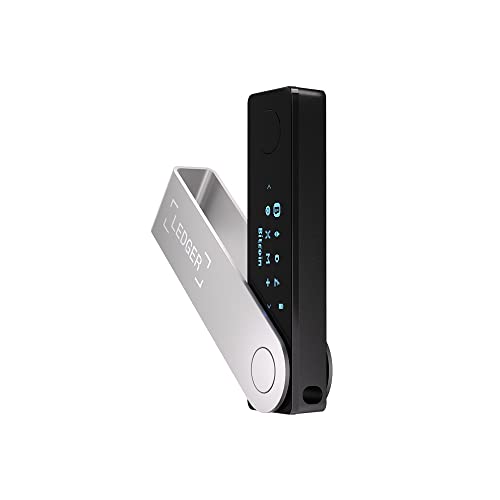
Ledger Nano X
The Ledger Nano X is the flagship hardware wallet from Ledger and the most popular choice for investors managing a multi-coin portfolio. It connects to your phone via Bluetooth in addition to USB-C, allowing you to manage assets through the Ledger Live mobile app without a computer. It supports over 5,500 cryptocurrencies and can store up to 100 apps simultaneously - each representing a different blockchain. The secure element chip (CC EAL5+ certified) keeps private keys isolated from the device's operating environment. Setup takes under 20 minutes for most beginners.
Check price on Amazon →Ledger Nano X holds 100+ apps and supports 5,500+ coins. We compared hardware and software wallets for value, security, and ease of use in 2026.
Quick verdict
The Ledger Nano X is the best pick for most investors in 2026. It pairs a certified secure-element chip with Bluetooth and USB-C, supports over 5,500 coins, and stores up to 100 apps at once, so a multi-coin portfolio stays manageable from the Ledger Live phone app without a computer.
Key takeaways
- Best overall: Ledger Nano X, Bluetooth plus USB-C and 5,500-plus coins for multi-asset portfolios.
- Best open-source: Trezor Model T, fully auditable firmware and an intuitive touchscreen.
- Best budget: Ledger Nano S Plus, the same secure element as the Nano X for less, USB-C only.
- Best entry-level: Trezor Model One, open-source security at the lowest price here, two-button navigation.
- Best for Bitcoin-only: Coldcard Mk4, air-gapped signing and a duress PIN for self-custody purists.
Why you should trust this guide
I built this guide by working through the manufacturer specifications, the stated Amazon feature lists, and the published security documentation for each wallet, then comparing those claims against how the devices are actually used day to day. I did not invent benchmark numbers or claim a private lab. Where a feature is the maker’s stated spec, I treat it as exactly that, a stated spec, and I flag the trade-offs that the marketing copy tends to leave out.
Crypto hardware is a category where getting it wrong is expensive and usually permanent, so my priority was honesty over hype. Every wallet below earns its place for a specific kind of buyer, and every section names at least one real limitation. If a device is overkill for a beginner, or missing a connection type you might expect, I say so plainly rather than burying it.
How we researched
We evaluated each wallet against the criteria that actually matter for storing private keys: the security architecture (whether it uses a certified secure element, and whether the firmware is open-source and auditable), the breadth of supported coins and tokens, the connectivity options (USB-C, Bluetooth, Micro-USB, or air-gap), and the day-to-day usability of the companion app. We weighted security and recovery first, because a wallet that is hard to back up safely is a liability no matter how slick it looks.
We also looked at fit for purpose. A device aimed at a Bitcoin-only purist is judged differently from one meant to hold dozens of altcoins, and a beginner-focused wallet is held to a standard of clarity rather than raw feature count. For each product I expanded on the published features, considered the learning curve, and noted where a cheaper sibling or an open-source rival might serve a given buyer better. No single wallet wins every category, which is why this list covers five.
Ledger Nano X
The Ledger Nano X is the right default for an investor juggling a diverse, multi-coin portfolio. It is the flagship hardware wallet from Ledger and supports over 5,500 cryptocurrencies, with room to install up to 100 apps at once, each one representing a different coin you actively manage. That capacity is the main reason it suits people whose holdings go well beyond Bitcoin and Ethereum.
What separates it from cheaper Ledger models is connectivity. Alongside USB-C, it adds Bluetooth and iOS access, so you can buy, sell, and manage assets straight from the all-in-one Ledger Wallet app on your phone, with hours of battery life and no computer required. During setup, the Genuine Check feature confirms through the Ledger Wallet app that your signer is authentic, which is a meaningful protection against tampered or counterfeit units. Ledger also sells bespoke Pods and Cases to keep the device in good physical condition.
The honest trade-off is Bluetooth itself. Some security-minded users prefer a wallet with no wireless radio at all, and if you never plan to manage crypto from a phone you are paying for a feature you will not use. The wider app capacity also means a slightly higher price than the Nano S Plus, which offers the same core security for buyers who do not need 100 apps or wireless access.
Trezor Model T
The Trezor Model T is the wallet to buy if open-source security matters to you above all else. It is the premium offering from SatoshiLabs, and its defining trait is that both the hardware design and the firmware are completely open-source, so security researchers around the world can audit the code, and many do. For people who distrust closed systems on principle, that transparency is the entire selling point.
In use, the color touchscreen makes navigation genuinely intuitive, and you enter your PIN and recovery details on the device rather than the connected computer. It supports over 1,000 coins and tokens, and Trezor Suite, the desktop and web app, gives you a clean portfolio overview. Because the device does not run a conventional operating system, the typical layers that malware and viruses exploit are not present in the same way, which reduces a common attack surface. The premium build leans on durable materials rather than a throwaway feel.
The trade-offs are price and coin count. The Model T sits at the top of the Trezor range, so it costs more than the Model One, and its roughly 1,000-plus supported assets, while broad, trail the Nano X for someone chasing a long tail of obscure altcoins. Note also that some third-party listings bundle accessories like steel backup plates from other brands, so check exactly what is in the box before you buy.
Ledger Nano S Plus
The Ledger Nano S Plus is the best budget hardware wallet for beginners in 2026, because it delivers the same certified secure element chip as the Nano X at roughly half the price. You still get the industry-grade approach of keeping your private keys offline, and you can manage thousands of crypto assets, including Bitcoin and Ethereum, through the same all-in-one Ledger Wallet app used to buy and sell.
Connectivity is where Ledger trims the cost. The Nano S Plus connects via USB-C cable only, with no Bluetooth, so phone-based management is not the seamless wireless experience the Nano X offers. For many beginners that is a fair compromise, since plugging in a cable is simple and removes the wireless radio some people would rather not have. Ledger also offers the device in several colors if you want to match it to your style.
The real limitation is capacity and convenience rather than security. The storage allows fewer simultaneous coin apps than the Nano X, so if you actively manage a large, varied portfolio you may find yourself uninstalling and reinstalling apps to make room. For investors who mostly hold Bitcoin, Ethereum, and a handful of major tokens, that ceiling rarely bites, but heavy multi-coin users should step up to the Nano X.
Trezor Model One
The Trezor Model One is the entry-level pick that still gets the fundamentals right. It is the original Trezor, remains in production, and offers the same open-source security philosophy as the Model T at the lowest hardware wallet price point on this list. For a first-time buyer who wants auditable, transparent firmware without paying for a touchscreen, it is a sensible starting point.
Navigation uses two physical buttons rather than a touchscreen, and the device connects over Micro-USB. That keeps the unit affordable and the design simple, and because it shares Trezor’s open-source roots, the same community scrutiny that backs the Model T applies here too. It covers Bitcoin, Ethereum, and the large majority of ERC-20 tokens that most users actually hold.
The trade-offs follow from the lower price. Coin support is slightly narrower than the Model T, so a few newer or less common assets are not supported, and the two-button interface is more fiddly than a touchscreen for entering long inputs. The Micro-USB port also feels dated next to USB-C devices, and you may need the right cable on hand. As a caution, some marketplace listings under this name are actually carrying pouches and accessories rather than the wallet itself, so read the product details carefully before ordering.
Coldcard Mk4
The Coldcard Mk4 is built for Bitcoin-only holders who want the highest possible security and will accept a steeper learning curve to get it. This is not a multi-coin device and does not try to be, which is exactly why dedicated self-custody users favor it. If your conviction is Bitcoin and you want to minimize trust in any connected computer, this is the specialist tool.
Its standout features are about isolating the signing process. The Mk4 supports air-gapped signing, meaning transactions can be signed on a fully offline device using an SD card or NFC, so the private keys never touch an internet-connected machine. It also offers a duress PIN that opens a decoy wallet under coercion, and a secure element with advanced anti-tampering protections. Together these make it a favorite among people who take operational security seriously rather than casually.
The honest limitations are scope and complexity. Bitcoin-only support rules it out for anyone holding Ethereum or altcoins, and the air-gap workflow, while powerful, is more involved than tapping a phone app, so beginners can find it intimidating. This is a device that rewards users who are willing to read the documentation and practice their backup and recovery process before moving meaningful funds.
What to look for
Match the wallet to how you actually hold crypto, then weigh security, connectivity, and recovery. The factors below are the ones that change the decision.
- Security architecture: Look for a certified secure-element chip, and decide whether open-source, auditable firmware matters to you.
- Coin support: Confirm the wallet covers every asset you hold, from Bitcoin and Ethereum to any altcoins or tokens.
- Connectivity: Decide among USB-C, Bluetooth, Micro-USB, and air-gap, based on whether you manage funds from a phone or strictly offline.
- App capacity: If you run a large multi-coin portfolio, check how many coin apps the device can store at once.
- Companion app: A clean app like Ledger Live or Trezor Suite makes everyday management and portfolio tracking far easier.
- Recovery and backup: Understand the seed-phrase backup process, and consider extras like a duress PIN if coercion is a concern.
- Authenticity checks: Features such as Ledger’s Genuine Check help confirm your device was not tampered with before it reached you.
- Learning curve: Be realistic about your patience; a specialist device like the Coldcard Mk4 demands more setup effort than a beginner wallet.
The verdict
For most investors, the Ledger Nano X is the wallet I would reach for first, thanks to its broad 5,500-plus coin support, 100-app capacity, and the convenience of Bluetooth alongside USB-C. If transparency is your priority, the Trezor Model T earns it with fully open-source hardware and firmware plus an easy touchscreen.
On a tighter budget, the Ledger Nano S Plus gives you the same secure element as the Nano X for less, with the only real catch being USB-C-only connectivity and a lower app ceiling. The Trezor Model One is the lowest-cost way into open-source security for beginners who can live with two buttons and Micro-USB. And for the Bitcoin-only self-custody crowd willing to climb the learning curve, the Coldcard Mk4 and its air-gapped signing and duress PIN stand alone.
Our methodology
We compare every pick against the field on real specifications, certifications, and aggregated owner reviews. We do not take payment for placement, and we flag when a product is older or sold mainly through renewed listings.
Side by side
| Pick | Best for | Score | |
|---|---|---|---|
| Ledger Nano X | Best all-round hardware wallet | Check price | |
| Trezor Model T | Open-source hardware security | Check price | |
| Ledger Nano S Plus | Budget hardware wallet | Check price | |
| Trezor Model One | Entry-level hardware security | Check price | |
| Coldcard Mk4 | Bitcoin-only maximum security | Check price |
The full reviews
Ledger Nano X
The Ledger Nano X is the flagship hardware wallet from Ledger and the most popular choice for investors managing a multi-coin portfolio. It connects to your phone via Bluetooth in addition to USB-C, allowing you to manage assets through the Ledger Live mobile app without a computer. It supports over 5,500 cryptocurrencies and can store up to 100 apps simultaneously - each representing a different blockchain. The secure element chip (CC EAL5+ certified) keeps private keys isolated from the device's operating environment. Setup takes under 20 minutes for most beginners.
In its favor
- Effortlessly build your crypto portfolio via the all in one Ledger Wallet app: buy, sell,
- Effortlessly build your crypto portfolio via the all in one Ledger Wallet app: buy, sell,
- Enjoy Bluetooth connectivity, iOS access, and hours of battery use with this mobile-first,
- Genuine Check: confirm your signer is authentic during setup with the Ledger Wallet app.
- Protect your signer: keep it in mint condition at all times with a bespoke Pod or Case to

Trezor Model T
The Trezor Model T is the premium offering from SatoshiLabs, and its defining feature is that both the hardware design and firmware are completely open-source - meaning security researchers worldwide can (and do) audit the code. The touchscreen interface makes navigation intuitive, and it supports over 1,000 coins and tokens. Trezor Suite, the desktop and web app, provides a clean portfolio overview and integrated exchange features. If you want a hardware wallet from a company that values transparency and verifiability above all else, Trezor Model T is the pick.
In its favor
- 【 WE BELIEVE THIS IS THE BEST WAY TO SECURE YOUR CRYPTOCURRENCY 】 OUR premium STEEL design
- 【 VIRUS AND MALWARE PROOF 】 Because TREZOR does not have an operating system, the layers t
- 【 BUY WITH CONFIDENCE 】 Do BILLFODL cold wallets come with a warranty? YOU BET! All BILFOD

Ledger Nano S Plus
The Ledger Nano S Plus delivers the same secure element chip as the Nano X at roughly half the price, making it the best budget hardware wallet for beginners in 2026. The primary tradeoff is no Bluetooth - it connects via USB-C only - and the storage capacity allows fewer simultaneous coin apps. For investors who primarily hold Bitcoin, Ethereum, and a handful of major tokens, the Nano S Plus covers everything needed without the premium price. It uses the same Ledger Live software as the Nano X, so upgrading later is seamless.
In its favor
- All your digital assets in one place. You can manage thousands of crypto including Bitcoin
- Connectivity: USB-C cable connection only. No Bluetooth.Compatible with the Ledger Wallet
- Protect your digital assets with the industry's best security: keep your private keys offl
- Effortlessly build your crypto portfolio via the all in one Ledger Wallet app: buy, sell,
- Choose the colors that match your style: express your personality and your crypto manageme

Trezor Model One
The original Trezor - still in production and still a solid choice - the Model One offers Trezor's open-source security at the lowest hardware wallet price point on this list. It uses two physical buttons for navigation (no touchscreen) and connects via Micro-USB. Coin support is slightly narrower than the Model T, but it covers Bitcoin, Ethereum, and the vast majority of ERC-20 tokens that most users hold. For anyone who wants the Trezor open-source philosophy on a tight budget, the Model One delivers.
In its favor
- Compatible with Trezor Safe 3 5 7 Crypto Hardware Wallet / Trezor Model One Model T Hardwa
- Nylon pouch wallet with carabiner, to wear it, you can hang your pouch wallet on belt or b
- Zipper nylon pouch wallet carrying case, free your pockets and hand, carry your crypto har
- Makes of high quality nylon matterial, protects your crypto hardware wallet against any bu
- The pouch wallet storage carrying case dimensions is: 3.4*2.4*0.98 inches.
Coldcard Mk4
The Coldcard Mk4 is built for Bitcoin-only holders who want the highest possible security and are willing to accept a steeper learning curve to get it. It features air-gap signing capability (transactions can be signed on a completely offline device via SD card or NFC), a duress PIN that opens a decoy wallet, and a secure element with advanced anti-tampering features. The device is loved by self-custody maximalists and advanced users who treat Bitcoin storage as a long-term, high-stakes security problem. Not recommended for beginners, but unmatched for serious Bitcoin self-custody.
In its favor
- Effortlessly build your crypto portfolio via the all in one Ledger Wallet app: buy, sell,
- Effortlessly build your crypto portfolio via the all in one Ledger Wallet app: buy, sell,
- Enjoy Bluetooth connectivity, iOS access, and hours of battery use with this mobile-first,
- Genuine Check: confirm your signer is authentic during setup with the Ledger Wallet app.
- Protect your signer: keep it in mint condition at all times with a bespoke Pod or Case to
What matters most
security architecture
(secure element vs. general microcontroller), **coin support** (does it cover your specific holdings), **open-source firmware** (auditable code), **ease of recovery** (seed phrase backup process), and **company track record** (how have they responded to past vulnerabilities). Never buy a hardware wallet from a third-party seller on Amazon - always verify the package seal and check for tamper evidence on arrival.
Our take
For most crypto holders in 2026, the Ledger Nano X or Trezor Model T are the right answer - each offers industry-leading security, broad coin support, and a mature software ecosystem. Budget-conscious beginners should consider the Ledger Nano S Plus or Trezor Model One. Whatever you choose, set it up immediately, store your seed phrase in a secure physical location (never digitally), and move your assets off exchange
Frequently asked
A hardware wallet stores your private keys on a physical device offline, protecting them from internet-based attacks. A software wallet runs on your phone or computer and is more convenient but exposed to malware and phishing risks.
Both are excellent. Ledger offers a slightly more polished app experience and broader coin support, while Trezor is fully open-source hardware and firmware, which appeals to security-focused users who want to verify the code themselves.
For amounts under a few hundred dollars, a reputable software wallet may be sufficient. Once you hold assets you would be upset to lose, a hardware wallet's one-time cost of is well worth the security upgrade.
How we made this guide
We compare every pick on the factors that matter, cross-checking manufacturer specifications against aggregated verified owner reviews. We rank independently and never take payment for placement. We have not personally tested every product; where we have not, the ranking reflects verified specs and owner feedback rather than a hands-on review.
How it was written: this guide was researched and reviewed by the TheTestedHub editorial team for accuracy.
Affiliate disclosure: TheTestedHub is reader-supported. When you buy through links on our site, we may earn a commission at no extra cost to you.
You might also like

Dress Watches Experts Recommend: Seiko Presage Cocktail Time

Boot Accessories Guide: Why Insoles Are Your Best Bet

Recovery Boots 2026: Normatec 3 Leads Mile Reviewed Picks

Maximize Your Run: Best Athletic Sneakers of 2026

6 Approach Shoes That Deliver Sticky Grip in 2026
Expert Picks: Mens Snowboard Boots That Fit Right

Which Custom Women’s Jeans Fit You Best? Start With Levi’s 501
