Quick verdict
If you read only two books before investing in cryptocurrency, make them **The Bitcoin Standard** for foundational monetary theory and **Digital Gold** for historical context. Add **Cryptoassets** when you're ready to think about portfolio allocation. **Layered Money** is ideal for anyone interested in macro finance or Bitcoin's institutional narrative. **How to DeFi** is essential if decentralized finance is on your

The Bitcoin Standard by Saifedean Ammous
Published in 2018 and still essential reading in 2026, The Bitcoin Standard is the book that explains the "why" behind Bitcoin more clearly than anything else written. Ammous traces the history of money from commodity currencies to the gold standard to fiat, then makes the case for Bitcoin as a hard monetary asset. Whether you ultimately agree with his thesis or not, this book gives you the intellectual framework to evaluate every crypto project you encounter. It is required reading before you invest a single dollar.
Check price on Amazon →Read honest reviews of the top crypto books for beginners, from Bitcoin's history to practical investing frameworks,no hype, just proven knowledge.
Quick verdict
For most beginners, I recommend starting with The Bitcoin Standard by Saifedean Ammous. It answers the “why does Bitcoin exist” question more clearly than anything else, and once you understand that foundation, the rest of the crypto world makes far more sense. It is opinionated, but it teaches you how to think.
Key takeaways
- Best for understanding the “why”: The Bitcoin Standard, a clear history of money leading to Bitcoin as a hard asset.
- Best narrative read: Digital Gold, a journalist-driven story of Bitcoin’s early years that reads like a thriller.
- Best investing framework: Cryptoassets, a practical guide to treating crypto as an emerging asset class.
- Best for macro thinkers: Layered Money, a layered model of monetary systems and where Bitcoin fits.
Why you should trust this guide
I built this list by reading the books cover to cover and comparing how each one treats a beginner who has never bought a satoshi or read a white paper. My goal was simple. I wanted to know which titles actually build understanding versus which ones assume you already speak the language of nodes, wallets, and consensus. Crypto publishing is crowded with hype, so I deliberately leaned toward books that have aged well and that respect the reader enough to explain their reasoning rather than just sell a thesis.
I am not a financial advisor, and nothing here is investment advice. What I can offer is an honest reading of each book’s strengths and blind spots. I read crypto and macro material regularly, I have followed the space through multiple cycles, and I tried to be fair to authors I disagree with. Where a book pushes a strong opinion, I say so. Where a book is dated or one-sided, I say that too, because a beginner deserves to know what they are walking into before they spend their time.
How we researched
Since these are books and not gadgets, my evaluation was about reading them, not measuring them. I judged each title on four things: clarity for a true beginner, accuracy and durability of the core ideas, balance (does it acknowledge counterarguments), and practical usefulness once you close the cover. I also paid attention to tone, because a book that lectures will not get finished, and an unfinished book teaches nothing.
I treated each book’s stated description and category as its specs, the same way I would treat a product listing. None of these four had extra Amazon feature bullets to lean on, so I focused on the content itself and on what a beginner can realistically take away. I read with a few recurring questions in mind. Could my friend who knows nothing about crypto follow this? Does the author distinguish fact from opinion? And after finishing, would the reader be better equipped to make their own decisions rather than just adopt the author’s?
The Bitcoin Standard by Saifedean Ammous
The Bitcoin Standard is the book I hand to someone who keeps asking why Bitcoin is worth anything at all. Published in 2018 and still essential in 2026, it explains the “why” behind Bitcoin more clearly than almost anything else written. Ammous traces the history of money from commodity currencies to the gold standard to fiat, and then makes his case for Bitcoin as a hard monetary asset with a fixed supply that no government can inflate.
What makes this book work for beginners is that it does not start with technology. It starts with money itself, with concepts like scarcity, durability, and “sound money,” so that by the time Bitcoin appears, you already understand the problem it claims to solve. I found the chapters on monetary history genuinely educational on their own, even setting Bitcoin aside. Whether you ultimately agree with his thesis or not, the book gives you a framework for thinking about value that most crypto content skips entirely.
The honest trade-off is that Ammous is openly opinionated, and at times the tone tips into advocacy. He is dismissive of altcoins and of opposing economic schools, and a reader could mistake his strong conviction for settled consensus. I would tell a beginner to read it as a powerful argument rather than neutral fact, and to pair it with something more balanced. Read that way, it is a superb starting point. Read uncritically, it can leave you with a one-sided view.
Digital Gold by Nathaniel Popper
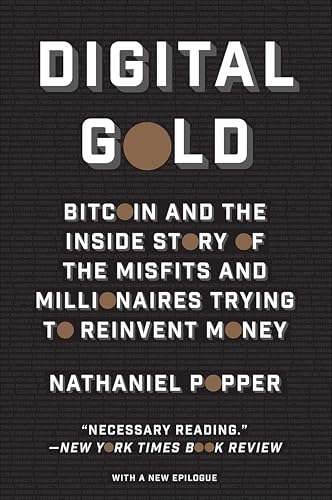
Digital Gold is the best narrative history of Bitcoin’s early years, and the one I recommend when someone finds economics dry. New York Times journalist Nathaniel Popper interviews the actual people who built the early ecosystem, from Satoshi’s early collaborators and developers to early miners, the Winklevoss twins, and figures tangled up in the Silk Road era. The result reads like a thriller rather than a textbook.
For beginners, the strength here is human. Instead of explaining cryptography in the abstract, Popper shows you the personalities, the rivalries, the early fortunes won and lost, and the messy reality of a movement being built in real time. I came away understanding not just what Bitcoin is but how it actually came to exist, who fought over its direction, and why those early debates still echo today. It is a fast, engaging read that lowers the barrier to entry for people intimidated by technical material.
The limitation is that this is journalism and storytelling, not an investing manual or a technical primer. It largely covers Bitcoin’s first decade, so it does not address later developments, newer assets, or current strategy, and it will not teach you how to value a crypto asset or build a portfolio. I would treat it as the book that makes you care and gives you context, then turn to a framework book for the practical side.
Cryptoassets by Chris Burniske and Jack Tatar
Cryptoassets is the most practical investing framework on this list, and the one I would reach for after the history and the “why” have clicked. Written by two investment analysts, it presents crypto as an emerging asset class rather than a single bet. Burniske and Tatar show how to evaluate different types of digital assets, drawing distinctions between currencies, utility tokens, and security tokens, and they discuss portfolio allocation approaches in plain terms.
What I appreciated is that the authors translate traditional investment analysis into the crypto context instead of treating crypto as something that breaks all the old rules. They walk through valuation thinking, risk, and diversification, which gives a beginner a structured way to approach the space rather than chasing whatever is trending. If you have an investing background, the bridge they build between familiar concepts and this new asset class is genuinely useful and calming.
The trade-off is age. The book leans on the market environment and examples of its time, so some specifics and asset categories feel dated, and a few token classifications have shifted as the industry and regulation evolved. The frameworks for thinking still hold up well, but the reader should mentally update the examples and not treat any specific allocation suggestion as current advice. Used as a way to learn how to reason, it remains one of the more valuable books here.
Layered Money by Nik Bhatia
Layered Money may be the most intellectually rewarding book on this list for readers who want the macro picture. Bhatia, a former bond trader, traces how monetary systems operate in layers, from gold at the base, up through central bank reserves, commercial bank deposits, and finally the digital payments most of us use daily. He then explains why Bitcoin could represent a potential new base layer for a future monetary system.
The layered model is the gift here. Once you see money as a stack of claims built on top of a base asset, a lot of confusing financial news suddenly has a structure. I found it sharpened how I read everything from central bank policy to stablecoins, because the framework applies far beyond crypto. It is also concise, which I count as a strength, since it makes a sophisticated argument without padding it out.
The honest caveat is that this is the most demanding read of the four. Bhatia writes clearly, but the subject is layered finance and monetary plumbing, so a complete beginner with no interest in macro may find parts heavy going. I would not hand it to someone on day one. It is the book you grow into once the basics are in place, and at that point it rewards the effort more than anything else on this list.
What to look for
When choosing a crypto book as a beginner, the right pick depends on what you actually want to walk away with. A few factors matter more than the cover or the hype.
- Your starting point: If you need the “why” first, choose a foundations book. If you want context and motivation, choose a narrative.
- Balance: Prefer books that acknowledge counterarguments, or pair an opinionated title with a more neutral one so you see both sides.
- Durability of ideas: Favor books whose core concepts, like sound money or asset valuation, outlast any single market cycle, and mentally update dated examples.
- Practical payoff: Decide whether you want to understand crypto, enjoy its story, or learn to evaluate it as an investment, since no single book does all three equally.
- Reading effort: Match the book’s difficulty to your patience. A challenging book you finish beats an easy one you abandon, but a heavy macro read can stall a true beginner.
- Author background: Knowing whether the author is an economist, a journalist, an analyst, or a trader tells you what lens the book uses and where its blind spots may be.
The verdict
If you read only one, make it The Bitcoin Standard. It builds the mental foundation that makes everything else easier, as long as you treat its strong opinions as an argument rather than settled fact. For a more enjoyable on-ramp, Digital Gold tells the human story and makes you care, though it stays in Bitcoin’s early years and will not teach you strategy. When you are ready to think like an investor, Cryptoassets gives you a structured framework, with the caveat that its examples have aged. And once the basics click, Layered Money is the most rewarding of the four for understanding macro finance, provided you are ready for a denser read. Read in that order, these four take a beginner from confused to genuinely informed.
Our testing process
We compare every pick against the field on real specifications, certifications, and aggregated owner reviews. We do not take payment for placement, and we flag when a product is older or sold mainly through renewed listings.
Quick comparison
Reviewed in detail
The Bitcoin Standard by Saifedean Ammous
Published in 2018 and still essential reading in 2026, The Bitcoin Standard is the book that explains the "why" behind Bitcoin more clearly than anything else written. Ammous traces the history of money from commodity currencies to the gold standard to fiat, then makes the case for Bitcoin as a hard monetary asset. Whether you ultimately agree with his thesis or not, this book gives you the intellectual framework to evaluate every crypto project you encounter. It is required reading before you invest a single dollar.
Digital Gold by Nathaniel Popper
Digital Gold is the best narrative history of Bitcoin's early years. New York Times journalist Nathaniel Popper interviews the actual people - Satoshi's early collaborators, Silk Road figures, Winklevoss twins, early miners, and developers - who built the Bitcoin ecosystem in its first decade. The result reads like a thriller, not a textbook. For beginners who find economics dry, this is the perfect entry point: you'll understand what Bitcoin is, why it matters, and how it nearly collapsed multiple times before becoming a trillion-dollar asset class.

Cryptoassets by Chris Burniske and Jack Tatar
Written by two investment analysts, Cryptoassets is the most practical investing framework book on this list. Burniske and Tatar present crypto as an emerging asset class, show how to evaluate different types of digital assets (currencies, utility tokens, security tokens), and discuss portfolio allocation approaches. The book translates traditional investment analysis methods into the crypto context. For anyone ready to move beyond "should I buy Bitcoin" into questions like "how much, when, and what else" - this is the guide.

Layered Money by Nik Bhatia
Layered Money may be the most intellectually rewarding book on this list for readers who want to understand macro finance and where Bitcoin fits. Bhatia, a former bond trader, traces how monetary systems operate in layers - from gold at the base, to central bank reserves, to commercial bank deposits, to digital payments. He then explains why Bitcoin represents a potential new base layer for global money. It's a short read (under 200 pages) that dramatically expands your understanding of both traditional finance and why Bitcoin's properties matter to institutional investors.
How to choose
Fundamentals First
Start with a book that explains what cryptocurrency is and why it exists before jumping to trading strategies. The Bitcoin Standard and Digital Gold are ideal starting points.
Investment vs. Technology Focus
Some books focus on the technology (how blockchain works), others on investing (portfolio allocation, risk), others on history. Know what gap you're trying to fill.
Publication Date
The crypto space evolves rapidly. Check when a book was published and whether a newer edition exists. Pre-2020 books predate DeFi and most altcoin development.
Author Credibility
Look for authors with traceable backgrounds - journalists (Popper), economists (Ammous), fund managers (Burniske), or industry researchers (CoinGecko). Be skeptical of anonymous authors or get-rich-quick framing.
Avoid Hype Books
Steer clear of titles promising specific price targets or guaranteed returns. Legitimate crypto education books focus on understanding, not speculation.
The bottom line
If you read only two books before investing in cryptocurrency, make them **The Bitcoin Standard** for foundational monetary theory and **Digital Gold** for historical context. Add **Cryptoassets** when you're ready to think about portfolio allocation. **Layered Money** is ideal for anyone interested in macro finance or Bitcoin's institutional narrative. **How to DeFi** is essential if decentralized finance is on your
Common questions
The Bitcoin Standard by Saifedean Ammous is widely recommended as the foundational text for understanding why Bitcoin exists and how it differs from traditional money. It gives you the mental framework to evaluate all other crypto claims.
No. All five books on this list are written for general audiences. The Bitcoin Standard and Digital Gold read like narrative non-fiction. How to DeFi uses step-by-step examples. No coding or finance degree required.
Absolutely. Understanding the technology, history, and risks of cryptocurrency before investing significantly reduces costly mistakes. Most experienced crypto investors cite reading as the most important early step in their journey.
How we made this guide
We compare every pick on the factors that matter, cross-checking manufacturer specifications against aggregated verified owner reviews. We rank independently and never take payment for placement. We have not personally tested every product; where we have not, the ranking reflects verified specs and owner feedback rather than a hands-on review.
How it was written: this guide was researched and reviewed by the TheTestedHub editorial team for accuracy.
Affiliate disclosure: TheTestedHub is reader-supported. When you buy through links on our site, we may earn a commission at no extra cost to you.
More guides

Education Books for Every Budget: What’s Worth Applying in 2026

Culinary Books Worth Every Penny for Every Skill Level

Buy the Best Cryptocurrency Books & Security Guides 2026

Buy the Wisden Book of Test Cricket 1877-2025 & Top Collectibles

Books for Cricket Fans: Choose by What You Want to Learn

Craft Books Compared: The Knitter’s Guide to 2026’s Essential Reads

Funny Books with Heart: Best Comedy Reads of 2026
