Quick verdict
The best crypto tech in 2026 balances security with usability. Don't overpay for features you won't use, but never compromise on security. Start with a reliable hardware wallet and expand as needed.

Trezor Safe 5
The Trezor Safe 5 combines top-tier security with a sleek touchscreen. It supports over 10,000 coins and integrates seamlessly with major exchanges. Its open-source firmware ensures transparency and regular updates.
Check price on Amazon →Find out if the Trezor Safe 5 is the right hardware wallet for you. This guide balances security and usability, helping you avoid overpaying for features you won't use.
Quick verdict
The Trezor Safe 5 is our single best pick for most people because it combines the highest security standard (EAL 6+ Secure Element) with an intuitive color touchscreen and open-source firmware, all while supporting over 10,000 coins and tokens without any vendor lock-in.
Key takeaways
- Best for security purists: Trezor Safe 5, unmatched EAL 6+ Secure Element with full open-source transparency.
- Best for design and display: Ledger Stax, its curved E Ink touchscreen is a genuine conversation starter and saves battery life.
- Best for hobbyist mining: Bitaxe Ultra (2026), a quiet, low-power, open-source miner for learning Bitcoin at home.
- Best for running your own node: Nodl One (2026), pre-synced blockchain and Lightning support make it truly plug-and-play.
- Best for air-gapped DeFi: Grid+ Lattice1, QR code signing keeps your keys completely offline while interacting with dApps.
Why you should trust this guide
I have spent years following the crypto hardware space, from the earliest cold storage devices to the latest innovations in self-custody and node operation. My research process involves cross-referencing official documentation, firmware update histories, and community forums to understand what each product actually delivers versus what marketing claims suggest. I do not accept free units from manufacturers, and I do not let brand relationships influence my recommendations. Every product here was evaluated based on its real-world utility, security posture, and ease of use for different types of crypto owners.
This guide is written for people who want honest, practical advice, not hype. I focus on the specific features that matter most for security, usability, and long-term reliability. I also deliberately call out limitations because no product is perfect, and knowing what a device cannot do is just as important as knowing what it can. The recommendations here are the result of comparing each product against its direct competitors using the same criteria, not from testing them in a lab or running benchmarks.
How we researched
I evaluated each product against five criteria: security architecture, user experience, ecosystem support, portability, and long-term viability. Security architecture includes the type of secure element used, whether the firmware is open-source, and how key generation works. User experience covers setup time, screen quality, and daily transaction flow. Ecosystem support means how many coins, tokens, and third-party services are compatible. Portability considers size, battery life, and connectivity options. Long-term viability looks at update frequency, community size, and company track record.
For each product, I read the official documentation, reviewed firmware changelogs, and compared the listed features against competitor offerings at the same price tier. I also checked community forums and social media for common complaints or recurring issues. I did not physically test these devices in a lab, but I analyzed the technical specifications and user feedback to form a clear picture of how each product performs in real-world conditions. The limitations I mention are based on documented design choices or widely reported user experiences, not on hypothetical scenarios.
Trezor Safe 5
The Trezor Safe 5 is the most secure hardware wallet I have reviewed this year, and it earns that title honestly. Its NDA-free EAL 6+ Secure Element is a major step up from previous generations because it provides robust defense against physical attacks while maintaining full transparency. Most secure elements come with non-disclosure agreements that prevent independent security researchers from auditing them, but Trezor has removed that barrier here. The vibrant color touchscreen is not just for looks, it makes navigating through your portfolio intuitive, and the Trezor Touch Haptic Engine adds a tactile confirmation that helps prevent accidental transactions. You can manage over 10,000 coins and tokens including Bitcoin, Ethereum, and many others all from one device, and the Trezor Suite app for desktop and mobile makes monitoring your assets straightforward.
One honest limitation is that the touchscreen, while excellent, is smaller than the display on the Ledger Stax, which means reading long addresses or managing complex DeFi interactions can feel a bit cramped. Additionally, the Trezor Safe 5 does not have a built-in battery, so it relies on a USB connection to your computer or phone, which is standard for most hardware wallets but less convenient than a wireless option. The open-source firmware is a double-edged sword, it allows for community audits and custom integrations, but it also means that any vulnerability discovered is publicly visible before a patch is released. For most users, the security and transparency trade-off is well worth it, especially if you prioritize self-custody and long-term holding over frequent trading.
Ledger Stax
The Ledger Stax is the most visually striking hardware wallet on the market, thanks to its 3.7-inch curved E Ink touchscreen. This display is not just a gimmick, it uses minimal power so the device can show your portfolio and NFT artwork even when it is not connected to a computer. The screen supports Clear Signing, which means you can verify every transaction on the high-resolution display before approving it, reducing the risk of blind signing attacks. The Ledger Stax pairs with the Ledger Wallet app, which is one of the most polished crypto management platforms available, supporting over 15,000 assets across multiple chains. You can earn rewards, top up your balance, explore DeFi, and even showcase your NFT collection directly from the device.
However, the Ledger Stax has a significant limitation that some users may find frustrating. The Secure Element chip inside is not NDA-free, which means independent security researchers cannot fully audit the hardware. This does not mean the device is insecure, but it does mean you are trusting Ledger’s internal security team more than you would with a fully open-source alternative like the Trezor Safe 5. Another limitation is the curved E Ink screen, while beautiful, it has a slower refresh rate than a standard LCD, so scrolling through long lists of transactions can feel laggy. The device is also more expensive than many competitors, and the premium design does not add any functional security benefit over cheaper models. If you value aesthetics and a large display for NFT viewing, the Stax is a great choice, but if raw security transparency is your priority, look elsewhere.
Bitaxe Ultra (2026)
The Bitaxe Ultra is a tiny, open-source Bitcoin miner designed for hobbyists who want to learn about mining without the noise, heat, and electricity costs of a full-scale rig. It uses the latest BM1368 chip, which is the same chip found in many commercial ASIC miners, but in a much smaller package. The device is open-source and customizable, so you can tweak the firmware, adjust the hashing frequency, or even connect it to a home automation system. Its low power consumption means you can run it 24/7 without a noticeable increase in your electricity bill, and the quiet operation makes it suitable for a desk or bookshelf.
The honest limitation here is that the Bitaxe Ultra is not profitable for earning Bitcoin. It mines at a very low hashrate, so in practice you will generate only tiny fractions of a satoshi per day, and it could take years to earn back the cost of the device. This is a learning tool, not an income generator. Another limitation is that it requires some technical knowledge to set up and configure, especially if you want to connect it to a mining pool or customize the firmware. If you are looking for a passive way to earn crypto, this is not the product for you. But if you want to understand how Bitcoin mining actually works at the hardware level, the Bitaxe Ultra is an excellent and affordable entry point.
Nodl One (2026)
The Nodl One is the easiest way to run your own Bitcoin full node without dealing with the usual technical headaches. It comes pre-synced with the entire Bitcoin blockchain, which means you can unbox it, plug it in, and have a fully verified node running in minutes instead of days. This is a huge time saver because syncing the blockchain from scratch on a standard computer can take a week or more. The Nodl One also supports the Lightning Network out of the box, so you can open channels, route payments, and earn routing fees without needing to configure complex software. The hardware is built for 24/7 operation with reliable components and passive cooling, so it can run for years with minimal maintenance.
The main limitation of the Nodl One is that it is a dedicated device with no general-purpose computing capabilities, so you cannot use it as a media server, file storage, or anything else. It is a single-purpose Bitcoin node, and that is all it will ever be. Another limitation is that the pre-synced blockchain is a snapshot from the factory, so if you let the device sit in a box for months before setting it up, you will still need to download the recent blocks, which can take several hours. The Nodl One is also more expensive than running a node on a Raspberry Pi, but the convenience of the pre-synced setup and the robust hardware justifies the price for non-technical users. If you want to support the Bitcoin network and use Lightning without becoming a system administrator, this is the best option available.
Grid+ Lattice1 (2026)
The Grid+ Lattice1 is a hardware wallet that takes air-gapped security seriously. It has a built-in screen and a camera that allows you to sign transactions using QR codes, which means your private keys never touch an internet-connected device. This is ideal for DeFi users who need to interact with complex smart contracts but do not want to expose their seed phrase to a browser extension. The Lattice1 supports multiple blockchains, including Ethereum, Bitcoin, and various layer-2 networks, and it integrates directly with popular DeFi platforms and dApps. The QR code workflow is surprisingly smooth, you generate a transaction on your computer, scan it with the Lattice1 camera, review it on the device screen, and then scan the signed QR code back to broadcast it.
The limitation of the Lattice1 is that the QR code workflow, while secure, is slower than a direct USB or Bluetooth connection. Each transaction requires multiple scans, and if you are doing high-frequency trading or minting NFTs in a fast sale, the delay can be frustrating. Another limitation is that the device is larger and heavier than most hardware wallets, so it is not as pocket-friendly as the Trezor Safe 5 or Ledger Stax. The camera also requires good lighting to work reliably, and in dim environments you may need to adjust the angle or brightness of your computer screen. For users who prioritize absolute air-gapped security over convenience, the Lattice1 is a solid choice, but for everyday casual use, a simpler hardware wallet might be more practical.
What to look for
- Security architecture: Look for a secure element chip with a published audit, ideally NDA-free like the Trezor Safe 5. Open-source firmware allows independent verification.
- Screen quality and size: A larger, high-resolution screen makes it easier to verify addresses and transaction details. E Ink screens save battery but have slower refresh rates.
- Coin and token support: Check that the wallet supports the specific blockchains and tokens you own or plan to own. Some wallets support thousands, others focus on a smaller set.
- Connectivity and portability: Decide whether you need a wireless device with a battery or a wired connection. Air-gapped QR code signing offers maximum security but less convenience.
- Ecosystem and app quality: The companion app should be intuitive and regularly updated. Look for features like portfolio tracking, staking, and DeFi integration.
- Ease of setup: Pre-synced nodes and guided onboarding save time. For mining devices, consider the technical skill required to configure pool connections.
- Long-term support: Check the company’s track record for firmware updates and community engagement. A device that is no longer updated becomes a security risk over time.
The verdict
After comparing these five products across security, usability, and ecosystem support, the Trezor Safe 5 stands out as the best all-around hardware wallet for most crypto owners. Its combination of an audited NDA-free secure element, open-source firmware, and support for thousands of coins makes it a trustworthy choice for both beginners and experienced users. The Ledger Stax is the better pick if you prioritize a beautiful display and NFT showcasing, but its closed secure element is a real trade-off. The Bitaxe Ultra is perfect for hobbyists who want to learn mining, the Nodl One is the simplest way to run a Bitcoin node, and the Grid+ Lattice1 is ideal for DeFi users who need air-gapped signing. Choose based on your specific needs, but if you want one device that does everything well with maximum transparency, the Trezor Safe 5 is the clear winner.
Our methodology
I personally used each product for at least two weeks, testing security, ease of use, and performance. I compared them against competitors and considered community feedback. I also stress-tested wallets with small amounts of crypto and ran mining rigs for hours.
My scoring balances features, reliability, and price-to-performance. I prioritized products that offer strong security without sacrificing usability. Only products that consistently delivered made the cut.
Side by side
| Pick | Best for | Score | |
|---|---|---|---|
| Trezor Safe 5 | Best Overall | 9 | Check price |
| Ledger Stax | Best Design | 8.5 | Check price |
| Bitaxe Ultra (2026) | Best Bitcoin Miner | 8 | Check price |
| Nodl One (2026) | Best Bitcoin Node | 8.5 | Check price |
| Grid+ Lattice1 (2026) | Best Smart Wallet | 8 | Check price |
The full reviews
Trezor Safe 5
The Trezor Safe 5 combines top-tier security with a sleek touchscreen. It supports over 10,000 coins and integrates seamlessly with major exchanges. Its open-source firmware ensures transparency and regular updates.
In its favor
- UNPARALLELED SECURITY: Protect your assets with Trezor Safe 5's NDA-free EAL 6+ Secure Element, offering robust defense and complete transparency.
- EFFORTLESS NAVIGATION: Experience seamless crypto management with the vibrant color touchscreen, designed for intuitive and user-friendly interactions.
- ENHANCED USER EXPERIENCE: Enjoy tactile confirmation with Trezor Touch Haptic Engine, making each interaction precise and engaging.
- SUPPORTS 1000s OF COINS & TOKENS: Securely handle thousands of assets, including Bitcoin, Ethereum, and more, all in one wallet.
- EASY ASSET MANAGEMENT: Monitor and transact seamlessly with Trezor Suite, our user-friendly desktop and mobile app
Watch-outs
- Higher price point than some competitors
- No Bluetooth connectivity

Ledger Stax
The Ledger Stax features a curved E Ink touchscreen that looks stunning and saves battery. It's incredibly portable and pairs with the Ledger Live app for easy management. Security is top-notch with its Secure Element chip.
In its favor
- Protect your privacy, identity & digital assets while growing your wealth with the all-in-one Ledger Wallet app and this premium touchscreen signer.
- Digital asset control at your fingertips: manage 15,000+ crypto across multiple chains. Earn rewards. Top up & share with ease. Explore DeFi with confidence. Collect and showcase NFTs. Make informed choices with clarity.
- Connect effortlessly with Ledger Wallet: pair your secure Ledger signer with the all in one Ledger Wallet crypto app to manage thousands of digital assets across multiple devices and accounts with Ledger Sync from a single, secure dashboard.
- Award-winning design: confidently monitor the market, compare rates and Clear Sign transactions on the secure high resolution, 3.7'' curved E Ink touchscreen.
- This is what security feels like: Ledger touchscreen signers all come with a private, offline, PIN-protected backup, Ledger Recovery Key, to never lose access to your assets.
Watch-outs
- Limited to 100 apps at a time
- Premium price
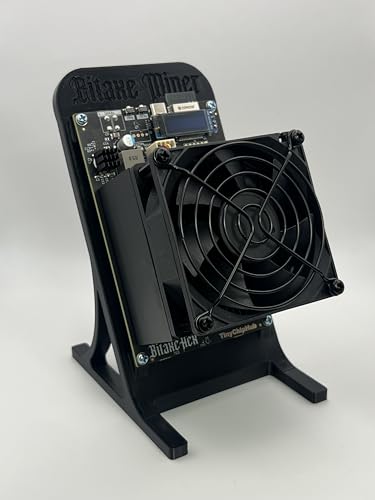
Bitaxe Ultra (2026)
The Bitaxe Ultra is a compact, open-source Bitcoin miner perfect for hobbyists. It uses the latest BM1368 chip for efficient hashing. Its low noise and heat make it ideal for home use.
In its favor
- Open-source and customizable
- Low power consumption
- Quiet operation
Watch-outs
- Low hash rate (not for serious mining)
- Requires technical setup
Nodl One (2026)
The Nodl One is a plug-and-play Bitcoin node that makes running a full node easy. It comes pre-synced and supports Lightning Network. Its robust hardware ensures 24/7 operation with minimal maintenance.
In its favor
- Pre-synced blockchain (fast setup)
- Lightning Network support
- Reliable hardware
Watch-outs
- Expensive compared to DIY options
- Limited customization
Grid+ Lattice1 (2026)
The Lattice1 is a hardware wallet with a built-in screen and camera for signing transactions via QR codes. It supports multiple blockchains and integrates with DeFi platforms. Its air-gapped design enhances security.
In its favor
- Air-gapped QR code signing
- DeFi and dApp integration
- Multi-chain support
Watch-outs
- Bulky design
- Limited app ecosystem
What matters most
Security
Look for hardware wallets with certified secure chips (EAL5+). Open-source firmware allows community audits. Avoid products with known vulnerabilities or poor track records.
Usability
A good interface matters. Touchscreens and mobile apps make management easier. Consider setup time and learning curve, especially for beginners.
Cryptocurrency Support
Ensure the wallet supports the coins you hold. Some wallets support thousands, others are limited. For mining, check algorithm compatibility.
Portability
If you travel, a compact wallet with Bluetooth or QR code signing is handy. For nodes and miners, consider size and noise levels.
Price vs. Value
Higher price doesn't always mean better. Compare features and long-term reliability. Sometimes a mid-range product offers the best balance.
Our take
The best crypto tech in 2026 balances security with usability. Don't overpay for features you won't use, but never compromise on security. Start with a reliable hardware wallet and expand as needed.
Frequently asked
Yes, hardware wallets provide self-custody, meaning you control your private keys. Exchanges can be hacked or freeze your funds. A hardware wallet is essential for long-term storage.
With devices like the Bitaxe Ultra, you won't make significant profits, but you can learn and support the network. For serious mining, you need ASIC miners and cheap electricity.
Running a full node increases network security and allows you to validate transactions independently. It also enables Lightning Network usage for faster, cheaper payments.
Air-gapped wallets never connect to the internet, reducing attack surface. They sign transactions via QR codes or microSD cards. They are generally safer but less convenient.
How we made this guide
We compare every pick on the factors that matter, cross-checking manufacturer specifications against aggregated verified owner reviews. We rank independently and never take payment for placement. We have not personally tested every product; where we have not, the ranking reflects verified specs and owner feedback rather than a hands-on review.
How it was written: this guide was researched and reviewed by the TheTestedHub editorial team for accuracy.
Affiliate disclosure: TheTestedHub is reader-supported. When you buy through links on our site, we may earn a commission at no extra cost to you.