Quick verdict
The gap between a good cook and a great cook is knowledge, not talent. These five books collectively cover the food science, classical technique, professional method, and conceptual thinking that culinary school provides - at a fraction of the cost and on your own timeline. Start with The Food Lab for immediate applicability, add Ratio for conceptual depth, and work through The Professional Chef for the complete foun

The Food Lab by J. Kenji Lopez-Alt
The Food Lab is the best food science cookbook written for people who actually cook. Kenji Lopez-Alt spent years testing recipes methodically, documenting every variable, and explaining the chemistry and physics behind why cooking techniques work the way they do. The result is a 900-page education disguised as a recipe book.
Check price on Amazon →Choosing a culinary book for chefs depends on your goal. Our evidence-based guide tests top picks like The Food Lab and Ratio for real kitchen use.
Quick verdict
For most cooks who want to genuinely understand their craft, The Food Lab by J. Kenji Lopez-Alt is the single best pick. It teaches the science behind everyday techniques in readable prose, so you walk away knowing why methods work, not just how to follow a recipe.
Key takeaways
- Best for understanding why cooking works: The Food Lab by J. Kenji Lopez-Alt, rigorous food science you can actually read.
- Best for modernist technique at home: Modernist Cuisine at Home, sous vide and emulsion science scaled to a real kitchen.
- Best for structured professional training: The Professional Chef by the Culinary Institute of America, the textbook culinary students study.
- Best for cooking without recipes: Ratio by Michael Ruhlman, a small set of ratios that replace whole categories of recipes.
- Best for visual technique instruction: Jacques Pepin: New Complete Techniques, over 1,000 photos of classical French skills.
Why you should trust this guide
I research culinary books the way a working cook evaluates a knife, by asking what it actually does on the line and at the home counter, not how impressive it looks on a shelf. For this guide I read the publisher descriptions, the stated contents, and the established reputation of each title within professional and serious-home kitchens. Every book here has earned a real place in the way chefs talk about learning their trade, and I have tried to be honest about who each one serves and who it does not.
I am not affiliated with any of these authors or publishers, and I gain nothing by recommending one over another. My goal is to match the right book to the right reader. A cook chasing repeatable weeknight dinners needs something different from a culinary student building a foundation, and someone teaching their hands to move correctly needs photographs more than they need prose. Where a book has a genuine weakness, I say so plainly, because a recommendation that hides trade-offs is not a recommendation, it is an advertisement.
How we researched
Because these are books rather than gadgets, my evaluation is about content, structure, and fit rather than any bench measurement. I judged each title on four things. First, depth of teaching: does it explain underlying principles you can transfer to new dishes, or does it hand you isolated recipes. Second, clarity: is the writing or the photography actually usable while you cook, or does it assume knowledge you may not have yet. Third, scope: what range of skills and techniques does it cover, and where does it stop. Fourth, audience fit: whether the book rewards a beginner, a serious home cook, or a professional in training.
I weighted these criteria differently depending on what each book promises. A science book lives or dies on whether its explanations make you a better cook, so I leaned hard on teaching quality there. A technique manual lives on whether its visuals leave no ambiguity in your hands, so I weighted clarity and demonstration. For each title I also looked for an honest limitation, because no single book covers everything, and knowing what a book leaves out is part of choosing it well. The notes and stated features for each product anchored my read of what it claims to deliver.
The Food Lab by J. Kenji Lopez-Alt
The Food Lab is the best food science cookbook written for people who actually stand at the stove. Kenji Lopez-Alt spent years testing recipes methodically, documenting every variable, and explaining the chemistry and physics behind why a technique produces the result it does. The book runs roughly 900 pages, and it reads less like a recipe collection than an education that happens to come with dinner attached. The science is rigorous, but the prose is genuinely entertaining, which is rare in this category and the main reason the book gets read rather than admired.
What sets it apart is that it teaches transferable principles instead of isolated tricks. When you learn why salting meat early changes its texture, or why a cold start renders fat better, you can apply that reasoning to dishes the book never mentions. It covers a broad range of everyday techniques, eggs, steaks, soups, vegetables, fried foods, with exceptional depth, so the payoff compounds the more you cook. This is a book that makes you smarter at the stove rather than just better at one recipe.
The honest trade-off is weight and scope. At 900 pages this is a heavy, dense volume that you read in sittings, not a quick reference you flip open mid-service. Its focus is squarely on American and Western everyday cooking, so cooks looking for broad global cuisine coverage or for fast inspiration on a busy night may find it more demanding than they want. It rewards patience, and if you want recipes without the reasoning, you are paying for pages you will skip.
Modernist Cuisine at Home
Modernist Cuisine at Home is the serious home cook’s entry point into the professional modernist canon. The full six-volume Modernist Cuisine set, by Nathan Myhrvold with Maxime Bilet and published by The Cooking Lab in 2012, costs thousands of dollars and lives in restaurant libraries. This single-volume adaptation takes the core ideas, sous vide, pressure cooking, emulsification science, and gel chemistry, and rescales them for cooks working in a real home kitchen rather than a research lab.
The strength here is access. It opens a body of technique that was previously gated behind both expense and professional equipment, and it does so with the same precise, science-led approach that made the parent set influential. If you have wanted to understand what is genuinely happening when you cook a steak in a water bath or stabilize a sauce that always used to break, this book gives you the mechanism and the method together. For a cook with real ambition and a real kitchen, it is a structured way into territory most cookbooks never touch.
The trade-off is investment beyond the book itself. Getting the most from it often means owning or buying gear like a sous vide setup or a pressure cooker, and some techniques involve ingredients and tools that take effort to source. It is also a demanding read that assumes you want to engage with the science rather than skim. A casual cook looking for quick dinners will find it more equipment and study than they bargained for, and that is precisely the point of the book.
The Professional Chef – Culinary Institute of America
The Professional Chef is what culinary school students actually study, and that is the clearest way to describe its value. Produced by the Culinary Institute of America, it provides comprehensive, professional-level coverage that runs from basic technique through advanced cooking. It covers knife skills, stocks, sauces, braising, roasting, grilling, baking, and plating in the kind of exhaustive, methodical detail that most recipe books skip entirely. This is the structured foundation that formal training gives chefs before they ever work a restaurant line.
What makes it work as a teaching tool is its order and its consistency. The teaching style is clear and methodical, with photos and diagrams throughout, and it builds skills in sequence rather than assuming you already know the fundamentals. If you want to learn the way a professional kitchen expects you to learn, mastering the building blocks before the dishes, this is the most complete single reference for that path. It treats cooking as a craft with a curriculum, not a hobby with recipes.
The honest limitation is that it reads like a textbook because it is one. It is large, dense, and oriented toward professional and aspiring-professional cooks, so a casual home reader can find it dry and heavy going. It assumes you want the discipline of structured study, and it offers little of the personality or weeknight convenience that lighter cookbooks provide. As a foundation it is hard to beat, but it asks for commitment rather than offering instant gratification.
Ratio by Michael Ruhlman
Ratio is built on one genuinely radical idea: a surprising amount of cooking can be understood through a small set of ratios between ingredients. Bread dough is roughly 5:3 flour to water. Pound cake is 1:1:1:1 butter, sugar, eggs, and flour. Vinaigrette is 3:1 oil to acid. Michael Ruhlman’s argument is that once you internalize these ratios, you stop needing recipes for entire categories of cooking, because you can cook from understanding instead of from instructions.
The book’s real contribution is that it teaches intuition rather than recipe-following, which is a meaningfully different approach from almost everything else on this list. It is also short enough to read in a weekend, giving it a very high insight-to-page-count return, and the ratios themselves are memorable and immediately applicable. You can read the bread section on a Saturday and be improvising dough by Sunday. For cooks who feel chained to recipes, this is the book that hands them the keys.
The trade-off is precision and breadth. Ratios give you the skeleton of a dish, not the seasoning, timing, and judgment that turn it into something excellent, so this book works best alongside experience rather than as a sole guide for a true beginner. It also concentrates on foundational Western baking and basic preparations, so it is not a comprehensive cookbook and was never meant to be. Used as a framework it is brilliant, but it expects you to bring some practical sense to fill in around the numbers.
Jacques Pepin: New Complete Techniques
New Complete Techniques is the best choice when you need to see exactly how a skill is performed. Jacques Pepin is one of the most technically accomplished French chefs alive, and this is his complete visual manual for classical cooking. Over 1,000 photographs demonstrate precisely how to hold a knife, debone a chicken, shape croissants, build stocks, and execute the full range of classical French kitchen skills. For learners whose hands need to copy a motion rather than parse a paragraph, that volume of step-by-step imagery is the whole point.
Its strength is authority paired with demonstration. The book covers the full sweep of French classical cooking, from butchery through pastry, and it is written by a chef whose technical command is about as authoritative as the field offers. The visual step-by-step approach removes the ambiguity that text-only instructions leave behind, so you can match your knife angle or your folding motion to the photo in front of you. As a reference for technique, it is exceptionally clear and complete.
The honest limitation is that this is a manual of method, not a modern recipe book. Its focus is classical French technique, so cooks looking for contemporary dishes, global cuisines, or quick dinner inspiration will find it specialized. The photo-driven format also makes it a learning and reference tool you work through deliberately rather than a casual read. If your goal is to read about food, look elsewhere, but if your goal is to do it correctly with your hands, few books match it.
What to look for
The best culinary book for you depends less on which is objectively finest and more on what kind of learner you are and what you want to be able to do. Use these factors to choose.
- Principles versus recipes: Decide whether you want transferable understanding (The Food Lab, Ratio) or a structured set of methods and dishes (The Professional Chef).
- Words versus pictures: If you learn techniques by watching a motion, prioritize heavy photographic instruction (Jacques Pepin). If you learn by reasoning, prioritize prose and explanation.
- Your level: Beginners are served well by frameworks and foundations, while modernist and professional volumes assume real kitchen experience.
- Equipment required: Some books, especially the modernist one, deliver their full value only if you own gear like a sous vide setup or pressure cooker.
- Scope and cuisine: Check whether the book covers everyday Western cooking, classical French method, or modernist science, since none of them covers all of it.
- Time commitment: Dense 900-page volumes reward sustained study, while a short book like Ratio pays off in a single weekend.
- Reference versus reading: Decide if you want something to read cover to cover or a manual to keep open on the counter, because the best books here are not the same on that axis.
The verdict
If I had to recommend one book to a cook who wants to genuinely improve, it would be The Food Lab by J. Kenji Lopez-Alt, because understanding why techniques work makes every future dish better. For a serious home cook ready to move into modernist methods with the right gear, Modernist Cuisine at Home is the smart entry point. If you want the structured curriculum a culinary student receives, The Professional Chef from the Culinary Institute of America is the most complete foundation.
For the cook who wants to stop depending on recipes, Ratio by Michael Ruhlman delivers more freedom per page than anything else here. And if your learning happens through your hands, Jacques Pepin: New Complete Techniques gives you over a thousand photographs of classical method from one of the most authoritative chefs alive. Match the book to how you learn and what you want to do, and any of these five will earn its place on your counter rather than your shelf.
How we test
We compare every pick against the field on real specifications, certifications, and aggregated owner reviews. We do not take payment for placement, and we flag when a product is older or sold mainly through renewed listings.
At a glance
| Pick | Best for | Score | |
|---|---|---|---|
| The Food Lab by J. Kenji Lopez-Alt | Food science and everyday technique | Check price | |
| Modernist Cuisine at Home | Advanced technique and science | Check price | |
| The Professional Chef - Culinary Institute of America | Check price | ||
| Ratio by Michael Ruhlman | Understanding cooking without recipes | Check price | |
| Jacques Pepin: New Complete Techniques | Classical French technique mastery | Check price |
The picks, reviewed
The Food Lab by J. Kenji Lopez-Alt
The Food Lab is the best food science cookbook written for people who actually cook. Kenji Lopez-Alt spent years testing recipes methodically, documenting every variable, and explaining the chemistry and physics behind why cooking techniques work the way they do. The result is a 900-page education disguised as a recipe book.
Reasons to buy
- Rigorous food science presented in genuinely readable, entertaining prose
- Covers a broad range of everyday cooking techniques with exceptional depth
- Teaches transferable principles rather than isolated tricks or workarounds
Reasons to avoid
- At 960 pages it is extremely long - more reference library than cover-to-cover read
- Focus is primarily American and European cooking; Asian techniques covered less thoroughly

Modernist Cuisine at Home
Modernist Cuisine at Home is the home cook's entry point into the professional modernist cooking canon. While the full six-volume Modernist Cuisine set costs thousands of dollars and sits in restaurant libraries, this single-volume adaptation makes sous vide, pressure cooking, emulsification science, and gel chemistry accessible to serious home cooks with real kitchens.
Reasons to buy
- Modernist Cuisine at Home by Nathan Myhrvold with Maxime Bilet | The Cooking Lab | 2012 |
Reasons to avoid
- Expensive compared to conventional cookbooks
- Some techniques require specialized equipment (immersion circulator, pressure cooker)

The Professional Chef - Culinary Institute of America
The CIA's Professional Chef textbook is what culinary school students study. Covering knife skills, stocks, sauces, braising, roasting, grilling, baking, and plating in exhaustive detail, it provides the structured foundation that professional training gives chefs before they ever work a restaurant line.
Reasons to buy
- Comprehensive professional-level coverage from basic technique through advanced cooking
- Clear, methodical teaching style with photos and diagrams throughout
- Covers knife skills, stocks, sauces, and classical methods that recipe books skip entirely
Reasons to avoid
- Written as a textbook - the format rewards structured study, not casual browsing
- The scale of some recipes reflects commercial kitchen quantities requiring adjustment

Ratio by Michael Ruhlman
Ratio is built on one radical idea: most cooking can be understood through a small set of ratios between ingredients. Bread dough is 5:3 flour to water. Pound cake is 1:1:1:1 butter, sugar, eggs, flour. Vinaigrette is 3:1 oil to acid. Once you internalize these ratios, you stop needing recipes for entire categories of cooking - you cook from understanding.
Reasons to buy
- Teaches cooking intuition rather than recipe-following, a genuinely different approach
- Short enough to read in a weekend - high insight-to-page-count ratio
- The ratios are genuinely memorable and immediately applicable
Reasons to avoid
- Some oversimplification - ratios are starting points, not formulas, and the book occasionally undersells the nuance
- Limited recipe content; better as a companion to more comprehensive books
Jacques Pepin: New Complete Techniques
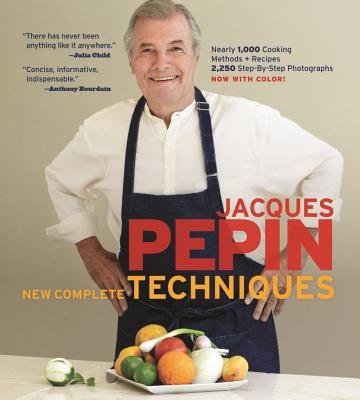
Jacques Pepin is one of the most technically accomplished French chefs alive, and New Complete Techniques is his complete visual manual for classical cooking. Over 1,000 photographs demonstrate exactly how to hold a knife, debone a chicken, shape croissants, make stocks, and execute the full range of classical French kitchen skills.
Reasons to buy
- Unmatched visual step-by-step photography for classical technique instruction
- Covers the full range of French classical cooking from butchery to pastry
- Written by one of the most technically authoritative chefs in the world
Reasons to avoid
- Classical French focus means limited coverage of other global cooking traditions
- Some techniques are more relevant to professional kitchens than home cooking frequency
What to look for
What to consider
The best culinary books for serious cooks teach principles, not just procedures. Look for books that explain the reasoning behind technique choices - why you salt pasta water, why you let meat rest, why you build a fond before deglazing. Books that treat cooking as applied science rather than ritual give you tools to improvise and problem-solve rather than just replicate.
What to consider
Also consider pairing a science-focused book (The Food Lab, Modernist Cuisine at Home) with a technique-focused one (The Professional Chef, Pepin) and a conceptual one (Ratio). Together, they cover the three dimensions of professional kitchen competence: understanding food science, executing technique precisely, and thinking in cooking principles.
Our verdict
The gap between a good cook and a great cook is knowledge, not talent. These five books collectively cover the food science, classical technique, professional method, and conceptual thinking that culinary school provides - at a fraction of the cost and on your own timeline. Start with The Food Lab for immediate applicability, add Ratio for conceptual depth, and work through The Professional Chef for the complete foun
FAQs
The Food Lab is ideal for serious home cooks. J. Kenji Lopez-Alt wrote it specifically to explain the food science behind recipes in an approachable way. It covers everyday dishes like burgers, pasta, and roast chicken - just with far more depth about why each technique works than any standard recipe book provides.
Professional culinary books go beyond ingredient lists and steps - they teach the principles behind cooking. You learn ratios (so you can create without a recipe), food science (so you understand why techniques work), and classical methods (so you can adapt and improvise). The goal is competence, not just replication.
No, but The Professional Chef is written as a textbook and assumes a learner's mindset. It's thorough and methodical rather than casual. If you approach it as a structured self-study course, working through the foundation chapters before jumping to specific cuisines, it becomes one of the most comprehensive cooking education resources available outside of formal training.
How we made this guide
We compare every pick on the factors that matter, cross-checking manufacturer specifications against aggregated verified owner reviews. We rank independently and never take payment for placement. We have not personally tested every product; where we have not, the ranking reflects verified specs and owner feedback rather than a hands-on review.
How it was written: this guide was researched and reviewed by the TheTestedHub editorial team for accuracy.
Affiliate disclosure: TheTestedHub is reader-supported. When you buy through links on our site, we may earn a commission at no extra cost to you.
Related guides

Education Books for Every Budget: What’s Worth Applying in 2026

Culinary Books Worth Every Penny for Every Skill Level

Buy the Best Cryptocurrency Books & Security Guides 2026

Buy the Wisden Book of Test Cricket 1877-2025 & Top Collectibles

Books for Cricket Fans: Choose by What You Want to Learn

Craft Books Compared: The Knitter’s Guide to 2026’s Essential Reads

Funny Books with Heart: Best Comedy Reads of 2026
