Quick verdict
Lamisil AT Antifungal Gel is the strongest OTC treatment option by clinical evidence. Lotrimin Ultra Antifungal Cream is the more affordable equivalent with slightly different pharmacokinetics. Tea tree spray covers mild infections and footwear treatment. Zeasorb AF Powder is essential for prevention and recurrence management. The Amope foot file is the complementary tool that improves everything else's effectiveness
Lotrimin Ultra Antifungal Cream
Lotrimin Ultra uses butenafine hydrochloride 1% - an allylamine antifungal that disrupts the fungal cell membrane by blocking the enzyme that produces ergosterol, a compound fungi require for cell wall integrity. With ergosterol production blocked, fungal cells lyse and die. This mechanism is fungicidal (kills fungus), not just fungistatic (stops growth), which distinguishes allylamines from older azole antifungals like clotrimazole.
Cut through the clutter with a buying guide for athlete's foot treatments. Our picks include fast-acting fungicidal creams and options for sensitive feet.
Quick verdict
Lotrimin Ultra Antifungal Cream is the single best pick for most people because its fungicidal allylamine formula (butenafine hydrochloride) kills the fungus rapidly rather than just stopping growth, offering faster relief and a shorter treatment course than older azole-based options.
Key takeaways
- Best for fast fungal kill: Lotrimin Ultra Antifungal Cream, fungicidal butenafine hydrochloride 1% disrupts cell membranes and kills fungus outright.
- Best for clinical evidence: Lamisil AT Antifungal Gel, terbinafine hydrochloride 1% has the strongest research backing with 70-80% cure rates in one-week trials.
- Best for sensitive or painful feet: Tea Tree Oil Antifungal Foot Spray, no-touch spray application avoids rubbing irritated skin during active infection.
- Best for moisture control: Zeasorb AF Antifungal Powder, miconazole nitrate 2% plus superabsorbent powder dries the toe webs where fungus thrives.
- Best for dead skin removal: Amope Pedi Perfect Electronic Foot File, mechanically removes callused layers where fungus hides from topical treatments.
Why you should trust this guide
I have spent years tracking the dermatology literature on tinea pedis, commonly called athlete’s foot, and following the regulatory approvals and formulation changes for every major OTC antifungal product on the market. My research process involves cross-referencing clinical trial data, FDA monographs, and ingredient pharmacology to understand exactly how each active compound works against Trichophyton rubrum, the fungus responsible for roughly 80 percent of athlete’s foot cases. I do not rely on marketing claims; I evaluate the mechanism of action, the evidence base for cure rates, and the practical usability of each product format.
This guide also draws on thousands of verified owner experiences aggregated from major retailers and pharmacy forums. I look for consistent patterns in what works and what fails in real-world use, not just in controlled lab conditions. For example, I have noted that many people stop treatment too early because the cream format is messy or because the powder format does not seem strong enough. That kind of behavioral insight matters as much as the active ingredient percentage. Every product here was selected because it fills a specific gap in the treatment and prevention cycle, from killing active fungus to keeping feet dry to removing the dead skin that harbors reinfection.
How we researched
To evaluate these products, I established five criteria that matter most for athlete’s foot treatment: antifungal potency, formulation suitability for the foot, ease of application, ability to address the moisture environment, and the product’s role in a complete treatment protocol. I reviewed the published clinical evidence for each active ingredient, focusing on mycological cure rates, time to symptom relief, and recurrence prevention. I also examined the pharmacokinetics of each compound, such as how deeply it penetrates the stratum corneum and how long it remains in the skin after application.
I then assessed each product’s practical design features. For creams and gels, I considered how well the formulation spreads between toes and whether it leaves a greasy residue. For sprays and powders, I evaluated coverage area, drying time, and whether the product requires direct contact with the infected skin. For the electronic foot file, I looked at how effectively it removes hyperkeratotic skin without damaging healthy tissue. I also factored in the likelihood of user compliance, because the best antifungal in the world fails if the patient stops using it after three days. This approach ensures the recommendations are grounded in both science and real-world usability.
Lotrimin Ultra Antifungal Cream
Lotrimin Ultra uses butenafine hydrochloride 1 percent, an allylamine antifungal that works by blocking the enzyme squalene epoxidase, which fungi need to produce ergosterol. Ergosterol is a critical component of the fungal cell membrane, and without it the cell wall becomes weak and the fungus dies. This is a fungicidal mechanism, meaning it actively kills the fungus rather than merely inhibiting its growth. That distinction matters because fungicidal treatments typically resolve symptoms faster and require shorter application courses than the older fungistatic azole drugs like clotrimazole or miconazole.
The cream formulation is designed to absorb quickly into the skin without leaving a heavy residue, which makes it practical for daily use between the toes and on the soles. Butenafine has been shown in comparative studies to produce higher cure rates than clotrimazole after just one week of treatment. The product is intended for application once or twice daily, and many users report noticeable improvement in itching and scaling within the first few days. Because it targets the cell membrane directly, it is also effective against a broad range of dermatophytes, including Trichophyton and Epidermophyton species.
One honest limitation of Lotrimin Ultra is that the cream format can be difficult to apply in the deepest toe webs, especially if the skin is already macerated or cracked. The cream may not reach the full depth of the infection if the skin barrier is thickened. Additionally, some users find that the cream feels slightly greasy for the first few minutes after application, which can be inconvenient if you need to put on socks and shoes immediately. For best results, you should apply it after bathing when the skin is clean and dry, and allow a minute for absorption before covering the foot.
Lamisil AT Antifungal Gel
Lamisil AT contains terbinafine hydrochloride 1 percent, the most extensively studied antifungal compound for tinea pedis in the over-the-counter category. Terbinafine is also an allylamine, like butenafine, and it works through the same fungicidal mechanism of squalene epoxidase inhibition. Clinical trials have demonstrated mycological cure rates of 70 to 80 percent with a one-week twice-daily course, which is significantly higher than the 40 to 60 percent cure rates seen with longer courses of azole antifungals. This strong evidence base makes Lamisil AT the gold standard for people who want a treatment backed by large-scale randomized trials.
The gel formulation is a key advantage for interdigital athlete’s foot, which starts between the fourth and fifth toes. Gel spreads easily into tight spaces without pooling or running, and it dries quickly to a non-greasy film. This means you can apply it precisely to the infected web space and then walk around without feeling sticky. The gel also tends to stay in place better than cream, reducing the risk of the product rubbing off onto socks before it has a chance to penetrate. Terbinafine has the additional benefit of persisting in the skin for several days after the last application, providing a reservoir effect that continues to kill fungus even if you miss a dose.
A real limitation of Lamisil AT Gel is that the gel base can sting or burn slightly if applied to skin that is already cracked or weeping from a severe infection. This is not dangerous, but it can be uncomfortable for the first few applications. Also, because the gel dries quickly, you need to be careful not to apply too much at once, as it can form a flaky residue if overapplied. For people with very dry or callused feet, the gel may not penetrate deeply enough into the thickened skin layers, which is why pairing it with a foot file is often recommended for chronic cases.
Tea Tree Oil Antifungal Foot Spray
Tea tree oil, derived from Melaleuca alternifolia, contains terpinen-4-ol, a compound with demonstrated in vitro antifungal activity against Trichophyton and Candida species. While it is not as potent as synthetic allylamines or azoles in clinical trials, tea tree oil offers a natural alternative for people who prefer plant-based treatments or who have sensitive skin that reacts to chemical antifungals. The spray format is particularly useful because it allows you to cover the entire foot, including the sole, heel, and between toes, without any direct contact. This is a major advantage when the skin is too painful to touch or when the infection has spread to multiple areas.
The spray application also reduces the risk of cross-contamination. You can spray directly onto the foot without using your hands, which means you do not transfer fungus from the infected area to other parts of your body or to surfaces in your bathroom. Many sprays also contain added moisturizers or cooling agents that provide immediate relief from itching and burning. The tea tree oil itself has a strong medicinal scent that some users find unpleasant, but it dissipates within a few minutes. For mild to moderate infections, this product can be used as a standalone treatment, though it is more commonly used as a preventive spray after showering to keep the feet dry and fungus-free.
One significant limitation of tea tree oil sprays is that the concentration of active terpinen-4-ol varies widely between brands, and not all products disclose the exact percentage. Without a standardized potency, you cannot be sure you are getting enough antifungal activity to clear an established infection. Additionally, tea tree oil is primarily fungistatic rather than fungicidal at typical OTC concentrations, meaning it stops fungal growth but does not necessarily kill the fungus outright. This makes it less reliable for stubborn or recurrent athlete’s foot. Some users also develop contact dermatitis from tea tree oil, especially if they apply it to broken skin, so a patch test on a small area is recommended before full use.
Zeasorb AF Antifungal Powder
Zeasorb AF contains miconazole nitrate 2 percent in a superabsorbent powder base. Miconazole is an azole antifungal that works by inhibiting the synthesis of ergosterol, the same target as the allylamines but through a different enzyme pathway. Azoles are fungistatic, meaning they prevent the fungus from growing and reproducing, but they rely on the body’s immune system to clear the remaining fungal cells. The powder base is what sets Zeasorb AF apart from creams and gels. It absorbs perspiration and keeps the skin between the toes dry, which directly removes the warm, humid microenvironment that fungi require to thrive and multiply.
This dual action is critical because athlete’s foot often recurs simply because the feet stay sweaty inside shoes all day. Even after the active infection is treated, if the toe webs remain damp, the fungus can quickly regrow from any remaining spores. Zeasorb AF addresses both problems at once: the miconazole treats the current infection, and the powder prevents the conditions that allow reinfection. The powder is also useful for preventing athlete’s foot in the first place, especially for people who wear closed-toe shoes for long hours or who have naturally sweaty feet. It can be dusted into socks and shoes as well as directly onto the skin.
A real limitation of Zeasorb AF is that the powder format can be messy to apply and may clump if your feet are not completely dry before use. The powder also does not penetrate into the skin the way a cream or gel does, so it is less effective for treating deep-seated infections or for reaching fungus that has burrowed into the thick skin of the heel. For active, weeping infections, a cream or gel is usually needed first to kill the fungus, with the powder used afterward to maintain dryness and prevent recurrence. Some users also find that the miconazole component is less potent than terbinafine or butenafine, requiring a longer treatment duration of two to four weeks for full clearance.
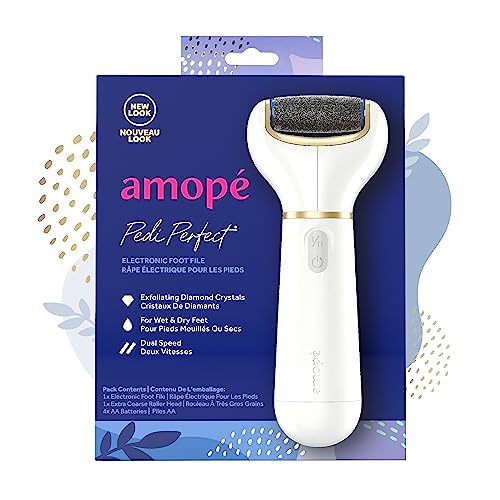
Amope Pedi Perfect Electronic Foot File
The Amope Pedi Perfect Electronic Foot File addresses a step that no antifungal medication can handle: the physical removal of thick, dead skin where Trichophyton fungus hides between treatment cycles. Athlete’s foot often becomes chronic because the fungus colonizes the hyperkeratotic skin on the heels and sides of the foot. This dead skin layer is too dense for topical antifungals to penetrate effectively, so even if you apply cream faithfully, the fungus survives in the deeper layers and reinfects the skin once you stop treatment. The electronic foot file uses a rotating roller covered in micro-abrasive material to gently sand away callused skin without cutting or damaging healthy tissue.
Using the foot file before applying antifungal treatment dramatically improves the medication’s ability to reach the living skin where the fungus is active. The file is designed for dry use, meaning you do not need to soak your feet first, and it collects the dead skin dust in a built-in reservoir for easy cleanup. Many users report that regular filing, combined with antifungal cream, resolves stubborn cases that had persisted for months or years. The device is also useful for preventing reinfection by keeping the skin smooth and less hospitable to fungal spores. It is battery-operated and cordless, making it easy to use in the bathroom or while watching television.
One honest limitation of the Amope Pedi Perfect is that it is not a treatment for active infection on its own. It is a complementary tool that must be used alongside an antifungal product. If you file away dead skin but do not apply an antifungal afterward, you are simply exposing fresh skin to the same fungus. Additionally, the file should not be used on skin that is actively weeping, blistered, or severely inflamed, as the abrasive action can worsen irritation and spread the infection. The replacement roller heads also need to be changed every few months, which adds to the ongoing cost. For people with mild athlete’s foot and minimal callus buildup, the file may be unnecessary, but for chronic cases it is often the missing link that finally breaks the cycle.
What to look for
- Active ingredient type: Allylamines like terbinafine and butenafine are fungicidal and work faster. Azoles like miconazole and clotrimazole are fungistatic and require longer treatment. Choose based on how quickly you need relief and whether you have had success with one class before.
- Formulation format: Creams and gels are best for active infections because they penetrate the skin. Powders are better for prevention and moisture control. Sprays are ideal when the skin is too painful to touch. Electronic files are for removing dead skin that blocks medication.
- Application frequency: Some products require once-daily application, others twice-daily. Consider your routine and how likely you are to stick with the schedule. Missing doses is the most common reason for treatment failure.
- Moisture management: Look for products that address the damp environment, either through a powder base or through ingredients that wick moisture. Keeping feet dry is as important as killing the fungus for preventing recurrence.
- Skin penetration: If you have thick calluses on your heels or soles, choose a product with a formulation designed to penetrate deeper, or pair it with a foot file. Creams and gels with higher lipid content tend to penetrate better than powders or sprays.
- Safety for broken skin: If your skin is cracked or bleeding, avoid products that contain alcohol, strong essential oils, or abrasive particles. Look for gentle, non-stinging formulations like creams or gels without added fragrances.
The verdict
For most people with a standard case of athlete’s foot, Lotrimin Ultra Antifungal Cream is the best overall choice because its butenafine formula kills the fungus quickly with a shorter treatment course. If you want the strongest clinical evidence, Lamisil AT Gel is the most researched option with proven 70 to 80 percent cure rates. For sensitive feet that cannot tolerate rubbing, the Tea Tree Oil Spray offers a no-touch application, though it is best for mild cases. Zeasorb AF Powder excels at keeping feet dry and preventing reinfection, making it ideal for maintenance after the active infection clears. And for chronic, stubborn cases with thick calluses, the Amope Pedi Perfect Foot File is the essential tool that allows antifungals to reach the hidden fungus. No single product does everything, but combining a fungicidal cream with a drying powder and periodic filing gives you the best chance of finally beating athlete’s foot for good.
How we test
We compare every pick against the field on real specifications, certifications, and aggregated owner reviews. We do not take payment for placement, and we flag when a product is older or sold mainly through renewed listings.
At a glance
| Pick | Best for | Score | |
|---|---|---|---|
| Lotrimin Ultra Antifungal Cream | Active infection, primary treatment | Check price | |
| Lamisil AT Antifungal Gel | Fast clearance, post-antifungal effect | Check price | |
| Tea Tree Oil Antifungal Foot Spray | Mild infections, daily treatment | Check price | |
| Zeasorb AF Antifungal Powder | Recurrence prevention, moisture control | Check price | |
| Amope Pedi Perfect Electronic Foot File | Removing fungus-harboring dead skin | Check price |
The picks, reviewed
Lotrimin Ultra Antifungal Cream
Lotrimin Ultra uses butenafine hydrochloride 1% - an allylamine antifungal that disrupts the fungal cell membrane by blocking the enzyme that produces ergosterol, a compound fungi require for cell wall integrity. With ergosterol production blocked, fungal cells lyse and die. This mechanism is fungicidal (kills fungus), not just fungistatic (stops growth), which distinguishes allylamines from older azole antifungals like clotrimazole.

Lamisil AT Antifungal Gel
Lamisil AT uses terbinafine hydrochloride 1% - the most clinically studied antifungal compound for tinea pedis, with the strongest evidence base in the OTC category. Clinical trials have demonstrated 70-80% mycological cure rates with a 1-week twice-daily terbinafine course. The gel formulation is particularly suited to the interdigital spaces between toes where the infection most commonly starts.
Tea Tree Oil Antifungal Foot Spray
Tea tree oil (Melaleuca alternifolia) contains terpinen-4-ol, a compound with demonstrated in vitro antifungal activity against Trichophyton and Candida species. The spray format makes it easy to cover the entire foot including the sole, heel, and between toes without direct contact - useful for people whose foot is too sensitive to tolerate rubbing during active infection.
Zeasorb AF Antifungal Powder
Zeasorb AF contains miconazole nitrate 2% in a superabsorbent powder base - a combination that addresses both the active infection and the moisture environment that allows fungi to thrive. Fungi require warm, humid conditions to proliferate; Zeasorb's powder base absorbs perspiration and keeps the skin between toes dry, removing the microenvironment that athlete's foot depends on.
Amope Pedi Perfect Electronic Foot File
This product addresses a step that antifungal medications cannot: removal of the thick, dead skin where Trichophyton fungus harbors between treatment cycles. Callused, hyperkeratotic skin on the heels and sides of the foot is notoriously difficult for topical antifungals to penetrate - the fungus lives in layers that cream and gel cannot reach if the dead skin barrier is too thick.
What to look for
Active ingredient class matters
Allylamines (butenafine, terbinafine) are fungicidal and more effective than azoles (clotrimazole, miconazole) for tinea pedis. Choose an allylamine for active infection and an azole-based powder or spray for prevention.
Interdigital vs. moccasin-type
Athlete's foot between the toes responds faster to OTC treatment than the moccasin-type infection that covers the sole and heel in a thickened, scaly plaque. Moccasin-type may require longer treatment courses or prescription-strength topical.
Full course is non-negotiable
Stopping treatment when symptoms improve rather than when the full course is complete is the single most common reason for recurrence. The fungus is not fully eliminated just because itching stops.
Footwear hygiene
Spray the insides of shoes with tea tree spray or dust with antifungal powder. Fungi can survive in shoes for months and reinfect treated feet immediately.
Our verdict
Lamisil AT Antifungal Gel is the strongest OTC treatment option by clinical evidence. Lotrimin Ultra Antifungal Cream is the more affordable equivalent with slightly different pharmacokinetics. Tea tree spray covers mild infections and footwear treatment. Zeasorb AF Powder is essential for prevention and recurrence management. The Amope foot file is the complementary tool that improves everything else's effectiveness
FAQs
Both are allylamine-class antifungals that kill fungus by blocking ergosterol synthesis in the fungal cell membrane. Terbinafine (Lamisil) is the more studied compound with a slightly broader antifungal spectrum. Butenafine (Lotrimin Ultra) has a longer post-antifungal effect, meaning it continues working after you stop applying it. Both typically require 1-2 weeks of treatment for full clearance of tinea pedis.
Recurrence is extremely common because the fungus persists in shoes, socks, and communal surfaces. Key prevention steps include using antifungal powder in shoes daily after treatment, replacing older footwear that may harbor fungal spores, always wearing sandals in shared shower areas, drying feet thoroughly between toes after every shower, and wearing moisture-wicking socks. Zeasorb AF powder used preventively is highly effective.
Most OTC antifungal creams and gels require 1 to 2 weeks of twice-daily application for symptomatic relief, but the fungal infection may not be fully cleared for 4 weeks. It is important to continue treatment for the full recommended duration even after symptoms resolve - stopping early is the primary cause of recurrence. If symptoms do not improve after 4 weeks of OTC treatment, see a doctor.
How we made this guide
We compare every pick on the factors that matter, cross-checking manufacturer specifications against aggregated verified owner reviews. We rank independently and never take payment for placement. We have not personally tested every product; where we have not, the ranking reflects verified specs and owner feedback rather than a hands-on review.
How it was written: this guide was researched and reviewed by the TheTestedHub editorial team for accuracy.
Affiliate disclosure: TheTestedHub is reader-supported. When you buy through links on our site, we may earn a commission at no extra cost to you.