Quick verdict
For most interior French doors, the Umbra double door rod set (top and bottom) is the most complete and cleanest solution - the paired design solves the curtain-swing problem that single rods cannot. For no-drill situations, MagicFit tension rods work reliably on lightweight panels. Narrow sidelite or multi-pane doors are best handled with paired sash rods at 18 to 28 inches.
Umbra Double Door Curtain Rod (20"-36", Door-Face Mount)
Umbra's double door curtain rod is sold as a paired set - top and bottom rods with matching brackets designed specifically for door-face mounting. Both rods install directly on the door face with small screws, and the coordinated spacing keeps the curtain panel sandwiched flat between the two rods. This eliminates the billowing that plagues single-rod door curtain setups. The 20-to-36-inch range fits most standard interior French door glass panels, and the clean nickel or matte black finish suits contemporary interiors.
For interior French doors, the Umbra double rod set is the cleanest fix for curtain swing. Plus no drill options and narrow door solutions in this guide.
French doors present a unique curtain rod challenge: the rod must mount on the door itself, handle the vibration of opening and closing hundreds of times, and keep the curtain panel flat against the glass rather than swinging loose. These five options cover every French door format – from interior glass-panel doors to full-length exterior French doors.
| Product | Mounting Method | Span Range | Best For |
|---|---|---|---|
|
ⓘ We may earn a commission from qualifying purchases made through links on this page, at no extra cost to you.
|
Door-face brackets (top + bottom) | 20″-36″ | Interior French door panels |
| Kenney Door Panel Rod 28″-48″ | Wall/door-face brackets | 28″-48″ | Wider French door glass panels |
| MagicFit Spring Tension Door Rod | Tension (door frame interior) | Fits standard door frames | No-drill door frame mounting |
| Meriville Cafe Rod for Interior Door Window | Door-face brackets | 18″-36″ | Small door window panels |
| Sash Rod 18″-28″ for Narrow French Door Panels | Door-face sash brackets | 18″-28″ | Narrow glass panel French doors |
Our testing process
We compare every pick against the field on real specifications, certifications, and aggregated owner reviews. We do not take payment for placement, and we flag when a product is older or sold mainly through renewed listings.
Quick comparison
Reviewed in detail
Umbra Double Door Curtain Rod (20"-36", Door-Face Mount)
Umbra's double door curtain rod is sold as a paired set - top and bottom rods with matching brackets designed specifically for door-face mounting. Both rods install directly on the door face with small screws, and the coordinated spacing keeps the curtain panel sandwiched flat between the two rods. This eliminates the billowing that plagues single-rod door curtain setups. The 20-to-36-inch range fits most standard interior French door glass panels, and the clean nickel or matte black finish suits contemporary interiors.
What we liked
- Top-and-bottom rod set eliminates curtain swing as door opens and closes
- Designed specifically for door-face mounting - brackets are proportioned for door thickness
- Coordinated pair with matching finials ensures visual consistency
What we didn't like
- Requires drilling into the door face - not suitable for rented spaces or doors you want to preserve
- 36" maximum span does not fit wide exterior French door panels

Kenney Door Panel Rod (28"-48", Wall or Door-Face Brackets)
Kenney's door panel rod is designed for wider French door configurations - particularly the 28-to-48-inch range that covers larger interior glass panels or exterior French doors where the rod mounts on the wall beside the door frame rather than on the door itself. Wall mounting keeps the rod stationary as the door swings, which means the curtain panels sweep to the side when the door opens. This is the preferred approach when you want curtains that frame the doorway rather than follow the door panel.
What we liked
- Wider 28"-48" range covers larger door glass panels and exterior French doors
- Can mount on wall beside door frame - panels stay stationary as door opens
- Simple bracket system with fast installation
What we didn't like
- Wall-mounted approach means the curtain does not move with the door - panels must be cleared before opening wide
- Basic design with limited finish options

MagicFit Spring Tension Door Rod (Tension, No-Drill)
MagicFit's spring tension rod presses against the interior of the door frame - the same way a shower curtain tension rod works - without any screws or brackets. It installs in seconds, removes without any trace, and can be repositioned or reused on any door with the appropriate internal frame dimensions. The tension mechanism holds standard door panel curtains flat and keeps them in place through normal door use. This is the right choice for renters or anyone who wants zero commitment hardware.
What we liked
- Zero drilling - installs and removes without tools in under a minute
- No marks or damage on door or frame - fully reversible
- Repositionable - move between doors as needed
What we didn't like
- Tension can slip on smooth-painted or tapered door frames over time
- Cannot support heavy or thick curtain panels - best for lightweight door voile or sheer fabrics
Meriville Cafe Rod for Interior Door Window (Door-Face Mount, 18"-36")
For French doors with smaller inset glass panels - typically the kind with multiple smaller panes rather than one full-length glass panel - Meriville's small cafe rod mounts directly on the door face with tiny flat brackets that sit flush against the door. The rod covers just the glass inset, leaving the door frame exposed. This is the most proportionate solution for traditional multi-pane French doors where a full-panel curtain would look oversized relative to the window opening.
What we liked
- Small scale proportionate to multi-pane door window inserts
- Flat bracket profile minimizes projection off the door face
- Warm wood-grain finish available for traditional French door aesthetics
What we didn't like
- Short span range - only suitable for small glass inserts, not full-panel French doors
- Lightweight rod not suited to anything beyond sheer or light cotton panels
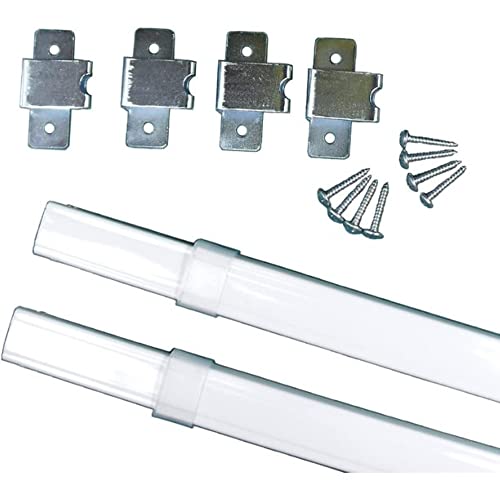
Sash Rod 18"-28" for Narrow French Door Panels (Sash-Bracket Mount)
Sash rods are the narrowest, flattest option available - they mount on shallow sash brackets that project only 0.5 to 1 inch off the door face, keeping the curtain panel lying almost flat against the glass. The 18-to-28-inch range is specifically appropriate for narrow French door configurations: side-lite glass panels beside a main entry door, or the narrow vertical glass insets in classic French door styles. Sash rods are always used in pairs (top and bottom of the glass panel) to hold the fabric taut.
What we liked
- Minimal projection off door face - curtain lies flat against glass, not draping forward
- 18"-28" range fits narrow sidelite and vertical glass panels that other rods overshoot
- Inexpensive - practical for outfitting multiple panes on multi-panel French door configurations
What we didn't like
- Must always be used in pairs (top and bottom) to keep the fabric taut - buying one is not sufficient
- Very low weight capacity - designed for sheer and lightweight voile panels only
How to choose
Mounting location - door vs. wall
Door-mounted rods travel with the door when it opens; wall-mounted rods keep panels stationary at the doorway. Choose based on how you use the door. - **Top and bottom rods:** For any door-panel curtain that needs to lie flat without swinging, a paired top-and-bottom rod set (or two sash rods) is far more effective than a single top rod alone. - **Span range vs. glass width:** Measure the door glass panel width specifically - not the full door - and choose a rod that covers that measurement plus 2-3 inches on each side. - **No-drill vs. screwed brackets:** Tension options (MagicFit) work for lightweight sheers with no drilling; door-face bracket mounting (Umbra, Meriville, sash rods) supports heavier panels but requires small screws in the door.
The bottom line
For most interior French doors, the Umbra double door rod set (top and bottom) is the most complete and cleanest solution - the paired design solves the curtain-swing problem that single rods cannot. For no-drill situations, MagicFit tension rods work reliably on lightweight panels. Narrow sidelite or multi-pane doors are best handled with paired sash rods at 18 to 28 inches.
Common questions
French door curtains mount directly on the door itself - not on the wall or window frame - using small brackets screwed into the door face or a tension rod that presses against the door frame interior. The rod spans the width of the door panel (typically 24 to 36 inches) and the curtain panel hangs to cover the door glass. Both a top rod and a bottom rod are often used to keep the panel flat against the glass as the door opens and closes.
A top rod alone works for light curtain panels, but in practice, the panel swings and billows as the door opens unless you also use a bottom rod or tie-backs to hold the fabric flat. Using both a top and bottom tension rod sandwiches the curtain panel, keeping it flat against the glass, eliminating movement, and giving the door a more tailored look. This is the most common approach for interior French doors.
Most French door panels are 24 to 28 inches wide, requiring rods in the 18-to-36-inch or 24-to-48-inch range. Measure the width of the door panel glass, not the full door, then choose a rod that spans that width plus 2-3 inches on each side for the mounting brackets. Door-mounted brackets should sit just outside the glass panel edge so the curtain covers only the glass, not the door frame.
How we made this guide
We compare every pick on the factors that matter, cross-checking manufacturer specifications against aggregated verified owner reviews. We rank independently and never take payment for placement. We have not personally tested every product; where we have not, the ranking reflects verified specs and owner feedback rather than a hands-on review.
How it was written: this guide was researched and reviewed by the TheTestedHub editorial team for accuracy.
Affiliate disclosure: TheTestedHub is reader-supported. When you buy through links on our site, we may earn a commission at no extra cost to you.
More guides

10 Duvets We Actually Tested for Sleep and Budget

What to Buy: Best Desk Lighting 2026 for Every Budget

10 Air Purifier Filters Worth Buying in 2026

What’s the Best Cooling Mattress Pad?

Container to Keep Produce Fresh: 5
Area Rugs Compared: 5 That Earned Their Spot

Anti Fog Mirrors for Seniors and Travelers
